

Published May 09, 2026 | 7:00 AM ⚊ Updated May 09, 2026 | 6:12 PM

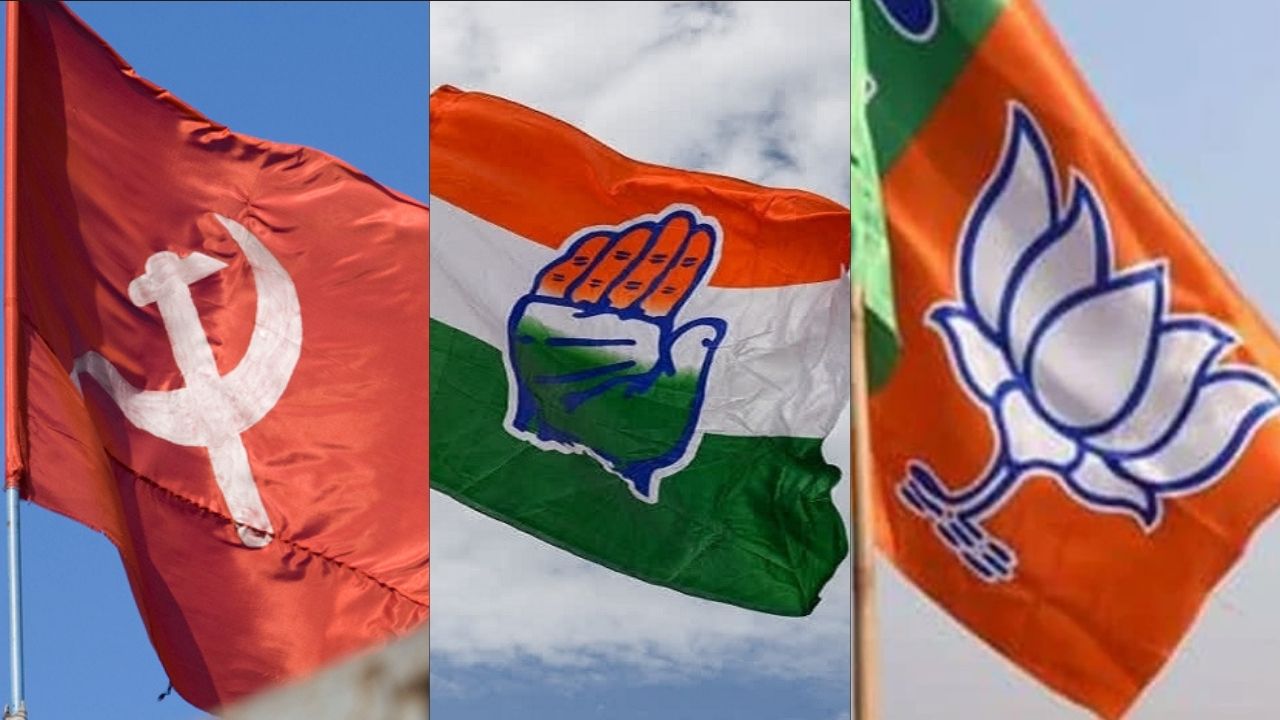
The BJP had won the president's post earlier after the LDF stayed away from the election.

Synopsis: Kerala’s 2026 Assembly election upended long-held political certainties, with several entrenched party bastions falling for the first time in decades amid internal dissent, shifting loyalties, and local undercurrents. From Payyannur to Vamanapuram, the results revealed an electorate willing to break with habit, turning once “safe” seats into unpredictable contests.
For years, certain constituencies in the state’s electoral map carried a sense of predictability — they were spoken of less as battlegrounds and more as inheritances, passed from one election to the next with little disruption.
That certainty unravelled in 2026.
What unfolded was not a routine verdict, but a series of jolts that travelled across regions, cutting through party strongholds and long-held loyalties.
Seats that had withstood decades of political shifts suddenly gave way, and familiar margins collapsed without warning.
The outcome felt less like a swing and more like a rupture — a moment when the electorate chose to unsettle the very idea of “safe seats.”
What had been seen as impregnable party bastions crumbled, some for the first time in half a century. The results did not just alter seat tallies; they unsettled political assumptions, exposed internal fractures, and revealed an electorate far less predictable than before.
From the northern belt of Kannur and Kasaragod to the southern stretches of Thiruvananthapuram, voters signalled something deeper than anti-incumbency.
In Payyannur, loyalty to the CPI(M) had long been taken for granted.
Since the constituency came into being in 1967, the Left never lost its grip. That record has now been broken — not by an outsider, but by one of its own.
V. Kunhikrishnan did not enter the fray as a routine rival. A former district committee member and area secretary, he positioned himself as a voice of dissent from within.
His line — “Nethruthwathe Anikal Thiruthanam” (cadre must correct the leadership)— travelled quickly across local party networks, carrying a blunt message: the leadership needed correction from the cadre.
He was up against T.I. Madhusoodanan, the sitting MLA who had seemed unassailable.
In 2021, Madhusoodanan polled over 62 percent of the vote, the highest share for any candidate in the state, and won by nearly 50,000 votes. That margin had given little reason to expect trouble this time.
The campaign took a different turn. Kunhikrishnan raised allegations about financial irregularities involving funds mobilised in the constituency. The party leadership brushed them aside. His expulsion followed soon after. He responded by taking the issue further, even publishing a book detailing his claims. Among sections of the cadre, the questions did not fade.
When the CPI(M) chose to field Madhusoodanan again, the contest shifted in character. It stopped being just another election. It became a test of how much the local base was willing to overlook.
With backing from the UDF, Kunhikrishnan won by 7,487 votes.
The result carries weight beyond the margin. Payyannur has been represented by some of the most influential Communist leaders in Kerala’s political history like M V Raghavan and Pinarayi Vijayan. That inheritance offered no cover this time. If anything, it made the outcome harder to ignore.
Also Read: IUML leader PK Kunhalikutty gains edge in Kerala Deputy CM discussions
If Payyannur exposed dissent, Taliparamba magnified it.
A constituency that had remained firmly with the CPI(M) since 1977, Taliparamba had shown early signs of unease in recent elections. Victory margins had narrowed, and vote shares had dipped. Yet, few anticipated a complete reversal.
The turning point came with the candidature of Shyamala, which triggered resistance within the party. T.K. Govindan, a senior leader and member of the district secretariat, publicly opposed the decision. His criticism went beyond the candidate; it questioned the decision-making process itself.
Govindan alleged that the nomination had been pushed through despite widespread opposition at multiple levels within the party structure. He framed it as a symptom of deeper issues — centralisation, disregard for internal democracy, and the growing perception of favouritism. Shyamala is wife of CPI(M) party secretary M V Govindan.
When his objections were ignored, he left the party and entered the fray as a rebel candidate with UDF backing.
The campaign that followed was less about traditional political rivalry and more about internal accountability. Govindan positioned himself not as an opponent of the CPI(M), but as someone attempting to reclaim its values.
The electorate responded.
Govindan defeated Shyamala by 12,551 votes, ending a 49-year CPI(M) hold over the constituency. The numbers told their own story: the party’s vote share dropped sharply, while the challenger consolidated support across segments that had previously remained out of reach.
Even in areas once considered strongholds, the erosion was visible.
Further north, in Trikaripur, the shift came with little warning.
Since its formation in 1977, the constituency had consistently elected CPI(M) candidates. The party’s organisational strength here was considered formidable, and past victories had often been comfortable.
That narrative was disrupted by the sudden emergence of Sandeep Varier as the UDF candidate. His entry into the constituency came late, with barely weeks to campaign. There had been no prolonged groundwork, no long-standing local build-up.
Yet, the result defied expectations.
Varier defeated CPI(M) candidate V.P.P. Musthafa by 4,431 votes, marking the first time a non-Left candidate won from Trikaripur. The shift was reflected in the vote shares: the CPI(M)’s support dropped significantly, while the UDF surged ahead.
The result suggested that even in constituencies with deep-rooted organisational networks, momentum could shift quickly when voter sentiment aligned.
Also Read: Congress steps up CM selection process in Kerala, CLP meet on Thursday
Perambra had remained a Left bastion since 1980, its electoral history marked by consistent CPI(M) victories. Over the years, the party had maintained a firm grip, often winning by comfortable margins.
That hold slipped in 2026.
Fathima Thahliya, contesting as the UDF candidate, secured a victory by 5,087 votes over veteran leader and LDF convener T.P. Ramakrishnan. The margin may not have been overwhelming, but the significance was unmistakable.
Ramakrishnan, a former minister and a prominent figure in the LDF, had won convincingly in 2021. Yet, this time, the contest unfolded differently. The campaign saw sharp exchanges and heightened rhetoric, with both sides attempting to shape the narrative.
Voter turnout remained high, and the UDF appeared to benefit from sustained mobilisation. Thahliya’s campaign maintained pressure even after polling, reflecting a confidence that the constituency was within reach.
When the results were declared, Perambra joined the list of long-standing Left strongholds that had changed hands.
In central Kerala, Poonjar offered a different kind of shift.
The constituency had long been associated with regional forces and strong personalities, particularly P.C. George, who had dominated its politics for decades. Congress victories here had been rare, the last one dating back to the early years, way back in 1960.
That changed in 2026.
Sebastian M.J., contesting for the UDF as a Congress candidate, defeated sitting MLA Sebastian Kulathunkal by 6,693 votes. The result reflected multiple factors — anti-incumbency, shifting community alignments, and the impact of a multi-cornered contest.
P.C. George, contesting as a BJP candidate, remained a significant presence but could not translate his influence into a winning tally. His campaign, marked by sharp rhetoric, may have contributed to a consolidation of votes against him.
For the Congress, the victory represented a breakthrough in a constituency where success had long proved elusive.
Also Read: Kerala’s quiet churn leaves smaller parties either back in play or off the map
The pattern was not confined to northern Kerala.
In Vamanapuram, a constituency in Thiruvananthapuram district, the CPI(M) had held sway since 1980. The political landscape here had remained largely stable for decades, with the Left maintaining a consistent presence.
That continuity ended with the victory of Sudhir Shah, a Congress candidate whose campaign centred on a simple assertion: no constituency was beyond reach.
His win, by a margin of 12,185 votes over sitting MLA D.K. Murali, marked a dramatic turnaround. In the previous election, Murali had secured a comfortable victory. This time, the balance shifted decisively.
Shah’s rise within the party had been gradual, built through organisational work and local-level engagement. His candidature initially came as a surprise, but it soon gained traction.
The result suggested that local dynamics, candidate selection, and organisational energy could outweigh historical voting patterns.
Another scenario is that some constituencies in Kerala seemed inseparable from the names that represented them. This election has unsettled that certainty also.
Pathanapuram is one such case.
Since 2001, K.B. Ganeshkumar had held the seat with ease, building an image of administrative efficiency and development. That run has now been halted.
Congress candidate Jyoti Kumar Chamakalla, who lost in 2021, returned better prepared and far more grounded in the constituency. His work over five years—quietly strengthening booth-level networks and consolidating the party structure—began to show early, with the UDF gaining control in most local bodies.
Chamakalla’s campaign leaned on organisation rather than spectacle. By the time polling arrived, he had closed earlier gaps and built steady confidence among workers.
On the other side, Ganeshkumar entered with visible strain. A series of controversies, including personal allegations and friction within community organisations, eroded his standing. The fallout with sections of the NSS and resentment linked to remarks about Oommen Chandy added to the unease. The emotional undercurrent around Chandy’s legacy, amplified during the campaign, found resonance. The result reflected that shift.
Chathannur tells a different but equally striking story.
A constituency that stayed with the CPI since 2006 has now moved to the BJP.
B.B. Gopakumar, contesting for the third time, converted persistence into victory. He had come close in the last two elections; this time, he pushed through.
His local connect, organisational backing, and steady rise within the party helped. The absence of the sitting CPI MLA and signs of voter fatigue worked in his favour. BJP had sensed an opening here even when attention remained on other seats. Gopakumar held his ground through counting, eventually winning by over four thousand votes.
Two constituencies, long defined by continuity, have chosen disruption.
What ties these results together is not just who won or lost, but how those outcomes came about.
Across constituencies, the shifts did not follow a single pattern. In some places, it was rebellion from within that broke decades of continuity. In others, it was patient organisational work, local discontent, or the cumulative effect of smaller fractures that had gone unaddressed. Strongholds did not fall to a wave; they gave way under pressure that had been building, often quietly.
In short, Kerala’s electoral map now looks more open than it has in decades. Because the very idea that certain seats were beyond contest has been tested, and, in several cases, overturned.



