

Published May 28, 2026 | 4:56 PM ⚊ Updated May 28, 2026 | 5:54 PM

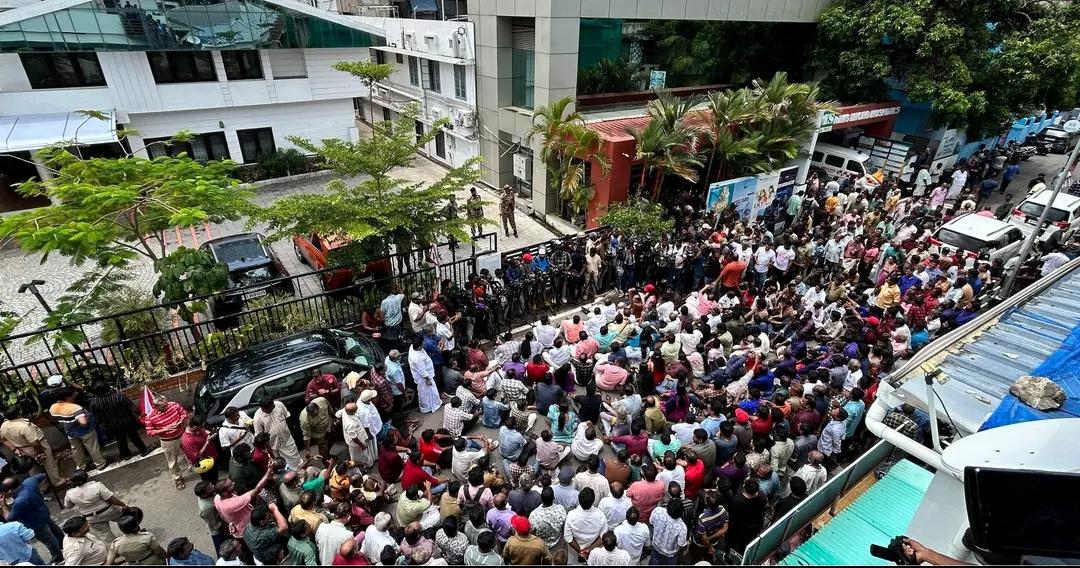
CPI(M) supporters in front of the rented house of Pinarayi Vijayan in Thiruvananthapuram on Wednesday during the ED search

It was George Orwell who wrote “All animals are equal, but some animals are more equal than others,” as a satire on revolutions that gradually created their own hierarchies.
Nearly eight decades later, a variation of that question is quietly circulating within Kerala’s CPI(M): Are some party families more equal than others?
The question has surfaced because of the strikingly different responses adopted by the party in two Enforcement Directorate (ED) investigations separated by six years.
When the ED arrested Bineesh Kodiyeri, son of then state secretary Kodiyeri Balakrishnan, in 2020, the CPI(M) maintained a careful distance.
Senior leaders insisted that the matter concerned an individual, not the party.
Investigative agencies, they said, should be allowed to do their work. There were no emergency mobilisations, no statewide protests and no attempt to transform the case into a larger political confrontation.
The mood was markedly different when the ED’s actions touched the family of former Chief Minister Pinarayi Vijayan.
Within hours, the party moved into battle mode.
Protest programmes were announced, leaders took to the streets and the investigation was portrayed not as a case involving an individual family member but as an attack on the party itself. An ED team was physically targeted.
The distinction was impossible to miss.
That contrast has acquired fresh significance because Bineesh Kodiyeri, whose party membership was frozen after his arrest, was later acquitted in the case.
Yet, despite reportedly applying four times for the restoration of his membership, he continues to remain outside the party fold.
Even as the party leadership kept him at arm’s length, Bineesh was among those visible on the frontlines of the protests in Thiruvananthapuram when the ED came knocking on the doors of Vijayan and his daughter, T Veena, defending a party position that many believe was never extended to him during his own ordeal.
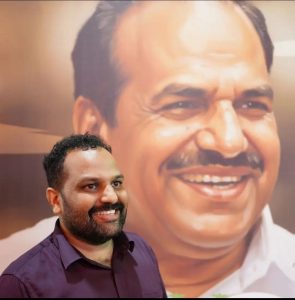
Bineesh Kodiyeri
The Bineesh Kodiyeri episode unfolded at a particularly sensitive moment for the CPI(M).
In October 2020, the ED arrested Bineesh under the Prevention of Money Laundering Act in connection with a Bengaluru drug trafficking case that had originated from an NCB investigation.
The allegations immediately triggered political turbulence because Bineesh was not just another accused individual. He was the son of Kodiyeri Balakrishnan, then the CPI(M)’s state secretary and one of the most powerful leaders in the organisation.
Yet the party’s instinct was not to shield him.
Vijayan, who was then the Chief Minister, adopted a cautious position.
His response was that the matter was under investigation and that it would be inappropriate to comment without knowing what evidence the agency possessed. If any illegality had occurred, he suggested, the law would deal with it.
Kodiyeri Balakrishnan’s response was even more striking. He publicly stated that the allegations against Bineesh were personal in nature and not related to the party. Let the investigation proceed, he said. If his son had committed any wrongdoing, he should face punishment, however severe.
There was no attempt to transform the controversy into an ideological confrontation with the Centre. No statewide mobilisation was launched. No dramatic declarations were made about democracy being under threat. The party maintained a visible distance from Bineesh and emphasised institutional discipline.
The message could not have been clearer: an individual facing allegations would have to face the consequences alone.
Also Read: CPI(M) cadre attack ED convoy
The political consequences extended beyond Bineesh.
Within weeks of the controversy, Kodiyeri stepped down as CPI(M) state secretary.
Officially, health concerns were cited.
Even though Kodiyeri remained a politburo member, many within the political sphere viewed his resignation through the lens of the controversy surrounding his son. The episode reinforced the impression that the party was determined to demonstrate its distance from the allegations.
Also Read: Kodiyeri was a troubleshooter for the CPI(M)
The recent ED action connected to Veena and the Exalogic-CMRL controversy produced a completely different political atmosphere.

Veena with her husband and former minister Muhammed Riyas.
Before the investigation could fully unfold, senior CPI(M) leaders moved aggressively to challenge the legitimacy of the probe. The party secretariat met urgently. Protest programmes were announced. Leaders took to the streets. Demonstrations erupted in multiple locations.
The national capital, New Delhi, too, witnessed a protest.
The language employed by the leadership also underwent a notable shift.
State secretary MV Govindan described the case as a deliberate fabrication and argued that it should not be viewed merely as a case involving Vijayan’s daughter. According to the party’s narrative, the investigation represented an attack on the CPI(M) itself, an attempt to weaken the organisation by targeting its most prominent leader.
The distinction is significant.
In 2020, the party insisted that Bineesh’s case was an individual’s problem. In 2026, the party argued that the allegations involving Veena were inseparable from a larger political assault on the movement.
As one district committee leader puts it, “One investigation was compartmentalised. The other was collectivised. One was treated as personal. The other became ideological.”
This has triggered discussions within the party.
And a question that is now gaining momentum is, if an investigation involving the son of a Politburo member was treated as a personal issue that required no organisational intervention, why should an investigation involving the daughter of another Politburo member be treated as an attack on the entire party?
Perhaps the most remarkable aspect of the episode is Bineesh’s own conduct.
When the ED controversy involving Veena escalated, Bineesh chose not to remind anyone that the party had remained silent during his own troubles. Instead, he publicly backed the CPI(M)’s position.
His statement carried a strong emotional undertone.
Vijayan’s family, he said, was also his family within the larger party family. This was not the moment to revisit old grievances. He added that he was taking the position that Kodiyeri would have adopted had he been alive.
In many ways, that statement revealed more about the party’s predicament than any opposition criticism could.
Kodiyeri’s son continues to defend the organisation that continues to keep him outside its formal fold.
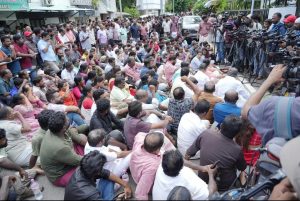
Sit-in protest of CPI(M) supporters against ED search
Yet there is another layer to this story, one that may explain the extraordinary political energy that followed the ED raid.
The most immediate beneficiary of the controversy is not Veena. It is Pinarayi Vijayan.
The timing could hardly have been better from a political standpoint.
Only weeks earlier, the CPI(M) had suffered an election result that few within the party had anticipated.
Constituencies considered impregnable had fallen. Questions were being raised in party committees.
Grassroots workers who had spent years defending the government suddenly found themselves demanding answers. The aura of political invincibility that had surrounded Vijayan had taken a visible hit.
Then came the ED raid.
What began as an investigation into transactions involving Veena and CMRL quickly acquired a larger political meaning. The conversation was no longer about business dealings. The narrative shifted to something far more familiar in Kerala politics — a battle between the Centre and the state’s most powerful political figure.
It was a deft political pivot.
The focus moved from electoral setbacks to political victimhood.
Internal criticism gave way to collective outrage. Cadres who had been discussing what went wrong in the election found themselves discussing what the BJP and central agencies were allegedly doing to the party.
The target, party leaders argued, was not Veena. It was Vijayan. And if the target was Vijayan, then the target was the CPI(M) itself.
The message travelled quickly through the party structure.
A leadership that had been facing uncomfortable questions suddenly found thousands of workers rallying to its defence. The debate shifted from accountability to resistance. From electoral introspection to political mobilisation.
The ED may have arrived looking for documents.
The CPI(M) leadership found an opportunity to rewrite the conversation.



