

Published Jun 19, 2026 | 9:27 AM ⚊ Updated Jun 19, 2026 | 2:05 PM

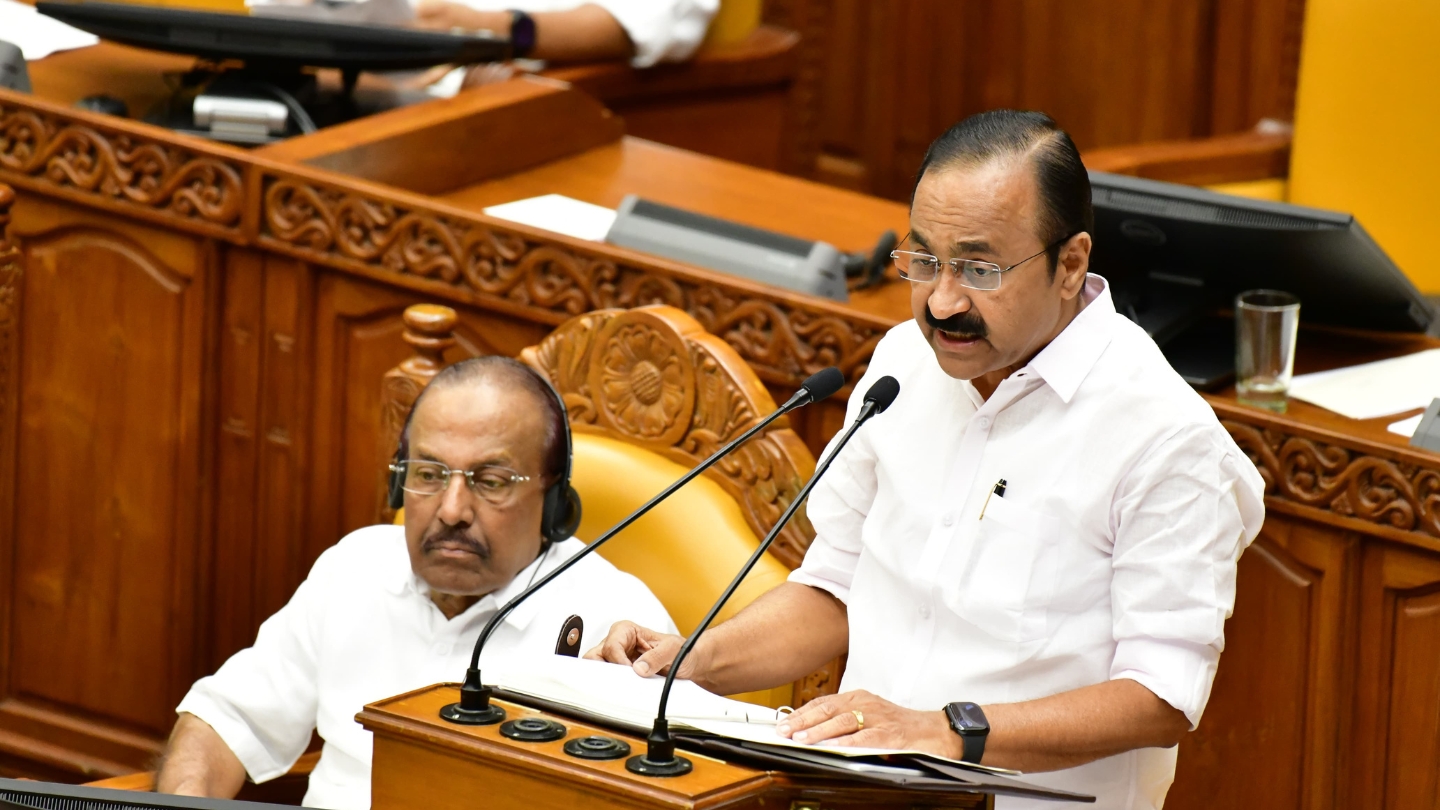
Kerala Chief Minister VD Satheesan in the Assembly. (File Photo)

Synopsis: Kerala Chief Minister VD Satheesan presented Kerala’s Revised Budget for the financial year 2026-27 amid mounting concerns over the state’s fiscal position and funding commitments. Satheesan said Kerala has been facing severe economic challenges, pointing to a growing debt burden and declining revenue performance.
Kerala Chief Minister VD Satheesan on Friday, 19 June, presented Kerala’s Revised Budget for the financial year 2026-27 amid mounting concerns over the state’s fiscal position and funding commitments.
Earlier, the Opposition had indicated that it would closely watch three key issues in the budget: how the government plans to bridge the shortfall in central assistance, how funds will be mobilised for the implementation of the Indira Guarantee schemes, and how the state intends to meet KIIFB’s ₹10,000 crore bill obligations.
Satheesan said Kerala has been facing severe economic challenges, pointing to a growing debt burden and declining revenue performance.
Presenting the revised budget, he noted that the State’s total debt had risen to ₹5.07 lakh crore, while compulsory expenditure such as salaries, pensions and interest payments accounted for 77 percent of revenue receipts, leaving limited fiscal space for development activities.
However, the chief minister announced the Oommen Chandy Health Insurance Scheme and set aside a budget of ₹10 crore for it. It is one of the Indira Guarantees announced by the Congress-led UDF ahead of the Assembly elections.
He also allocated ₹600 crore for the Priyadarshini scheme, which allows free travel for women and transgender community in KSRTC ordinary buses, and ₹1,422.60 crore for implementing the employment guarantee programme.
Also Read: How corruption at Kerala’s RTOs is fueling a road safety catastrophe
The chief minister said Kerala’s capital expenditure stood at just 1.3 percent of Gross State Domestic Product (GSDP), among the lowest levels in the country. He also highlighted a decline in the state’s own tax revenue as a share of GSDP.
While it stood at 6.94 percent in 2015-16, significantly above the average of major states at the time, it had fallen to 6.41 percent in 2025-26. According to him, Kerala’s tax effort was now below the average of comparable states, the average of major states and the national average.
He said the previous government’s budget estimates for 2026-27 had projected revenue deficit grants, other grants and the state’s share of central taxes at levels that were no longer realistic.
The January 2026 budget had estimated receipts under these heads at ₹14,137.69 crore, but the revised assessment indicated a cumulative shortfall of around ₹20,500 crore.
Against this backdrop, Satheesan said the previous government had fixed plan expenditure at ₹35,750 crore without adequately accounting for the anticipated revenue shortfall.
He added that the revised budget to be presented by the government had consequently reduced project expenditure proportionately to reflect the lower revenue availability.
However, he said the road tax on electric vehicles and the quarterly tax on private buses and tourist buses will be reduced.
During the budget speech, Satheesan also announced Mission Samudra, a flagship initiative aimed at transforming Kerala into a major maritime economy and a prominent player on the global maritime map within the next five years.
The chief minister highlighted Kerala’s vast maritime potential, including its 600-kilometre coastline, two international ports, the Vizhinjam International Transshipment Terminal, 17 non-major ports, and extensive inland water resources.
Under Mission Samudra, Kerala will be developed as an integrated maritime economic zone by strengthening connectivity between ports and the state’s road, rail, and logistics networks.
The initiative also envisages the development of port-led industrial corridors, greenfield urban centres, and modern infrastructure to support maritime trade and investment.
To improve connectivity with the Vizhinjam port and facilitate cargo movement across the country, the government will expedite land acquisition and construction for key infrastructure projects, including the Balaramapuram–Vizhinjam rail link and the Vizhinjam–Navaikulam Outer Ring Road.
The chief minister said the project would position Kerala as a leading maritime gateway in South Asia, generating employment, attracting investments, and driving long-term economic growth through a port-led development strategy.
Satheesan also announced that an aviation logistics park will be established, with ₹200 crore to be earmarked for it.
He said the State Planning Board should be elevated as a think tank.
The chief minister said an Invest Kerala Cell would be established to facilitate investment-related matters. He added that a committee of experts will study Kerala’s demographic change.
Noting that remittances of non-resident Keralites alone will not help the state, the chief minister said in the budget that they will have to invest and must engage in knowledge sharing, and announced an NRK Investment Fund.
Announcing the One-Kerala Karuthal Mission, he said it will ensure that the benefits meant for beneficiaries reach the right hands. It will also use CSR funds and donations from the public.
He said a Global Job Watch Tower will be established to keep track of employment opportunities and job skill changes happening across the world and earmarked ₹2 crore for it.
Satheesan also said Kerala will explore the opportunities in the space economy and earmarked ₹5 crore for it.
With a budget of ₹100 crore, the Kerala Knowledge Valley project will ensure that the higher education sector benefits from knowledge sharing, including making use of the ideas of national and international universities.
The chief minister also announced the Wayanad Tribal University and Indigenous Knowledge Zone, with an estimated budget of ₹50 crore.
He added that 10,000 MSME initiatives will be developed in the state and that a ‘One Kerala Karuthal Mission’ will be launched, with donations used exclusively for the mission under a transparent, real-time public disclosure system. An initial allocation of ₹1 crore has been earmarked.
He also said a global convention centre will be developed near Kochi International Airport, while Thiruvananthapuram, Kollam and Alappuzha will be included in the Sadayam Kerala Economic Corridor.
To address the growing trend of students going abroad for higher studies, the government plans to create world-class educational infrastructure in Kerala and integrate youth into the state’s development process, while also promoting a silver economy.
Also Read: Right-wing narrative, West Asia conflict fuels suspicion of Bengali workers in Kerala
The districts of Thiruvananthapuram, Kollam, and Alappuzha will be integrated into a single, high-growth economic zone of strategic national importance, creating the Southern Kerala Economic Corridor.
This corridor will serve as a powerful engine of economic development, attracting investment, generating employment, strengthening infrastructure, and positioning Southern Kerala as a leading hub for industry, innovation, logistics, tourism, and sustainable growth. The chief minister allocated ₹50 crore for the initiative. Satheesan announced that Light Metro services will be introduced in Kozhikode and Thiruvananthapuram.
The government announced a special package for Wayanad, Kasaragod and Idukki, particularly in the areas of education, health and livelihood.
The state government said a comprehensive land management framework will be introduced, and a land bank will be established. It aims to identify, consolidate and make available land for agriculture, housing, industry, and infrastructure development.
Satheesan also announced that the support price for rubber has been enhanced to ₹250 per kilogram. He added that surplus milk will be converted into value-added products.
To address the growing demand for skilled healthcare support professionals, Caregiver Certificate Courses will be introduced in hospitals across the state. These programmes will provide quality training, create employment opportunities for youth, and strengthen patient care services, while positioning Kerala as a leading hub for healthcare and caregiving excellence.
Satheesan also said that a world-class football stadium will be established in the Malabar region, with ₹50 crore set aside for the initiative.
He also announced the Kerala Urban Growth Mission with a budget of ₹100 crore. The state government will also establish a Unified Metro Transport Authority in Thiruvananthapuram and Kozhikode.
A fisheries sub-plan will be introduced for fishermen, with enhanced insurance coverage and increased financial assistance for their children. The chief minister said the kerosene subsidy for fisherfolk will be increased to ₹75 and announced a special housing scheme for them. He further announced special financial assistance for fisherfolk on days when adverse weather conditions affect their day’s work.
However, he noted that the state government has a Zero Tolerance Policy when it comes to environmental protection and conservation.
The chief minister announced that a new film city, Chithra Nagaram, named after pioneer filmmaker JC Daniel, will be established in Kochi. At the same time, an MT Vasudevan Nair Cultural Park will be developed in Kozhikode with an allocation of ₹50 crore.
The government also announced a memorial for actor Salim Kumar in Ernakulam, with an allocation of ₹1 crore, and ₹1 crore will be allocated for the Umbayee Music Academy.
The cultural park will serve as a venue for showcasing Kerala’s traditional art forms, including Kathakali, Koothu, Theyyam and Oppana. It will also feature a convention theatre, library, voice museum, food court and other cultural facilities.
In addition, a new music academy named after the late music director Johnson will be set up in Thrissur.
Kerala Culinary Institute will be established to promote Kerala’s traditional dishes and cooking styles. The Kerala School of Design and Planning will be established to offer undergraduate and postgraduate programmes in design, planning and related disciplines.
Green Marshal project will be implemented in Fort Kochi, Munnar and Kovalam regions. Women will be provided with training to promote community-based tourism. Initiatives such as Brand Wayanad, responsible tourism programmes and a digital tourism app will also be developed to strengthen Kerala’s tourism sector.
Sabarimala, Guruvayur, Kottiyoor and Thiruvallam temples will be developed as major national pilgrimage centres like the Tirupati model. A cultural centre on behalf of Sree Narayana Guru will be established in New Delhi.
The state government also announced the Kerala Disaster Resilience Programme. It will use geospatial intelligence, risk analytics and will study climate change.
Further, Satheesan announced the plan to establish a Global Gold Hub in the Kochi-Thrissur belt, with ₹10 crore earmarked for it. A Global Furniture Hub will be established in the Perumbavoor–Aluva–Kochi belt, with ₹10 crore allocated for the project.
The government also decided to promote GenZ and New Gen Technology, robotics, Internet of Things (IoT) and virtual reality, and earmarked ₹50 crore for it. It has also been decided that the construction of the skywalk in Kottayam will be restarted.
The chief minister announced a Vilangadu (in Kozhikode district) Package as the landslide in 2024 affected the area and allocated a budget of ₹5 crore for the same.
He added that the state government will take over the responsibility of endosulfan-affected families and ensure that they receive all entitled benefits.
Satheesan said Rapid Response Teams (RRTs) will be deployed in areas facing severe human-wildlife conflicts to ensure quicker intervention and better management of wildlife-related issues.
The state government has also allocated an amount of ₹559.39 crore for irrigation development and flood-resistance measures.
The chief minister said facilities will be arranged so that one can participate in grama sabha meetings online.
Satheesan said that the Kozhikode Cyber Park will be enhanced to the standard of Kochi Inforpark and Thiruvananthapuram Technopark. An incubation centre will be established for new entrepreneurs, providing management support, mentorship and initial capital assistance to help develop and grow their ventures.
He also announced a special package for bringing down the road accidents in the state. The chief minister added that digital stamping and e-stamping facilities will be expanded to more sectors. Further, the Lottery Department will be reformed comprehensively.
The chief minister said ambiguities in the assured pension system will be examined and that steps will be taken to reform the NPS pension system. He added that a supply-chain management model will be implemented in Supplyco to make it self-sufficient in procuring essential commodities.
The chief minister announced that Girl Friendly Campuses will be ensured, making available clean toilets, environment-friendly sanitary napkins and making them aware of menstrual hygiene.
He said the Siddharthan Anti-Ragging Act will be implemented in campuses to address the menace of ragging and hinted at implementing a semester in Kerala programme for foreign students.
It is named after JS Sidharthan, a 20-year-old veterinary student at Kerala Veterinary and Animal Sciences University (KVASU) in Wayanad, who was found dead in his hostel bathroom in February 2024 after enduring a brutal, 29-hour ordeal of relentless physical assault and public humiliation by senior students and batchmates.
Satheesan added that ₹77.91 crore will be allocated for minority community development and ₹31.29 crore for others. He further said that the Mittayi project for children with diabetes will be relaunched.
To boost scientific temper, the Jawaharlal Nehru Centre for Scientific Temper will be established to turn Kerala into a global knowledge hub, and 25 crore will be allocated for it.
Welfare boards with the same operational mandate are to be merged, he said. Satheesan said that, to nurture sports talents for the Olympics, Vision 2036 will be implemented.
Satheesan announced an academic council to prevent excessive political influence on academic issues.
Announcing a zero tolerance policy for crimes against children, the chief minister said more women will be appointed as Station House Officers in Police Stations across the state. To prevent crimes against women, the Makalkoppam project will be launched.
The chief minister said action will be taken against police officials involved in sabotaging rape and assault cases filed by survivors.
The state government said it will come out with measures to reduce out-of-pocket expenditure in healthcare. It also announced another medical college in Thiruvananthapuram and a new one in Harippad.
It said School Health Brigades will be formed to promote health awareness and well-being among students. A new programme will be implemented for those who are over the age of 40 to carry out health checkups.
Tribal Health clusters and coastal care units will be established to provide dedicated healthcare services for tribal communities and fisherfolk. Golden Hour Project will be implemented, connecting health institutions.
Further, differently abled citizens will be provided with more amenities, including ramps in public spaces.
The chief minister also announced ₹10 crore for Operation Toofan, the government’s operation against the growing drug menace in the state.
The comprehensive health insurance coverage for all serving employees of the state government, Medisep, will be revised.
Also Read: Kerala’s Operation Toofan nets drugs worth ₹10 crore; 2,778 people arrested
Meanwhile, former Finance Minister KN Balagopal urged the state government to take up with the Union government the issue of the Revenue Deficit Grant (RDG), which was not provided to Kerala following the recommendations of the 16th Finance Commission.
According to Balagopal, Kerala had expected to receive a substantial revenue deficit grant under the new Finance Commission.
He noted that if the model followed by previous Finance Commissions had been continued, Kerala could have received more than ₹40,000 crore over five years.
The state budget, he said, was prepared on the assumption that ₹14,138 crore would be received as the first instalment of the grant during the current financial year.
“The denial of the Revenue Deficit Grant has upset the financial calculations of several states,” Balagopal said, pointing out that even Himachal Pradesh had raised the issue with the Centre and demanded restoration of the grant.
He added that the Centre has not yet given final approval to the Action Taken Report on the 16th Finance Commission recommendations, leaving room for further discussions.
Balagopal expressed hope that the revised budget would contain strong measures and a clear strategy to secure the Revenue Deficit Grant from the Union Government.
The revised budget is expected to outline the government’s roadmap for addressing the state’s fiscal challenges while sustaining welfare commitments and infrastructure spending.
(Edited by Muhammed Fazil with inputs from Dileep V Kumar and Sreelakshmi Soman.)
Also Read: CM Satheesan salutes Salim Kumar’s memory in maiden budget with memorial announcement



