

Published Aug 13, 2026 | 8:00 AM ⚊ Updated Aug 13, 2026 | 10:21 AM

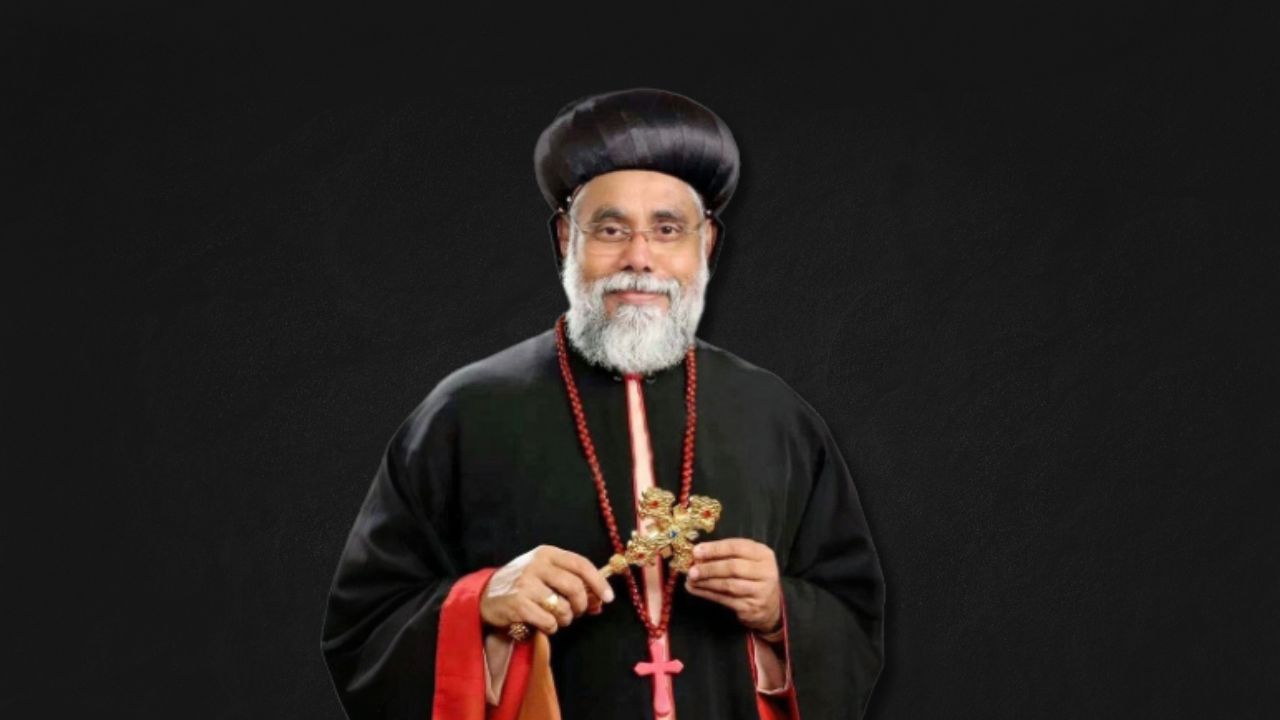
Dr Yuhanon Mar Meletius Metropolitan

Synopsis: “If conversion were the primary motive behind Christian charitable work, the Christian population of India would not still be around two per cent after decades of such service. Our objective has been to empower people through education, healthcare and social services, not to use charity as a means of conversion,” says Dr Yuhanon Mar Meletius Metropolitan.
Bishop Dr Yuhanon Mar Meletius Metropolitan of the Malankara Orthodox Syrian Church has emerged as one of Kerala’s fearless voices in raising concerns over the Centre’s policies affecting minority communities. He is also at the forefront of the growing concerns over the proposed Foreign (Contribution) Regulation Act (Amendment) Bill, 2026, which the Centre has introduced during the ongoing Monsoon Session of Parliament.
The concerns raised by the Malankara Orthodox Syrian Church and other Christian denominations assume significance, given their extensive network of hospitals, educational institutions and service-oriented initiatives across the country.
In a conversation with South First, Dr Yuhanon Mar Meletius Metropolitan spoke about the implications of the proposed FCRA amendments, the concerns within the Christian community and how what he describes as misleading narratives and policy decisions at the Centre are increasingly affecting minorities in India.
Q: The Church and several Christian charitable organisations run hospitals, schools and various social-service initiatives. How important is foreign funding to sustain these activities, particularly in poorer regions?
A: The Orthodox Church and other Christian charitable organisations have historically played an important role in serving the poor and working towards the empowerment of marginalised communities. A major portion of the resources for these initiatives comes from two sources — our church members settled abroad and foreign agencies that support humanitarian and charitable activities.
These contributions are particularly important in North India, where the social and economic conditions of many people from backward communities remain extremely difficult.
Of course, people within India also contribute financially to the Church and its charitable activities. Still, those contributions alone are often not sufficient to sustain the scale of our service initiatives.
This is why foreign contributions from our own members and legitimate charitable agencies have been important.
There may be instances where people become interested in Christianity because of the services provided by churches. But that does not mean conversion has been the objective of these activities.
If conversion were the primary motive behind Christian charitable work, the Christian population of India would not still be around two per cent after decades of such service. Our objective has been to empower people through education, healthcare and social services, not to use charity as a means of conversion.
Also Read: Human cost of FCRA 2026 Bill
Q: Critics often allege that foreign-funded charitable activities are being used for religious conversion. How do you respond to that allegation?
A: The argument does not stand scrutiny. Christian missionaries and churches have been involved in education and healthcare in India for centuries. In Kerala, in particular, their contribution to the education sector cannot be ignored.
The basic approach has always been to empower people, especially those who were historically denied opportunities.
Instead of asking whether a person would become a Christian, the focus was on whether that person could receive an education, access healthcare or improve their social and economic position.
The same service-oriented approach continues across the country.
If we intended to attract people to Christianity through these services, the Christian population would have increased dramatically. That has never happened because conversion was never the central objective of our charitable work.
Q: You have expressed concern that the FCRA (Amendment) Bill 2026 could particularly affect Christian institutions. What is your major concern with the proposed amendments?
A: We are already following the provisions of the Foreign Contribution Regulation Act. There is a system of monitoring and scrutiny of foreign contributions, and we have no objection to legitimate government oversight.
At one point, the government sought to centralise foreign contribution-related transactions through Delhi. We accepted that arrangement because we believed it would make monitoring easier and bring greater transparency.
But the proposed amendments raise a different concern.
Certain provisions could give the government greater powers over the physical assets of organisations receiving foreign contributions.
Section 16(a), in particular, is a matter of serious concern because it could enable authorities to take control of, or seize, physical assets associated with institutions such as schools and hospitals.
This creates apprehension among churches and charitable institutions because allegations can be raised against an organisation. If the law provides such extensive powers, valuable institutions serving the public could potentially be affected.
The Malankara Orthodox Syrian Church alone runs around 150 institutions in Kerala. Across different states, our dioceses operate at least eight to 10 educational, healthcare, and social-service institutions. Many of these institutions depend, at least partly, on contributions from our members living abroad.
Also Read: Kerala Assembly adopts anti-FCRA amendment resolution
Q: Have Christian organisations already experienced difficulties in receiving or managing foreign contributions under the existing FCRA system?
A: Yes. We have already experienced serious difficulties. We have lost access to at least three bank accounts, and there has been no satisfactory response from the Centre regarding the cancellation of those accounts.
The larger problem is the lack of two-way communication. We sent letters and emails, but there is often no response.
We have not wanted to turn this into a loud public confrontation because that is not our preferred method of resistance.
We have approached the Home Minister and held discussions because we believe problems between the government and institutions can be resolved through dialogue. We have continued to seek a solution through healthy discussions rather than street protests.
Also Read: Attacks on Christians are not about conversions
Q: Do you see the FCRA amendments as part of a larger political environment in which minority institutions are coming under increasing pressure?
A: The political situation is certainly concerning. There is an ideological position within the broader Sangh Parivar that India should primarily reflect the interests of Hindus and minorities should have a diminished role in the country’s social sphere.
We are concerned that this mindset could gradually affect the ability of Christian and Muslim institutions to undertake social and community empowerment activities.
We have seen attacks and intimidation against Christians, particularly in parts of North India. I have personally witnessed such incidents in Odisha. Kandhamal is a painful example. Following the death of a Hindu monk, thousands of Christian families faced attacks and threats. The circumstances surrounding that death itself have remained a matter of controversy, but the violence that followed had a devastating impact on the Christian community.
What concerns me now is that behaviour that was once more commonly associated with certain parts of North India appears to be spreading to Kerala as well. We saw an incident in Nalleppilly in Palakkad where our church faced an attack related to a Christmas celebration at our school.
In such a situation, further tightening of the FCRA framework naturally creates anxiety among Christian institutions.
Q: You have spoken about the importance of dialogue with the Union government. Why have churches preferred negotiations rather than large-scale protests?
A: We respect the government because the people of India have elected it. Our approach has therefore been to seek dialogue rather than confrontation. We have written letters, sent emails and sought meetings. We have also discussed these concerns with the Home Minister.
Dialogue is the foundation of a healthy democracy. Unfortunately, we feel that there has not been sufficient two-way communication. We raise our concerns, but responses are often not forthcoming.
We do not believe that every disagreement with the government has to become a street protest. We would rather sit across the table, explain our concerns and find a solution. But for that to happen, there has to be willingness on both sides to communicate.
Even in Parliament, we expect the government to face questions and respond to concerns raised by elected representatives. The same principle applies to Policies. A government should be willing to engage with stakeholders affected by its policies.
Also Read: Father, son and the holy mess
Q: The BJP’s political presence has grown in Kerala, including among sections of the Christian community. Does that indicate a broader political shift among Christians in the state?
A: I would not say that the BJP’s growth in Kerala represents the support of the entire Christian community. There may be some church leaders and individuals in positions of influence who have shown a certain degree of inclination towards the BJP, but that cannot be equated with the political position of the entire Christian community.
The BJP’s victory in Thrissur, for instance, should be understood in the context of several political factors, including the position taken by certain church leaders. Similarly, its performance in the Assembly election cannot simply be interpreted as a consolidation of Christian support. Anti-incumbency was also an important factor.
There are leaders such as PC George who have taken positions favouring the BJP. Still, the views of an individual leader cannot be presented as the collective position of the Christian community.
The Christian community in Kerala is politically diverse. Different people support different political parties and ideologies. Therefore, it would be wrong to suggest that the entire Christian community has moved towards the BJP simply because some church leaders or individuals have shown support for it.
(Edited by Majnu Babu).



