

Published May 29, 2026 | 2:23 PM ⚊ Updated May 29, 2026 | 2:23 PM

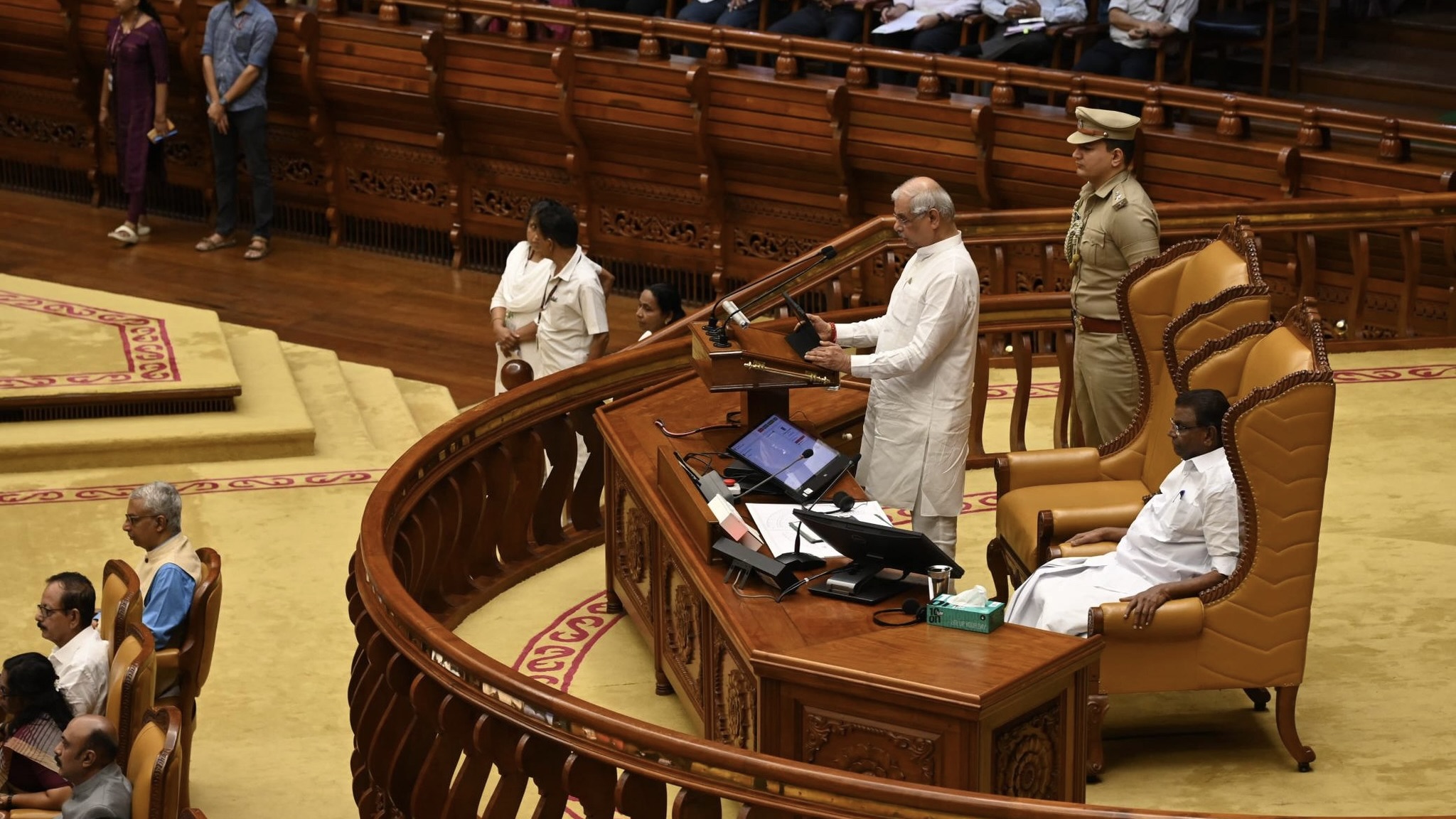
Governor Rajendra Vishwanath Arlekar seen delivering the policy address in the Kerala Legislative Assembly.

Synopsis: The first policy address of Kerala’s newly elected UDF government outlined a development agenda promising menstrual leave for schoolgirls to stronger action against drug abuse, plans to address human-wildlife conflict, support farmers, expand infrastructure and reform the co-operative sector as part of its vision for a ‘Puthuyuga Keralam’. The proceedings were not without controversy, however, after Governor Rajendra Vishwanath Arlekar objected to the partial rendition of Vande Mataram.
The first policy address of the newly sworn-in UDF government in Kerala, delivered by Governor Rajendra Vishwanath Arlekar in the Legislative Assembly on Friday, 29 May, promised clean governance, fiscal discipline and administrative efficiency.
The government used the Governor’s address to unveil its vision of a ‘Puthuyuga Keralam’, setting out the broad direction it intends to pursue over the next five years.
The speech projected a Kerala that combines economic growth with social justice, modern infrastructure with environmental responsibility, and technological progress with human compassion. At its core was the message that development must be felt in the daily lives of ordinary people rather than remain confined to government files and policy documents.
The new government also announced a series of welfare measures, including three days of menstrual leave every month for school-going girl students and six months of maternity leave for women employed in the unorganised sector.
While the speech largely steered clear of direct criticism of the BJP-led Union Government despite long-standing concerns over financial constraints imposed on the state, it took aim at the previous LDF administration, which ruled Kerala for the past decade.
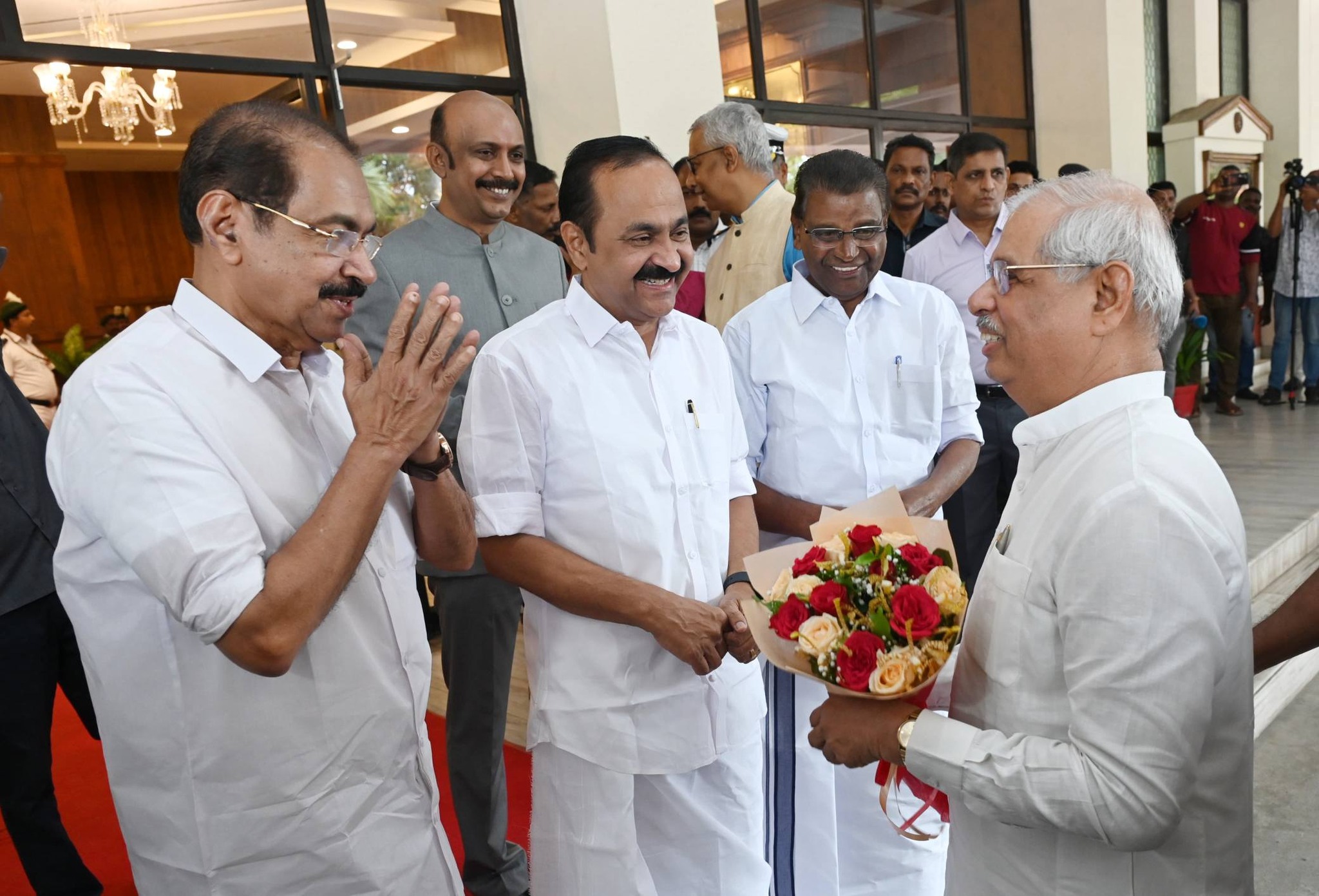
Governor Rajendra Vishwanath Arlekar arrives at the Kerala Legislative Assembly.
The proceedings, however, were not without controversy. Governor Arlekar expressed strong displeasure that only the first eight lines of Vande Mataram were sung instead of the full version.
The presence of the State Police Chief inside the Assembly hall as he accompanied the Governor also drew objections from sections of the Opposition for alleged breach of established convention and protocol.
Also Read: After Sabarimala, gold artefacts missing from Kerala’s famed Padmanabha Swamy Temple
The government promised a people-centric administration, stating that governance should be simpler, faster and more accessible. Citizens, it said, must receive services on time as a matter of right, with administrative systems functioning efficiently and responsively.
A major focus was placed on transparency and accountability. The address noted that corruption, wasteful expenditure and delays in decision-making weaken public trust and hinder development. Greater use of technology was proposed to improve transparency and expedite service delivery, while government departments would be expected to adhere to clear standards of accountability.
Reaffirming Kerala’s tradition of secularism, social harmony and democratic values, the government pledged to uphold these principles.
The address also outlined a development approach that seeks to balance growth and welfare. Economic progress, it said, should create opportunities, while welfare measures must ensure security and dignity for vulnerable sections. The government’s stated goal is an inclusive model of development that delivers both prosperity and social justice.
Women’s welfare emerged as a key focus in the government’s policy roadmap, with proposals ranging from menstrual leave for school students to maternity benefits for women in the unorganised sector.
Among the most talked-about announcements is the proposal to grant up to three days of menstrual leave every month for schoolgirls. Weekend catch-up classes are planned to ensure students do not fall behind academically.
Under Project ‘Menstrual Dignity’, schools, colleges and public spaces will be made more supportive and accessible for girls and women.
The policy address also promises six months of maternity leave for women employed in the unorganised sector, extending social security benefits to a workforce that has traditionally remained outside the ambit of formal protections.
Child Care Rules will be introduced in line with the Maternity Benefit Act, 1961, making crèches and daycare centres mandatory in public offices, industrial establishments, IT parks and workplaces employing more than 50 people.
The government has reiterated its commitment to making Kerala the most woman-friendly state in the country. Equal pay for women, improved public restroom facilities in major towns, and access to essential items such as sanitary napkins and footwear form part of the broader agenda.
Other proposals include free KSRTC travel for women, a monthly educational assistance of ₹1,000 for girl students, the creation of a Women Farmers Consortium to strengthen women’s participation in agriculture, and stricter action against crimes targeting women and children.
Also Read: Caught between Rajeev and Muraleedharan, BJP finds a middle path in Gopakumar
The Governor announced a major overhaul of the Excise Department, placing the fight against narcotics, organised drug networks and alcohol abuse at the centre of the UDF government’s policy agenda.
The move comes amid growing concerns over substance abuse among young people and the increasing sophistication of drug trafficking networks.
The strategy rests on three pillars: enforcement, awareness and rehabilitation.
Enforcement measures include advanced digital surveillance systems, cyber monitoring, intelligence gathering and specialised training aimed at disrupting narcotic supply chains and dismantling organised drug rackets.
The government has also signalled stricter use of laws such as the NDPS Act and the Prevention of Illicit Traffic in Narcotic Drugs and Psychotropic Substances Act (PITNDPS Act) to freeze assets, disrupt inter-state trafficking routes and target organised syndicates.
A State Narcotic Enforcement Bureau will be established to undertake specialised operations, including monitoring online drug networks. The Excise Department will work closely with the Home and Health Departments to coordinate enforcement, prevention and treatment measures.
A statewide anti-drug mission will be launched with the new academic year in June. Schools, colleges, local bodies and community organisations will participate in awareness campaigns aimed at reducing demand and protecting children and young people from substance abuse.
The government has also reiterated its commitment to reducing alcohol consumption in a phased manner, describing addiction as a serious threat to public health, family life and productivity.
It has promised a zero-tolerance approach to drug mafias, peddlers and suppliers while expanding rehabilitation and treatment support for those affected by addiction.
The policy address also outlined a broad development agenda focused on tackling human-wildlife conflict, strengthening agriculture, improving infrastructure and restoring confidence in the co-operative sector.
Addressing growing concerns over wildlife incursions into human settlements, the Forest Department will adopt a three-tier strategy based on containment, mitigation and compensation.
Scientific studies will be undertaken to assess wildlife populations and identify the factors driving animals out of forests. Authorities will examine whether increasing animal numbers, food scarcity or inadequate access to drinking water within forest habitats are contributing to the problem. Measures will also be introduced to reduce conflicts and improve compensation for affected families, particularly in high-range farming regions.
The government also plans to unlock the potential of Kerala’s 600.15-kilometre coastline, 44 rivers, 34 lakes and four international airports through an integrated development programme aimed at transforming the state into a major port-led hub.
The aviation sector will receive special attention, with a series of infrastructure projects intended to position Kerala as an important civil aviation centre in South Asia.
More than 10,000 micro, small and medium enterprises will receive support to enhance their competitiveness. In agriculture, the focus will be on increasing farm incomes, strengthening procurement systems and ensuring fair prices for paddy, coconut, rubber and other crops.
The co-operative sector will also undergo reforms, including stronger deposit protection measures, timely repayment mechanisms and expanded deposit guarantees aimed at rebuilding public trust in co-operative institutions.
Also Read: While the goats fought, the fox feasted! Munambam Waqf dispute in Kerala enters a new phase
For the first time in the Assembly’s history, proceedings began with Vande Mataram ahead of the Governor’s address. However, only the opening portion of the song was performed by a police band. The full version was not rendered despite a recommendation from Lok Bhavan that it be sung in its entirety.
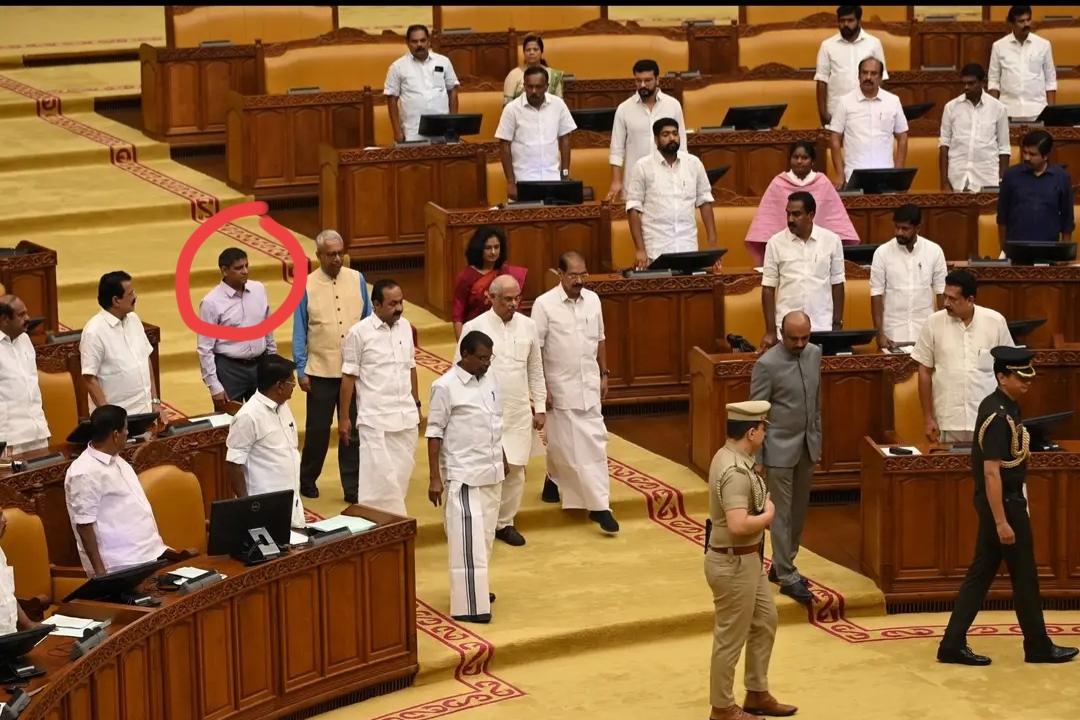
State Police Chief Ravada A Chandrasekhar accompanies Governor Rajendra Vishwanath Arlekar inside the Assembly.
Governor Arlekar later expressed strong displeasure over the decision, saying established protocol requires the complete rendition of Vande Mataram when it is performed in the Governor’s presence. He said the issue had already been flagged by Lok Bhavan officials and that he had directly conveyed his concerns to Speaker Thiruvanchoor Radhakrishnan. Describing the matter as serious, the Governor said such lapses should not recur.
The issue quickly triggered political reactions. BJP leaders accused the government of slighting the Governor. BJP MLA V Muraleedharan alleged that protocol had been violated and claimed the government had bowed to pressure from groups opposed to the full rendition of the song.
The LDF-led Opposition, however, backed the government’s stand. Leader of the Opposition Pinarayi Vijayan said there was nothing improper in rendering only two stanzas and dismissed demands for a full rendition as an RSS-driven position.
The day also witnessed a separate protocol controversy after State Police Chief Ravada Chandrasekhar accompanied the Governor into the Assembly chamber. As the DGP is not permitted to enter the House, the incident drew objections. The Speaker acknowledged the lapse, while the police chief is understood to have explained that he entered unintentionally while accompanying the Governor.



