

Published Jun 03, 2026 | 9:21 AM ⚊ Updated Jun 11, 2026 | 10:44 AM

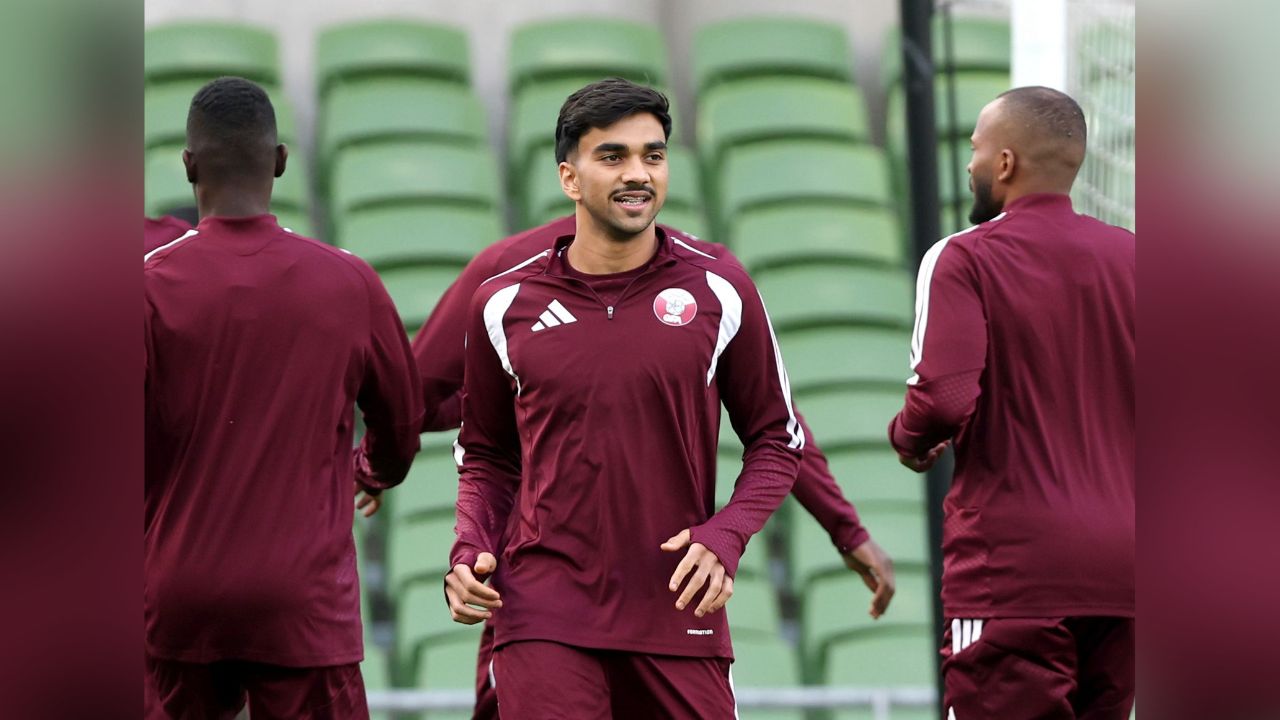
Tahsin Mohammed Jamshid.

Synopsis: Tahsin Mohammed Jamshid, born to Malayali parents, has been selected to represent Qatar at the FIFA World Cup 2026. Tahsin’s father, Jamshid Thachankandy, is originally from Thalassery and is a former University of Calicut footballer who also represented Kerala in the Santosh Trophy.
Twelve years ago, a house in Valapattanam in the Kannur district of Kerala, where a wedding was scheduled and had been alive with celebration, suddenly turned into a place of tension and panic. A seven-year-old boy who had arrived from abroad with his parents had gone missing.
The festive mood faded completely, replaced by worry and urgency as more people joined the search, calling out his name and scanning every possible corner.
At that very moment, when panic had taken over the entire area, the boy was elsewhere — completely unaware of the chaos he had left behind. He was on a nearby ground, playing football with local children, lost in the game as if nothing else in the world existed beyond that moment.
Now, that missing seven-year-old boy, Tahsin Mohammed Jamshid, has been selected to represent Qatar at the FIFA World Cup 2026.
Tahsin was included in Qatar’s preliminary squad announced on 13 May as part of a push to bring in young talent for the World Cup cycle. Later, he impressed coaches with his discipline and adaptability during high-altitude training at Westmont College in Santa Barbara, earning a place in the final FIFA World Cup 2026 squad.
At just 19, he stands out as one of the youngest players in the FIFA World Cup 2026, after proving his technical ability and versatility during the team’s training camp.
When Tahsin’s uncle, Sabic Ali, narrated his story to South First, a huge parade was going on near the League House in Valapattanam. The same people who once searched for the missing seven-year-old boy are now celebrating his rise to world football, distributing sweets and putting up massive flex boards across the junction.
Also Read: Kerala health officials wary of deadly amoeba ahead of monsoon showers
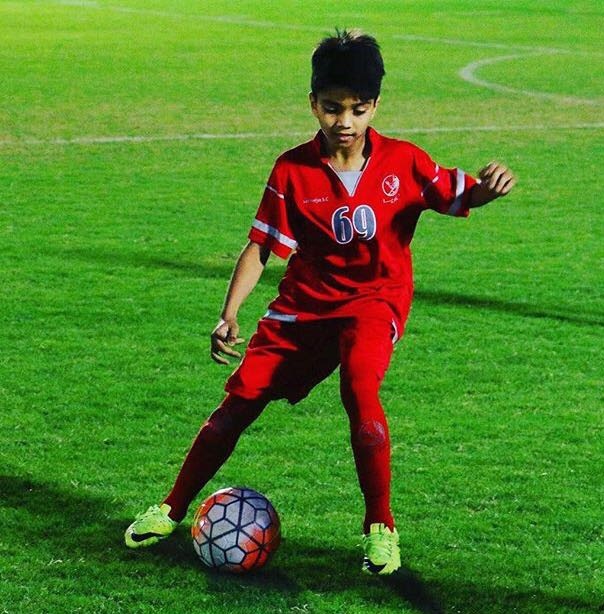
Childhood photo of Tahsin.
Valapattanam village in Kerala is widely regarded as a major centre of sevens (seven-a-side) football in the state. The format evolved organically as a response to limited playing spaces, especially in areas where full-sized 11-a-side grounds were unavailable.
Although not recognised by any football federations, sevens football remains deeply rooted in Kerala’s sporting culture and regularly draws crowds that rival or even surpass the atmosphere of major European matches at the local level.
Many Indian internationals, including IM Vijayan and CK Vineeth, have credited the format for helping sharpen their speed, agility and close ball control.
Speaking to South First, Sabic Ali said Valapattanam is the maternal village of Tahsin. He added that Tahsin’s father, Jamshid Thachankandy and mother, Shyma, moved to Qatar in 1996 and have since made only occasional visits to Kerala.
Even during brief holidays in Kerala, he would actively follow and support local football matches.
Tahsin’s father, Jamshid Thachankandy, is originally from Thalassery and is a former University of Calicut footballer who also represented Kerala in the Santosh Trophy. He currently works as an accountant in Qatar.
Tahsin with his father and Elder Brother
Raised in Doha, Tahsin developed a strong connection with the country and later acquired Qatari citizenship.
He was introduced to football early by his father and went on to train at the Aspire Academy. He began his career in the Qatar Stars League, making his senior debut for Al Duhail against Al Rayyan in 2024.
He progressed through Qatar’s youth system, representing the U16 and U17 teams, before moving up to the U20 setup. His consistent performances eventually earned him a place in the senior national team pool.
With his inclusion in the squad, Tahsin Mohammed Jamshid became the first footballer of Indian origin to be named in a national team squad for a FIFA World Cup campaign.
Also Read: Munambam Waqf dispute in Kerala enters a new phase

Giant cutouts of Messi, Ronaldo and Neymar
In Kerala, football is more than a sport — it is a festival.
During World Cup seasons, discussions fill tea shops, homes, offices and public spaces, with people passionately supporting teams from across the world regardless of any personal connection. Every four years, the state fully immerses itself in the tournament.
Ahead of the upcoming World Cup, there is growing buzz around Tahsin possibly making the squad. If he gets selected and plays, it would be a historic moment for Indian-origin footballers at the World Cup level.
Three other Indian-origin players also feature in FIFA World Cup squads this year.
Australia’s 26-man squad includes 25-year-old winger Nishan Velupillay, born in Melbourne with roots in Tamil Nadu. Sarpreet Singh, born in Wellington to parents from Jalandhar, Punjab, is one of New Zealand’s most technically gifted midfielders.
DR Congo midfielder Samuel Moutoussamy also has Tamil roots.
The big question now is who will make a World Cup debut first.
Speaking to South First, local Kozhikode footballer Anzil T said that fans celebrated Messi and Neymar with giant cutouts in 2022, and this year they are planning to do the same for Tahsin, saying he deserves a place among them. He added that a Malayali appearing at the World Cup is a dream for many, and excitement is already spreading through the streets of Malabar.
During the 2022 FIFA World Cup, giant cutouts of Lionel Messi, Cristiano Ronaldo and Neymar were set up by rival fans in the Kurungattu Kadavu river at Pullavoor in Kozhikode. The symbolic “fan war” between supporters drew worldwide attention, with even FIFA platforms highlighting Kerala’s unique football passion.
(Edited by Muhammed Fazil.)



