

Published Jun 02, 2026 | 1:33 PM ⚊ Updated Jun 02, 2026 | 1:33 PM


Kerala is all set to receive monsoon showers.

Synopsis: As Kerala braces for the southwest monsoon, health authorities are confronting a worrying surge in amoebic meningoencephalitis (AME), a rare but often fatal brain infection that has claimed 31 lives this year and continues to puzzle researchers. New studies highlight the role of delayed diagnosis and diabetes in worsening outcomes, even as experts warn that monsoon-driven environmental changes could heighten the risk of exposure to disease-causing amoebae.
As dark monsoon clouds move towards Kerala, health authorities in the state are worried about amoebic meningoencephalitis (AME), a rare but often fatal brain infection that has emerged as one of the state’s most troubling public health challenges.
The disease has already left a grim mark this year.
In May alone, 29 confirmed cases were reported, of which 14 were fatal.
The figures underline the infection’s deadly nature, with nearly half of those diagnosed succumbing to the illness.
Since January, Kerala has recorded 125 confirmed cases and 31 deaths, according to official data available till 1 June.
Despite the growing caseload, crucial questions surrounding the outbreak remain unanswered. Doctors and researchers have yet to establish the frequent appearance of the disease or the factors driving its spread.
The infection poses a diagnostic challenge, often resembling more common forms of meningitis and encephalitis in its early stages. The absence of rapid diagnostic facilities in many hospitals adds to the difficulty of detecting cases in time.
In 2025, Kerala reported around 200 confirmed infections and nearly 50 deaths.
Public health experts had linked the surge to prolonged monsoon conditions and unusually warm weather, though definitive evidence remains elusive.
Expectations now centre on the findings of a joint study by the State Health Department and the Indian Council of Medical Research (ICMR). The results are still awaited.
Also Read: Monsoon-driven “moist heatwaves” pose hidden health risk
A sharp rise in deaths linked to AME during May has heightened concerns among health authorities as the state prepares for the southwest monsoon, expected to set over Kerala in a few days.
Official data show that while the number of reported cases remained relatively stable, fatalities nearly doubled in May.
The state recorded 17 cases and six deaths in January, followed by 23 cases and two deaths in February.
March saw 32 cases and six deaths, while April reported 24 cases and three deaths.
In May, however, 29 cases resulted in 14 deaths, marking the deadliest month of the year so far.
The increase has put focus on seasonal conditions favouring the spread of disease-causing free-living amoebae, particularly during the monsoon.
AME occurs in two forms.
Primary amoebic meningoencephalitis (PAM) is caused by Naegleria fowleri, commonly known as the “brain-eating amoeba”. Infection occurs when contaminated water enters the nose, allowing the organism to travel along the olfactory nerve and reach the brain.
The disease progresses rapidly, beginning with fever and severe headache before advancing to seizures, coma and, in most cases, death.
The second form, granulomatous amoebic encephalitis (GAE), is caused by other free-living amoebae, including Acanthamoeba species, Balamuthia mandrillaris and Vermamoeba vermiformis. These organisms can also invade the central nervous system and cause severe neurological damage.
Public health experts point to several environmental factors that make the monsoon season particularly significant.
Heavy rainfall alters water bodies, creating stagnant pools, flooding low-lying areas and disturbing sediments in ponds, rivers and wells. Amoebae that normally remain buried in sediments can become suspended in water, increasing the likelihood of human exposure.
Warm temperatures and high humidity further support their survival. In tropical regions, rain followed by hot weather creates favourable conditions for microbial growth, including the bacteria on which these amoebae feed.
The monsoon period also brings greater human contact with potentially contaminated water.
Swimming, bathing and recreational activities in ponds, rivers and other freshwater sources become more common. Water entering the nose during such activities remains the primary route of infection. The disease does not spread through drinking contaminated water.
“Heavy rainfall can alter the quality of natural water bodies and increase human exposure to contaminated water sources. Monsoon conditions create a combination of stagnant water, disturbed sediments and increased recreational exposure,” an official with the Directorate of Health Services said.
“These environmental changes can increase opportunities for contact with free-living amoebae, making preventive measures especially important during the rainy season.”
Flooding can also compromise water quality.
Organic waste, sewage, and debris washed into water sources reduce overall sanitation levels. Chlorination systems may become less effective during periods of heavy rainfall, creating conditions in which amoebae can survive and multiply.
With the rainy season approaching, health officials are expected to intensify public awareness campaigns, urging people to avoid forcing untreated water into the nose and to exercise caution while swimming in warm freshwater bodies.
The sharp rise in fatalities during May has added urgency to those efforts, with experts warning that vigilance will be crucial in the weeks ahead.
Also Read: Why the ‘brain-eating’ amoeba continues to haunt Kerala
As Kerala grapples with recurring cases of PAM, a series of new studies has shed fresh light on who is most at risk—and why survival remains so elusive.
Among the most significant findings is a study published in Nature in May 2026, which identifies diabetes mellitus as a major predictor of death in PAM patients.
Conducted across six districts of Kerala between January and November 2025, the prospective study analysed 200 laboratory-confirmed cases, making it one of the largest investigations of the disease anywhere in the world.
Researchers found that diabetic patients were nearly twice as likely to die as non-diabetic patients despite receiving standardised treatment.
Of the 30 diabetic patients whose outcomes were known, 20 succumbed to the infection.
Surprisingly, commonly used inflammatory markers failed to predict survival, suggesting that the course of the disease may be determined very early after infection.
The findings carry particular significance for Kerala, often described as India’s diabetes capital because of its high prevalence of diabetes and pre-diabetes among adults.
Public health experts say the study highlights a potentially dangerous intersection between a growing metabolic disease burden and an emerging infectious threat.
The concern comes as climate change is believed to be expanding the geographic range of Naegleria fowleri, a free-living amoeba that thrives in warm freshwater bodies.
PAM occurs when contaminated water enters the nose, allowing the organism to travel to the brain, where it causes rapid and devastating inflammation.
A separate study published in Travel Medicine and Infectious Disease in May-June 2026 reviewed PAM cases reported across India between 2018 and 2025.
The authors found that delayed diagnosis remained one of the biggest contributors to the disease’s extraordinarily high fatality rate.
Most patients died within a very short period after symptom onset, leaving clinicians with a narrow window for intervention, the study found.
Although amphotericin B-based combination therapy remains the cornerstone of treatment, delays in recognising the disease often postpone the initiation of life-saving therapy.
Advanced diagnostic facilities, such as cerebrospinal fluid (CSF) PCR testing, were available only at select tertiary-care centres.
The review also highlighted the predominance of paediatric cases, rapid disease progression and consistently high mortality across the country.
Researchers stressed the need for stronger environmental surveillance of freshwater sources, greater public awareness of safe water practices and specialised training for healthcare professionals. They also called for the creation of a national PAM registry and adaptation of CDC-based treatment protocols to Indian healthcare settings.
Meanwhile, a third study published in the Cureus Journal of Medical Science in February 2026 offers a more encouraging message: early diagnosis can save lives.
The study, led by microbiologist Pressy Sankar of Government Medical College, Kozhikode, examined 12 microbiologically confirmed cases of free-living amoebic meningoencephalitis treated between May 2024 and April 2025.
Researchers found that rapid wet mount microscopic examination of freshly collected CSF samples proved to be a valuable diagnostic tool, particularly in resource-limited settings where advanced molecular testing may not be immediately available.
Since the disease often presents with non-specific neurological symptoms that resemble other forms of meningitis or encephalitis, clinicians can easily miss the diagnosis. However, the study found that early identification of amoebae on wet mount microscopy enabled the prompt initiation of multidrug therapy, improving survival outcomes among patients.
Taken together, the three studies paint a clearer picture of Kerala’s evolving challenge.
While PAM remains rare, the evidence suggests that early diagnosis, rapid treatment and greater awareness can improve survival. At the same time, the newly established link between diabetes and mortality raises urgent questions for a state already carrying one of the country’s heaviest diabetes burdens.
Also Read: Inside Kerala’s amoebic meningoencephalitis crisis
The state recorded its first PAM death in Alappuzha in 2016. A decade later, it has entered a new and more concerning phase.
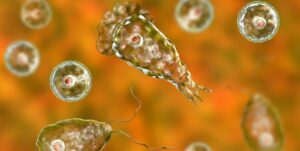
Amoebic meningoencephalitis is a rare but often fatal brain infection caused by the free-living organism Naegleria fowleri, better known as the “brain-eating amoeba”.
After another isolated case surfaced in Malappuram in 2019, infections have continued to appear almost every year, with both case numbers and fatalities showing an upward trend.
Health officials attribute part of the increase to intensified surveillance under Kerala’s One Health Action Plan, which prioritises active monitoring of the disease. Yet the changing pattern of infections is raising fresh concerns.
Unlike previous years, when outbreaks could often be linked to a specific water source or season, cases reported in 2025 have emerged from widely scattered locations across the state. Experts believe prolonged monsoons and unusually warm weather may have created favourable conditions for the amoebae to thrive. The disease has also affected a broader age spectrum, from young children to older adults.
Risk factors include exposure to contaminated pond or well water and ritual nasal cleansing using unsterile water. Since the amoebae can multiply in warm, stagnant water systems even without faecal contamination, health authorities stress the need for vigilant water management, adequate chlorination and public awareness to prevent further infections.
(Edited by Majnu Babu)



