

Published Jul 06, 2026 | 11:57 AM ⚊ Updated Jul 06, 2026 | 11:57 AM

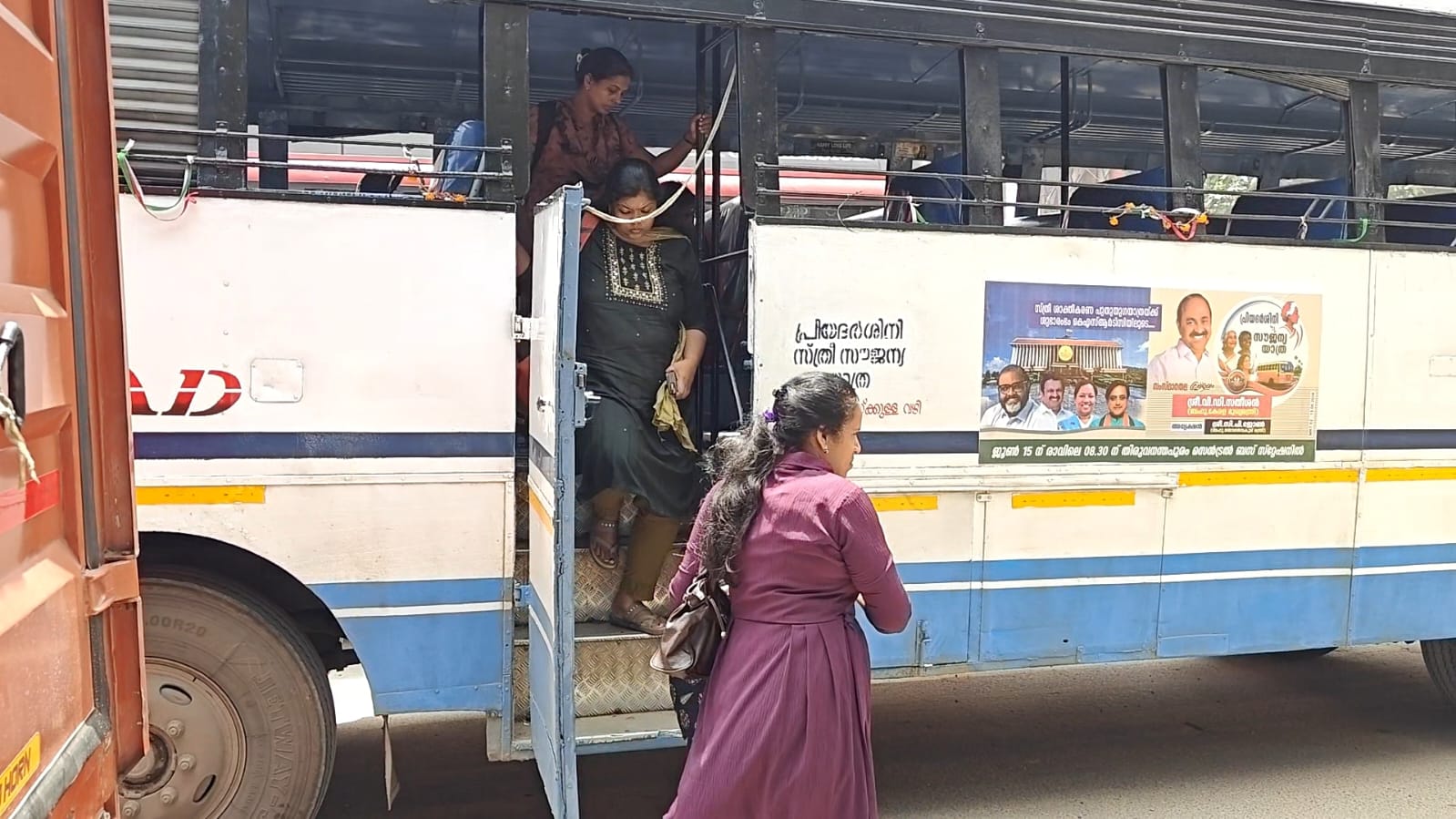
Following the implementation of the Priyadarshini scheme, KSRTC has witnessed a surge in female ridership from around 10 lakh to nearly 15 lakh.

Synopsis: Kerala’s private bus industry has been pushed into an unprecedented financial crisis following the introduction of the Priyadarshini free travel scheme, with operators reporting steep revenue losses, suspending services and demanding compensation while the government begins route mapping and an expert review without altering the welfare programme. As transport organisations prepare a statewide protest on 6 July and the Bus Operators Federation plans a six-day relay dharna from 20 to 25 July, the controversy has evolved into a wider debate over balancing social welfare with the survival of the state’s private public transport network.
These days, if you board a private bus in Kerala, chances are you might also be greeted with an unusual sales pitch.
Along with your ticket, the conductor may politely ask whether you would like to buy a packet of local snacks such as murukku, achappam or kuzhalappam.
For many bus workers, it has become a desperate attempt to earn enough money to keep the wheels turning for another day, following a worsening financial crisis that has engulfed Kerala’s private bus sector since the state government introduced the Priyadarshini scheme, allowing women and transgender persons to travel free in ordinary KSRTC services.
“We are not trying to become snack vendors,” said a conductor in Pathanamthitta, where the practice first attracted public attention.
“We simply want enough income to buy diesel and continue operating the next day. If selling a few packets of murukku helps us do that, we have no other option.”
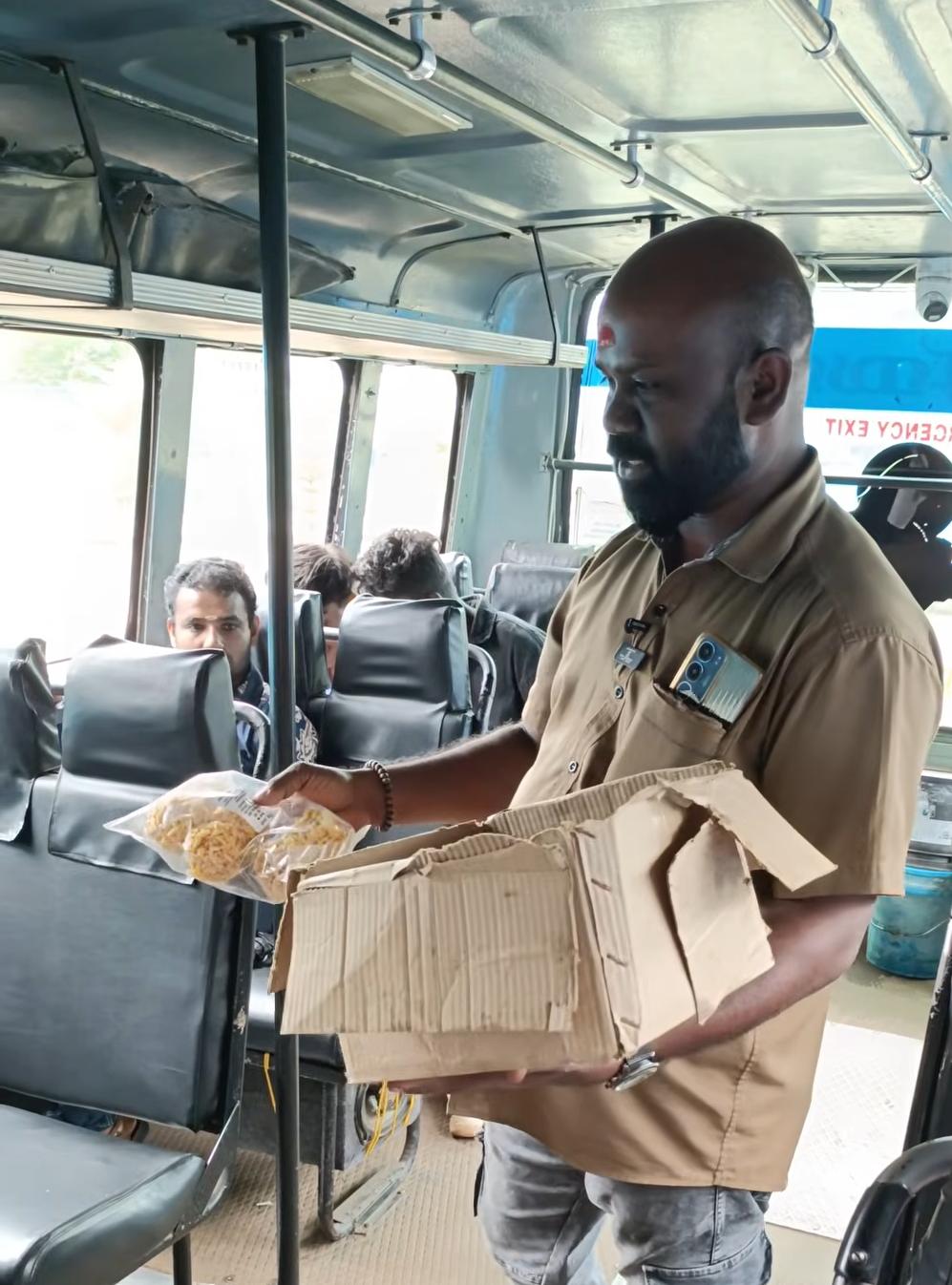
A private bus employee sells snacks inside a bus.
Operators say the scheme has dramatically slashed their daily earnings, pushing hundreds of buses towards suspension.
Their unusual form of protest has since spread to several districts, turning the humble snack packet into a symbol of the private bus industry’s frustration.
Notably, the practice followed Transport Minister CP John’s suggestion that private operators should explore alternative sources of income instead of depending entirely on ticket revenue. He also pointed to advertising as one such avenue, drawing comparisons with KSRTC.
“If this is what the government means by alternative income, this is all we can realistically do,” another conductor remarked while holding up packets of achappam for sale.
The Priyadarshini scheme, one of the UDF government’s flagship welfare programmes under the Indira Guarantees, was launched on 15 June.
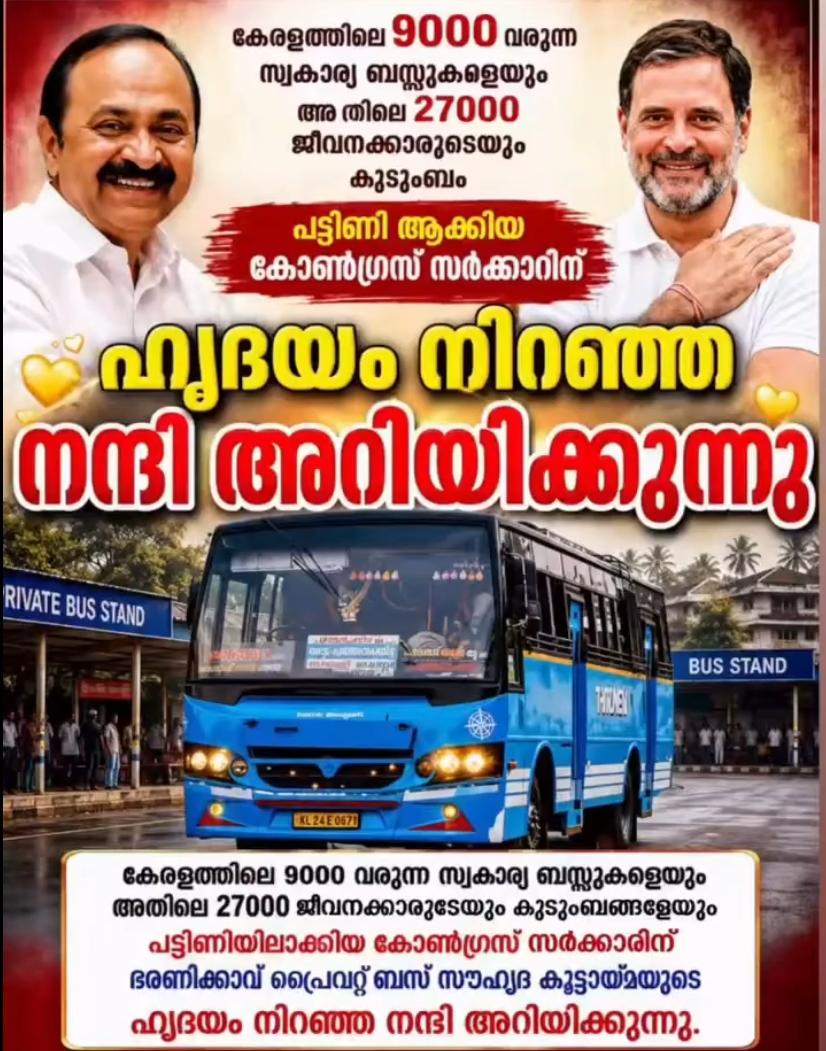
A poster mocking the UDF government.
The government has projected the initiative as a major step towards improving women’s mobility and reducing household expenses. Officials estimate that nearly five lakh additional women have shifted to KSRTC buses since the scheme was introduced.
For private bus operators, however, women have traditionally constituted the backbone of private bus ridership, particularly on short-distance and town routes. With free travel now available on KSRTC buses, operators say a substantial portion of their regular passengers has migrated almost overnight.
“When women in a family travel free on KSRTC buses, husbands and other family members also choose the same bus. So we are not losing one passenger. We are losing entire families,” said a senior office-bearer of a private bus operators’ association.
Transport Department figures indicate that the passenger shift has been significant on routes where KSRTC ordinary services and private buses operate in parallel.
In Pathanamthitta, many owners say their daily collections have fallen to less than half of what they earned before the scheme.
In Ernakulam, bus owners estimate daily losses of between ₹2,000 and ₹5,000 per vehicle, while operators in Kasaragod say some buses are losing nearly ₹3,000 every day.
Many say they are finding it difficult even to meet fuel expenses.
“Our buses are running, but every trip is adding to our losses,” said a bus owner from central Kerala. “There comes a stage when continuing the service becomes more expensive than stopping it.”
Following the implementation of the scheme, KSRTC has witnessed a surge in female ridership from around 10 lakh to nearly 15 lakh. The increase has resulted in an additional daily financial liability of approximately ₹2.5 crore for KSRTC.
However, according to information shared by Minister CP John in the Assembly, the initiative effectively transfers more than ₹7 crore in financial benefits directly to women every day by eliminating their travel expenses, thereby enhancing their disposable income, improving mobility and strengthening their economic participation.
Also Read: A.M.M.A. imbroglio: Court stays ad hoc panel’s functioning, Pisharody steps down
The financial strain has already begun affecting services.
Around 150 private bus owners have reportedly submitted G Forms seeking permission to suspend operations temporarily to avoid mounting liabilities. In Ernakulam district alone, nearly 30 buses have already stopped operating, and many more are expected to follow unless some form of financial support or operational restructuring is announced.
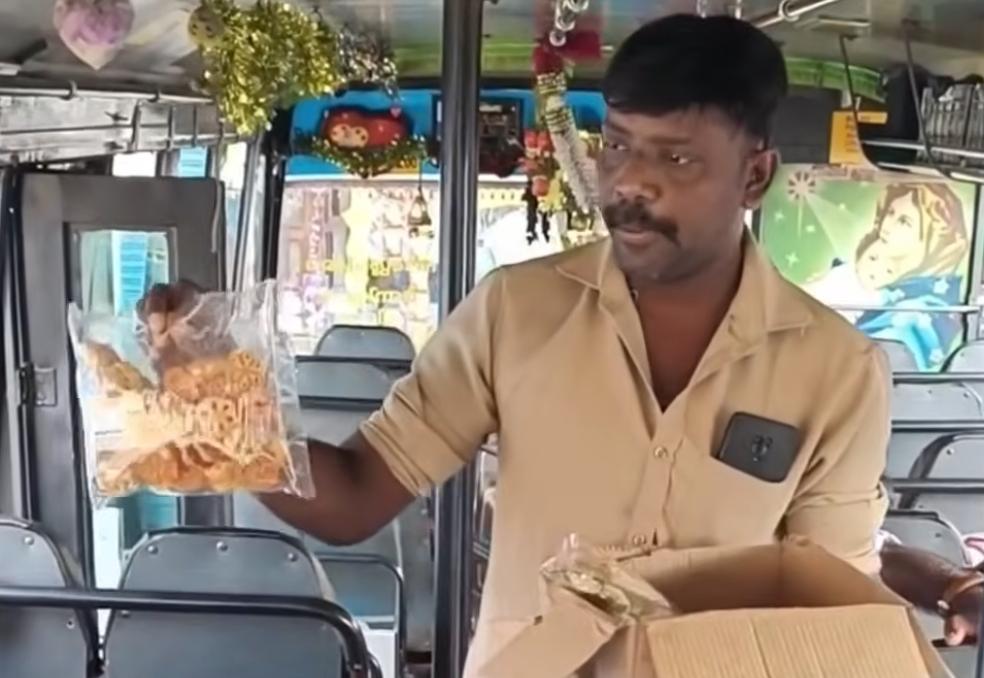
A private bus employee selling snacks inside a bus.
Some operators have even expressed willingness to lease their buses to KSRTC if independent operations become financially unviable.
“We are not against the free travel scheme,” a representative of the operators’ association said.
“But if the government introduces a welfare programme that directly affects our livelihood, it must also come forward with a mechanism to protect those who are providing public transport.”
The Transport Minister himself acknowledged in the Assembly that many private buses were suffering daily revenue losses ranging from ₹1,500 to ₹2,500 after the implementation of the Priyadarshini scheme.
“The issue has been taken seriously and appropriate measures will be examined after careful consideration,” CP John said.
He also maintained that the government does not view private bus operators merely as businessmen but as stakeholders who shoulder a substantial portion of Kerala’s public transport network.
The government has attempted to soften the blow by reducing the quarterly motor vehicle tax for private buses by 50 percent.
But operators dismiss the concession as inadequate.
The annual benefit works out to roughly ₹50,000 per bus, translating to little more than ₹130 a day.
“When our daily loss is between ₹2,000 and ₹3,000, how does a saving of ₹130 solve the problem?” asked an office-bearer of the Kerala Private Bus Operators Federation.
According to bus owners, the concession barely offsets a fraction of the losses caused by declining passenger numbers.
The growing unrest prompted a joint meeting of private bus operators, auto-taxi unions and tourist vehicle associations in Thiruvananthapuram, which decided to convene a larger convention on 6 July to finalise plans for a statewide motor strike.
Leaders insist their protest is not against women receiving free travel.
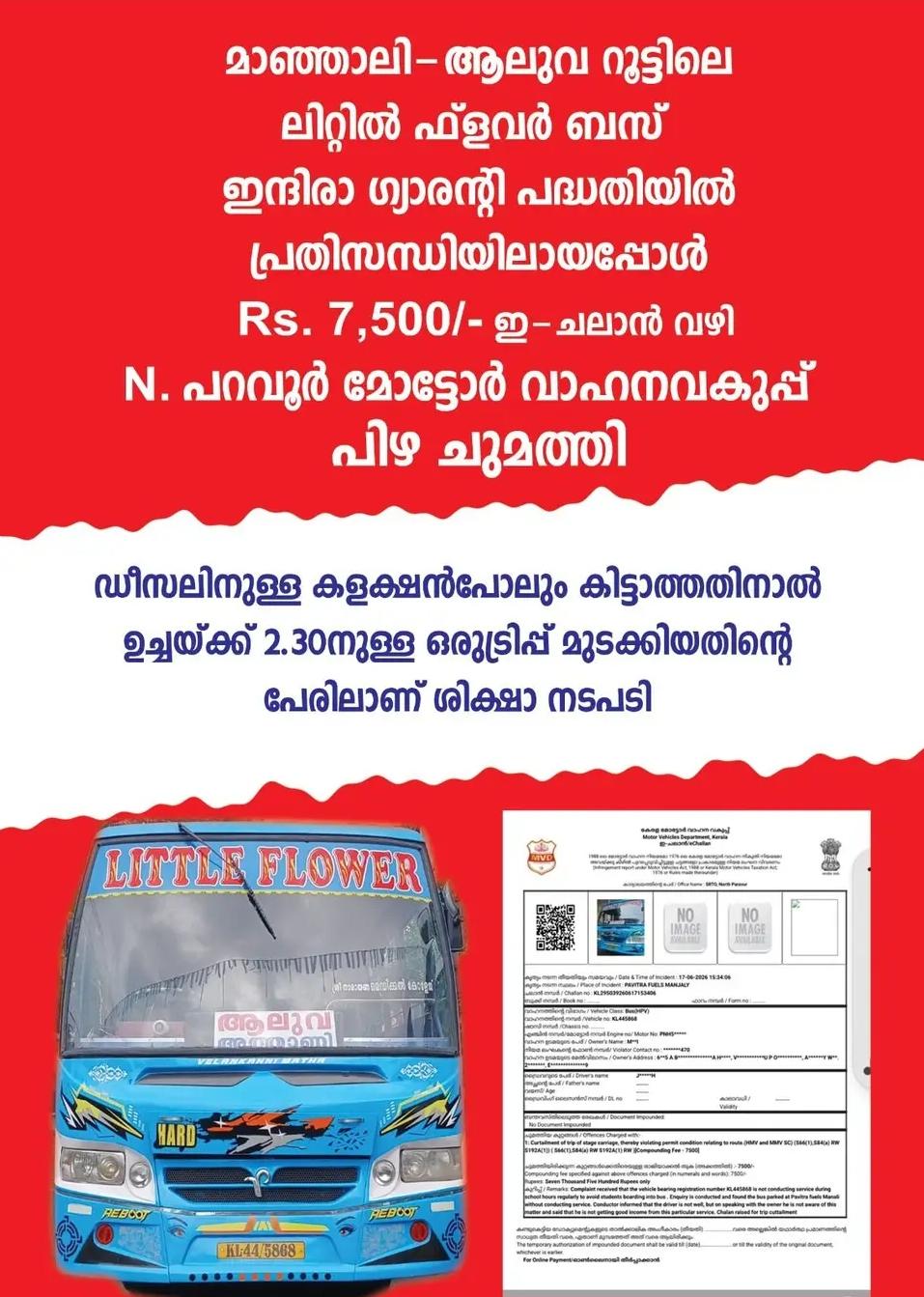
A poster that protests against the MVD decision to fine a private bus for cancelling a trip.
“Our objection is not to the scheme,” said TG Gopinathan of the All Kerala Bus Operators Organisation.
“The government has every right to introduce welfare measures. But it cannot ignore the financial consequences for another segment of the public transport system.”
The Bus Operators Federation Central Committee has also announced a six-day relay dharna in front of the Secretariat from 20 to 25 July, demanding urgent government intervention to safeguard the sector.
The relay dharna will see bus operators from districts across the state participate in phases, with different district units leading the protest each day.
The Federation said the protest is intended to draw the state government’s attention to what it describes as an unprecedented crisis confronting the private bus industry. Operators have been urging the government to introduce measures to offset the impact of the Priyadarshini scheme, contending that the absence of a level playing field between private buses and KSRTC has pushed many services into financial uncertainty.
The associations are demanding meaningful compensation, route rationalisation and discussions on services where KSRTC and private buses operate simultaneously.
Also Read: Interview: Beyond dispatched passport — R Rajagopal questions policy failing lakhs of citizens
Facing mounting pressure, the state government has initiated a series of measures to assess the extent of the problem and explore possible remedies without altering the flagship welfare programme.
Transport Minister CP John on 3 July said the government would undertake a detailed exercise to identify routes where Kerala State Road Transport Corporation (KSRTC) services and private buses operate simultaneously. The move comes amid sustained protests by private bus operators, who allege that the free travel scheme for women and transgender persons has severely affected their passenger base and pushed many services into financial distress.
Addressing reporters, the minister said the impact of the scheme was not uniform across the state and cautioned against generalising its effects.
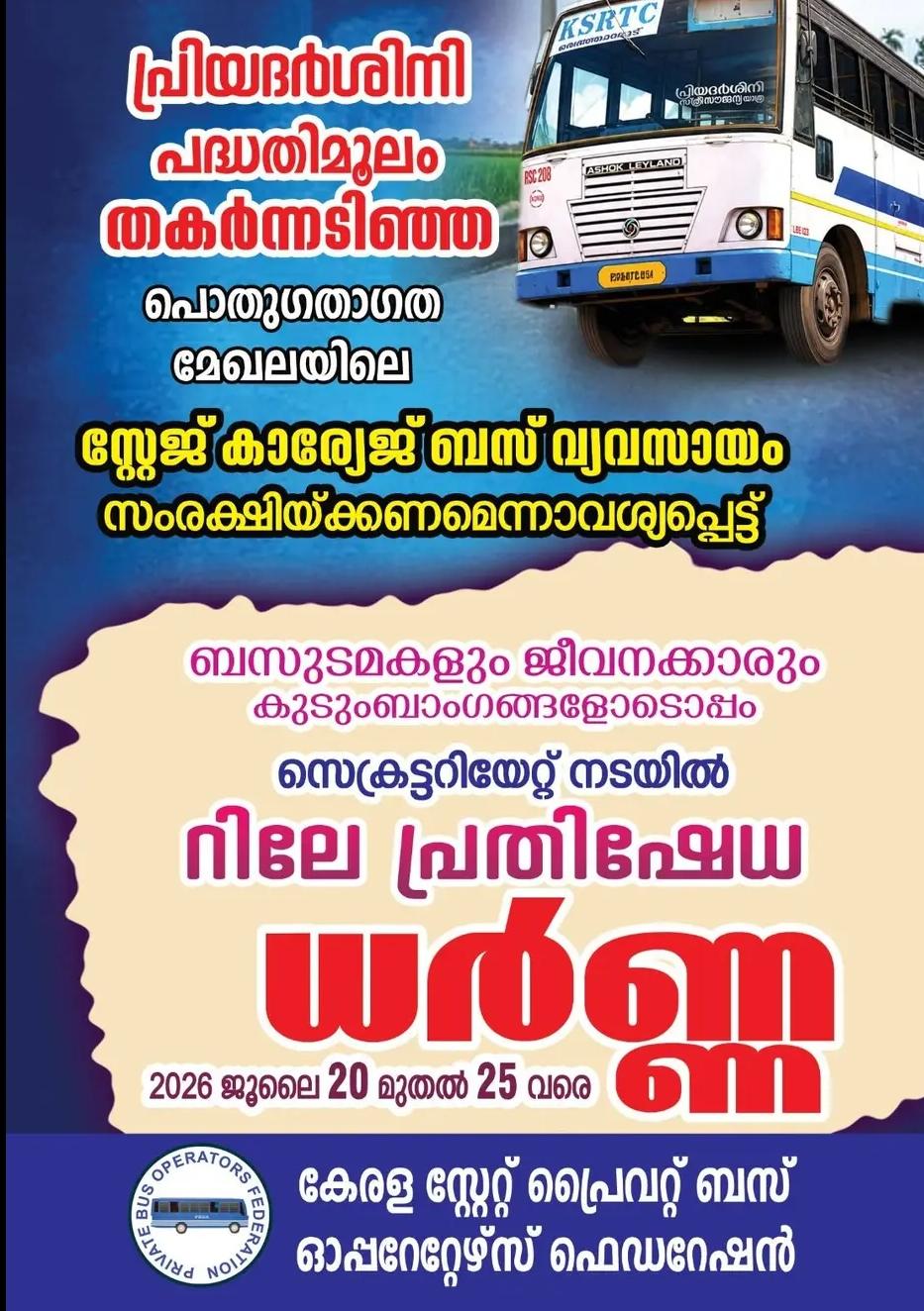
A protest poster
“There are around 8,000 private buses operating in Kerala. The difficulties are not being experienced by all operators because there are several routes where KSRTC services are either absent or minimal. The issue is largely confined to routes where both KSRTC and private buses are competing for the same passengers,” he said.
According to John, the government had already begun examining the issue following discussions at the highest level. He said he had taken up the matter with Chief Minister VD Satheesan and also held a meeting with the Transport Commissioner.
Following these discussions, the government has decided to prepare a comprehensive mapping of overlapping routes across the state.
“The Chief Minister has granted permission for the exercise. We will identify the routes where KSRTC and private buses operate in parallel and where private operators have suffered because of the overlap. Only after such an assessment can an appropriate course of action be considered,” the minister said.
While private bus organisations have threatened an indefinite strike if the government fails to intervene, John made it clear that they were free to pursue democratic forms of protest.
“If they wish to stage protests, they have every right to do so,” he said.
The route-mapping exercise is expected to become the first official attempt to systematically assess whether the expansion of KSRTC ordinary services under the Priyadarshini scheme has had a measurable impact on private operators in specific corridors.
Also Read: Operation Toofan nets ₹30 crore worth of drugs in first month, over 5,700 arrested
The state government has decided to constitute an expert committee to undertake a comprehensive study of the Priyadarshini scheme and its wider implications for Kerala’s public transport sector.
The panel has been entrusted with examining the implementation and progress of the free travel programme while also evaluating complaints raised by the private bus industry regarding declining passenger numbers and mounting financial losses.

From a viral AI video that mocks Minister C P John’s call for alternate income
Government sources indicated that the committee would analyse operational data, study passenger movement and assess the economic consequences faced by private operators since the introduction of the scheme. Its findings are expected to guide the government’s future policy decisions.
Alongside the study, the government has also initiated direct engagement with stakeholders. A meeting with representatives of private bus owners has been scheduled for 13 July to discuss the challenges confronting the sector and hear their demands before any decisions are taken.
The latest initiatives follow assurances made by Chief Minister VD Satheesan during the discussion on the Finance Bill in the Assembly on 1 July.
The Chief Minister said that the private bus sector forms an integral part of Kerala’s public transport network and said the government was conscious of the hardships being faced by operators and employees.
He recalled that representatives of the private bus sector had highlighted their concerns during the preparation of the government’s election manifesto and said their role in ensuring public transport connectivity could not be overlooked.
“Private bus employees are part of Kerala’s public transport system. They are rendering an important public service,” the Chief Minister had said.



