

Published Jul 03, 2026 | 5:12 PM ⚊ Updated Aug 10, 2026 | 11:16 AM

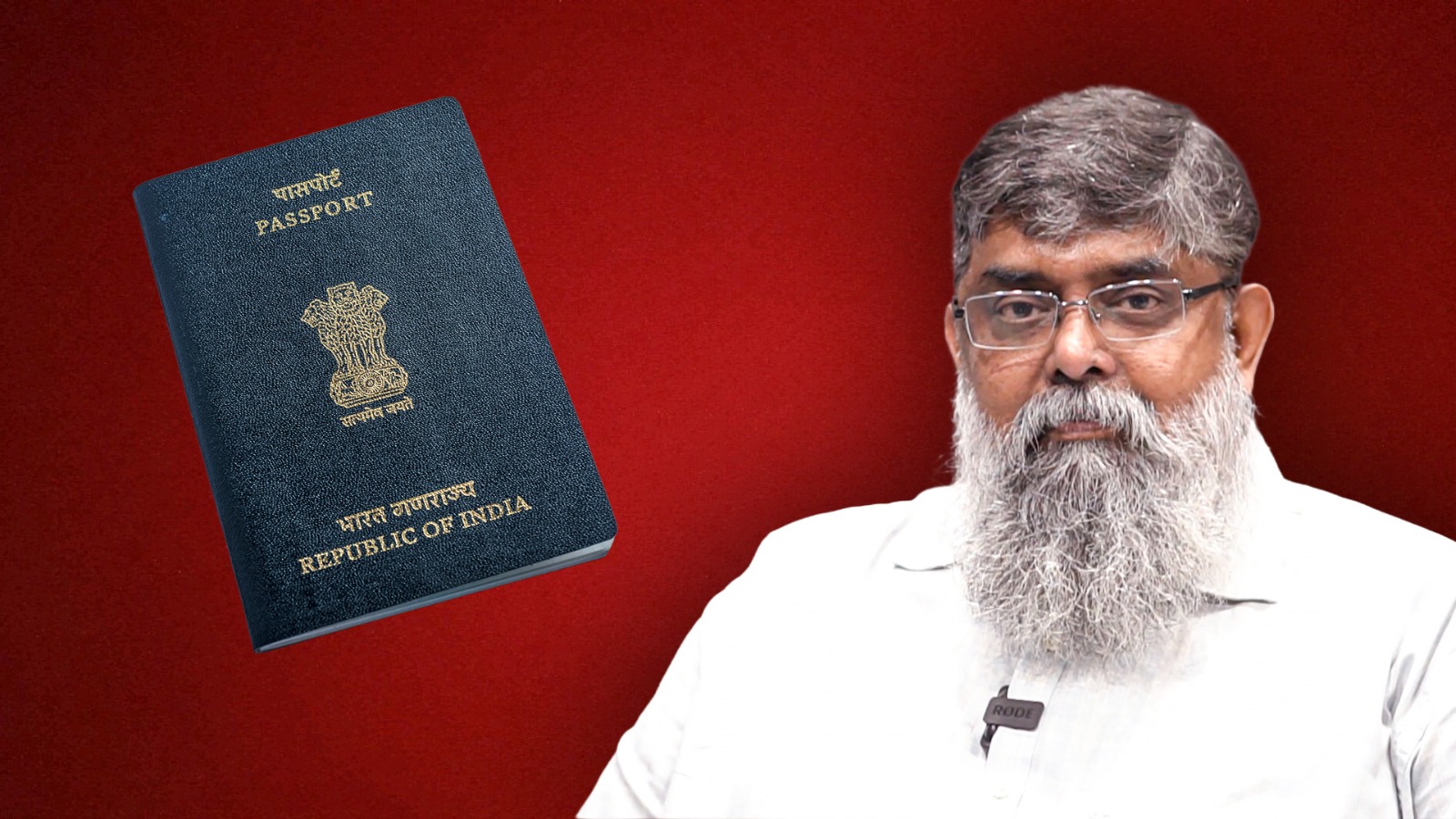
Former Editor of The Telegraph, R Rajagopal, has received an SMS, saying his renewed passport has been despatched.

Synopsis: R Rajagopal had spent much time checking his voting rights appeal status and then the passport tracker, so that it became a part of the morning routine for the former Editor of The Telegraph. On the 100th day, he spoke about the travails of an Indian editor, who has ceased to exist on the voters’ list following the contentious Special Intensive Revision (SIR). The West Bengal Police had sent an adverse report to the passport authorities, who refused to renew his passport, effectively preventing him from being by his daughter’s side on her big day — her wedding — in San Francisco on 17 April. The question now is not about a passport; it’s about lakhs of Indians forced to live in an almost perpetual state of uncertainty in their own country.
Former Editor of The Telegraph, R Rajagopal, is mighty cautious. He has received an SMS informing him that his renewed passport has been despatched and he may track it on the Speed Post tracker. He will confirm that his passport has been renewed only after it reaches his hands.
In conversation with South First, Rajagopal explained why the issue has gone far beyond his personal experience, arguing that it reflected deeper policy failures affecting lakhs of citizens. He also spoke about the hardships caused by the Election Commission of India’s SIR exercise and the media’s crucial role in highlighting such actions.
Q: Finally, your passport has been despatched. What is your feeling now?
A: I received an SMS saying my passport has been despatched and that I can track it through the Speed Post tracker. I saw it only now. I will confirm once I get it in hand. Hopefully, it will happen tomorrow.
At one stage, even the police indicated that renewal would be difficult and that there was little possibility of it going through. So, naturally, I am relieved.
But I don’t see this as a personal victory.
My concern has never been only about my passport. Every year, thousands of people apply for passport renewals. No citizen should face unnecessary hardship because of confusion over an electoral exercise. A simple policy can prevent a great deal of anxiety and make the entire process smoother.
Related: Indian Editor on travails without voter ID and passport
Q: Your case triggered a wider debate on the SIR. What remains the biggest concern?
A: The biggest problem is the lack of policy clarity. The SIR was introduced as an exercise to revise electoral rolls. It was the stated objective. But gradually, its consequences extended far beyond elections.
People deserve to know where the boundaries are.
If an exercise is meant only to update voter lists, it should not suddenly start affecting other areas of public life without a clearly explained legal basis.
Q: You have repeatedly questioned the idea of “logical discrepancy.” Why?
A: I questioned it because nobody has properly explained what it actually means. There has been no authoritative illustration of how such discrepancies are determined.
In India, names are often written in multiple legitimate ways, especially when they are transliterated into English. A spelling variation does not automatically mean two identities are different. Using such inconsistencies to cast doubt on a person’s identity can lead to serious injustice.
Q: You have also criticised the documentation requirements. What troubles you about that process?
A: The system appears to assume that every citizen has preserved perfect records across generations. That’s not how India works.
Many people have lived through floods, river erosion and other disasters. Poor families often prioritise saving their lives and livelihoods over preserving old papers. Some leave important documents with relatives or employers for safekeeping.
These are everyday realities that any humane system should recognise.
A process that functions mechanically without considering such circumstances risks becoming insensitive to the lives of ordinary people.
Q: Your experience involved tracing old family records. Did that change your perspective?
A: It reinforced my belief that documentation is often messy, though it is no fault of citizens. Older records contain clerical mistakes, missing names and spelling errors. Correcting them decades later requires enormous effort, legal procedures, travel and expense.
If someone who has spent a lifetime studying, working and travelling with officially accepted documents has to struggle like this, one can imagine the difficulties faced by people with fewer resources.
Related: ‘Display common sense’: Editors Guild of India to ECI
Q: You have described the issue as an “expanding loop.” Could you explain?
A: The concern is that an exercise introduced for one limited purpose gradually begins influencing unrelated areas.
Today, the discussion is about passports. Tomorrow, it could involve some other public service. Citizens need certainty.
Rules should not keep changing after people have already complied with one set of requirements. Policy cannot become a moving target.
Q: Do you believe this creates a wider atmosphere of uncertainty?
A: Certainly. When people are unsure which document will be accepted tomorrow, they remain in a constant state of anxiety.
Instead of focusing on issues such as employment, inflation or the cost of living, they begin worrying about whether their identity documents will continue to be recognised. It is unhealthy for any democracy.
When governments do not provide clear policy direction, speculation naturally fills the vacuum. People begin imagining consequences because they do not know where the process will end.
Q: Some argue that stricter verification is necessary to identify illegal immigrants. How do you respond?
A: If there is credible evidence that someone is living in the country illegally, the law should take its course. Nobody disputes that.
But that does not justify treating every citizen as a suspect.
Verification should be targeted and evidence-based. Ordinary people should not be subjected to endless hurdles simply to prove that they belong in their own country.
Q: Even after your passport appears to have been cleared, what remains your biggest concern?
A: My passport is in only one case. What matters far more is what happens to the large number of ordinary citizens who may find themselves in similar situations in the future.
This should never become a story about me.
The real issue is whether public policy remains transparent, predictable and fair.
If a simple clarification can ensure that people are not harassed unnecessarily while accessing essential services, then that would be a far more meaningful outcome than the resolution of any one individual’s case.
(Edited by Majnu Babu).



