

Published Jun 10, 2026 | 3:05 PM ⚊ Updated Jun 10, 2026 | 3:27 PM

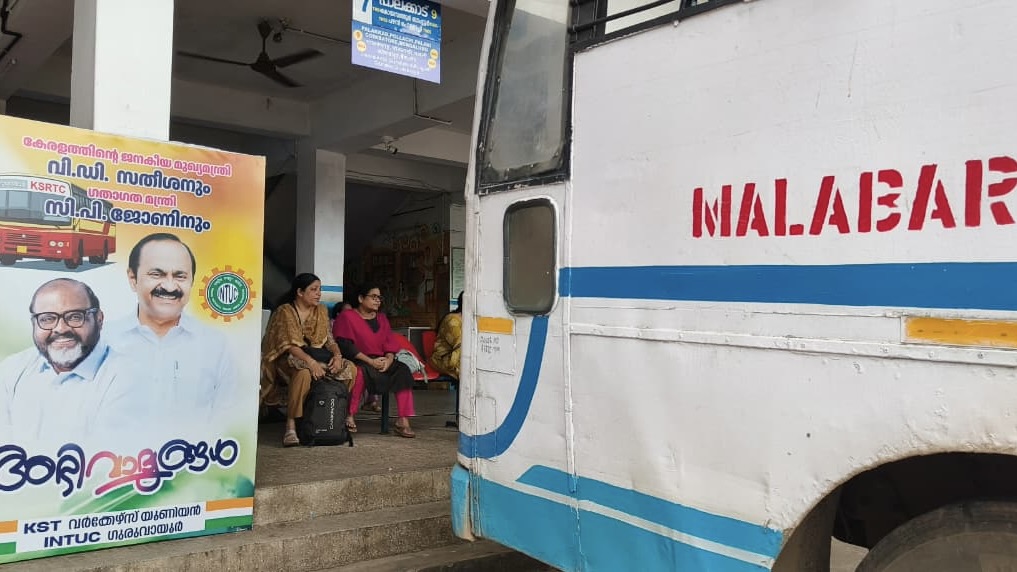
The government has assured KSRTC that it will fully compensate the corporation for the anticipated revenue loss.

Synopsis: Women and transgender persons in Kerala will be able to travel free on KSRTC ordinary buses from 15 June under the State government’s Priyadarshini scheme, with the government promising to fully compensate the transport corporation for the resulting revenue loss. While the move has been welcomed as a step towards greater inclusion, some have raised concerns about the availability, reliability and frequency of ordinary bus services across the State.
Women and transgender persons in Kerala will be able to travel free of cost on Kerala State Road Transport Corporation (KSRTC) ordinary buses from 15 June under the State government’s Priyadarshini scheme, the first major welfare initiative rolled out under the Congress-led UDF government’s Indira Guarantee programme.
Announcing the decision after the Cabinet meeting, Chief Minister VD Satheesan said the next six months would be used to identify measures to improve KSRTC’s revenue and strengthen its financial sustainability while implementing the scheme.
The government has assured KSRTC that it will fully compensate the corporation for the anticipated revenue loss, estimated at around ₹800 crore annually.
The government has also indicated that the initiative, initially limited to ordinary services, could be reviewed after the first 100 days, with the possibility of extending the benefit to fast and superfast services at a later stage.
The decision follows a series of high-level discussions involving Transport Minister CP John, Finance Department officials and KSRTC authorities. The government has maintained that the financial burden of the scheme will not be transferred to the transport corporation.
Also Read: Why free bus travel for women is good for Kerala
The announcement has evoked mixed responses, with some expressing concerns over the availability and reliability of KSRTC ordinary services across the State.
“As someone who depends on public transport often, my concern is how many ordinary bus services are actually available in Kerala and how many of them are in working condition,” Advocate Padma Lakshmi, a transgender lawyer practising at the Kerala High Court, told South First.
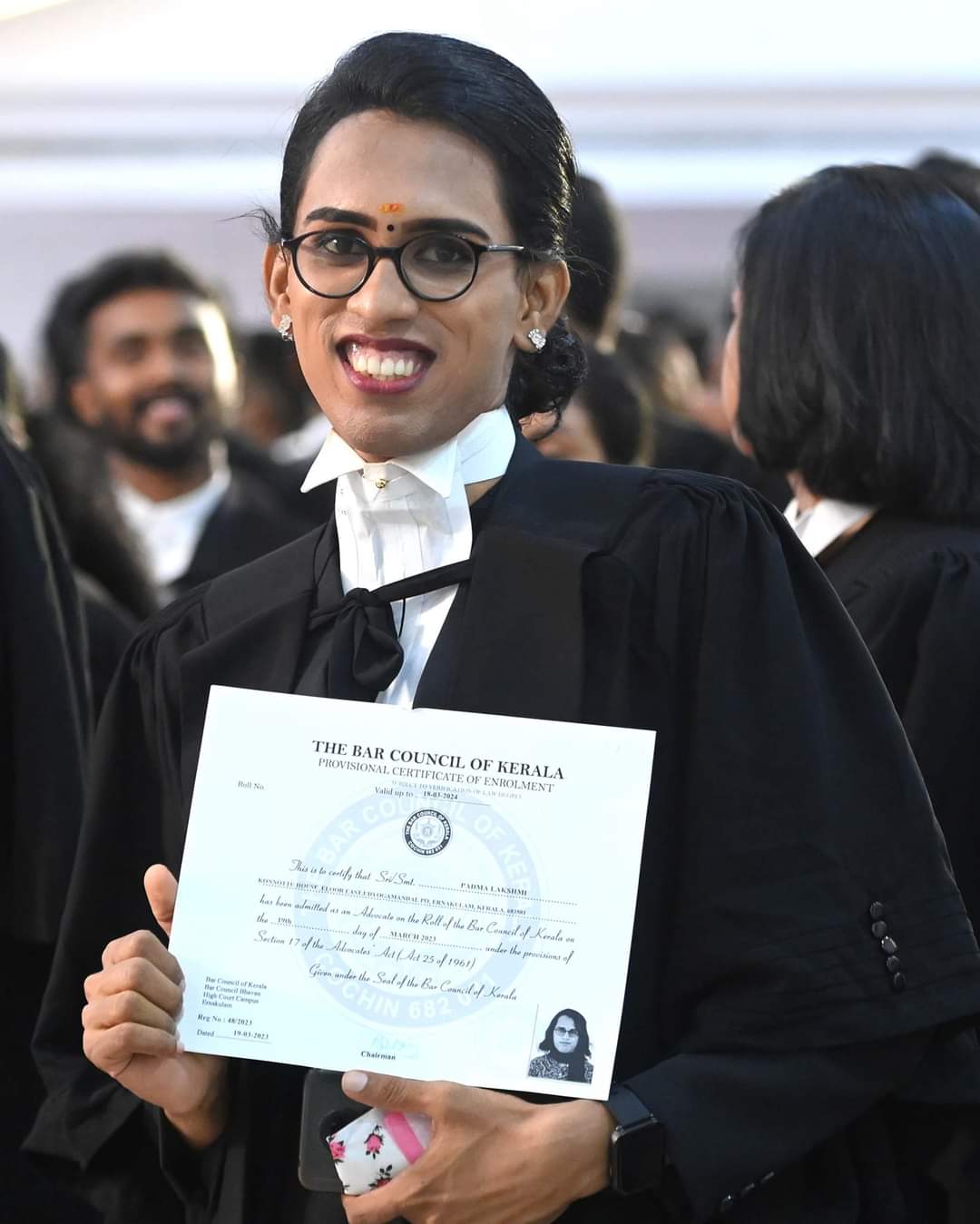
Padma Lakshmi is Kerala’s first transgender lawyer. (Supplied)
Padma Lakshmi stressed that awareness and sensitisation should go hand in hand with welfare measures.
“Inclusivity is always welcome, but even today many transgender persons cannot confidently depend on public transport because they fear bullying. I have personally faced such experiences while travelling in a lawyer’s suit, so one can imagine what others are going through,” she said.
“Along with inclusivity, there should be efforts to create awareness. Women should feel comfortable, and so should we. Public transport is a shared space, and awareness is necessary to ensure dignity and safety for everyone. Other sexual minorities also deserve benefits like this.”
Also Read: Heritage slayers? Many moves to strip Lakshadweep of its identity, land, language and culture
Smitha Gopal, a KSRTC conductor at the Kottayam depot, welcomed the government’s decision and said that limiting the scheme to ordinary services was the right approach for now.
“Ordinary buses are enough at this stage because extending the benefit to fast and superfast services would create a huge financial burden. At the Kottayam depot, one of the largest KSRTC depots in Kerala, there are around 22 ordinary bus services. Most depots have fewer than 30 buses operating as ordinary services, and these buses mainly serve villages and interior routes,” she told South First.
According to her, the larger challenge lies in maintaining service frequency and reliability.
“When there is a staff shortage or a mechanical issue, ordinary services are usually the first to be affected. We cannot cancel fast and superfast services, so sudden cancellations of ordinary buses are common. However, this can gradually be addressed by increasing the number of services. Many fast passenger buses are not in good condition and could instead be converted into ordinary services, which generally cover shorter distances,” she said.
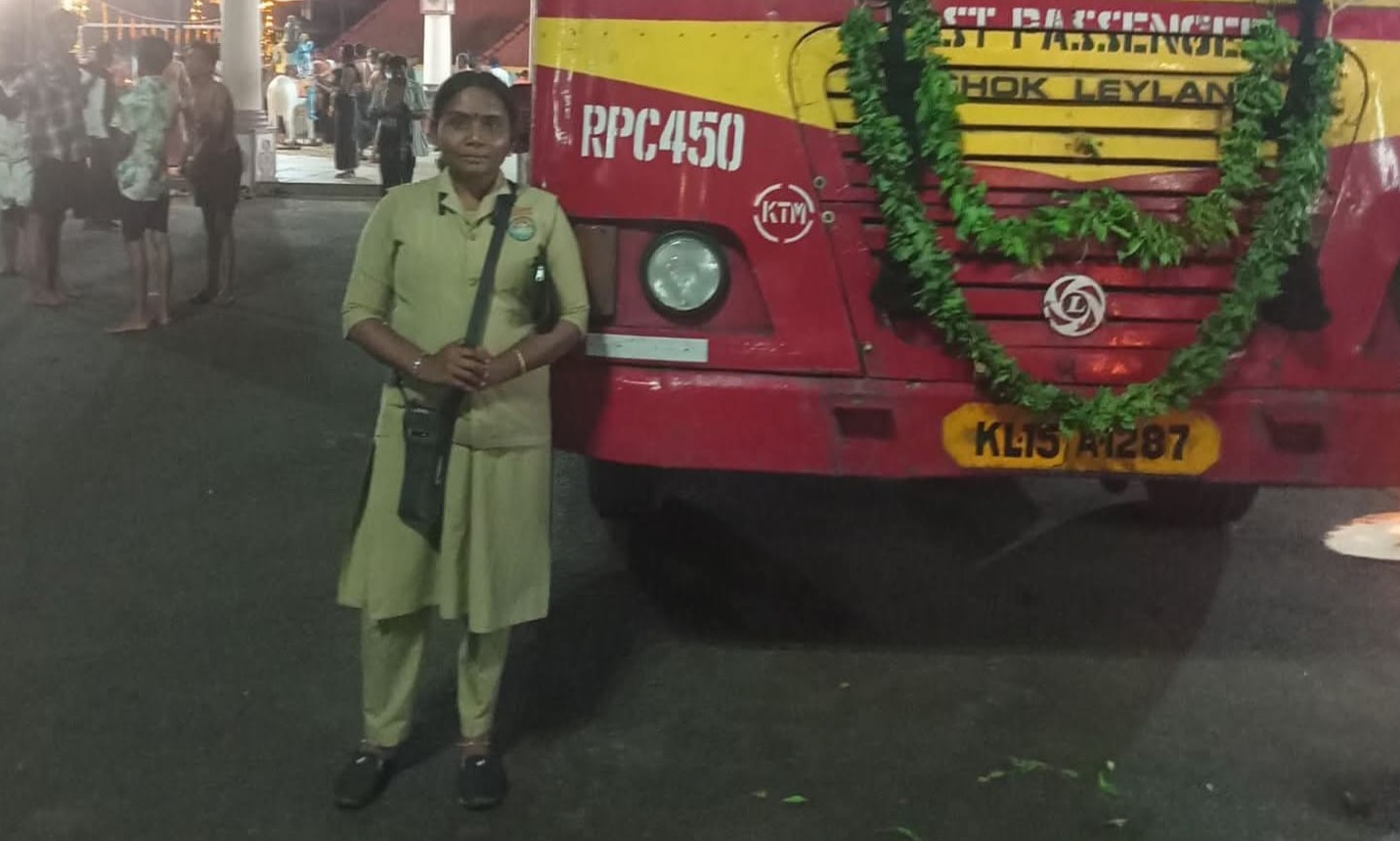
Smitha Gopal
She also highlighted the need to schedule more ordinary services during peak travel hours to match the commuting patterns of working women.
“I am currently working on the Kottayam–Tenkasi service, where a ticket costs around ₹184. If routes like these become free in the future, the financial loss will be significant, especially when KSRTC is already functioning with government support,” she added.
Meanwhile, private bus operators have also raised concerns, fearing they could lose a significant portion of their passenger base.
Speaking to South First, Vinod Mathew, a private bus driver in Kochi, said operators were uncertain about how the policy would affect them.
“Private buses usually charge ₹3 to ₹4 less than KSRTC ordinary services to retain our regular passengers, many of whom are women. We do not know how the government plans to compensate for the losses we may face. Many operators are already struggling due to financial losses, and there is no guarantee regarding our jobs if passenger numbers fall sharply,” he said.



