
Published Jun 06, 2026 | 8:00 AM ⚊ Updated Jun 06, 2026 | 9:50 AM

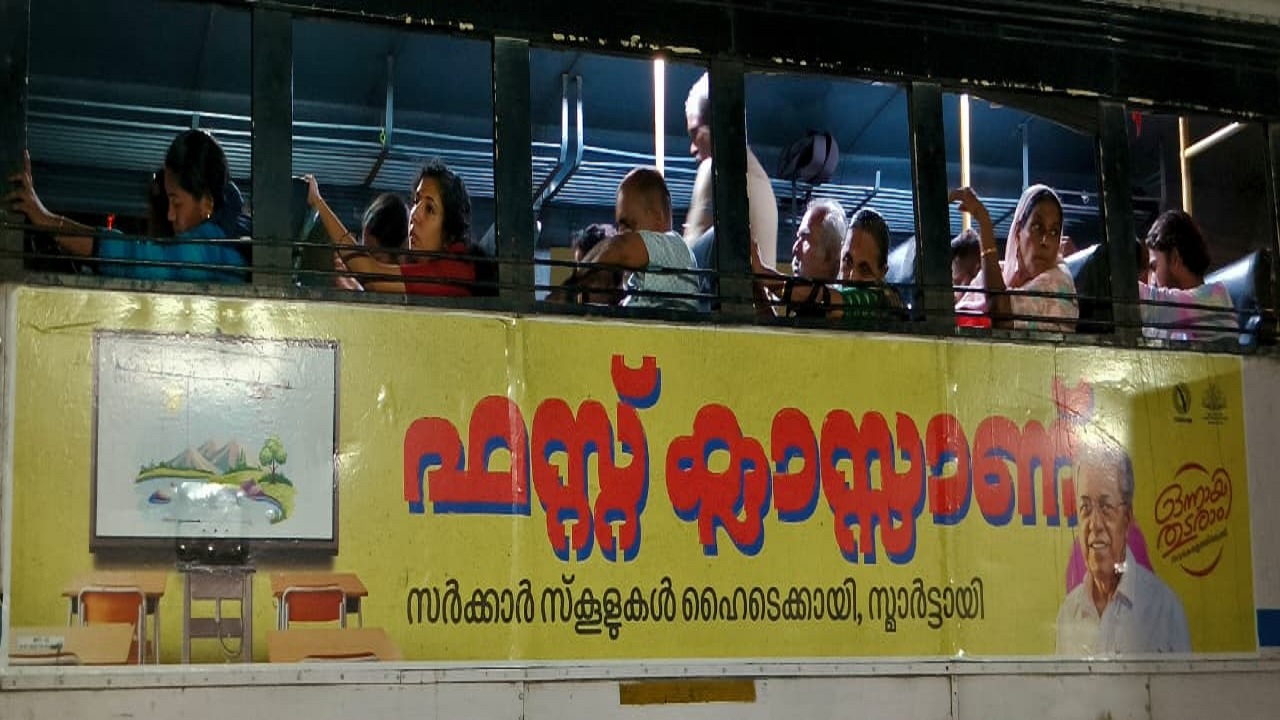
Like women in neighbouring Tamil Nadu and Karnataka, women in Kerala too will gain from free bus travel

Synopsis: Free travel for women might not be perfect. But as the facts below show, a Kerala where poor women can move freely is a Kerala that moves forward—for all of us.
You might not use a KSRTC (Kerala State Road Transport Corporation) bus. You might drive a car, two-wheeler or even walk to work. When you hear that the government is launching free bus travel for women (from June 15), your first thought could have been: “Why should my taxes pay for someone else’s ride?”
That’s a fair question. But here’s what the evidence from Tamil Nadu and Karnataka tells us: free bus travel for poor working women doesn’t just help them—it helps the whole state, including you.
In Tamil Nadu, women using free bus travel saved an average of ₹888 per month. That’s 11–14 percent of their income.
For a daily wage worker, a street vendor, or a domestic helper, that ₹888 is not pocket money—it buys groceries, pays school fees, or buys medicine. Every rupee saved on bus fare is a rupee spent in the local economy. When poor women spend more on food, vegetables, and children’s education, it benefits the chaaya kada, the vegetable vendor, and the small grocery shop near you.
Kerala already has higher female workforce participation than the national average. But many women still stay home because the cost of daily bus travel (₹40–₹60 per day) adds up to more than they can afford.
Free travel removes that barrier. In Tamil Nadu, women reported starting small vending businesses, travelling to markets, and even taking up new jobs they wouldn’t have considered before. A woman who works and earns is a woman who doesn’t have to ask her husband or son for money for every small need. That reduces household stress—and benefits the whole family.
You might be thinking: “More buses, more congestion.” But the opposite happened in Bengaluru under the Shakti scheme. While bus ridership shot up, the scheme did not crowd out paying passengers.
In fact, if more women switch from walking or being dropped by family members to taking the bus, it means fewer two-wheelers and cars on the road during peak hours. That means less traffic for you. The fewer women your neighbour has to drop to the bus stop, the less fuel he burns and the faster he reaches his own workplace.
Critics often say free travel is a waste. But Karnataka’s data shows that the subsidy cost is actually quite modest—for every rupee collected from paying passengers, the government pays only slightly more than one rupee to cover women’s free travel. That’s a small price for getting more women into education, jobs, and healthcare.
A working woman earns more, spends more in local markets, and raises healthier children who will become productive adults. The government gets that money back many times over.
Also Read | Ground Report: Do women in Kerala need free travel in KSRTC buses?
Think of the women who clean your office, sell fish in the market, work in small shops and large stores, or care for elderly neighbours. Many of them are poor. Many of them are from marginalised communities.
They wake up at 4 am, travel long distances, work hard, and return home exhausted. For them, saving ₹30–₹50 a day on bus fare is not a luxury—it’s survival. Free travel says to them: “We see you. We value you. You deserve to keep that money for yourself and your children.” That is not charity. That is justice.
This is a real concern in Kerala, where private buses carry most passengers. But the lesson from other states is clear: exclude private buses, and you create a two-tier system that hurts everyone.
The government must compensate private operators or extend the subsidy to them. That is a design problem—not a reason to abandon the idea. Done right, free travel can be implemented without destroying livelihoods.
You may never board a free bus. That’s fine. But every day, you see women waiting at bus stops, walking long distances, or sitting cramped in overcrowded private buses. Free travel will not solve all their problems. It will not fix overcrowding overnight, nor will it magically create last-mile connectivity. But it will remove one huge, daily barrier—cost.
And when that barrier falls, everyone gains. The woman who saves ₹800 a month buys more from your local shop. The woman who takes up a new job pays more taxes. The woman who can now visit a private doctor costs the public health system less. The woman who doesn’t have to beg her husband for bus fare lives with more dignity—and dignity is contagious.
So. be optimistic. Not because free travel is perfect, but because the evidence shows it works. And because a Kerala where poor women can move freely is a Kerala that moves forward—for all of us.
Also Read | Promise vs practicality: Free bus travel for women becomes acid test for UDF in Kerala



