

Published Apr 24, 2026 | 7:00 AM ⚊ Updated Apr 24, 2026 | 7:00 AM

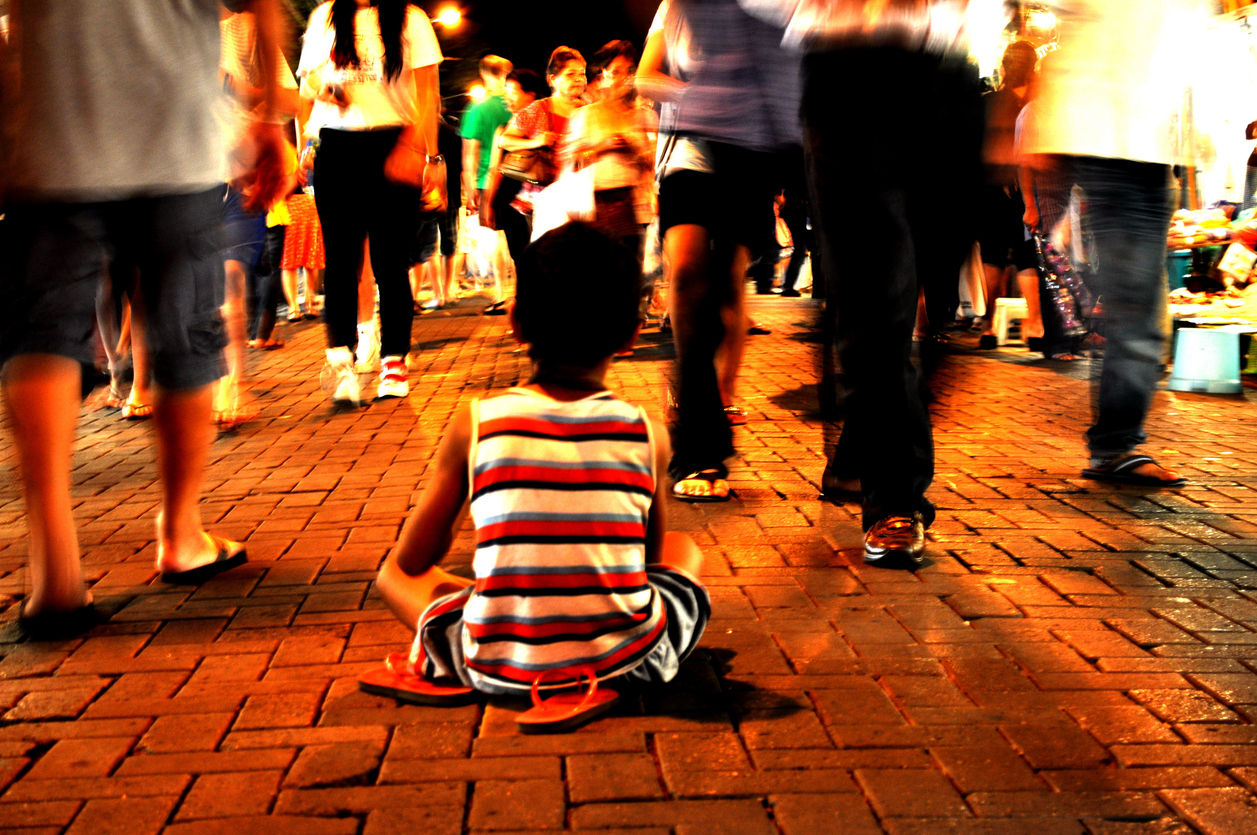
Representational image. Credit: iStock

Synopsis: Kerala has finally rolled out a long-delayed policy aimed at protecting and rehabilitating children living on its streets. The real challenge now is whether these promises will translate into meaningful change in the everyday lives of children still growing up on the margins.
After four years of drift and delay, Kerala has finally put on paper what many activists had been pressing for all along—a dedicated policy for children who live and grow up on its streets.
The move follows a nudge that was harder to ignore: the Supreme Court of India stepping in on its own to flag the precarious lives of Children in Street Situations (CiSS) and asking states to act, with guidance from the National Commission for Protection of Child Rights.
What emerged this March is the Kerala State Policy for Children in Street Situations (KSPCISS), a document that has been a long time coming. The idea itself wasn’t new. As far back as February 2022, a meeting led at the Chief Secretary level had agreed on the need for such a framework. Then, silence. And now, in 2026, the policy has surfaced—late, but not insignificant.
At its core, the policy leans on a simple assertion: no child should fall through the cracks because of where they are born or where they end up. It places responsibility squarely on the State, promising protection from violence, neglect and exploitation, while also pushing for access to education, healthcare, and justice systems that often remain out of reach for children on the margins.
Also Read: Between belief and branding: Non-veg Vishu ads spark cultural fault lines in Kerala
The phrase “street child” carries a history of its own.
It emerged in the 1980s and was later adopted by the United Nations Commission on Human Rights to describe children for whom the street becomes both home and livelihood, often without meaningful adult care.
India, however, never formally defined the term in law.
Instead, officials point out that, the Juvenile Justice (Care and Protection of Children) Act, 2015 folds such children into a broader category—“children in need of care and protection” (CNCP). This includes those without shelter, those working or begging on the streets, children abandoned by families, or those left without support due to illness or disability.
Across the country, three distinct patterns tend to emerge.
Some children live entirely on their own, cut off from families, surviving through odd jobs or begging. Others drift between the street and home—working or loitering through the day before returning to fragile households at night. Then there are those who never really leave the street at all, growing up alongside parents who live and work in public spaces.
In Kerala, officials with the Women and Child Development Department point out that, it is this last group that dominates the landscape.
The state rarely sees large numbers of children living completely alone or spending entire days unsupervised in public spaces. Instead, most children in street situations are part of migrant or economically displaced families.
Entire households live under bridges, along railway edges, in open public spaces that offer neither privacy nor protection. Many have travelled long distances, chasing work that arrives in bursts—construction sites, daily-wage labour, informal trades. When the work pauses, life spills back onto the street.
That doesn’t make them any less vulnerable.
Living in plain sight, yet largely unnoticed, these children navigate a life where school is irregular, safety uncertain, and opportunity thin.
Earlier, a UNICEF report titled ‘Study of Children in Street Situations in India’ flagged a troubling reality.
Across the developing world, children living on the streets form a significant yet invisible population, facing heightened risks of sexual abuse, exploitation and violence. Reliable recent data remains scarce, but trends point upward—driven by rapid population growth and uneven development. The report highlighted that the COVID-19 pandemic only deepened their vulnerability, pushing more families into distress and leaving children exposed.
Often overlooked by institutions meant to protect them, these children struggle without basic needs—safe shelter, clean water, sanitation, education, or healthcare. The lack of focused research, the report stated, further complicates matters, making it harder to design policies or programmes that actually reach them and respond to the scale of the crisis.
Also Read: ‘100% literacy, saar!’: How Kerala’s Ernakulam rewrote India’s education map
The push for Kerala’s policy on children in street situations did not emerge in isolation.
It traces back to a sharp nudge from the Supreme Court of India, which stepped in on its own motion after disturbing accounts of children surviving without shelter, care, or protection across Indian cities.
In early 2022, the Court made it clear that the issue could no longer be treated as an administrative afterthought.
It asked every state and union territory to act—quickly, and with intent.
At the centre of this directive was a framework prepared by the National Commission for Protection of Child Rights, laying out how children on the streets should be identified, rescued, and rehabilitated.
The urgency was hard to ignore.
Estimates suggested that between 15 and 20 lakh children were living in such conditions nationwide, exposed daily to abuse, trafficking, substance dependence, and illness. Many had no adult supervision; some had run away, others were abandoned, and a few simply slipped through the cracks of fragile family systems.
Kerala’s response—the draft policy now in focus—is an attempt to bring structure to what has long been a scattered effort.
Officials say it is not just about sheltering children temporarily. The emphasis has shifted to long-term rehabilitation: tracing families where possible, preparing individual care plans, and ensuring access to education, healthcare, and social protection schemes.
The court, during its hearings, had underlined a simple point that continues to echo through policy corridors: these children are not statistics. They are individuals with rights—constitutional and human.
Across the country, several states have already begun shaping their own approaches, aligning with the national framework.
Kerala’s move fits into that larger pattern, though the real test will lie beyond the paperwork—on pavements, railway stations, and crowded junctions where these children remain most visible, yet often unseen.
The framework aimed at children living in street situations has finally taken shape after four years of consultations and revisions.
The first push came in February 2022, when the Chief Secretary asked the Department of Women and Child Development to draft a plan focused on protection and rehabilitation.
What followed was a long stretch of consultations—departmental meetings, revisions, and cross-sector inputs that slowly broadened the scope of the proposal.
By late November 2024, the draft had reached the ministerial table.
Representatives from Finance, Home, Health, Local Self-Government, Education and other key departments weighed in, prompting another round of revisions.
The document did not remain static; it evolved through continued discussions, eventually returning in updated forms in 2025 and again in early 2026.
Now titled the KSPCISS, the framework lays out a layered approach.
It begins with early identification through community networks—anganwadi workers, field staff and NGOs—and moves quickly to intervention, including rescue and safe shelter.
The longer arc focuses on reintegration.
Family tracing where possible, school enrolment, vocational support, healthcare and psychological services all form part of the plan. For migrant and nomadic families, the policy also proposes temporary shelters and daycare options.
A digital backbone is built into the system through the Baal Swaraj portal, enabling case tracking and even citizen reporting.
Also Read: Ration crisis surfaces in Kerala’s only tribal panchayat, probe intensifies
Kerala’s approach to CiSS rests on vigilance, policy intent, and scattered success stories—yet one crucial piece remains unclear: how many such children actually live in the state.
Officials with the Women and Child Development Department admit the numbers are not readily available.
Still, the concern itself is not new.
The State Policy for Children, 2016 had already flagged child labour, begging, and street-linked vulnerabilities as persistent issues.
Much of it, the policy notes, stems from migrant children brought in from northern and eastern parts of India, often absorbed into tourism, small-scale units, or domestic work. In border districts, some children continue to be pushed into agricultural labour across state lines despite monitoring efforts.
On the ground, however, there is a sense that things are not as dire as elsewhere.
Anson PD Alexander, who heads Kanal NGO, points to South First a relatively alert public and responsive local administration.
Complaints rarely go unnoticed, he says, and interventions tend to follow quickly. He credits schemes like Sarana Balyam for identifying and rehabilitating children exposed to labour, begging, or abuse.
A few years ago, the sight of children being brought in for begging during peak pilgrimage seasons—especially around Sabarimala and Oachira—was hard to miss.
That pattern has since weakened. Targeted drives, including the Oachira Child Beggary Eradication Programme, appear to have disrupted those networks.
Yet officials are cautious about drawing comfort from isolated improvements.
The policy framework leans heavily on early identification—finding children before exploitation deepens. Plans include a statewide survey to map “hotspots,” along with efforts to bring such children into anganwadis and formal schooling.
There is also an emphasis on communication.
Outreach teams are being trained to navigate language barriers with migrant families, using visual tools and culturally familiar cues. Awareness campaigns—ranging from street plays to digital messaging—aim to nudge parents toward safer choices.
Also Read: Kerala BDS student death: Police book loan application over alleged harassment
Officials say the new framework recognises street life itself as a denial of basic rights.
Education slips away first. Nutrition follows. Safety becomes uncertain. What remains is a cycle that is hard to break without intervention that is both precise and persistent.
The policy leans heavily on identifying vulnerability, not in abstract terms but through lived realities.
Authorities are now expected to assess children across a wide spectrum—exposure to abuse, access to schooling, hunger levels, mental health, substance dependence, even the risk of trafficking or early marriage.
The idea is simple: unless the full picture is seen, rehabilitation remains partial.
Attention is also turning to geography.
Certain locations—railway junctions, markets, transit hubs—have been marked as “hotspots.”
These are not just places where children are found; they are spaces where risks cluster. Field-level inputs from NGOs, police and district units will guide targeted interventions in these areas.
Monitoring will no longer rely on scattered reports.
The Baal Swaraj portal, a national digital platform, is expected to anchor the effort. It allows real-time tracking of rescue and rehabilitation, giving administrators a clearer sense of what happens after a child is identified.
The Kerala State Commission for the Rights of the Child will oversee this process, reviewing data and flagging gaps.
There is also an attempt to fix a long-standing problem—departments working in silos.
A State Coordinating and Action Group is set to bring together officials from health, education, labour, police and local governance, alongside civil society actors. Quarterly reviews are planned, not as a formality but as a pressure point.
A formal review of the policy is scheduled after five years. By then, the state hopes the numbers will tell a different story—fewer children on the streets, and more within systems that protect rather than overlook.
For now, the challenge lies in turning intent into presence—on the ground, where these children still wait to be seen.



