

Published Jun 22, 2026 | 9:00 AM ⚊ Updated Jun 22, 2026 | 9:00 AM

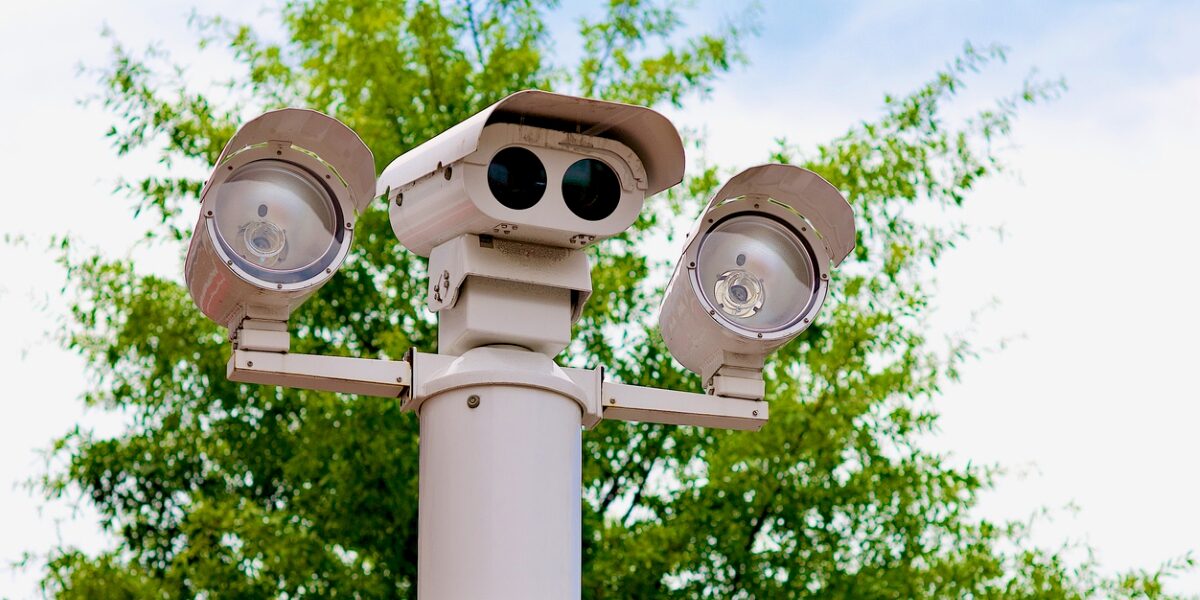
The Personnel and Administrative Reforms Department's report stated that surveillance at checkpoints was inadequate.

Synopsis: Kerala’s worsening fiscal stress has exposed a major enforcement gap in the Motor Vehicles Department. Interstate check-posts remain inactive for 16 hours a day, even as vehicle tax arrears have crossed ₹1,200 crore, enabling widespread evasion and revenue leakage. A government study has questioned the relevance of the existing check-post system and recommended replacing it with round-the-clock border enforcement.
Even as the state government is scrambling to shore up finances amid mounting fiscal stress, a startling official assessment has exposed how one of Kerala’s key revenue enforcement mechanisms has been operating with glaring gaps.
Interstate motor vehicle checkpoints, established to detect tax evasion and permit violations, remain inactive for nearly two-thirds of every day, raising serious concerns about revenue leakages at a time when vehicle tax arrears have crossed ₹1,200 crore.
The issue assumes significance as Chief Minister VD Satheesan, while presenting the Revised Budget 2026-27 on Friday, 19 June, announced the creation of a dedicated Tax Intelligence and Investigation Wing to plug leakages, strengthen compliance and crack down on tax evasion.
However, a recent government study suggested that some of the most basic enforcement systems were struggling to meet their objectives.
A Personnel and Administrative Reforms Department report submitted to the government on 9 June painted a troubling picture of weak tax recovery efforts, inadequate monitoring and ineffective enforcement within the Motor Vehicles Department.
The report said vehicle tax arrears in the state had crossed ₹1,200 crore, with more than 90 per cent of the outstanding amount linked to transport vehicles.
While the department has been conducting adalats and one-time settlement schemes to recover dues, the study found that follow-up measures in most offices remained far from satisfactory.
Also Read: Kerala white paper pegs state’s liabilities at Rs 5.07 lakh crore
The report’s most striking finding was about the functioning of Kerala’s interstate motor vehicle checkpoints.
Although most states have significantly reduced or discontinued physical checkpoint operations following the introduction of nationwide online systems for vehicle services, permit issuance and tax payments, Kerala has been maintaining 19 motor vehicle checkpoints along its borders.
The checkpoints included three in the Thiruvananthapuram district, seven in Palakkad, four in Kasaragod and one each in Kollam, Idukki, Thrissur, Wayanad and Kannur.
Yet despite their continued existence, the checkpoints operate only from 9 am to 5 pm.
Until February 2025, all checkpoints functioned round the clock in three shifts.
However, based on an order by the Transport Commissioner, operations were reduced to a single daytime shift. Staff from the remaining shifts were reassigned to Regional Transport Offices and Sub-Regional Transport Offices.
The study team questioned the logic behind limiting operations to office hours when violations frequently occurred during the night.
“The checkpoints are currently functioning only for eight hours a day and remain inactive for sixteen hours. Vehicles can cross the state border without any effective monitoring during this period,” the report noted.
Officials involved in the study observed that many vehicles passed through major border points, including Walayar in the Palakkad-Coimbatore border, after check-post operations had ended for the day.
The report pointed out that vehicles operating without permits or without paying required taxes could potentially enter and leave the state unhindered during the night hours.
The study further found inadequate surveillance infrastructure at many locations. Cameras installed for monitoring violations were reportedly not functioning efficiently, while most weighbridges, earlier used to check overloaded goods vehicles, have been remaining idle for years.
Adding to the concern was the absence of a dedicated enforcement infrastructure. The report stated that checkpoints lacked departmental vehicles required to intercept suspected violators, even when advance information about illegal operations was available.
Also Read: UDF’s first Budget charts a future-ready Kerala
The study questioned the relevance of physical checkpoints in the current regulatory environment.
With interstate permits, taxes and other vehicle-related payments now processed online, the report argued that the traditional role of checkpoints has diminished considerably. It also noted that several alternative roads allowed vehicles to bypass major checkpoints.
At present, checkpoints officials mainly verify documents generated through online systems and advise vehicle operators regarding unpaid taxes or permit violations. Since no taxes or permit fees were collected at the border, the report suggested that the existing arrangement offered limited enforcement value.
The study concluded that continuous field enforcement would be more effective than maintaining fixed checkpoints that function only during specific hours.
Accordingly, it recommended abolishing all existing motor vehicle checkpoints in the state and replacing them with a system of round-the-clock mobile enforcement teams operating in border regions.
Such an arrangement, it argued, would be consistent with provisions of the Central Motor Vehicles Amendment Act and would enable authorities to conduct surprise inspections and targeted enforcement operations rather than relying on static checkpoints.
The findings have come at a crucial moment for the state government.
Kerala has been facing significant fiscal challenges, and revenue mobilisation has emerged as a central concern in budget discussions.
The revelation of tax arrears crossing ₹1,200 crore — coupled with evidence of weak enforcement at border entry points — might intensify calls for structural reforms within the Motor Vehicles Department.
The government’s proposal to establish a Tax Intelligence and Investigation Wing appeared aimed at addressing such leakages.
Whether the new mechanism would succeed in tightening compliance and boosting collections might depend on how fast the administration acts on the broader weaknesses.
For a state searching for every possible rupee to stabilise its finances, the report has come as a reminder that strengthening enforcement can be just as important as finding new sources of revenue.
(Edited by Majnu Babu).



