

Published Jun 19, 2026 | 2:53 PM ⚊ Updated Jun 19, 2026 | 2:53 PM

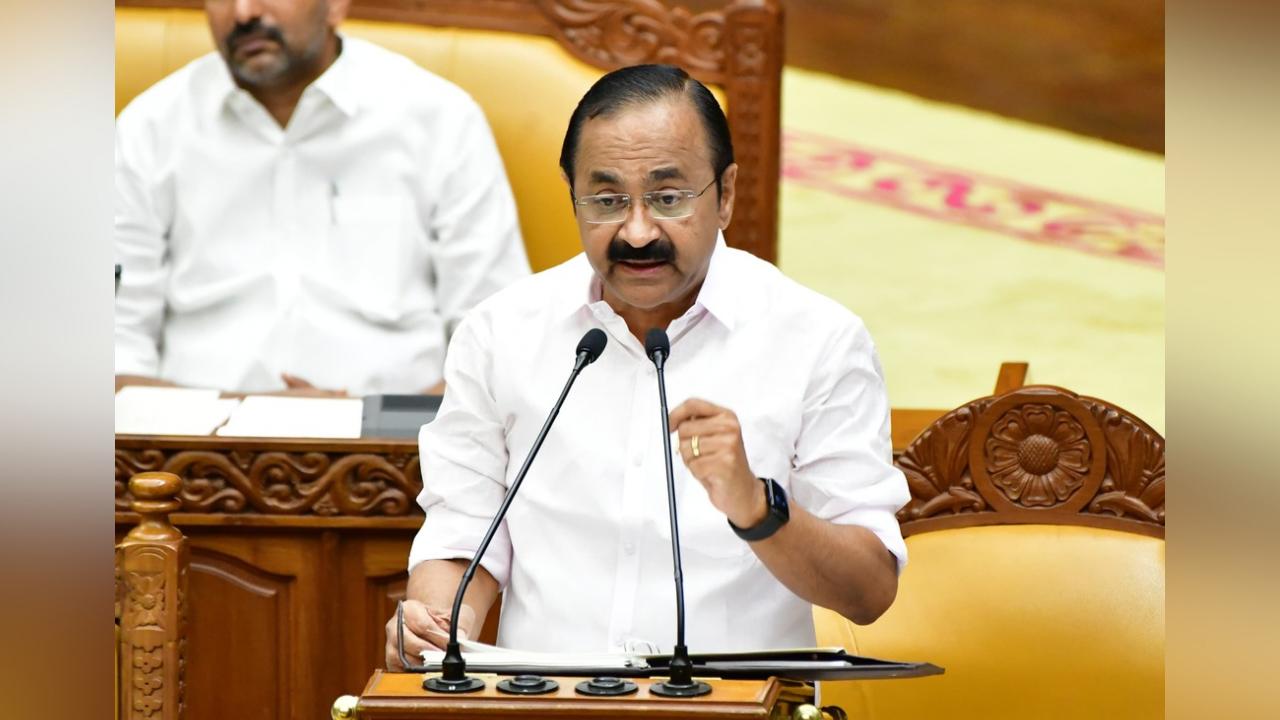
Kerala Chief Minister VD Satheesan presenting the Budget.

Synopsis : Presenting his first Budget, Kerala Chief Minister VD Satheesan unveiled a blueprint for the next five years, combining fiscal correction with ambitious investments in maritime infrastructure, aviation, technology, healthcare, manufacturing and knowledge-driven industries despite claims of inheriting a severe debt burden and revenue shortfall. The Budget places a strong focus on future-ready growth by creating opportunities for Gen Z through artificial intelligence, robotics, startups and scientific innovation, while balancing welfare commitments, environmental sustainability and inclusive development.
Opening his first Budget speech, Kerala Chief Minister VD Satheesan, also the finance minister m, trained his guns on the previous Left government, accusing it of leaving behind a severely strained fiscal landscape.
Presenting the Revised Budget for 2026–27 on Friday, 19 June, he portrayed the exercise as a crucial corrective measure aimed at repairing the state’s finances after what he termed a massive fiscal misjudgment by the LDF administration. The sharp criticism set the tone for his maiden Budget presentation.
Satheesan alleged that the previous budget had overstated expected revenues by ₹20,500 crore through inflated projections under the Revenue Deficit Grant, Union tax devolution and other grants.
The result, he said, was an unrealistic State Plan Outlay of ₹35,750 crore that now requires recalibration.
“While addressing a revenue shortfall of ₹20,500 crore, this government is also burdened with an accumulated liability of ₹87,012 crore,” he told the Assembly.
Yet, despite the difficult fiscal backdrop, the Budget unveiled an expansive vision for Kerala’s future, one cantered on maritime trade, logistics, advanced manufacturing, aviation, knowledge industries, healthcare, and emerging technologies.
Also Read: Kerala CM VD Satheesan presents revised budget
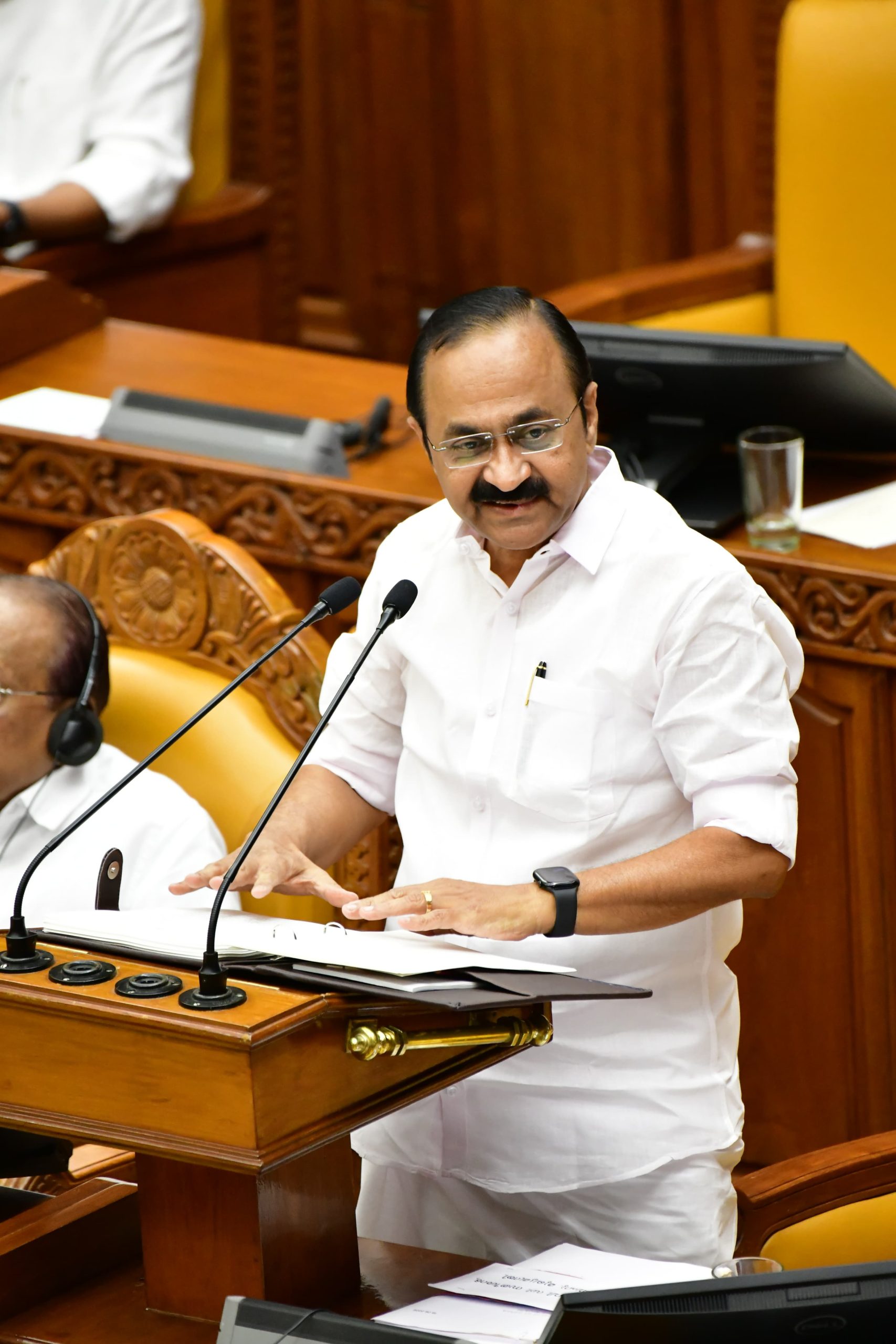
Chief Minister VD Satheesan during Budget presentation.
The centrepiece of the Budget is Mission Samudra, an ambitious initiative that seeks to transform Kerala into a global maritime powerhouse within five years.
The project proposes integrating Kerala’s 600-kilometre coastline, two international ports, the Vizhinjam transshipment terminal, 17 non-major ports and inland waterways into a single maritime economic ecosystem.
The government envisions Kerala as a unified “Port City” where ports, roads, railways, waterways, manufacturing clusters and new urban centres function as a connected growth network.
To support this vision, the government plans to accelerate the Balaramapuram-Vizhinjam underground railway project and the Vizhinjam-Navaikulam Outer Ring Road. Manufacturing zones, stuffing centres and dry ports will come up around Vizhinjam and Kochi ports.
In a significant move, Vizhinjam will be developed as India’s leading green bunkering hub, catering to the shipping industry’s transition towards environmentally sustainable fuels. A dedicated shipbuilding and ship-repair hub is also proposed.
An allocation of ₹400 crore has been earmarked for Mission Samudra projects.
In a major policy shift aimed at accelerating industrial growth and resolving long-pending land issues, the Budget announced an ambitious package of land reforms, including the creation of a State Land Bank, expedited land conversion procedures and measures to restore pattayam (title deed) distribution in hilly regions.
The budget stated that the acute land scarcity, difficulties in mobilising land and legal uncertainties have emerged as major hurdles to Kerala’s industrial ambitions. To address these challenges, a comprehensive Land Management Policy and a new legislative framework will be introduced.
Surplus and unutilised land held by government departments and public sector undertakings will be pooled into a Land Bank for productive use.
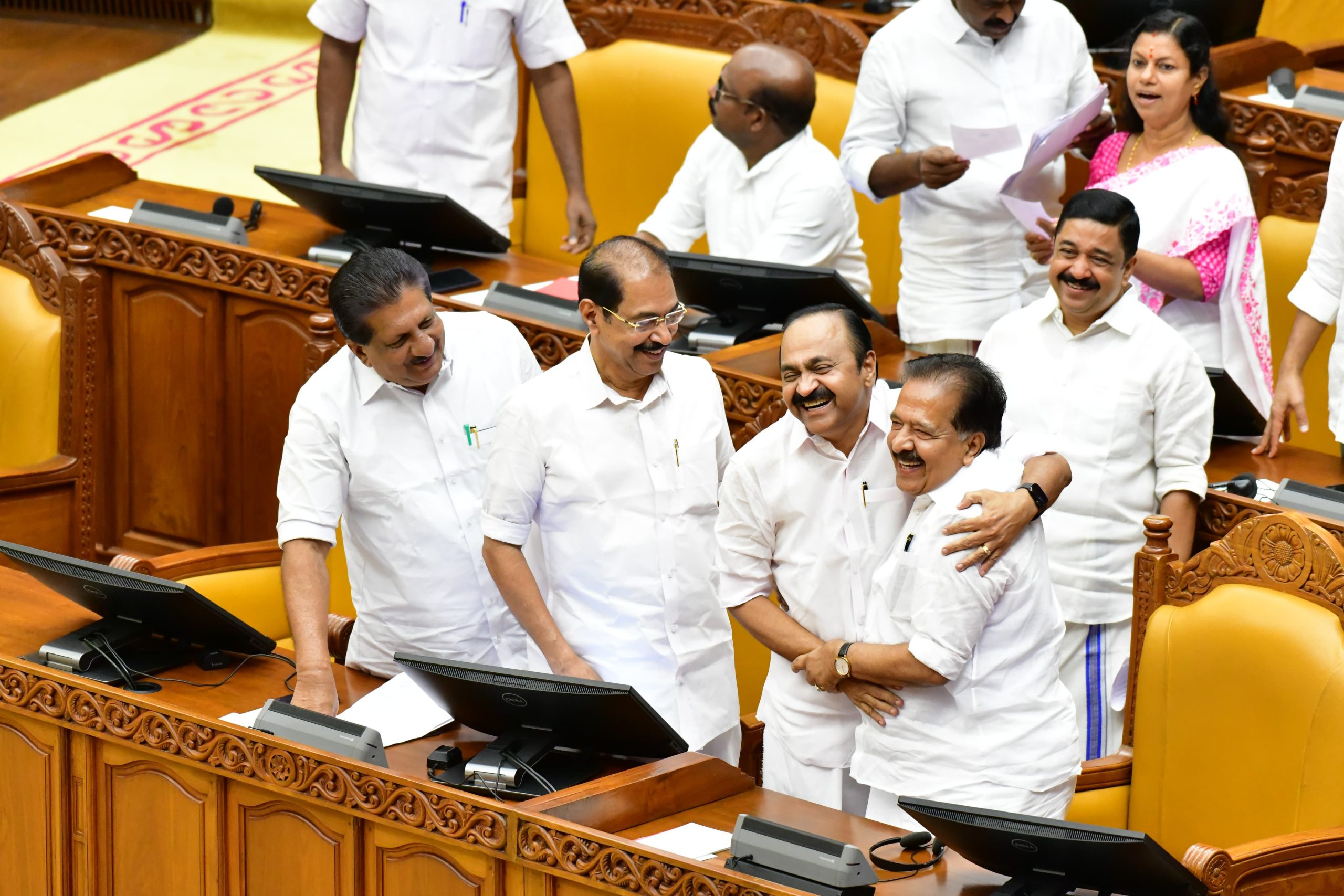
Chief Minister VD Satheesan before presenting the Budget.
The UDF Government also announced a rigorous review of existing land laws under what it termed “Land Reforms 2.0”, with outdated provisions set to be amended. Procedures for converting land for commercial and industrial enterprises will be simplified and accelerated, while a Land Pooling Framework will be introduced for large-scale projects. Agencies such as the Kerala Industrial Infrastructure Development Corporation (KINFRA) and INKEL (Infrastructure Kerala Limited) will be empowered to undertake land acquisition and related activities in a transparent and professional manner.
In a significant relief for farmers in high-range areas, the government promised time-bound action to resolve all issues blocking pattayam distribution. Efforts will be intensified to expedite the disposal of the CHR case before the Supreme Court, matters related to the 1964 Rules and pending high court cases. The government order restricting construction on cardamom patta land will be legally reviewed, and existing constructions on such land will be regularised unconditionally.
The Budget also proposes a technology-driven revision of land fair values across Kerala to better align notified values with prevailing market rates and ensure a more transparent property valuation system.
Another major announcement is the creation of the Southern Kerala Economic Corridor, linking Thiruvananthapuram, Kollam and Alappuzha into a unified strategic economic region.
The corridor will leverage the strengths of the three districts: Space and technology institutions in Thiruvananthapuram, mineral and rare-earth resources in Kollam, and the blue economy potential of Alappuzha.
Under the plan:
The government has allocated ₹100 crore for the Rare Earth and Critical Minerals Corridor and ₹50 crore for the Southern Kerala Economic Corridor.
Seeking to capitalise on rising international passenger traffic and growing logistics opportunities, the Budget proposes developing Kerala into South India’s leading aviation-logistics hub.
The plan revolves around the state’s four international airports and includes airport-centric economic zones, Aerocity and Aeropark projects, aircraft maintenance facilities, pilot training centres and aviation engineering institutes.
The government has set aside ₹200 crore for preliminary activities related to the project and announced plans for a comprehensive Aviation Policy.
Also Read: CM Satheesan salutes Salim Kumar’s memory in maiden budget
Acknowledging longstanding investor concerns over land availability, labour costs and bureaucratic delays, the government announced the formation of Invest Keralam, a specialised investment facilitation agency.
The agency will function as an apex single-window platform offering investors assistance in securing land, obtaining approvals and navigating regulatory procedures.
An Investment Advisory Council headed by the chief minister will monitor major projects and guide investment promotion efforts.
The initiative is being positioned as a key step towards creating a more business-friendly environment in Kerala.
The Budget also places considerable emphasis on Kerala’s emerging space sector.
The government plans to establish specialised research institutions focusing on satellite technologies and encourage greater student participation in space-related disciplines.
Officials believe the rapidly growing private space ecosystem can generate significant employment opportunities across manufacturing, engineering and data-driven services.
In a move aimed at strengthening Kerala’s position as a knowledge destination, the government announced the establishment of Kerala Knowledge Valley, a global higher education hub designed to attract leading Indian and international universities.
The proposed ecosystem will house advanced academic programmes, research parks and centres of excellence under a dedicated legislative framework.
Complementing this initiative is the Kerala Health and Life Sciences City, envisioned as a massive integrated healthcare ecosystem combining hospitals, medical colleges, research centres, rehabilitation facilities and support infrastructure.
The project aims to boost healthcare services, medical education, research and medical tourism.
An allocation of ₹100 crore has been provided for the Health and Life Sciences City.
With urbanisation accelerating across the state, the government announced the Kerala Urban Growth Mission to guide future city development.
The mission aims to create economically vibrant, environmentally sustainable and globally competitive urban centres.
An allocation of ₹100 crore has been made for the initiative.
The Budget also unveiled plans for the JC Daniel International Film City – Chitranagaram in Kochi.
The project seeks to strengthen Kerala’s film industry through improved infrastructure, anti-piracy measures, a permanent venue for the International Film Festival and incentives to attract national and international productions.
A provision of ₹100 crore has been earmarked for it.
Also Read: How corruption at Kerala’s RTOs is fuelling a road safety catastrophe
Recognising the industrial strengths of specific regions, the government announced sector-focused manufacturing corridors.
The Kochi-Aluva-Perumbavoor belt will be developed into a furniture manufacturing hub, building on Perumbavoor’s status as one of India’s largest plywood centres.
Similarly, the Kochi-Thrissur region will be transformed into a jewellery manufacturing corridor, supported by a proposed gold exchange hub and jewellery manufacturing park.
Both projects have been allocated ₹10 crore each.
The government announced a dedicated ₹50 crore initiative aimed at harnessing the technological capabilities of Generation Z through support for innovation, artificial intelligence, robotics, data science and startup ecosystems.
A new Jawaharlal Nehru Centre for Scientific Temper will also be launched to promote scientific awareness among students, with an allocation of ₹25 crore.
Among the welfare-oriented announcements, the government proposed the Oommen Chandy Health Insurance Scheme, which promises free health insurance coverage of up to ₹25 lakh for families.
The scheme is intended to shield households from catastrophic medical expenses.
An initial allocation of ₹10 crore has been provided for it.
Outlining his vision of a “Puthuyuga Keralam” (New Age Kerala), Satheesan said the government aims to combine economic growth with social justice through modern and environmentally sustainable infrastructure. He said technology-driven reforms in healthcare and education, job creation, senior citizen welfare, and the upliftment of marginalised communities would be central to the government’s development strategy.
At the same time, the chief minister painted a grim picture of the state’s finances.
He alleged that the previous government had overestimated revenue receipts by ₹20,500 crore in the January 2026 Budget, mainly under Revenue Deficit Grants, other grants, and Kerala’s share of Central taxes.
As a result, the revised Budget had to account for a corresponding revenue shortfall, making a reduction in the originally projected Plan Outlay of ₹35,750 crore unavoidable, he said.
Satheesan also said the government had inherited accumulated liabilities of ₹87,012 crore, besides the challenge of mobilising around ₹35,000 crore for ongoing Kerala Infrastructure Investment Fund Board (KIIFB) projects.
Pointing out that KIIFB’s off-budget borrowings carried significantly higher interest costs than normal state borrowings, he said the financing model had contributed to mounting debt and fiscal stress.
Announcing a review of the agency’s functioning, he said an Expert Committee would be constituted to recommend structural reforms to KIIFB. He further cautioned that implementing the pending pay and pension revision from July 2024, along with restoring leave surrender benefits, would place an additional burden on the state exchequer.
“Despite these constraints, we are committed to rebuilding Kerala’s finances while ensuring development and welfare reach every section of society,” Satheesan said.
Also Read: Right-wing narrative, West Asia conflict fuels suspicion of Bengali workers in Kerala
Student welfare and anti-ragging measures
Siddharthan was a victim of ragging at the Kerala Veterinary and Animal Sciences University, that happened in February 2024.
Tax relief and transport incentives
Road tax reductions for electric vehicles
Education and youth
Healthcare and social care
Technology-driven governance
Tribal and inclusive development
Green growth and sustainability
Fiscal position
(Edited by Muhammed Fazil.)



