

Published Jun 01, 2026 | 11:00 AM ⚊ Updated Jun 01, 2026 | 11:00 AM

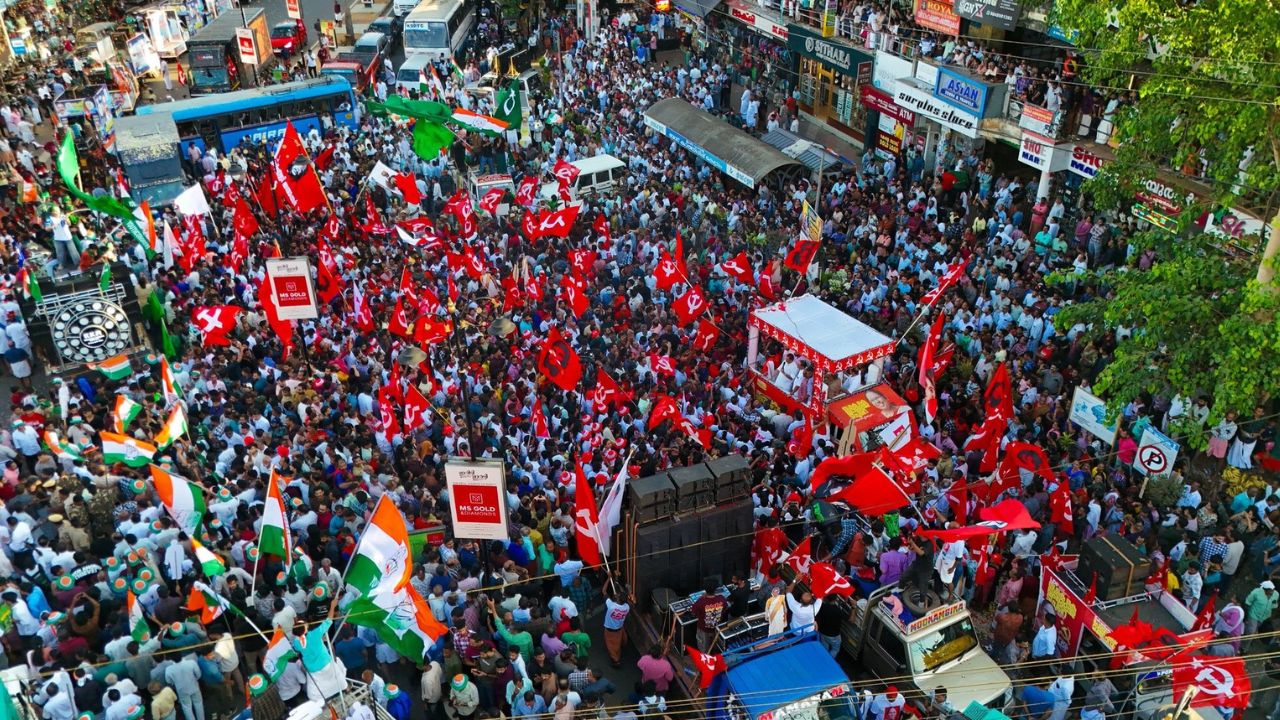
An LDF poll rally in Kerala.

Synopsis: As the Left Front in Kerala grapples with a crushing 2026 Assembly election defeat, internal reviews within the CPI(M) and CPI have exposed deep concerns over centralised leadership, candidate selection and voter alienation. The feedback points to structural and political shortcomings that many cadres believe accumulated over the years and ultimately cost the LDF power.
The arrival of June traditionally ushers in a new academic year in Kerala. This year, it also brings a moment of introspection for the state’s two principal Left parties — CPI(M) and CPI.
Bruised by their worst electoral setback in decades and pushed into the Opposition after 10 years in power, both parties have launched an extensive bottom-up review process to understand what went wrong in the 2026 Assembly elections — when the LDF was reduced to just 35 seats in the 140-member Assembly.
For the CPI(M), the decline was particularly stark, with its tally plunging from 62 seats in 2021 to 26. The CPI managed only eight seats.
As grassroots-level meetings gather feedback from cadres and local leaders, the central question confronting the Left is whether its defeat was merely the result of anti-incumbency after a decade in office or a symptom of deeper political erosion.
The feedback is expected to reach the leadership in June, when both parties will assess it and consider possible course corrections. Yet scepticism persists within sections of the rank and file.
Many leaders privately argue that repeated calls from top leadership to “speak openly” during review meetings have rarely led to meaningful corrective action. They point to the Left’s disappointing performances in the 2024 Lok Sabha elections and the subsequent local body polls as evidence that warning signs had surfaced much earlier but went largely unaddressed.
However, the leadership says that the ongoing review is more than a customary post-election exercise. For them, it is emerging as a critical political audit.
Also Read: HR crisis dogs busy medical college in Kerala
The CPI(M)’s ongoing post-election feedback exercise has evolved into one of the most candid internal reviews the party has witnessed in Kerala in recent years.
What began as an attempt to understand the reasons behind the LDF’s defeat in the 2026 Assembly election has opened the door to sharp criticism of the leadership, governance style and organisational functioning.
The scale of the setback itself appears to have forced the party into an unusual course correction.
After losing power following two consecutive terms and witnessing reverses in long-standing strongholds, the leadership opted for a rare bottom-up review process, inviting opinions from branch committees to district leaderships before any conclusions are drawn at the state level.
CPI(M) General Secretary MA Baby signalled the party’s approach when he stressed that the leadership would first listen to the grassroots.
“The party will hear what the cadres and lower committees have to say before arriving at any conclusions,” he said, underlining the importance of feedback from the ground.
The discussions held across districts suggest that the verdict was viewed by many cadres as more than a routine anti-incumbency setback.
Instead, it exposed growing concerns over the relationship between the leadership and the organisation, as well as the government’s inability to remain connected with ordinary voters.
If one theme dominates the CPI(M)’s post-election review, it has been dissatisfaction with the manner in which decisions were taken and communicated from the top. Across district and area committee meetings, cadres repeatedly pointed to what they described as an increasingly centralised leadership structure that left little room for feedback from the grassroots.
Much of the criticism was directed at the functioning of Pinarayi Vijayan and the party apparatus led by CPI(M) State Secretary MV Govindan.
Several district committees argued that decision-making had become concentrated in a small circle, creating a disconnect between the leadership and ordinary party workers. The concerns were echoed even by allies.
Senior CPI leader and former minister KE Ismail publicly argued that the LDF leadership had failed to give sufficient importance to electoral realities while selecting candidates.
“The criterion should have been winnability. Technical considerations alone cannot win elections,” he observed while discussing the front’s defeat.
A leader in the Parassala area committee (Thiruvananthapuram) said that the image of collective leadership weakened during the second term and that perception hurt the party politically. The leader added that this was highlighted in the review meeting.
Candidate selection emerged as one of the most contentious issues during the review. Several committees complained that local organisational assessments were ignored while deciding candidates.
In Idukki, party members cited the decision to deny a ticket to veteran leader MM Mani in Udumbanchola as a major reason for the district’s electoral collapse.
Local leaders argued that the implementation of the two-term rule created confusion and resentment among cadres who felt established leaders with strong local support were sidelined.
Similarly, the decision to field KK Shailaja in Peravoor came under criticism in party meetings in Kannur, with members arguing that local realities were overlooked.
The issue of minority alienation also surfaced prominently.
The Idukki district committee concluded that the party’s perceived closeness to Sree Narayana Dharma Paripalana (SNDP) Yogam leadership damaged its traditional support among minority communities.
Members questioned why the state leadership failed to distance itself from controversial statements made by SNDP Yogam General Secretary Vellappally Natesan.
According to participants in the discussions, the perception that the party was unwilling to take a clear stand contributed to an erosion of trust among sections of minority voters.
Organisational weaknesses were another recurring concern.
Several local committees criticised the functioning of the DYFI, arguing that the youth wing failed to engage a generation increasingly concerned about employment, education and economic opportunities. Members complained that activities had become routine and symbolic, with excessive focus on initiatives such as pothichoru (midday meal) distribution while broader political engagement with young people remained weak.
The review has also exposed strains within the wider LDF coalition.
Kerala Congress (M) leaders openly complained about cross-voting by CPI(M) workers in constituencies contested by the party. Their assessment suggested that dissatisfaction within the Left’s traditional support base ran deeper than the leadership had anticipated. The allegation has strengthened concerns that organisational discipline weakened considerably during the election campaign.
Many cadres also spoke of an atmosphere of overconfidence before the election.
The belief that the party could comfortably secure a third consecutive term, they argued, weakened organisational vigilance and reduced the urgency of grassroots campaigning.
Taken together, the feedback emerging from district committees presents a picture of a party struggling with centralisation, internal communication gaps and declining grassroots engagement.
More significantly, it suggests that many cadres no longer view the defeat as merely the result of anti-incumbency. For them, it reflects deeper organisational and political problems that accumulated over time and were ultimately exposed at the ballot box.
Also Read: Governor delivers policy address outlining UDF’s vision for a ‘Puthuyuga Keralam’
Feedback from district committees indicates that governance-related issues played a decisive role in shaping public opinion. Members pointed to growing dissatisfaction among sections of youth, farmers, workers and minority communities.
Concerns over unemployment, agricultural distress, labour-related disputes and the handling of protests found repeated mention during the review meetings. Cadres argued that the government often appeared distant from the anxieties of ordinary people despite its welfare initiatives and development projects.
Minority alienation has emerged as another sensitive issue. Discussions in several districts suggested that sections of the party’s traditional support base felt uncertain about the political direction adopted in recent years. The criticism indicates a growing recognition within the party that rebuilding trust among these communities will be essential for future electoral recovery.
The review also triggered calls for generational renewal and greater decentralisation. Some members have argued that younger leaders must be given larger responsibilities, while district units have demanded more consultation in organisational and electoral decisions.
For now, the leadership appears determined to allow the discussions to continue before announcing corrective measures. Yet the intensity of the criticism has created expectations that the exercise must lead to tangible changes rather than a routine assessment.
The feedback emerging from party committees presents a stark message: The defeat was not merely electoral. It reflected a widening gap between leadership, organisation and society.
A leader with the state committee of the CPI(M) said, “The issue is not simply that we lost an election. The issue is whether we are prepared to understand why people who stood with us for years decided to walk away.”
The CPI’s post-election review of the crushing defeat evolved into a wider examination of the coalition’s style of governance, organisational functioning and disconnect with voters, with party leaders describing the verdict as a clear warning from the people rather than a routine anti-incumbency backlash.
At a series of meetings stretching from the state leadership to district and local committees, CPI leaders acknowledged that the electorate had delivered a decisive message against the LDF after a decade in power.
The discussions, marked by unusually frank criticism, have highlighted concerns over centralised decision-making, weakening grassroots engagement and the growing gap between the government and traditional Left support bases.
State Secretary Binoy Viswam described the defeat as a moment of reckoning for the party and the front.
“Defeat has no other name but defeat,” he told party forums, adding that the result should be treated as a caution from the people and an opportunity to correct mistakes. He said the party would draw lessons from the “big failure” and move forward with necessary corrections.
The CPI’s assessment runs parallel to a broader LDF review process under which all constituent parties have been directed to conduct grassroots-level evaluations, beginning from branch and ward committees. Reports from across the state are expected to be consolidated by the end of June.
Party sources said a recurring theme emerging from district-level discussions is the perception that collective functioning within the front had weakened over the years.
Several leaders reportedly argued that governance had become increasingly centralised and that coalition partners often found themselves sidelined in key political and administrative decisions.
Criticism was also directed at Pinarayi Vijayan’s style of functioning, with leaders contending that certain public interventions and decisions had adversely affected the LDF’s image.
While no formal demand has emerged from the CPI leadership for a change in leadership, discussions in several districts reflected unease over the manner in which power was exercised during the LDF’s second term.
The scale of the setback has intensified the introspection. The CPI won only around eight seats. Across the state, many prominent LDF leaders and ministers failed to retain their constituencies, including in traditional Left strongholds.
District-level reviews have pointed to multiple factors behind the erosion of support.
Like CPI(M), local leaders of CPI also complained that grassroots committees were often ignored during candidate selection, resulting in resentment among cadres. The strong performance of rebel and dissident candidates, including former Left leaders who contested with opposition backing, has been cited as evidence of simmering organisational discontent.
In several meetings, cadres argued that the party had taken sections such as workers, farmers and marginalised communities for granted despite implementing welfare schemes. They pointed to growing frustration over unresolved local issues, factionalism and what many described as a diminishing culture of consultation.
The review also focused on changing voting patterns. Leaders noted signs of minority consolidation behind the UDF in several constituencies, while younger voters appeared less receptive to the LDF’s development-centric campaign. Party workers have argued that the government’s achievements failed to translate into electoral support because everyday concerns raised at the local level were not addressed effectively.
The discussions have been particularly intense in districts that witnessed dramatic reverses for the Left.
In Kollam, some leaders openly questioned the direction of the front and called for organisational changes.
In Kannur, concerns were raised about unresolved factional issues and the failure to incorporate local feedback. Similar criticisms surfaced in parts of Thiruvananthapuram, Idukki and Pathanamthitta, where district leaders blamed the state leadership for strategic and political miscalculations.
At the heart of the review is a growing recognition that the LDF’s flagship narrative of development did not resonate with large sections of the electorate. Party leaders acknowledged that administrative achievements alone could not compensate for political alienation and organisational fatigue.
Senior CPI leaders have stressed that the verdict should not be viewed as the end of the Left’s political relevance in Kerala but as a turning point requiring serious course correction.
“The people have given us a warning. We must understand it correctly and make the necessary corrections,” a senior CPI leader said after one of the review meetings.
The party is expected to place its findings before higher organisational forums in the coming weeks. Alongside organisational strengthening, discussions are focusing on rebuilding trust among minorities, reconnecting with youth, reviving grassroots activism and restoring a more consultative style within the LDF.
For now, the CPI’s message is one of acceptance rather than denial.
The verdict, leaders say, cannot be explained away as anti-incumbency alone.
(Edited by Muhammed Fazil.)



