

Published Jul 15, 2026 | 1:12 PM ⚊ Updated Jul 15, 2026 | 1:12 PM

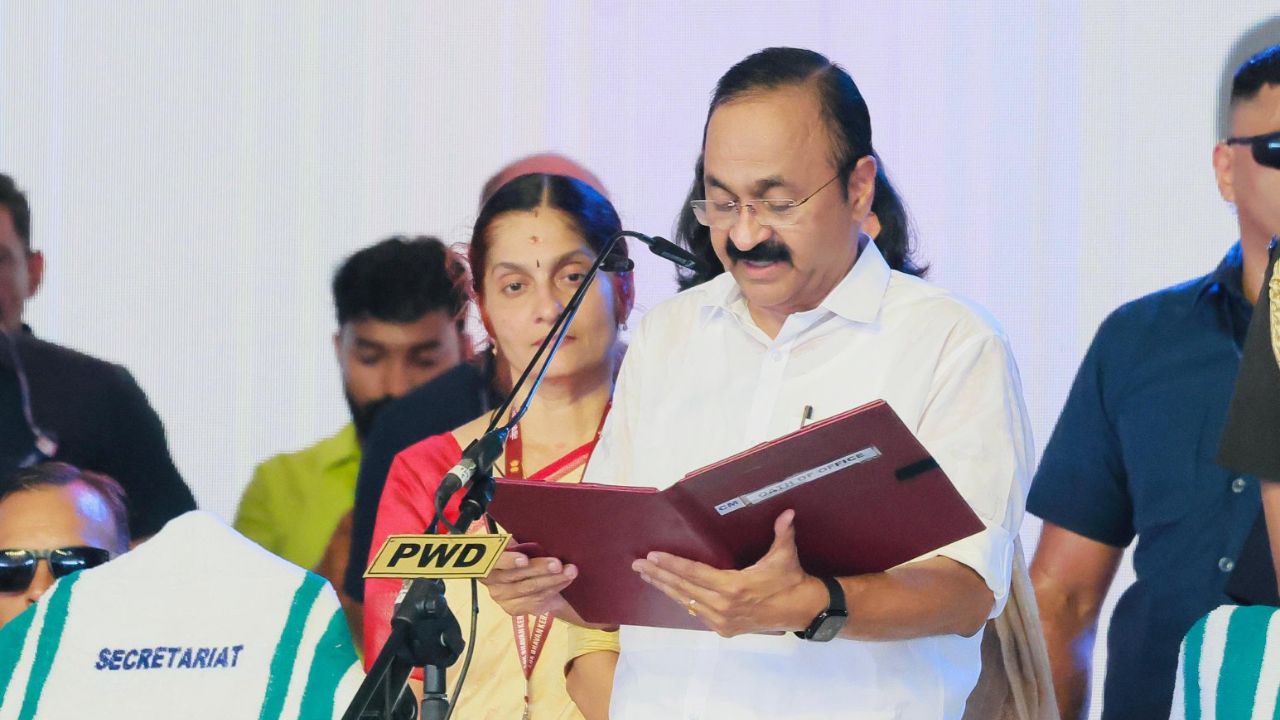
VD Satheesan-led UDF government's white paper painted a picture of depleted finances.

Synopsis: Kerala’s finances have become the centrepiece of an escalating political battle, with the UDF government and the CPI(M) issuing rival white papers that offer starkly different explanations for the state’s economic crisis and the road ahead. From inherited liabilities and welfare spending to KIIFB, borrowing and centre-state fiscal relations, both sides rely on the same numbers to tell two entirely different stories.
A war of white papers has broken out in Kerala.
The state’s financial health has become the latest political battleground, with the ruling UDF and the Opposition CPI(M) locked in a fierce contest over whose version of the economy the public should believe.
At first, the VD Satheesan-led UDF government’s white paper painted a picture of depleted finances, unpaid dues running into tens of thousands of crores and a decade of shrinking public spending.
A month later, the CPI(M) has answered with its own report, accusing the government of twisting facts, breaching established procedures and using a politically crafted document to justify its economic agenda.
Also Read: UDF’s first budget charts a future-ready Kerala
The UDF government’s white paper and the CPI(M)’s counter-report offer sharply different explanations for Kerala’s strained finances.
Presented in the Assembly on 6 June, the government’s report said the state inherited unpaid liabilities of at least ₹48,733 crore, nearly equal to Kerala’s annual net borrowing, leaving little room for fresh spending.
It argued that years of fiscal pressure squeezed social services, support to local bodies, agriculture and education, while rising debt, committed expenditure and weak revenue growth have narrowed the state’s financial space, making structural reforms unavoidable.
The CPI(M), in its alternative white paper released on 14 July, dismissed the document as politically driven and questioned both its preparation and conclusions.
The party alleged confidential government financial data was shared with private individuals and used through artificial intelligence platforms, casting doubt on the report’s credibility.
More importantly, it accused the government of overlooking what it called the real cause of Kerala’s fiscal distress—the Union government’s financial policies.
The CPI(M) said the report ignored the reduction in Kerala’s share of central tax devolution by the Finance Commission and the restrictions imposed on the state’s borrowing, including over ₹1 lakh crore allegedly denied through off-budget loan adjustments.
The contrasting reports have set the stage for a political battle over who is responsible for Kerala’s financial crisis.
Also Read: UDF white paper blames LDF’s ‘fiscal mismanagement’
The government’s white paper portrayed Kerala’s mounting committed expenditure as one of the state’s biggest fiscal challenges, arguing that years of rising salary, pension and interest payments have squeezed development spending and weakened public finances.
The document argued that salaries, pensions and interest have for years consumed nearly three-fourths of the state’s revenue receipts, leaving little room for investment in roads, schools, hospitals and other infrastructure.
It also noted that Kerala’s tax revenue, as a share of Gross State Domestic Product (GSDP), has steadily declined from being above the average of major states a decade ago to below it now.
Together, these trends, it said, have created a structural imbalance in the state’s finances.
The CPI(M)’s counter white paper disputed that interpretation.
While accepting that salaries, pensions and interest account for 77.6% of Kerala’s revenue income, it argued that the figures cannot be viewed in isolation.
The party said Kerala deliberately chose to expand public services through regular government employment rather than outsourcing or contract appointments, particularly in sectors such as health and education.
Higher salary expenditure, it contended, reflected that policy choice.
The Left document also rejected the view that pensions are merely a financial burden, describing them as deferred wages earned by government employees.
It makes a similar argument on welfare pensions paid to 62 lakh beneficiaries, including agricultural workers, fishermen, weavers and persons with disabilities.
Though classified as revenue expenditure in government accounts, the CPI(M) said these payments have improved nutrition, education and healthcare among vulnerable sections and should be seen as a long-term social investment rather than consumption.
Also Read: Kerala’s proudest welfare achievement stretches state finances
Another flashpoint is the claim that the UDF government inherited ₹48,733-crore arrears, with both sides offering sharply different interpretations of the same figures.
The government’s white paper portrayed the unpaid dues as a major fiscal burden passed on by the previous administration (LDF government).
It said the liabilities, outstanding as of 31 March 2026, include ₹21,670 crore in Dearness Allowance (DA) arrears, ₹14,387 crore in Dearness Relief (DR) arrears, ₹3,431 crore under the Bill Discounting System (BDS), besides unpaid hospital claims, scholarships, dues to Supplyco, KMSCL and local bodies.
According to the document, while DA and DR arrears worth ₹36,057 crore will be cleared in eight instalments over four years as announced by the previous government, another ₹21,690 crore has to be found during 2026-27 to meet immediate obligations.
It also argued that these are not merely accounting entries but payments due to employees, pensioners, contractors, hospitals, students and public institutions that have already delivered services or borne the costs. It also cautioned that clearing these arrears will strain future budgets and treasury liquidity.
The CPI(M), however, rejected the government’s claim that it inherited a ₹48,733-crore financial burden, calling it a distortion of the state’s fiscal position.
In its counter white paper, the party argued that more than 74% of the total—₹21,670 crore in DA arrears and ₹14,387 crore in DR arrears—arose because the LDF government itself had announced their settlement in its final Budget and issued the necessary order.
Had the LDF returned to power, it said, the arrears would have been paid as promised.
Describing these committed payments as an “inherited crisis”, the CPI(M) contended, amounts to political rhetoric rather than sound financial assessment.
The party also disputed the inclusion of ₹3,431 crore under the Bill Discounting System as evidence of financial distress.
It says BDS is a routine mechanism through which contractor payments and KMSCL dues are settled, and bills raised towards the end of a financial year are naturally reflected as pending under the system.
While the government sees the ₹48,733-crore figure as proof of the fiscal stress left behind, the CPI(M) insists much of it represents planned commitments and normal year-end financial practices rather than hidden liabilities.
The state government’s white paper and the CPI(M)’s have offered sharply different readings of Kerala’s spending on Scheduled Castes (SCs) and Scheduled Tribes (STs), with each side relying on the same budget framework to reach opposite conclusions.
The UDF government argued that allocations under the Scheduled Caste Sub Plan (SCSP) and Tribal Sub Plan (TSP) are required to be set aside from the State Plan in proportion to the SC and ST population.
It noted that the prescribed shares are 9.81 per cent for the SCSP and 2.83 per cent for the TSP, together accounting for 12.64 per cent of the total plan outlay.
According to the document, actual spending on SCs, STs, Other Backward Classes and minorities has remained well below this level and has steadily declined over the past eight years.
It contends that the fall has been so steep that the combined expenditure has come down to around 3.85 per cent, only marginally above the TSP norm of 2.83 per cent. The white paper attributed this to the state’s prolonged fiscal stress, saying welfare spending on education, health, community development and targeted programmes has suffered, leaving historically disadvantaged communities increasingly vulnerable.
The CPI(M), however, rejected the charge outright, describing the white paper’s conclusions as a misuse of official figures to create a political narrative.
The party pointed out that although the 2011 Census recorded the SC and ST population at 9.10 per cent and 1.45 per cent respectively, Kerala has consistently earmarked 9.81 per cent of the State Plan for the SCSP and 2.83 per cent for the TSP between 2016-17 and 2026-27—both higher than the communities’ share in the population.
The CPI(M) also argued that the white paper overlooks how SCSP and TSP spending is accounted for.
While a substantial portion is routed through the Scheduled Caste and Scheduled Tribe Development Departments, the remaining allocations are implemented through local self-government institutions.
Since there are no dedicated sub-plans for OBCs and minority communities, expenditure incurred by local bodies for these groups is not reflected under separate departmental heads.
Comparing only departmental figures, the party said, gives an incomplete picture.
The party further contended that projects with Central funding, such as the Jal Jeevan Mission, make it technically impossible to maintain the prescribed SCSP-TSP ratio across the entire Plan outlay, making the white paper’s comparison flawed.
The Kerala Infrastructure Investment Fund Board (KIIFB), one of the flagship initiatives of the Left government, has emerged as one of the sharpest points of disagreement between the UDF government’s white paper and the CPI(M)’s rebuttal.
The white paper argued that KIIFB’s financial model has run its course.
It said the institution has an outstanding loan liability of around ₹21,000 crore, repayment of which will ultimately fall on the state. In addition, projects worth nearly ₹35,000 crore are yet to be financed, taking Kerala’s overall exposure linked to KIIFB to about ₹56,000 crore.
According to the document, KIIFB now raises funds at interest rates 1 to 1.5 percentage points higher than the state government, making its borrowings costlier. It also questions the manner in which projects were selected, alleging that allocations reflected political priorities rather than strategic planning.
The white paper, however, stopped short of dismissing the institution altogether.
It acknowledged that over the past nine years, KIIFB has built organisational capacity, financed major infrastructure projects and introduced better project management, sustainability standards and digital systems. But it contends that the institution’s original premise has been undermined, especially after the Centre classified KIIFB borrowings as state debt.
The document also cited the Comptroller and Auditor General (CAG), which observed that KIIFB’s debt is serviced through budgetary allocations from the State’s Consolidated Fund rather than its own revenue streams.
It argued that the CAG’s findings have effectively settled the debate on whether KIIFB can continue in its existing form.
The CPI(M), in its response, rejected the government’s conclusions and said the institution has not failed.
Instead, it blames the Union government’s decision to treat KIIFB borrowings as state debt, accusing the committee that prepared the white paper of accepting that position without challenge.
The party argued that the ₹21,000 crore liability represents assets already created or projects under execution, while the ₹35,000 crore figure relates to future infrastructure investments and cannot be portrayed as an immediate financial burden.
It said combining the two amounts to present a ₹56,000 crore liability is an accounting distortion.
The CPI(M) further maintained that if the same logic were applied to the State Budget, every road, bridge and public building under construction would have to be treated as a liability rather than an asset.
It also defended KIIFB’s institutional strengths, including project appraisal, technical scrutiny, climate-resilient construction standards and integrated digital systems.
While the White Paper recognised these capabilities, the CPI(M) said its recommendation to amend the law and end KIIFB’s independent borrowing would effectively dismantle the institution.
For the Left, the issue is not KIIFB’s viability but the state’s response to what it described as the Centre’s encroachment on Kerala’s financial autonomy.
The white paper saw reform as unavoidable; the CPI(M) sees surrender.
Far from settling the debate on Kerala’s finances, the two white papers have opened a fresh political fault line.
The government said its version is an honest appraisal intended to help the public understand the state’s financial challenges, while the CPI(M) contended that the report selectively presents data to undermine the previous administration’s record.
With contrasting assessments in place, the debate over the state’s fiscal health is far from over.
(Edited by Majnu Babu).



