

Published Sep 17, 2026 | 7:15 AM ⚊ Updated Sep 17, 2026 | 7:15 AM

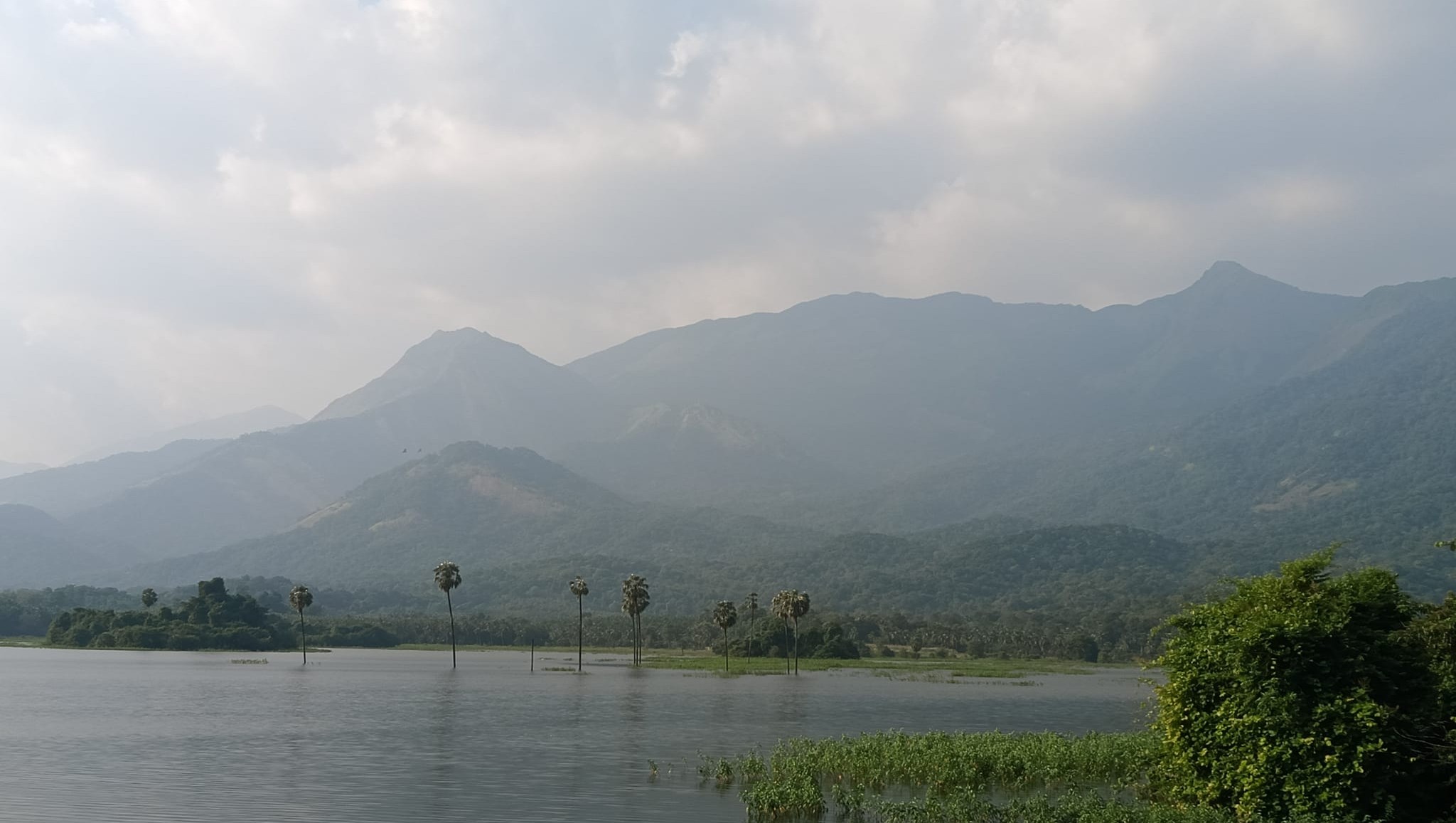
The draft proposes an ESA spread over 9,993.7 sq km covering 131 villages in Keralam.

Synopsis: With the September 25 deadline for objections to the Centre’s latest Western Ghats ESA draft approaching, Keralam is seeking to exclude 33 inhabited villages and reduce the number of villages covered by the proposal from 131 to 98. Residents in Kottayam, Idukki and other affected areas say the ESA could restrict farming and make construction and other development harder. Environmental groups, meanwhile, want no dilution of the proposed protection and say the Western Ghats’ forests, water sources and biodiversity need stronger safeguards.
With the 25 September deadline for filing objections to the Centre’s latest Western Ghats Ecologically Sensitive Area (ESA) draft drawing closer, Keralam is stepping up its efforts to keep 33 inhabited villages entirely outside the proposed protected zone.
The state, it is learnt, is putting together a detailed submission to the Centre, reiterating its stand that the ESA should be confined to forested areas and should not cover inhabited settlements, plantations and agricultural land.
A delegation led by Chief Minister VD Satheesan, along with Environment Affairs Minister Sunny Joseph, is also expected to meet the concerned officials at the Centre, giving a fresh push to the state’s campaign ahead of the deadline.
The draft proposes an ESA spread over 9,993.7 sq km covering 131 villages in Keralam. The state has sought to bring down the area to 8,590.69 sq km across 98 villages.
Hundreds of settler families in the high ranges of Kottayam and Idukki, where the most ESA villages fall, are preparing for another round of protests, insisting that inhabited areas and plantations must be kept outside its boundaries.
Agriculture is the mainstay of these villages, with rubber, cardamom, coffee, pepper, coconut and banana cultivated extensively.
Residents fear that inclusion in the ESA could bring restrictions on farming and make future development and construction activities more difficult.
Environmental groups, meanwhile, have opposed any dilution of the ESA proposal, warning that weakening the protection could have serious consequences for the Western Ghats at a time when landslides and debris flows continue to threaten settlements across the state.
Also Read: CPI(M) reshuffles Keralam leadership after successive poll setbacks, censures MV Govindan
The Union Ministry of Environment, Forest and Climate Change on 27 July reissued the draft notification for the seventh time in more than a decade, inviting objections and suggestions for 60 days until 25 September.
The draft retains 56,825.7 sq km as the proposed ESA across Gujarat, Maharashtra, Goa, Karnataka, Keralam and Tamil Nadu.
If finalised, mining, quarrying and sand mining, new thermal power plants, specified industries and large construction projects would be barred within the ESA. Hydel power generation and certain other activities would also face regulation.
The Centre’s latest notification acknowledges that differences with the states over the exact villages and areas to be included are yet to be settled.
In a reply to John Brittas MP at the Rajya Sabha, on 23 July, Minister of State Kirti Vardhan Singh said the Centre-appointed committee was examining the states’ concerns in consultation with them, balancing ecological protection with local rights, needs and development aspirations.
The issue has already triggered protests in Koottikkal, Melukavu, Poonjar Thekkekkara and Teekoy in the Poonjar Assembly constituency in Kottayam, where local bodies, residents’ groups, farmer organisations and the Catholic Church have intensified their campaign.
In Koottikkal, the panchayat has convened special grama sabhas in all its 14 wards, followed by an emergency council meeting that adopted a resolution listing the residents’ objections. The resolution, it said, will be sent to the state and union governments.
Local representatives said there was unanimous support among residents for keeping the panchayats outside the ESA. They warned that a larger agitation involving residents across age groups could follow if the demand is not addressed.
A major concern raised in several villages is the identification of plantations as forest areas.
Residents point out that the panchayats have little or no forest land and argue that satellite-based mapping may have classified plantations as forest cover. Such areas, they said, have long been occupied and cultivated and should not form part of the ESA.
In Chittar panchayat, in Pathanamthitta, residents are pressing for a more evidence-based approach to their demand for exclusion. Sajan Parackal, a resident of the panchayat, said political protests alone would not be enough and called for detailed cadastral maps and records to establish the extent of human habitation and agricultural land.
He said records relating to houses, farmland, roads and public institutions should be compiled and an official panchayat resolution adopted seeking the exclusion of inhabited and agricultural areas. The objections, he said, should then be submitted through the district administration and the State government to the Union Environment Ministry.
The key issue, according to Parackal, is to establish why Chittar was included in the proposed ESA and produce geographical and scientific evidence challenging that basis. He argued that boundary rationalisation and the exclusion of inhabited and cultivated areas would provide a more concrete basis for the demand than seeking a blanket withdrawal of the ESA.
Kerala Congress leader and Government Chief Whip Apu John Joseph said efforts were under way to secure the exclusion of the affected settlements and the concerns raised by the settlers, both directly and through different collectives, have been presented to Chief Minister VD Satheesan.
The Chief Minister, it’s learnt, is considering a visit to the high ranges to meet residents and other stakeholders on the issue.
Pathanamthitta MP Anto Antony, whose constituency includes Poonjar, said the UDF had consistently maintained that non-forest land should not be brought under the ESA.
“The forest land that falls after the boundary stone shall be included in the ESA. No property after this point can be regarded as ESA. This will be conveyed to the Centre through the State government,” he said.
Mananthavady MLA Usha Vijayan said the issue should be addressed through direct engagement with people living in the affected areas.
She said the initiative is an effort to hear public concerns while protecting both the region’s environment and the lives and livelihoods of its residents. She also stressed the need to protect farmers and people living in inhabited areas alongside environmental conservation.
Meanwhile, Kerala Congress (M) MP Jose K. Mani has raised questions over the forest-area figures used in determining the ESA.
He said the Forest Department’s 2024 figure puts Keralam’s total forest area at 11,536.251 sq km, while the figure of 9,107 sq km shown as forest area within the 123 ESA villages was erroneous. The Oommen V. Oommen Committee, he said, had assessed the forest area at 8,483.05 sq km.
According to Mani, the 9,107-sq-km figure reported to the Centre in 2014 includes 334 sq km of cardamom hill reserves in Idukki. He has called for an urgent joint meeting involving the Chief Minister, State Forest Minister and Union Environment and Forest Minister to rectify the discrepancy.
He warned that retaining the disputed figure could create complications, including pressure to reconcile the actual forest extent with the higher figure.
The Kerala Congress (M) has also held a special grama sabha at Melukavu panchayat in Kottayam on the ESA issue. The party has demanded that the concerns of residents and farmers be addressed and inhabited areas protected while arriving at a final decision.
Also Read: How fast can you spot danger? Keralam’s new licence test faces driving school block
The state government says that it will continue to press the Centre to confine the proposed ESA in the state to 98 villages, while keeping human settlements, agricultural land and plantations outside its final limits.
Speaking to the media after a recent Cabinet meeting, Chief Minister VD Satheesan said there was no need for concern over the latest draft on ESA demarcation, as the expert committee had only submitted its draft report. The state would make another representation to the Centre-appointed committee to ensure that its concerns were addressed, he said.
The Chief Minister said the area proposed as ESA had undergone several revisions.
The original Kasturirangan report had identified 13,108 sq km in the state. The Oommen V Oommen Committee, appointed by the then UDF government, subsequently reduced this to 9,993.7 sq km covering 123 villages. Following the bifurcation of some villages, the proposal came to cover 131 villages.
The previous LDF government later brought the proposal down to 98 villages, covering around 8,590 sq km.
“The government has already held discussions with the concerned authorities. The issue was discussed in detail with the expert committee during its visit to Keralam. I, along with the Environment Minister, will meet the concerned authorities and once again present the state’s views,” Satheesan said.
The state has particularly objected to the inclusion of the Cardamom Hills Area (CHA), which has been marked as forest land in the latest exercise.
“The CHA now marked as forest area must be avoided from the ESA. Inhabited areas must also be excluded,” he said.
Keralam has also sought a change in the method used to demarcate ESA boundaries. Satheesan said areas within a village that were inhabited or used for agriculture should not be brought under ESA merely because the village also contained forest land.
The expert committee had indicated that the state’s request on this issue would be considered, he said.
Meanwhile, Forest Minister Shibu Baby John assured farmers that agricultural and plantation land would not be forcibly acquired in the name of environmental protection.
Addressing representatives of farmers’ organisations from forest-fringe areas on 15 September, the Minister said the state would put pressure on the Centre to restrict the ESA notification to 98 villages. Human settlements, agricultural land and plantations would be kept outside the ESA limits, he added.
Also Read: Keralam moves to fast-track elderly care Bill, plans caregiver certification framework
Environmental groups have stepped up their campaign in support of the re-issued draft notification proposing large stretches of the Western Ghats as ESA.
Groups such as Save Western Ghats have launched social media campaigns, urging stronger protection for the mountain range, which they describe as vital to forests, water sources, biodiversity and local livelihoods.
The Wayanad Prakruthi Samrakshana Samithi (WPSS) alleged that the opposition to the ESA proposal was being driven by vested interests. It urged people to understand the purpose of ESA designation before rejecting it.
According to the group, the proposed safeguards are intended to protect biodiversity and wildlife habitats, reduce the risks of floods and landslides, conserve river basins and water sources, address climate-related threats and encourage sustainable development.
The organisation also dismissed fears that ESA status would drive residents from their land or cripple agriculture. It said restrictions mainly target activities such as mining and quarrying, red-category industries and large construction projects exceeding 20,000 sq m, while existing farming, homes and small-scale industries would not be affected.
The Animals and Nature Ethics Community (ANEC) Trust said such protected buffers outside national parks and sanctuaries could act as “shock absorbers” against unregulated development.
The groups alleged that though some protests may be genuine, some others might be out of vested interests including mining, encroachment and land interests.
(Edited by Dese Gowda)



