

Published May 26, 2026 | 11:57 PM ⚊ Updated May 27, 2026 | 11:54 AM

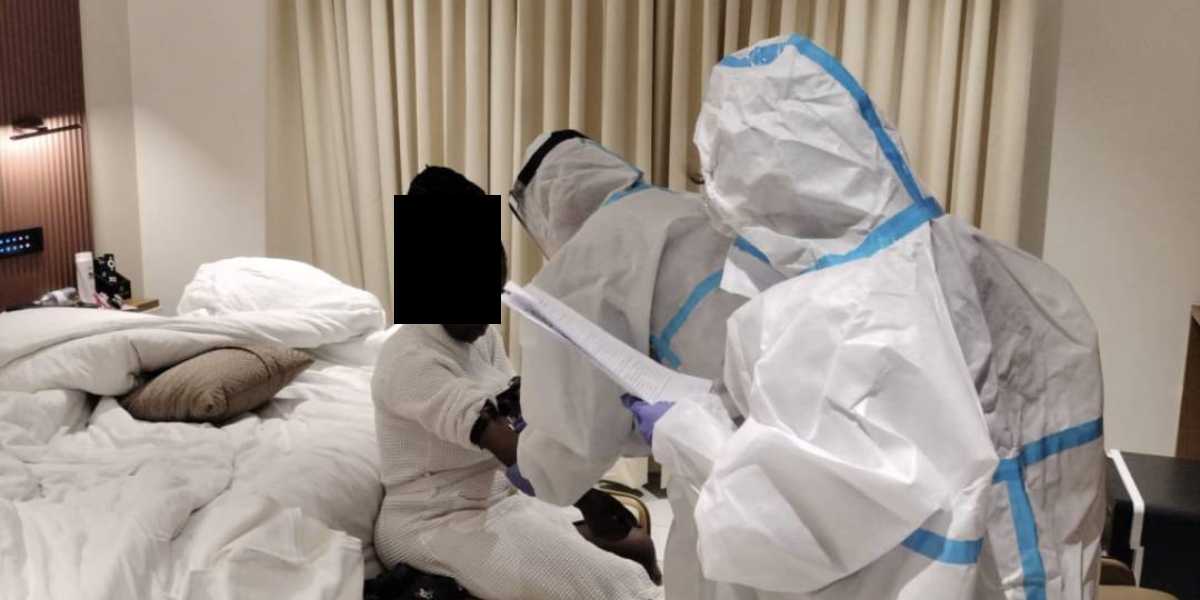
The Ugandan woman has been shifted to an isolated facility.

Synopsis: A young woman, who arrived in Bengaluru from Kampala, Uganda’s capital, developed mild symptoms, suspected to be of the Ebola virus disease. She has been shifted to a medical facility.
Bengaluru went on a high health alert on Tuesday, 26 May, after a 28-year-old woman from Uganda developed mild symptoms of suspected Ebola virus disease.
The Ugandan national, who had arrived in Bengaluru on 23 May from Kampala, the capital of the East African country, had been staying at the Royal Ace Boutique Hotel in the city.
After she showed the symptoms, including body aches, the woman was shifted to a state-run isolation and observation medical facility.
Blood and swab samples collected from the woman were sent to the ICMR-National Institute of Virology (NIV), Pune, for laboratory testing.
“One person returned from Uganda, sample sent to ICMR-NIV, case is not confirmed, report is awaited,” a Karnataka Health Department official told South First on Tuesday.
On Wednesday, the Union Health Ministry confirmed that the person has tested negative for Ebola Virus Disease (EVD), bringing relief after the incident triggered a health alert.
Before the suspected case came into light on Tuesday, Karnataka’s Health Department had activated precautionary surveillance and emergency preparedness systems across the state.
Authorities stressed that there were currently no confirmed Ebola cases in Karnataka or elsewhere in India.
Also Read: India issues Ebola advisory as WHO declares global health emergency
As part of preparedness measures, Karnataka has designated specialised quarantine, isolation and treatment facilities in Bengaluru and Mangaluru.
In Bengaluru, the Rajiv Gandhi Institute of Chest Diseases has been identified as the isolation centre, while the Epidemic Diseases Hospital has been assigned quarantine and treatment responsibilities.
In Mangaluru, Srinivas Port Hospital has been designated as the quarantine facility and Wenlock District Hospital as the isolation and treatment centre. Dedicated ambulance services have also been arranged for the safe transport of suspected patients.
Health officials said surveillance activities under the Integrated Disease Surveillance Programme (IDSP) have been intensified. Coordination with airports and other points of entry has also been strengthened to monitor travellers arriving from Ebola-affected countries.
Rapid Response Teams across Karnataka have been placed on alert to respond to any suspected cases if required.
The Health Department said hospitals have been instructed to maintain strict infection-control protocols and ensure adequate stocks of personal protective equipment (PPE), medicines and laboratory support systems. Healthcare workers were being provided training in handling suspected Ebola cases and following protective procedures.
Authorities urged the public not to panic, reiterating that the current measures were preventive and part of standard public health preparedness protocols followed during international disease alerts.
Most Ebola cases are being reported from the Democratic Republic of Congo, with a few cases in the neighbouring country of Uganda.
As of 18 May, 528 suspected cases and 132 deaths have been reported across Congo and Uganda. The confirmed cases in Congo stand at 51, concentrated in the conflict-torn northern provinces of Ituri and North Kivu.
Uganda has confirmed two cases in Kampala, including one death, among individuals who had travelled from Congo.
Earlier symptoms of Ebola
Later symptoms
(Edited by Majnu Babu).



