

Published May 21, 2026 | 1:15 PM ⚊ Updated May 21, 2026 | 1:33 PM

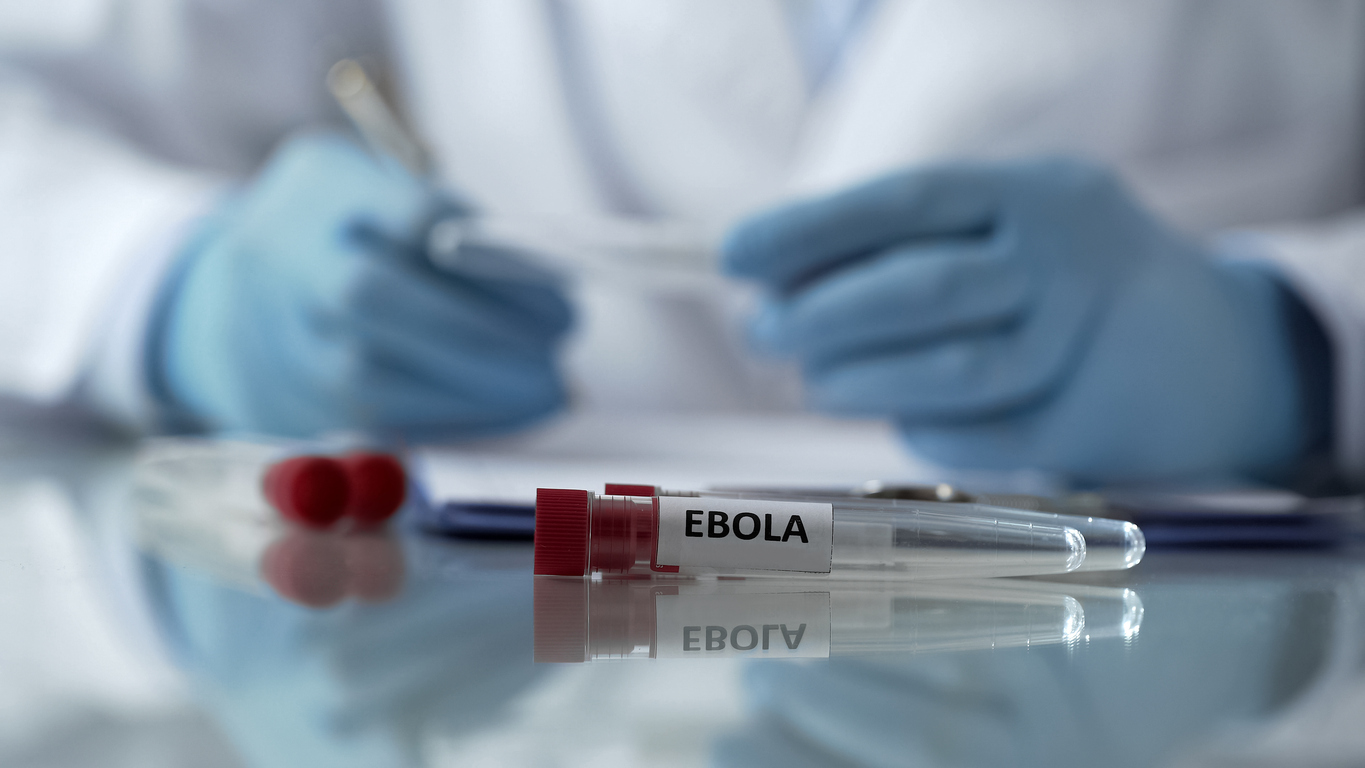
Ebola. (iStock)

Synopsis: India has issued a health advisory for passengers arriving from or transiting through Ebola-affected countries, asking those with symptoms or exposure history to immediately report to airport health authorities before immigration clearance. The WHO has declared the outbreak a public health emergency of international concern, and said it is worried over its “scale and speed”. WHO said “patient zero” has not been found.
India has activated health surveillance at international airports and issued a formal advisory for passengers arriving from Ebola-affected countries, after the World Health Organisation declared the ongoing Bundibugyo virus outbreak in the Democratic Republic of Congo and Uganda a Public Health Emergency of International Concern (PHEIC).
The Directorate General of Health Services (DGHS), under the Ministry of Health and Family Welfare, has specifically flagged the DRC, Uganda, and South Sudan as high-risk countries, directing passengers who have travelled from or transited through these nations to report to the Airport Health Officer or health desk before immigration clearance if they are experiencing symptoms or have had direct contact with blood or body fluids of a suspected or confirmed Ebola patient.
The Union Health Ministry confirmed that no case of Ebola has been detected in India so far.
Meanwhile, advisories have been displayed at the airports, including Delhi and Hyderabad, by the Airport Health Organisation (APHO). It advises passengers to watch out for symptoms such as fever, weakness, headache, muscle pain, vomiting, diarrhoea, sore throat and unexplained bleeding.
The advisory stated that any traveller developing symptoms within 21 days of arrival should immediately seek medical care and inform healthcare authorities about their travel history.
“Please cooperate with health screening and public health measures in the interest of passenger safety and International Health Regulations (IHR),” it said.
Also Read: Why Kerala is first to detect and report exotic viral strains
Union Health Secretary Punya Salila Srivastava chaired a high-level review meeting with health secretaries of all states and Union Territories (UTs) to assess the country’s preparedness and response mechanisms on Wednesday, 20 May.
States and UTs have been advised to ensure readiness at all levels. Detailed Standard Operating Procedures covering pre-arrival and post-arrival screening, quarantine protocols, case management, referral mechanisms, and laboratory testing have already been shared with all states and UTs.
All central ministries and departments have been sensitised and are undertaking preventive and surveillance measures in coordination with the health ministry.
This outbreak is not caused by the better-known Ebola virus (Zaire strain), for which approved vaccines and treatments exist. It is caused by the Bundibugyo virus, a far rarer species of Orthoebolavirus, first identified in 2007, for which there are no approved vaccines or therapeutics.
That distinction is at the heart of the international concern.
WHO Director General Dr Tedros Adhanom Ghebreyesus, in an extraordinary move, declared the PHEIC before even convening the Emergency Committee, citing the urgent need for action. It is the first time a WHO Director-General has taken such a step.
“This is the first time a Director General has declared a PHEIC before convening an Emergency Committee,” Dr Tedros said. “I took this step in accordance with Article 12 of the International Health Regulations, after consulting the Ministers of Health of DRC and Uganda, and in view of the need for urgent action.”
After the declaration, the Emergency Committee met and confirmed the classification. It agreed the situation is a PHEIC but stopped short of declaring it a pandemic emergency, which is a new and higher classification under the amended International Health Regulations.
“WHO assesses the risk of the epidemic as high at the national and regional levels, and low at the global level,” Dr Tedros said.
As of 18 May, the situation report shows 528 suspected cases, including 132 deaths, across the DRC and Uganda. Of 12 suspected cases reported from Uganda, two were confirmed through laboratory testing, with the rest testing negative
. A total of 668 contacts have been identified so far, 541 in the DRC and 127 in Uganda, though contact tracing remains challenging in parts of the DRC due to insecurity and movement restrictions.
The confirmed case count in DRC stands at 51, concentrated in the northern provinces of Ituri and North Kivu, including the cities of Bunia and Goma. Uganda has reported two confirmed cases in Kampala, including one death, among individuals who travelled from the DRC. An American national working in the DRC has also tested positive and has been transferred to Germany for treatment.
Dr Tedros outlined five factors driving serious concern about further spread.
“First, beyond the confirmed cases, there are almost 600 suspected cases and 139 suspected deaths. We expect those numbers to keep increasing, given the amount of time the virus was circulating before the outbreak was detected,” he said.
“Second, the epidemic has expanded, with cases reported in several urban areas. Third, deaths have been reported among health workers, indicating healthcare-associated transmission. Fourth, there is significant population movement in the area.”
The province of Ituri, the epicentre of the outbreak, is described as highly insecure. Conflict has intensified since late 2025, and fighting has escalated significantly over the past two months, with over 100,000 people newly displaced. The region is also a major mining zone, with high levels of population movement that increase the risk of spread.
“And fifth, this epidemic is caused by Bundibugyo virus, a species of Ebola virus for which there are no approved vaccines or therapeutics,” Dr Tedros added.
WHO added that the “patient zero” has not been found.
The absence of a vaccine for Bundibugyo is one of the defining challenges of this outbreak. While two vaccines, Ervebo (Merck) and Zabdeno/Mvabea (Janssen), are approved and recommended for Ebola virus disease caused by the Zaire strain, neither covers Bundibugyo.
Dr Vassil Morti, acting lead for the WHO Research and Development Blueprint, outlined what is in the pipeline.
“There is an rVSV Bundibugyo vaccine, the equivalent of the rVSV vaccine but specific for Bundibugyo. There are no doses currently available for clinical trial, so this needs to be prioritised as the most promising candidate. This is likely to take six to nine months,” he said.
A second candidate, based on the ChAdOx1 platform, the same platform used for the AstraZeneca Covid-19 vaccine, is being developed in collaboration between Oxford University and the Serum Institute of India with a Bundibugyo insert. Doses could potentially be available for clinical trial in two to three months, but Dr Morti stressed significant uncertainty remains.
“There is no animal data to support that yet, and it will depend on the animal data as to whether that is considered a promising candidate,” he said.
In the absence of specific treatments, the WHO is prioritising the setup of optimised supportive care treatment centres, safe patient referral pathways, and early case detection to improve survival.
Also Read: Indians pay more for pink salt influencers promote, ignores cheaper, healthier products
Questions have been raised about why the outbreak was not detected sooner. WHO officials were pointed in their explanation.
Dr Tedros said three compounding factors delayed detection. First, the intense armed conflict in Ituri province disrupted the entire health surveillance system, displacing health workers and communities alike. Second, the rapid field tests in use in the region are optimised for the Zaire strain, not Bundibugyo, meaning early samples returned false negatives. Third, the early symptoms of Bundibugyo virus disease, fever, fatigue, and muscle pain, are clinically identical to malaria and typhoid, both endemic in the region, meaning health workers initially attributed illness to those more common diseases.
Based on outbreak investigations, authorities believe the first index case dates to around 20 April 2026, with the body of that patient transferred on 22 April. A super-spreading event was identified around 5 May, after which social media reports of deaths in communities triggered an investigation team being deployed by 12 May. Thirteen samples were collected, eight of which were confirmed positive. Laboratory results were returned within 16 hours.
“Even in high-income countries, you would have that delay at the start of an outbreak,” said Dr Abdirahman Mahamoud, WHO Director for Health Emergency Alert and Response Operations.
Dr Tedros addressed remarks made by US Secretary of State Marco Rubio, who suggested the WHO was slow to identify the outbreak.
“It could be from a lack of understanding of how the IHR works and the responsibilities of WHO and other entities. We don’t replace the country’s work. We only support them,” Dr Tedros said. “It’s very difficult to follow a simplistic approach and blame this or that. It’s very difficult.”
WHO has deployed 38 experts from DRC cities from Kinshas to Bunia, split between the Ministry of Health and WHO. Over 17 tonnes of emergency supplies, including personal protective equipment, medical supplies, tents, stretchers, and medicines, have been shipped to the DRC.
Dr Tedros approved an additional $3.4 million from the Contingency Fund for Emergencies, bringing the total committed to $3.9 million. Additional funding has come from the UK Foreign, Commonwealth and Development Office (FCDO) and the EU’s DG HERA.
Modelling by Imperial College London, shared at the press conference, estimates between 400 and 800 cases under a moderate scenario, with a worst-case projection of 1,000 cases. WHO has adopted what it describes as a no-regret policy, scaling up the response as aggressively as possible from the outset.
Professor Lucille Blumberg, Chair of the WHO IHR Emergency Committee, from the University of Pretoria, confirmed the committee had agreed with the Director General’s PHEIC declaration and was finalising temporary recommendations for member states.
“The scale of the outbreak, the less common Bundibugyo strain for which there are no available specific drugs and vaccines, the context of the humanitarian crisis, the security challenges, the highly mobile population, and the close proximity to many borders were all highly considered,” she said.
She was also clear on the nature of transmission, directly addressing travel restriction measures imposed by the United States on DRC, Uganda, and South Sudan.
“It is important to remember how Ebola is transmitted. It requires direct contact with the blood and body fluids of an infected person. It is not casual contact. It is not airborne,” Professor Blumberg said. “Travel restrictions are not supported under IHR recommendations.”
Also Read: Karnataka HC temporarily stays FSSAI ban on ashwagandha leaves
Bundibugyo virus disease (BVD) is one of three Orthoebolavirus species known to cause large outbreaks in humans, alongside the Ebola virus (Zaire strain) and Sudan virus. It was first identified in 2007.
Ebola disease first appeared in 1976 in two simultaneous outbreaks: One of Sudan virus disease in Nzara, in what is now South Sudan, and one of Ebola virus disease near the Ebola River in what is now the DRC, from which the disease takes its name.
The average case fatality rate across Ebola disease outbreaks is around 50 percent, though historical rates have ranged from 25–90 percent depending on the outbreak and the strain.
The virus is transmitted through direct contact with the blood or body fluids of an infected person, or through contact with surfaces contaminated by an infected person. It is not airborne. People cannot transmit the disease before symptoms appear.
The incubation period ranges from 2 to 21 days. Symptoms begin suddenly and include fever, fatigue, muscle pain, headache, and sore throat, followed by vomiting, diarrhoea, and in some cases internal and external bleeding. Diagnosis is confirmed through RT-PCR testing, among other methods. Early, intensive supportive care significantly improves survival.
(Edited by Muhammed Fazil.)



