

Published Apr 22, 2026 | 7:00 AM ⚊ Updated Apr 22, 2026 | 8:06 AM

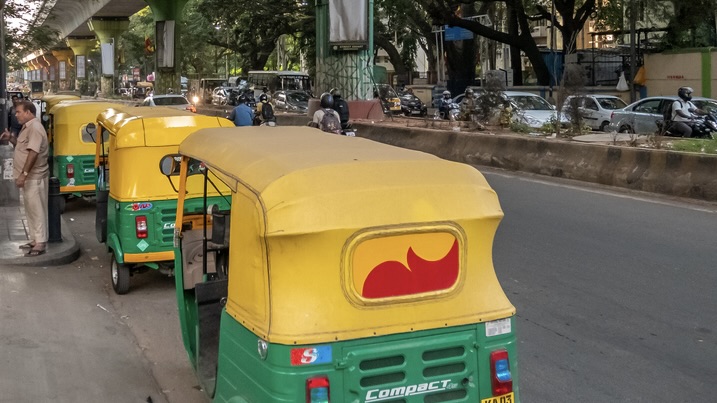
A series of language-based altercations between passengers and auto drivers has brought the issue to the forefront on numerous occasions.

Synopsis: The Karnataka Congress has urged Chief Minister Siddaramaiah to make proficiency in Kannada mandatory for auto and cab drivers to obtain licences in the state, following a similar move by the Maharashtra government earlier this month and amid growing language-related flashpoints in Bengaluru. While some drivers and union leaders have welcomed the proposal, saying it could help serve local passengers better, others argue that enforcing such a rule would be difficult and could prove counterproductive.
In a letter to Chief Minister Siddaramaiah, the Karnataka Pradesh Congress Committee (KPCC) has sought to make it mandatory for auto and cab drivers across Karnataka to be proficient in reading, speaking and writing Kannada to obtain a licence or permit.
This request comes in the broader context of a rising number of out-of-state drivers, the struggles of local Kannadigas, and a similar order by the Maharashtra government.
While the demand has drawn support from some auto and cab drivers as being beneficial for Kannadiga passengers and drivers, others have criticised it as unnecessary and potentially harmful to drivers.
Inayat Ali from the Karnataka App-Based Workers Union told South First that “Like Maharashtra, in Karnataka, this rule should be implemented. If they respect our local language, they can learn the language and serve the people.”
However, Manjunath, a former auto driver and a leader in the Adarsha Auto Drivers Union, said, “People are trying to take advantage of what happened in Maharashtra.”
Also Read: Bengaluru’s long-delayed civic polls risk another postponement amid overlapping govt surveys
A series of language-based altercations between passengers and auto drivers has brought the issue to the forefront on numerous occasions. According to anthropologist Usha Rao, the migration boom in Bengaluru has created a significant language gap.
In many cases, auto drivers face linguistic challenges when passengers are non-Kannadigas. While they say most passengers are accommodating, only 10 to 15 percent cause issues.
For example, in a video that surfaced on social media, a non-Kannadiga passenger was seen telling a local auto driver to “Speak in Hindi if you want to stay in Bengaluru,” with the latter replying, “You have come to Bengaluru, you speak in Kannada. I won’t speak in Hindi.”
There have also been instances where local drivers have resorted to violence against non-Kannadiga passengers or demanded higher fares from them.
Javeed Ahmed, an auto driver in Bengaluru and a member of the Auto Rickshaw Drivers Union, told South First, “There are problems between passengers and auto drivers. Linguistic problems lead to misunderstandings. People refuse to give business because the driver is a non-Kannadiga. So many people come and talk to local drivers in Hindi and blame them for not knowing Hindi. Drivers blame passengers for not knowing Kannada.”
While such instances have prompted demands that everyone coming to Karnataka from other states must learn basic Kannada, other factors have led the KPCC and KRV to request the government to mandate that auto drivers know how to read, write and speak Kannada.
Also Read: Redrawing Bengaluru wards vs delimitation: Why Tejasvi Surya’s comparison falls short
On 14 April, Maharashtra’s Transport Minister Pratap Sarnaik announced that proficiency in Marathi will be made mandatory for all licensed auto-rickshaw and taxi drivers from 1 May (Maharashtra Day). He said they will be inspected across 59 regional transport offices (RTOs) for their ability to read, write and speak Marathi. If they fail the inspections, their licence will be cancelled.
However, the move has elicited negative reactions from opposition parties and drivers’ unions, who say it poses a threat to drivers holding domicile certificates and that the government should instead focus on helping drivers learn the language.
Following the Maharashtra government’s notification, the KPCC requested Chief Minister Siddaramaiah to implement a similar policy in Karnataka. The demand was also amplified by the Karnataka Rakshana Vedike (KRV), with its President TA Narayana Gowda saying that licences or permits should not be granted or renewed for drivers who cannot read, write or speak Kannada.
The KRV also noted in its memorandum to the government that while other Indian states prioritise their local language in daily communication, Karnataka has witnessed an increasing use of non-local languages.
In its letter, the KPCC stated that the number of auto drivers from outside the state is rising, making it difficult for local Kannadigas to communicate in Kannada within their own state. The letter also said it is the duty of anyone who earns a living in Karnataka to learn and respect the state’s land, water and language.
Also Read: How Davanagere bypoll triggered a crisis in Congress with minority leaders
Ali said that while mandating reading and writing is not necessary, “If they don’t know Kannada, then the government must cancel their commercial licence. If they are giving the public service and they are serving the Kannada public, then they should know Kannada, and they should respect the local language.”
Supporting this, Subramanya, an auto driver in Bengaluru and President of the Swabhimani Chalakara Trade Union, said, “When there is a language barrier between the passenger and driver, even if both of them are saying the correct thing, there will be misunderstandings and fights.”
Nagesh, an auto driver in Wilson Garden, Bengaluru, told South First, “They should know Kannada, considering they are working and earning money in Kannada. Otherwise, they can speak their own language.” He said that daily tasks such as reading nameboards and interacting with local Kannadiga passengers become difficult if they do not know the language.
Ali and Subramanya echoed the views in the KPCC’s letter and the KRV’s memorandum.
While Ali said, “Kannadiga customers cannot coordinate and communicate with drivers,” Subramanya noted, “They are catering to customers in Karnataka, so communicating with them will become more comfortable if they know Kannada,” adding that knowing the local language would help drivers avoid misunderstandings.
This was also supported by Ahmed, who said that while auto drivers can know other languages, “The main point is that they should know Kannada so that they can serve the local people of Karnataka properly.”
Also Read: Karnataka drafts Aadhaar-based digital use policy for students without tech input, faces flak
On the other hand, Adarsha Sampath, General Secretary of the Adarsha Auto Drivers Union, told South First, “In Bengaluru, there are several languages that are spoken,” adding that forcing people to learn Kannada as soon as they arrive in the state would be very difficult.
Rather than mandating such a rule, he said it would be better to raise awareness and address the issue sensitively. He also said that while speaking Kannada is a good thing, reading should not be made mandatory.
Manjunath said, “Auto and taxi drivers are businessmen, and if they know all languages, it will be easier for them to conduct business with different people.”
He said that in areas such as the ITBT centre, they interact with customers speaking different languages and must be familiar with them. He also noted that people are trying to implement a policy similar to Maharashtra, “But mandating that everyone should know Kannada would make it impossible for people to stay in Karnataka.”
Rather than mandating that all auto drivers read, write and speak Kannada, Manjunath and Sampath said it would be better, in the case of drivers from other states, for the government to issue licences and permits to those who have lived in Karnataka and spoken Kannada for a minimum of 15 years.



