

Published Oct 19, 2026 | 9:20 PM ⚊ Updated Oct 19, 2026 | 9:20 PM

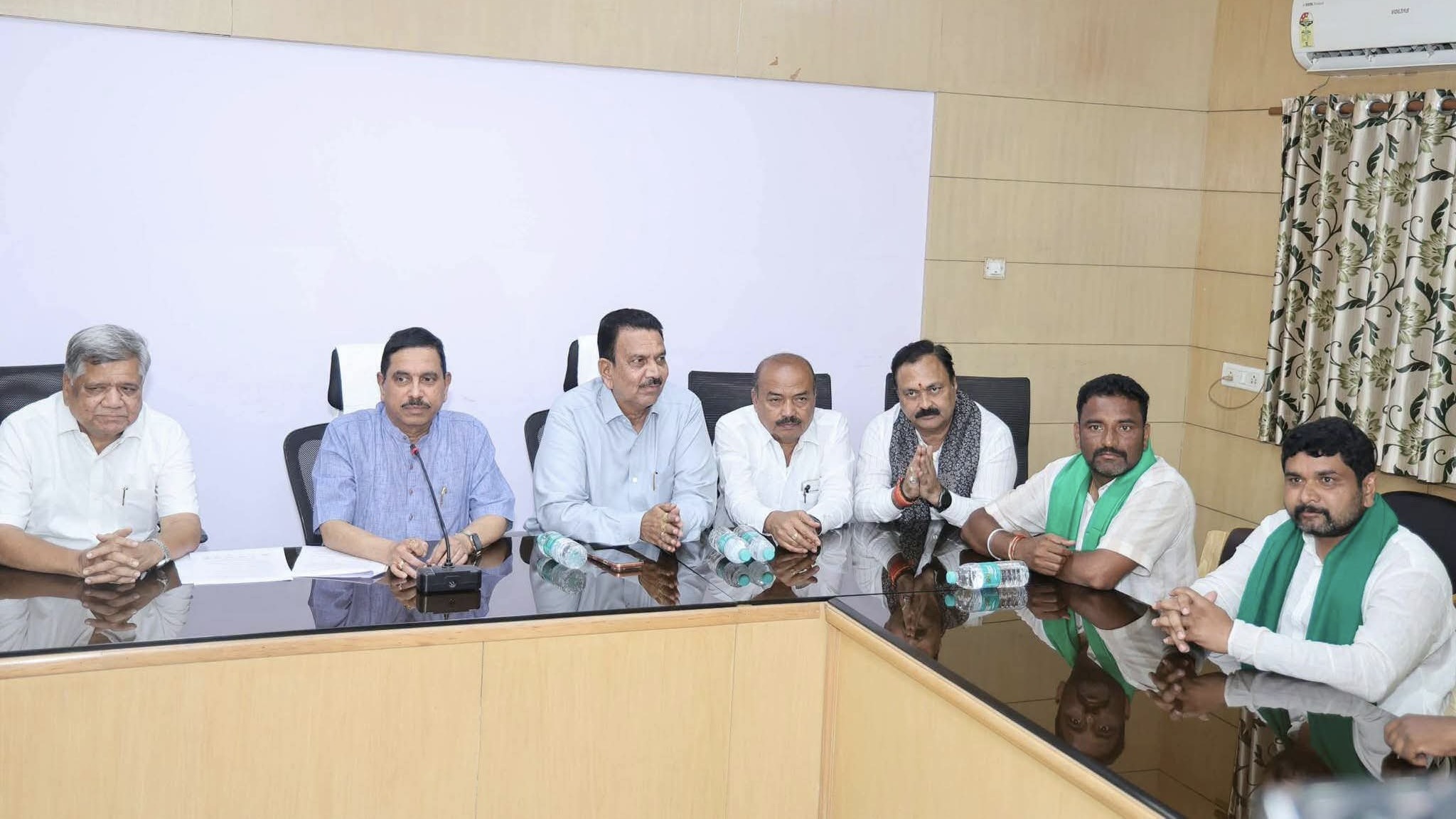
Union Minister Pralhad Joshi meets with farmer leaders.

Synopsis: Karnataka’s sugarcane farmers have suspended their week-long agitation after talks with Union Minister Pralhad Joshi in Hubballi, setting 26 November as the deadline for the Centre to act on their demands. They want the sugarcane price raised to ₹5,500 a tonne from ₹3,650 and the minimum selling price of sugar increased to ₹60 a kg from ₹31, along with changes to ethanol procurement. Chief Minister DK Shivakumar has urged the Centre to take early decisions, warning that the delayed crushing season in North Karnataka is bound to cause losses.
Karnataka’s sugarcane farmers have suspended their week-long agitation after late-night talks with Union Minister Pralhad Joshi in Hubballi, giving the Centre until 26 November to act on their demands for a higher sugarcane price, a revision of sugar’s minimum selling price (MSP) and changes to ethanol procurement.
The meeting between Joshi and a delegation of eight farmer leaders began late on Sunday, 18 October, and continued until about 3 am on Monday. The delegation included Karnataka Rajya Raitha Sangha and Hasiru Sene president Chunappa Pujeri and honorary president Shashikant Guruji.
Former Karnataka Chief Minister Jagadish Shettar, MLAs Mahesh Tenginkai and CC Patil, and senior district and police officials, including the Deputy Commissioners of Belagavi and Dharwad, attended the meeting.
The farmers want the Fair and Remunerative Price (FRP) of sugarcane raised from ₹3,650 a tonne for the 2026–27 sugar season to ₹5,500 a tonne. They have also demanded that the sugar MSP be raised from ₹31 to ₹60 a kg, along with changes to ethanol procurement and pricing and separate MSPs for sugar sold for domestic and commercial consumption.
The Centre has agreed to examine the demands through a four-member committee headed by former NITI Aayog member Ramesh Chand, constituted on 14 October.
Speaking to reporters after the meeting, Joshi said the Centre had asked the farmers to place their demands before the committee.
“I have told them that the Government of India has always stood by farmers. All the policy decisions we have taken so far have been in the interests of farmers,” he said.
“Now, they have placed their demands before us, and we have constituted a committee to examine them. We have conveyed that we are approaching all the issues positively and that they should discuss their demands with the committee,” he added.
Also Read: Kumaraswamy seeks probe into alleged sting operation targeting Siddaramaiah, warns of protests
The breakthrough follows weeks of protests over sugarcane prices. On September 29, thousands of farmers gathered in Hubballi under the banners of the Karnataka Rajya Raitha Sangha and Hasiru Sene, with growers from Maharashtra also joining the demonstrations.
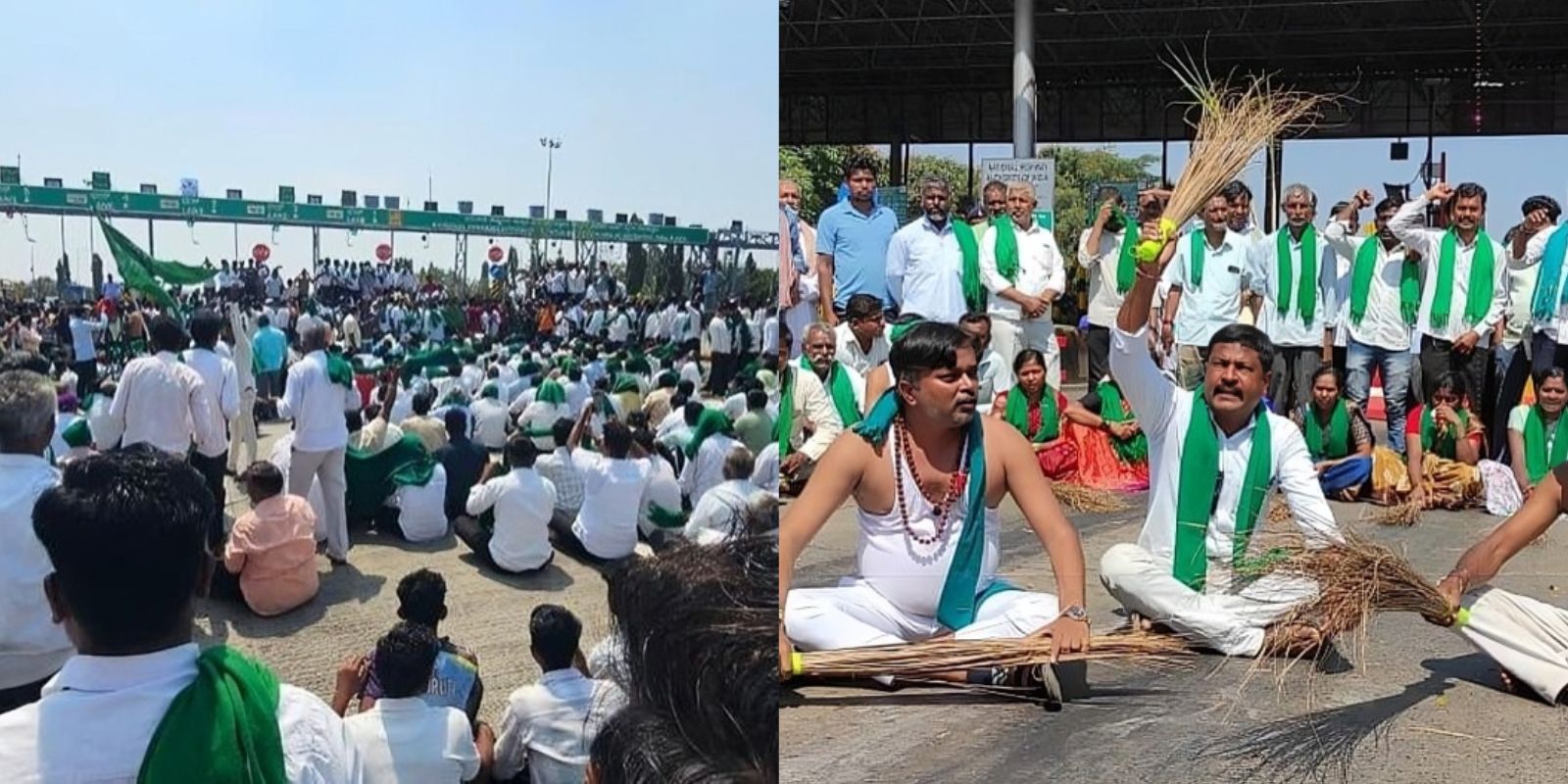
K’taka sugarcane farmers block the NH-48. (File Photo)
After initial discussions with Joshi, farmer representatives travelled to New Delhi on October 12 for talks with Union Agriculture Minister Shivraj Singh Chouhan and officials. The discussions covered the FRP, sugar MSP, cane weighment, deductions by mills, ethanol pricing and payments to farmers.
On October 13, farmers blocked highways in Belagavi and Bagalkot districts, disrupting traffic on the Pune–Bengaluru National Highway and other routes.
On October 14, protesters called off a 28-hour blockade at the Hattaragi toll plaza and began marching towards Joshi’s residence in Hubballi. Blockades at other locations continued for a period.
Farmer leaders said they would return to Hubballi and intensify the agitation if the government failed to meet their demands by November 26.
Speaking to South First, Pujeri said the discussions covered sugar pricing, ethanol procurement and the implementation of the Swaminathan Commission’s recommendations.
He cited the absence of a State-advised price (SAP), delays in cane payments, a lack of transparency in sugar recovery calculations, discrepancies in weighment practices and alleged irregularities by sugar mills.
Farmers are dissatisfied with the existing pricing arrangements because they do not adequately account for rising production costs or the revenue mills earn from by-products, he said.
“The government has responded positively to our demands and said a committee would examine them. We urged the government to examine practices in other states, such as Uttar Pradesh and Tamil Nadu, to ensure fair remuneration and justice for farmers,” he said.
“We have set a deadline until 26 November for the centre. If our demands are not met within that period, we will return to Hubballi and intensify the agitation.”
Also Read: Bengaluru advocate allegedly shot dead by tenants after rent dispute
Karnataka Chief Minister DK Shivakumar has separately sought urgent intervention by the Centre, saying the agitation had delayed the start of the sugarcane crushing season in North Karnataka.
In a letter dated 19 October to Prime Minister Narendra Modi, Shivakumar said the protests had prevented the crushing season from commencing in North Karnataka.
“Mature sugarcane remains standing in the fields, and every day of delay results in a loss of cane weight and sugar content,” he wrote.
The Chief Minister said the State government had taken measures within its powers to address complaints about cane weighment and sugar recovery.
Our sugarcane farmers deserve fair prices for their hard work and the assurance that their livelihoods are protected.
In North Karnataka, the delay in the commencement of the crushing season has created uncertainty for thousands of farming families, with mature sugarcane still standing in their fields. Every passing day can mean a loss in cane weight and sugar content, directly affecting the income of farmers who have worked hard for months to bring their crop to harvest.
During my recent visit to Kittur, I met the protesting farmers and heard their concerns firsthand. I understand their distress and the need for a timely resolution that safeguards their livelihoods. I have written to Hon’ble Prime Minister Shri @narendramodi, urging the Union Government to intervene and take early decisions on the key demands that fall within its purview.
The five key requests are:
1. Revise the Minimum Selling Price of sugar, unchanged at ₹31 per kg since 2019, to reflect rising sugarcane costs and enable mills to pay farmers fairly.
2. Introduce separate MSPs for domestic and commercial sugar to protect household consumers while ensuring fair prices for bulk buyers.
3. Review the exclusion of ethanol produced from sugarcane juice, sugar syrup and B-heavy molasses from procurement tenders and ensure fair allocation based on installed capacity.
4. Increase the prices of cane-based ethanol, unchanged since 2022–23, to reflect rising sugarcane costs and support sugar mills.
5. Restore the FRP base recovery rate to 9.50% to ensure farmers in low-recovery regions receive fair remuneration despite variations in soil, climate and crushing conditions.Our government has taken steps within its powers to improve transparency in cane weighment, strengthen sugar recovery testing and provide additional financial support to farmers. I have also welcomed the Union Government’s committee examining issues in the sugar sector. However, with the crushing season already delayed, these pressing concerns require timely decisions even as the committee continues its work.
The livelihoods of lakhs of sugarcane farmers and the well-being of their families are at stake. We must ensure that their hard work is recognised and that they receive fair remuneration for their produce. I urge the Union Government to respond positively to these demands so that the concerns of our farmers can be addressed and the crushing season can begin without further delay. The interests of our farmers and the welfare of the people of Karnataka remain our foremost priority.
@PMOIndia
— DK Shivakumar (@DKShivakumar) October 19, 2026
Under a government order dated 27 November 2023, the Legal Metrology Department had issued a standard operating procedure to prevent irregularities in sugar mill weighbridges, and all mills had been directed to comply. All 81 operational mills had shifted from analogue to digital load cells, he said.
District-level teams had also been set up to inspect sugar recovery and cane weight at every mill at least twice a month during the 2025–26 season and submit reports to the State government.
Shivakumar said average sugar recovery had risen from 9.91 percent in 2022–23 to 11.09 percent in 2025–26. All mills had also been directed to obtain accreditation from the National Accreditation Board for Testing and Calibration Laboratories (NABL) for their recovery-testing laboratories.
For the 2025–26 season, the State had ensured an additional ₹100 a tonne over the price agreed upon with mills under Government Order No. CI 324 SGF 2025, bearing ₹750 a tonne from its own funds, the letter said. About ₹290 crore had been paid directly to farmers.
However, Shivakumar said the farmers’ principal demands could be met only by the Centre. He welcomed the committee constituted on 14 October under Chand and said Karnataka would participate and share its data, but called for urgent decisions without waiting for the committee to complete its work.
Also Read: Tricolours, slogans and dissent: Bengaluru protesters march days after police detentions
Shivakumar asked the Centre to raise the sugar MSP, which has remained at ₹31 a kg since 14 February 2019, even as the sugarcane FRP had risen from ₹2,750 to ₹3,650 a tonne. Mills could not pay farmers a fair cane price while sugar prices remained at their 2019 level, he said.
He also sought separate MSPs for domestic and commercial sugar, saying the arrangement would protect household consumers while requiring bulk commercial buyers to pay a fair price.
The third demand concerned the exclusion of certain cane-based ethanol feedstocks from an oil marketing companies’ procurement tender dated 16 October for the 2026–27 Ethanol Supply Year, running from November 2026 to October 2027.
The tender excluded ethanol produced from sugarcane juice, sugar syrup and B-heavy molasses while retaining eligibility for ethanol produced from C-heavy molasses, the Chief Minister said.
Karnataka has an annual production capacity of 225 crore litres of cane-based ethanol, he wrote. Excluding these feedstocks would reduce sugar mills’ revenue and constrain their ability to pay cane growers on time.
Shivakumar urged the Centre to review the decision and allocate ethanol procurement from cane-based feedstocks in proportion to the installed capacity of mills to protect their financial viability and safeguard farmers’ interests.
(Edited by Dese Gowda)



