

Published Nov 18, 2026 | 2:17 PM ⚊ Updated Nov 18, 2026 | 2:26 PM

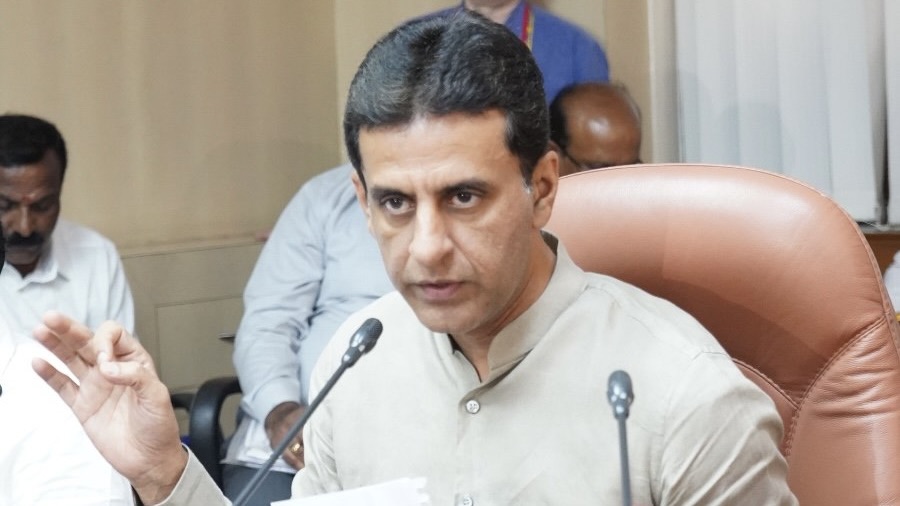
Rizwan Arshad said the Centre's ethanol-blending policy was putting an additional financial burden on ordinary vehicle owners.

Karnataka Minister for Food, Civil Supplies and Consumer Affairs Rizwan Arshad has written to Union Minister for Petroleum and Natural Gas Hardeep Singh Puri in the wake of the state government’s findings regarding the excessive blending of ethanol by several Oil Marketing Companies (OMC), resulting in reduced mileage and other issues in vehicles.
In a detailed letter dated November 17, Rizwan Arshad listed the government’s findings regarding excessive ethanol content in fuel supplied across the state, with one recording a 31.2 per cent blend, well above the Centre’s mandated 20 per cent.
Arshad also criticised the central government’s ethanol policy while stressing that the Congress government was not against the programme itself but its implementation without preparedness and over-blending.
“The programme cannot come at the cost of the citizens. A transition of this scale needs the whole ecosystem to be ready, including fuel infrastructure and ethanol-compliant vehicles, and that transition takes time,” the minister said.
The minister called on the Centre to adopt corrective measures, “keeping the interest of the common man as a priority.”
The minister also attached the test results of fuel samples collected from 14 retail outlets across districts and clarified that the government had to run the tests after the OMCs refused to provide details. Rejecting the OMCs’ claim that the tests violated “prescribed procedure,” the minister stated, “The State rejects these allegations in their entirety as baseless and factually incorrect.”
He also noted that the government’s move has created deterrence and stated that it will continue to monitor fuel quality in outlets across the state.
“Without consistent and continuous compliance checks, there is nothing to prevent these practices from returning, and the consumer must not be left exposed to that risk again. Karnataka will therefore continue to check fuel quality at retail outlets on a continuous basis, and will act firmly wherever any deviation from the notified standard is found,” he said.
In his letter, Arshad said that the state government initiated the probe and the tests after receiving thousands of complaints from vehicle owners regarding “falling mileage, rough running of engines, damage to older vehicles, and receiving less fuel than they paid for.”
The minister explained that the government had initially collected 63 fuel samples and approached the OMCs “in good faith” for details regarding the ethanol blending.
“Of the 63 samples, only 42 reports have been received so far, and not one of them reports the percentage of ethanol content in the sample. When the Government of Karnataka asked why, it was told that the Research Octane Number (RON) is the parameter for compliance. However, the OMCs’ own reply acknowledges that IS 17021 mandates measurement of ethanol content in blended petrol, yet no such measurement has been carried out. This is a clear admission of non-compliance with the very standard they cite,” the minister said.
“Moreover, the reports for the remaining 21 samples are yet to be received, and no reason has been given for this inordinate delay,” he added.
The minister stated that the government then ran tests using fresh samples collected from 14 outlets. He stated that the samples were tested in independent laboratories accredited by the NABL, in accordance with the law and prescribed procedures.
“Every sample was drawn by officers duly authorised under the Motor Spirit and High Speed Diesel (Regulation of Supply, Distribution and Prevention of Malpractices) Order, 2005, strictly in accordance with the procedure laid down in clause 8, with counterpart samples sealed and handed over on the spot. The density of each sample was recorded in the prescribed proforma at the point of collection and signed by the dealers and other authorised representatives as required under the Order, and the densities reported by the laboratories match those recorded at the outlets. There is, therefore, no procedural lapse and no discrepancy for the OMCs to point to,” he said.
Also Read: E20 or not? Keralam’s petrol tests hit a snag as Ernakulam laboratory awaits equipment
The minister also listed additional findings, including a non-uniform blending of ethanol ranging from 13.5 per cent to 31.2 per cent.
“Such wide variations leave the consumer wholly unaware of the composition of the fuel being dispensed into their vehicle. This is a matter of grave concern, as every consumer has an inalienable right to know the exact composition of the fuel for which he or she pays,” he stated.
The minister also flagged a high concentration of ethanol in petrol marketed as “premium and high-speed”, costing around ₹120 to ₹140 per litre.
He also raised transparency concerns regarding the quantity of the fuel, alleging that the Centre’s recent move, which doubled the mandatory verification interval for petrol and diesel dispensers from 12 months to 24 months, has weakened the safeguards on this front.
Arshad noted that a survey undertaken by the state government covering 805 retail outlets in Karnataka found that 768 required recalibration.
“Of the 3,071 nozzles tested, 2,618 showed deviation from their rated accuracy. A total of 101 outlets were found dispensing beyond the maximum permissible error and were booked, with fines of ₹6.66 lakh collected. Most significantly, even nozzles found within the permissible limit were nearing their tolerance threshold within just 9 to 11 months of use,” the minister said, adding that the findings indicate that the existing annual cycle is itself barely adequate.
“The State has therefore decided not to implement either notification and will continue annual verification of all dispensers through government inspectors,” he said, urging the Centre to reconsider the move.
To ensure consumer transparency and choice, the minister urged the Centre to ensure that retail outlets prominently display the exact ethanol percentage for every petrol grade and print it on all purchase receipts.
He stated that petrol pumps should continue offering E10 and ethanol-free petrol at affordable prices alongside E20 until the vehicle fleet is fully compatible with higher blends.
For quality assurance and accountability, an independent third-party mechanism using unbiased, NABL-accredited laboratories should conduct random fuel checks and report ethanol content, the minister said.
He also called for a dedicated fund to be set aside to compensate consumers whose vehicles suffer damage from petrol with ethanol above the prescribed limit, with claims settled through a simple, time-bound process based on certification from authorised service centres.
(Edited by Fayisa CA)



