

Published Nov 17, 2026 | 12:00 PM ⚊ Updated Nov 17, 2026 | 12:00 PM

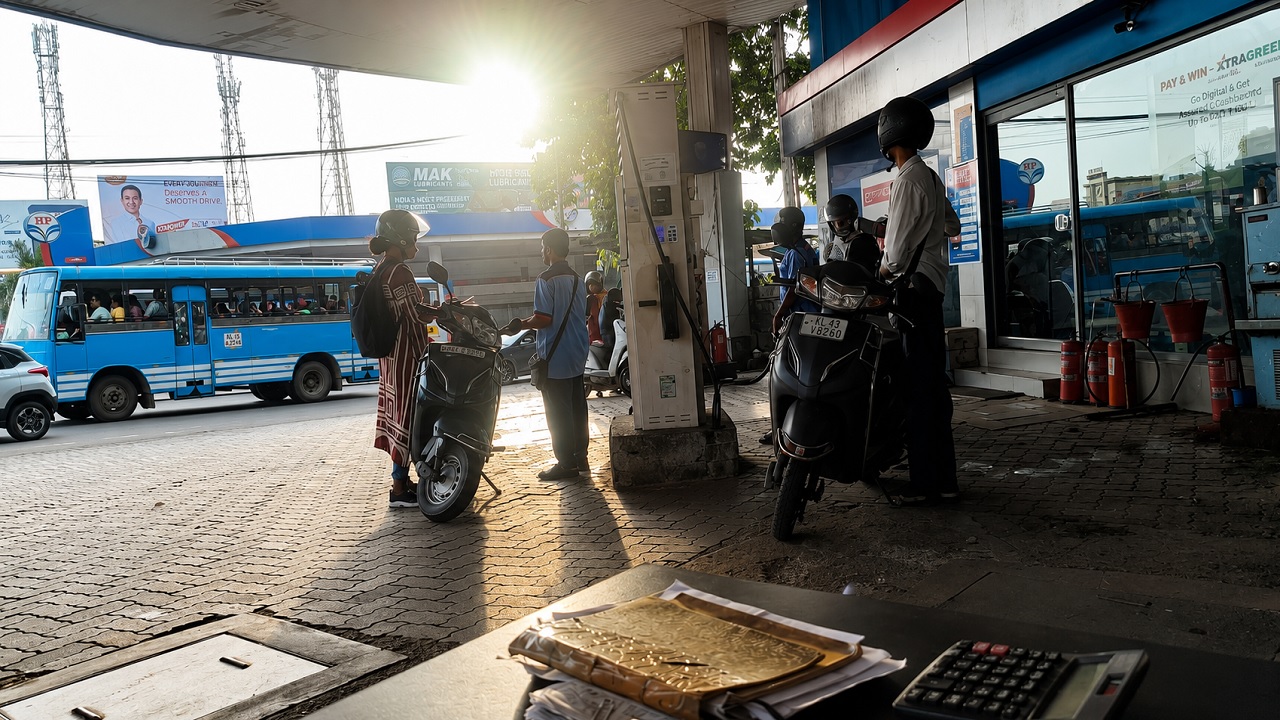
South First explored E20's real-world impact in Kochi

A week after the Keralam government ordered tests on petrol samples amid allegations of excessive ethanol blending, the state is still waiting for answers. But there is an unexpected hitch in the process: the laboratory entrusted with testing the samples says it does not have all the necessary equipment yet.
Speaking to South First, Food and Civil Supplies Minister Anoop Jacob said the government would ensure strict follow-up on the issue.
The minister’s office also said the government was planning to plug all possible loopholes before proceeding further.
“Since the Centre is also involved in this issue and there could be a legal battle, our side has to be perfect,” the minister’s office said.
Officials collected petrol samples from outlets in Thiruvananthapuram, Ernakulam, Kozhikode and Kannur in the first phase of the inspection. Civil Supplies officials said the exercise would be extended to rural areas in the next phase.
However, the lab test in Ernakulam is facing some challenges in the process.
Also Read: Sabarimala temple opens for Mandala-Makaravilakku season
Shaji, Ernakulam District Supply Officer, told South First that officials had collected petrol samples from outlets of Indian Oil Corporation (IOCL), Bharat Petroleum Corporation Limited (BPCL) and Hindustan Petroleum Corporation Limited (HPCL).
“From each pump, we collected six samples of the same quantity. Two samples were sent to the Regional Chemical Examiner’s Laboratory at Kakkanad, two have been retained at the Civil Supplies office and the remaining two have been kept at the respective petrol pumps,” he said.
Officials have been instructed to submit a detailed report to the Civil Supplies Department if the ethanol content is found to exceed 21 percent, with E20 (20 percent ethanol blending) being the permitted limit, he added.
The elaborate sampling arrangement is intended to ensure that the results can be verified and any dispute over the findings can be addressed.
While motorists and the government are waiting to know whether the petrol sold in the state crosses the prescribed ethanol limit, South First learnt that the Regional Chemical Examiner’s Laboratory at Kakkanad does not yet have all the equipment required to conduct the tests.
“We did not have sufficient equipment to conduct the tests. We have initiated procedures to purchase the required equipment,” a source at the laboratory told South First.
There are both conventional and instrumental methods to test ethanol content in E20 petrol.
The conventional method involves mixing a measured quantity of petrol with water or adding specific chemical reagents to a petrol sample. Since ethanol dissolves in water while petrol largely remains separate, the mixture is allowed to settle into two layers. The increase in the volume of the water layer is measured to estimate the ethanol content.
Alternatively, chemical reagents can cause a colour change, with the intensity of the change indicating the amount of ethanol present in the petrol.
Also Read: Nedumbassery crash: Prime accused Suhail Sajeev walks out on bail
Even this relatively straightforward method requires basic laboratory equipment, including graduated measuring cylinders, glass beakers, measuring pipettes, separating funnels, distilled water and thermometers.
The instrumental method, meanwhile, requires more sophisticated equipment, including a gas chromatograph, chromatographic columns and a Flame Ionisation Detector (FID).
The laboratory source said the conventional method was being pursued and that the necessary glassware had now been purchased.
“We have to follow standard procedures. More than rushing to produce results, we need to ensure that the findings are accurate. This could delay the results. Since it is a government institution, we cannot simply go out and purchase anything. There are procedures to be followed for every purchase,” the source explained.
So, while the entire state waits to find out what exactly is going into its petrol tanks, the laboratory is still getting its testing arrangements in place. The samples have been collected, sealed and distributed.
The next step is to test them.
But first, the lab needs to be ready to do so.
(Edited by Dese Gowda)



