

Published Sep 04, 2026 | 12:26 PM ⚊ Updated Sep 04, 2026 | 12:44 PM

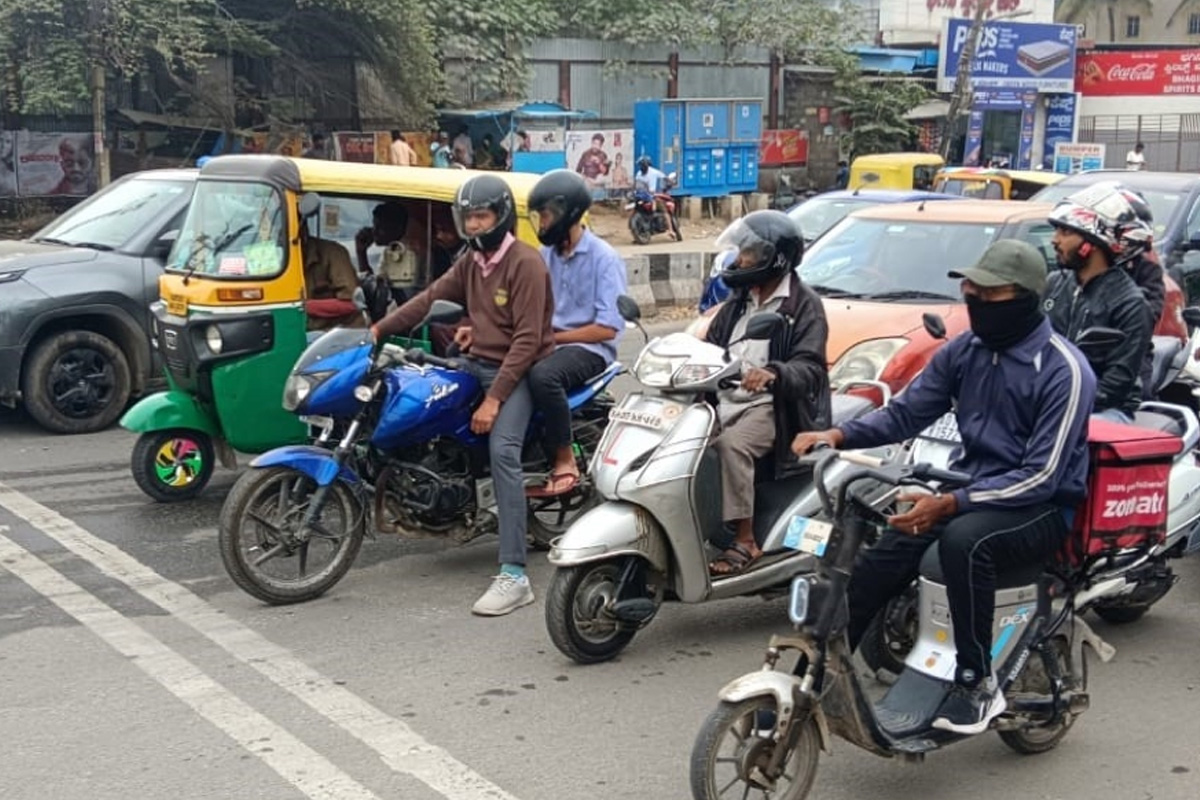
File photo of Bengaluru traffic. (Creative Commons)

The Bengaluru Traffic Police has begun pilot restrictions on specified categories of vehicles on five major elevated corridors from Friday, September 4, citing road safety concerns, fatal accidents, breakdown-related congestion and the need to improve traffic flow.
The restrictions cover the BGS Flyover on Mysuru Road, Peenya Elevated Corridor, Silk Board–Ragigudda Double-Decker Flyover, Airport Road Elevated Corridor between Sanjeevnagar Cross and Vidyashilpa Junction, and the Electronic City Elevated Corridor.
The Electronic City restrictions will come into force separately on September 11.
Traffic Police data shows the Electronic City elevated corridor recorded 14 fatal two-wheeler crashes in 2025 and another 12 between January and July 2026. The Airport Road elevated corridor recorded five fatal accidents in 2025 and 10 fatal crashes during the first seven months of 2026.
As a part of the Urban Mobility Mission, the Bengaluru Traffic Police has introduced vehicle restrictions on a pilot basis on five major elevated corridors to improve road safety, reduce accidents and congestion, and ensure smoother traffic movement.
The restrictions apply to…
— Priyank Kharge / ಪ್ರಿಯಾಂಕ್ ಖರ್ಗೆ (@PriyankKharge) September 4, 2026
Joint Commissioner of Police (Traffic) Karthik Reddy said the measures followed a study of accident patterns, vehicle speeds, flyover design, breakdowns and congestion on elevated roads. Police have said two-wheelers are particularly vulnerable on the Electronic City and Airport Road corridors because of higher speeds and strong crosswinds at some locations, while breakdowns of goods vehicles can create severe bottlenecks due to limited space on flyovers.
The restrictions form part of Bengaluru’s broader Urban Mobility Mission, which aims to bring agencies including the Traffic Police, GBA, BMTC, BMRCL, Transport Department, DULT and K-RIDE onto a common platform to implement coordinated, data-driven mobility interventions.
The mission focuses on road safety, congestion hotspots, public transport integration, first- and last-mile connectivity, freight movement, technology and data sharing, and better coordination of road and infrastructure works.
The initiative is intended to test measurable short-term interventions while larger transport projects are implemented.
The flyover restrictions will be assessed for their impact on accidents, congestion and traffic flow before authorities decide whether to continue, modify or expand them.
The move has also drawn opposition from some two-wheeler users, particularly over the 24×7 restrictions on the Electronic City and Airport Road elevated corridors.
Also Read:
Recruitment scam: Karnataka suspends arrested IAS officer Gyanendra Kumar Gangwar
(Edited by Keerthivas.)



