

Published Oct 13, 2026 | 1:12 PM ⚊ Updated Oct 13, 2026 | 1:12 PM

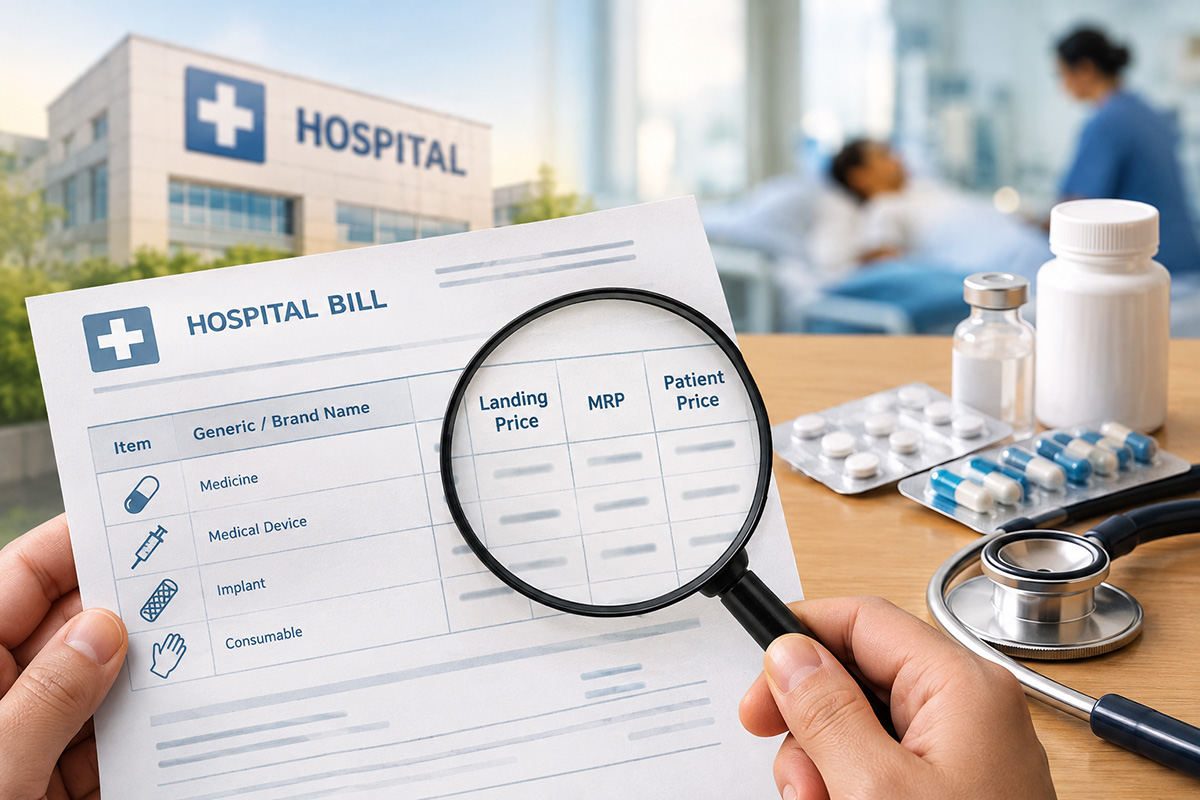
Image used for representational purpose. (AI generated image)

Synopsis: Karnataka has directed hospitals to disclose the procurement cost, maximum retail price (MRP) and patient price of medicines, medical devices and consumables on itemised bills from November 1. The move aims to improve billing transparency and protect patients, amid wider concerns over medicine mark-ups and proposals to regulate cancer drug prices.
Hospitals across Karnataka will have to disclose the actual procurement cost, maximum retail price (MRP) and price charged to patients for medicines, medical devices, implants and consumables on itemised bills from November 1.
The state’s Food Safety and Drugs Administration (FDA) said it has issued the directive to improve price transparency and address concerns over the gap between hospitals’ procurement costs and patient bills.
In a circular dated October 1, the Karnataka FDA said there was a “significant gap between the landing/base price (actual procurement cost to hospitals/hospital pharmacies) and the Maximum Retail Price (MRP) printed on medicines, medical devices and consumables.”
“In several cases, patients are billed at or near MRP without any transparency about the actual acquisition cost,” the circular said.
The department said the directive was intended to “ensure price transparency, protect patient interests, and prevent unfair trade practices.”
The circular applies to government, private and trust hospitals, nursing homes, clinics, day-care centres and diagnostic centres. It also covers inpatient and outpatient services where medicines, medical devices, implants, stents, consumables and disposables are supplied and billed to patients.
From November 1, hospitals and healthcare institutions must issue itemised bills showing each medicine, device, implant and consumable separately.
For every item, the bill must mention the product’s name, generic and brand name wherever applicable, batch number, manufacturing date and expiry date. It must also disclose the landing or base price, MRP, price charged to the patient and applicable taxes.
The circular defines the landing or base price as the actual procurement cost to the hospital, excluding taxes. It also specifies that the MRP must be shown as printed on the product pack or as notified by the National Pharmaceutical Pricing Authority (NPPA), wherever applicable.
The price charged to patients “shall not exceed MRP”, the circular stated, adding that hospitals must also comply with applicable ceiling prices notified by the NPPA.
The directive extends beyond hospital billing. The Karnataka FDA has instructed hospitals to display notices at billing counters, pharmacy counters and admission desks informing patients of their right to see the landing price and MRP on their bills.
Hospitals must also publish information about the policy on their websites, where available, and maintain purchase invoices, landing prices and billing records for at least three years for inspection by authorised officers.
The circular directs district health officers, chief medical officers and drug control authorities to monitor implementation. Authorities may conduct random checks and audits of hospital bills and purchase records.
Violations could attract action under applicable laws, including the Karnataka Private Medical Establishments Act, the Drugs and Cosmetics Act, 1940, the Drugs (Prices Control) Order, 2013, and the Consumer Protection Act, 2019.
The disclosure requirement comes amid Karnataka’s broader efforts to address high medicine prices, particularly for expensive cancer treatments.
In a separate statement, the Karnataka government said inspections had identified pricing concerns involving 253 medicines and consumables, with differences between their landing or procurement costs and the prices billed to patients.
The state had written to Union Health Minister JP Nadda on September 23, seeking national-level measures to address the issue. It urged the Centre to bring advanced chemotherapy, targeted therapy and other expensive cancer medicines under the purview of the Drugs (Prices Control) Order, 2013.
Karnataka also sought a comprehensive cap on trade margins for expensive, life-saving and anti-cancer medicines, alongside mandatory disclosure of purchase prices, MRPs and additional margins charged by hospitals or pharmacies.
The issue gained further attention following the Supreme Court’s observations on mark-ups on essential medicines, including cancer drugs. “How can a patient be cheated?” the top Court had asked then.
The Court questioned why the MRP of essential medicines, including cancer drugs, could not be capped at 16% above the price to retailer (PTR), as applicable to scheduled medicines under the Drugs (Prices Control) Order, 2013.
The court also flagged the difference between the prices at which medicines are supplied to retailers and hospitals and the prices ultimately paid by patients, describing the situation as “unacceptable for life-saving treatment”, according to the statement.
At its October 8 meeting, the NPPA granted in-principle approval to a proposal to cap trade margins at 30% of the MRP for non-scheduled anti-cancer medicines identified under Paragraph 19 of the Drugs (Prices Control) Order, 2013.
The proposal remains subject to finalisation of the list of medicines to be covered.
The Union Health Ministry has been directed to constitute an expert committee under the Directorate General of Health Services to recommend which anti-cancer medicines should be brought under price control. According to the state, the committee was expected to submit its report by October 14, 2026.
The Centre estimated that the proposed measure could reduce the MRP of several anti-cancer medicines by 20% to 70%, potentially saving patients approximately ₹2,500 crore.
Karnataka has also asked the Centre to consider extending price-control measures, where necessary, to other expensive life-saving medicines used to treat cardiac and kidney conditions.
Also Read:
Cancer drugs carry markup prices of up to 700%, government proposes 30% cap
(Edited by R Rajesh Kumar.)



