


Published Jul 19, 2026 | 7:00 AM ⚊ Updated Jul 19, 2026 | 7:00 AM

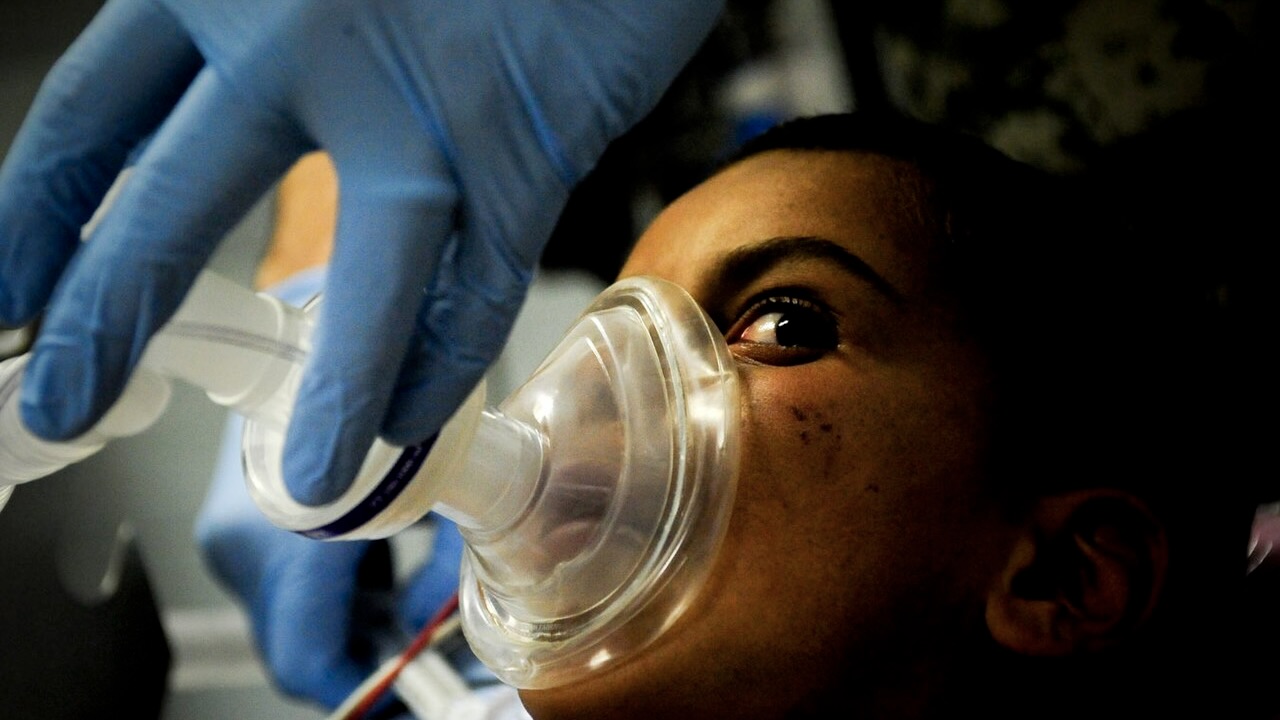
A child being prepared to go under anesthesia.

Synopsis: The deaths of two children in Kerala within five days after undergoing procedures involving anaesthesia have raised questions about paediatric anaesthesia safety. Experts tell South First that while the incidents warrant thorough investigation, adverse outcomes should not be equated with medical negligence without scientific evidence, independent expert review and complete clinical evaluation.
The deaths of two children undergoing procedures involving anaesthesia in Kerala within a span of five days have triggered questions over paediatric anaesthesia practices and medical accountability. While one case has already led to the registration of a medical negligence case against doctors, experts say the available information is insufficient to draw conclusions and caution against equating an adverse outcome with negligence.
The latest incident occurred on Wednesday, 15 July when nine-year-old Muhammed Iyas died during a routine surgery for an umbilical sinus at the Government General Hospital in Kasaragod. According to hospital authorities, the child underwent spinal anaesthesia for what doctors described as a straightforward procedure lasting about 15 to 20 minutes.
Hospital officials said the surgery had almost concluded when Iyas suffered a cardiac arrest. Doctors immediately initiated cardiopulmonary resuscitation (CPR) and successfully revived him. However, he soon suffered a second cardiac arrest, developed pulmonary oedema, a condition in which fluid accumulates in the lungs, and died despite prolonged resuscitation efforts.
Hospital Superintendent Dr Jithesh V described cardiac arrest as a rare but recognised complication associated with anaesthesia, adding that the event was unexpected because the child had no known underlying medical illness.
The boy’s family has alleged medical negligence, claiming they were informed about the cardiac arrests only after his death. Kasaragod Town Police have registered a case of unnatural death, and an autopsy is under way.
The incident came just five days after the death of 17-month-old Devansh Shouria at Baby Memorial Hospital in Payyannur.
The toddler had been administered general anaesthesia on 5 July to suture two facial injuries measuring just 0.6 cm on the lower lip and 0.8 cm beneath the chin. He never regained consciousness and died on 10 July.
A post-mortem conducted at Government Medical College, Pariyaram, attributed the death to hypoxic ischaemic encephalopathy, an irreversible brain injury caused by oxygen deprivation following induction of general anaesthesia. The forensic report described the injuries as superficial and healing and questioned whether general anaesthesia was required for such minor wounds.
Based on the autopsy findings, Payyannur DySP Shyju PL said the report suggested that general anaesthesia was not required. Police subsequently registered a medical negligence case against the anaesthesiologist, surgeon and hospital management. A five-member government medical board has been constituted to examine the treatment records before submitting its report.
Baby Memorial Hospital has denied negligence, maintaining that the child developed a rare complication despite all accepted treatment protocols being followed.
Also Read: How drone transport spared TB patients long journeys and steep diagnostic costs in rural Telangana
Speaking to South First, Dr AL Meenakshi Sundaram, President-elect of the Indian Society of Anaesthesiologists (ISA), said anaesthesiologists undergo extensive specialised training, particularly in managing children, but emphasised that anaesthesia remains one of the most demanding fields of medicine.
“Anaesthesiologists undergo three years of postgraduate MD training, during which they receive extensive exposure to paediatric anaesthesia. Beyond that, there are super-specialty programmes in paediatric and neonatal anaesthesia. So anaesthesiologists are well trained in managing children requiring anaesthesia,” he said.
He described anaesthesia as “a tightrope walk” because even minor physiological changes in a patient can have significant consequences.
“Anaesthesia is one of the most difficult specialties to master. The drugs we administer temporarily suppress normal body functions so that surgery can be performed safely. Even minor variations in a patient’s condition can make a difference. We can examine a patient externally, but we cannot always predict what may happen internally once anaesthesia is administered. That is why anaesthesia requires constant vigilance and continuous monitoring,” he said.
Dr Sundaram said it would be irresponsible to comment on either Kerala case without reviewing the complete clinical records.
“The doctor treating the patient decides which anaesthesia is appropriate after assessing the patient’s condition, the nature of the procedure, the available infrastructure and whether it is an emergency. We cannot put ourselves in that doctor’s shoes without knowing all the facts. Unless the complete medical records, the drugs used, coexisting illnesses and intraoperative events are examined, it would be inappropriate to conclude whether negligence occurred.”
He said anaesthesia follows internationally accepted safety protocols before a patient is even given medication.
“Before administering anaesthesia, the anaesthesiologist performs what we call a cockpit check, similar to the checks carried out by an airline pilot before take-off. The machine, monitoring equipment, emergency drugs and all supporting infrastructure are checked before the patient is assessed. These protocols exist to minimise risk and prepare for any unforeseen complication.”
Responding to suggestions that cardiac arrest itself points to negligence, Dr Sundaram said that conclusion cannot be drawn without understanding the underlying cause.
“If someone tells me a patient suffered a cardiac arrest, I still cannot conclude anything because every death ultimately ends in cardiac arrest. The important question is what caused that cardiac arrest. Without knowing the anaesthetic drugs administered, the patient’s medical history, coexisting illnesses and the sequence of events, no responsible anaesthesiologist can comment on the case.”
Dr Sundaram also stressed that an adverse outcome should not automatically be interpreted as criminal negligence.
“There is a distinction between medical complications and medical negligence. If a patient’s family believes negligence has occurred, they have every right to seek legal remedies. However, criminal negligence cannot be presumed simply because an unfortunate outcome has occurred.”
He said an independent medical opinion is essential before criminal negligence is alleged.
“The alleged negligence must be shown to be the proximate cause of death. It cannot merely be a chain of events. Such questions require scientific evaluation by independent medical experts before conclusions are reached.”
Referring to the FIR registered in the Payyannur case, he said investigating agencies should follow established legal safeguards while dealing with medical negligence allegations.
“Doctors are professionals whose intention is to save lives, not harm patients. The tragic loss of a child naturally evokes sympathy, and every doctor empathises with the family. But sympathy alone cannot become proof of negligence. Whether negligence occurred must ultimately be determined through expert medical evidence and the due legal process.”
Also Read: Beyond Air-Conditioners: Why India needs an evaporative cooling revolution
Supporting that view, Dr Arjun, a Thiruvananthapuram-based anaesthesiologist, told South First that speculation about an anaesthetic overdose in the Payyannur case is not supported by the available information.
“The probability of an overdose is very low because the dosage of anaesthetic drugs is calculated according to the child’s body weight. The dose is measured, documented and verified before the medication is prepared and administered. In a hospital setting, there are strict procedural guidelines, making an overdose highly unlikely.”
He said the post-mortem findings should not be interpreted as a definitive assessment of whether general anaesthesia was medically appropriate.
“A forensic surgeon’s primary responsibility is to determine the cause of death. Commenting on whether a particular treatment should or should not have been performed is generally outside that mandate. Even in court, such observations may not carry weight unless supported by expert medical evaluation.”
Dr Arjun said many members of the public assume local anaesthesia can always replace general anaesthesia, but that is not necessarily true in infants.
“Children, particularly infants, cannot remain still or cooperate during procedures. In such situations, local anaesthesia may not be feasible and general anaesthesia may become the safer and more practical option. Before the procedure, doctors explain the risks, benefits and possible complications to parents and obtain informed consent.”
While acknowledging the profound grief experienced by the families, he urged caution before attributing blame.
“The emotional impact of losing a child cannot be overstated. At the same time, infants are inherently at a higher risk of anaesthesia-related complications than adults. Based on the information currently available, there is virtually no possibility that an overdose caused the death, particularly in a hospital where strict safety protocols are followed.”
The two deaths have prompted renewed scrutiny of paediatric anaesthesia practices, especially in procedures perceived by the public to be relatively minor. However, experts say the circumstances of the two incidents are fundamentally different.
In the Kasaragod case, investigations are focused on the events leading to the child’s cardiac arrests during surgery. In the Payyannur case, the government medical board is expected to examine whether the choice of anaesthesia, the conduct of the procedure and the post-operative management met accepted standards of care.
Until those investigations are completed, experts maintain that it is essential to distinguish between recognised but rare complications of anaesthesia and proven departures from accepted medical practice.
“Medicine is not mathematics,” Dr Sundaram said. “The same drug may act differently in different individuals. That is why every case has to be evaluated on its own scientific and clinical merits rather than on assumptions made in the aftermath of a tragic outcome.”



