

Published Jun 10, 2026 | 7:00 AM ⚊ Updated Jun 10, 2026 | 7:00 AM

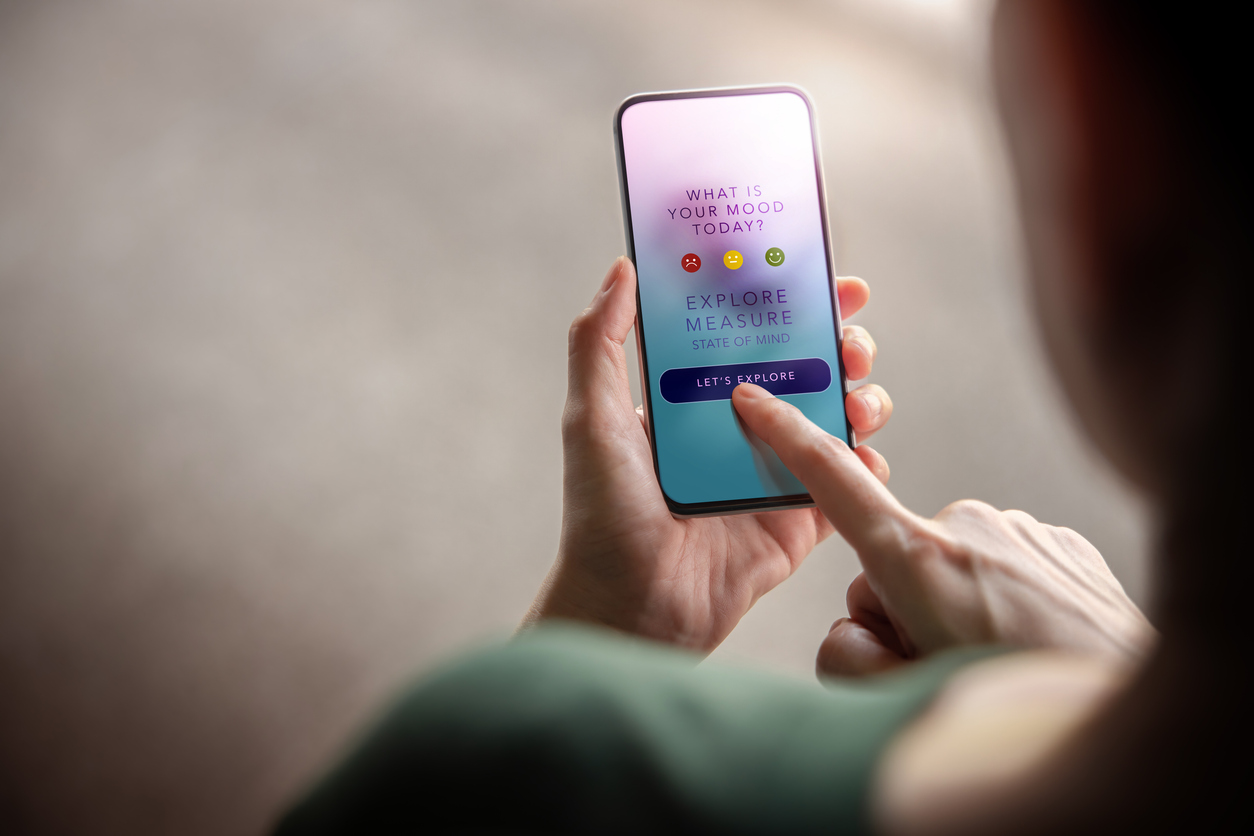
Representational image. Credit: iStock

Synopsis: India’s growing reliance on mental health apps reflects a severe shortage of professionals, with nearly 10% of adults affected and an 85% treatment gap for depression. While apps offer accessible support, research shows most lack clinical validation, crisis resources, or transparency in data use. Experts warn AI tools cannot replace therapy, urging regulation and stronger privacy safeguards.
Lakhs of Indians are now discussing their deepest fears, anxieties and emotional struggles with smartphone apps. Some track moods. Some offer guided meditation. Others use artificial intelligence to simulate conversations that resemble therapy.
At a time when India’s mental healthcare system faces a severe shortage of professionals, these platforms promise support that is affordable, accessible and available around the clock.
According to the National Mental Health Survey, nearly 10 percent of Indian adults experience a diagnosable mental health condition. The treatment gap for depression exceeds 85 percent.
But as their popularity grows, so do questions about privacy, effectiveness and accountability.
“Mental health apps gained popularity largely because of the shortage of mental health professionals and the need for easier access to support,” said Dr Sindhu Vasanth B, Assistant Professor of Psychology at RV College in Bengaluru told South First.
“People are scared of being judged when they talk about their mental health issues. Though mental health apps are not foolproof, they help people with easy accessibility and provide solutions when they are going through emotional difficulties.”
Also Read: India is talking about mental health more than ever, but is it understanding it?
What users may not realise is that using a mental health app involves sharing some of the most sensitive personal information a person can disclose. Depending on the platform, this may include mood logs, journal entries, self-assessment responses and detailed behavioural data, a digital record of a person’s inner life, accumulated over months or years.
Mental health data is not like a shopping history or a location log. It captures fear, grief, trauma and vulnerability in ways that few other data types do. And yet the industry’s standards for how that information is handled remain inconsistent.
Dr Sindhu believes informed consent deserves far greater attention. “Users should know how much of their information is being used for therapy, how much is stored, and whether any of it can be leaked or breached,” she said. “Transparency about how personal information is handled is extremely important.”
A study published in the Journal of Medical Internet Research reviewed 350 mental health apps available to Indian users, drawn from an initial pool of nearly 6,000 applications that were narrowed down based on relevance and quality criteria. The findings raise serious questions about what users are actually downloading.
Nearly two-thirds of the apps reviewed did not disclose whether mental health professionals had been involved in their development. Only 10.9 percent cited any empirical research supporting their effectiveness. Just one in four offered crisis support resources, and fewer than one in four actively encouraged users to seek professional help based on their symptoms or assessment results.
The study suggests that certain digital tools, guided self-help exercises, mindfulness programmes and digital cognitive behavioural therapy, can benefit individuals experiencing mild stress, anxiety or low mood. For users who cannot afford private therapy, face long waiting times in public health systems, or live in areas with few practitioners, these tools can offer something where previously there was nothing.
But what users may not realise is how critical the gap becomes as conditions grow more complex.
“There are a lot of differences between in-person counselling and AI-based therapy,” Dr Sindhu said. “AI cannot capture cultural nuances, non-verbal communication, body language or the wider context of a person’s experiences. While it can be useful as a first line of support, it is not good enough to understand the finer details of mental health disorders or provide the treatment required for complex conditions.”
The limitations are sharpest in moments of crisis. Algorithms can recommend journaling exercises and breathing techniques, but they are not equipped to manage emergencies involving severe distress or suicidal ideation. “If there is a crisis intervention or suicidal ideation, AI is not capable of providing the level of support required,” Dr Sindhu said. “Mental health professionals have established systems for crisis response, whereas many apps do not.”
Also Read: Every 36 minutes, mental illness claims a life by suicide in India; Bengaluru tops cities
India currently lacks a dedicated regulatory framework for most mental health apps, and the gap between what the industry promises and what regulators oversee is considerable.
A 2025 paper by researchers from NIMHANS, published in BJPsych International, notes that standalone mental health and wellness apps fall outside the scope of India’s existing medical device regulations. The Central Drugs Standard Control Organisation regulates software that functions as part of a medical device, but most mental health apps do not meet that definition. There is no centralised body specifically responsible for evaluating their safety, effectiveness or ethical standards.
The implications for users are direct. Without consistent oversight, it is difficult to distinguish between a clinically validated tool and a general wellness product designed primarily to hold a user’s attention.
The NIMHANS researchers recommend a tiered regulatory framework based on the level of risk different categories of app pose, a structure that would give higher-risk platforms, including those using AI for therapeutic interactions, closer scrutiny.



