

Published May 11, 2026 | 7:00 AM ⚊ Updated May 11, 2026 | 7:00 AM

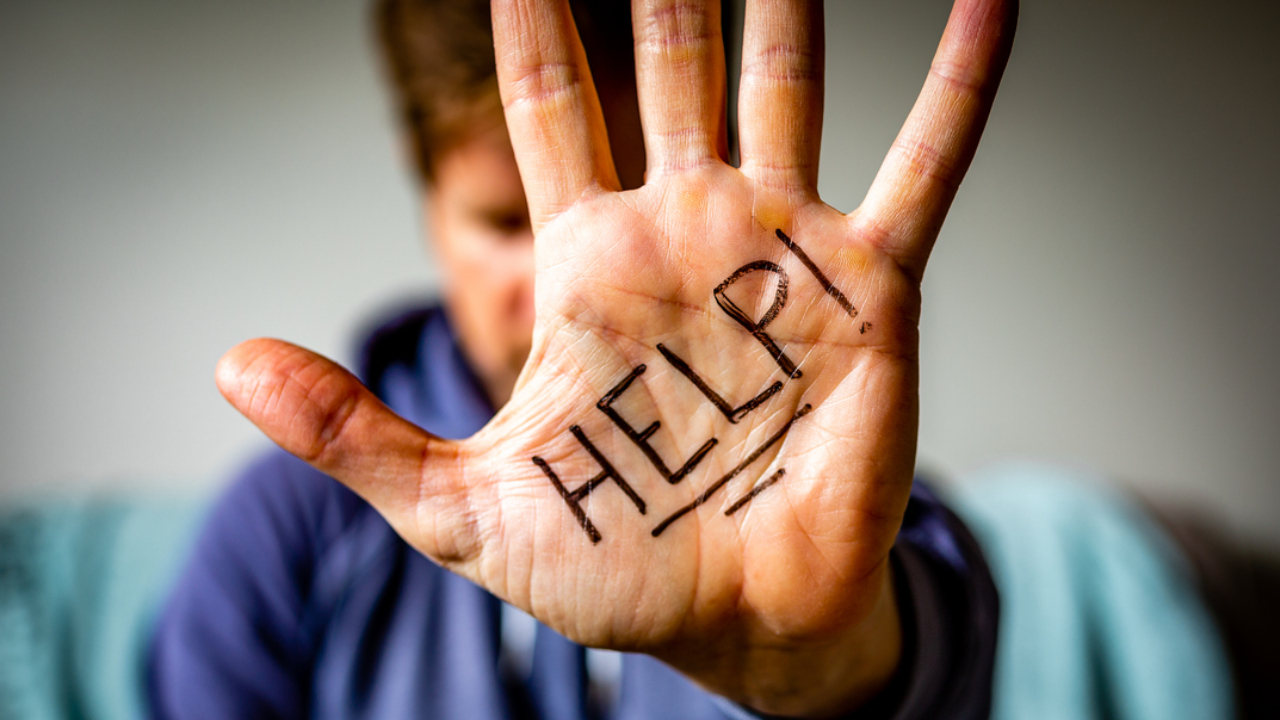
Representational image. Credit: iStock

Synopsis: NCRB 2024 data shows mental illness drove 14,305 suicides — one every 36 minutes. Karnataka tops in India with 2,465 deaths, while Bengaluru alone recording 455. The 18–45 age group bore 60% of the burden. Children too were affected, with 844 deaths. Despite slight declines, South India sustains high suicide rates, exposing deep structural gaps in mental health care.
Every 36 minutes in 2024, mental illness claimed a life by suicide somewhere in India.
Not once a day. Not once an hour. Every 36 minutes, throughout January to December, through festivals and through ordinary Tuesdays, someone lost their life to a condition that medicine can treat and society largely ignores.
The National Crime Records Bureau (NCRB) Accidental Deaths and Suicides in India 2024 report counted 14,305 such deaths across the year. It named the states where they concentrated, the cities that recorded the highest numbers, the age of every victim, and the gender.
The data does not explain why Karnataka and Bengaluru sit at the top of every list. But it establishes, with the authority of a government record, that they do.
The people mental illness kills by suicide are not confined to one age group. The NCRB data distributes those 14,305 deaths across every stage of adult life, and the numbers dismantle the assumption that this crisis concentrates only among the young or only among the old.
The 30 to 45 age group recorded the highest count, with 4,375 deaths. These are people in the middle of working lives, raising children, carrying financial responsibilities, and navigating the pressures that accumulate in that decade and a half.
The 18 to 30 age group followed with 4,258 deaths. Young adults, people entering careers and relationships and independent life, account for the second largest share of mental illness suicide deaths in the country.
Together, the 18 to 45 bracket absorbed 8,633 deaths, 60 percent of the national total. Mental illness claims the most productive decades of life at a rate that no other age distribution makes visible as starkly.
The 45 to 60 group recorded 3,008 deaths. Those aged 60 and above recorded 1,820. Even children below 18 did not escape, with 844 deaths recorded in that category, each one a number that sits behind a school, a family, and a life that had barely started.
Also Read: Women, apps, and door-to-door care: How a trial in Indian slums rewrote mental healthcare
Among the 53 major cities the NCRB tracks, Bengaluru recorded 455 deaths by suicide linked to mental illness in 2024. No other city in India came close.
Delhi recorded 78. Mumbai recorded 85. Hyderabad recorded 118. Chennai recorded 52. Bengaluru recorded more than five times what Chennai produced and more than three times what Mumbai recorded.
That single number, 455, places Bengaluru in a category by itself. It also places a question on the table that the city’s health infrastructure, its employers, its government, and its residents all need to answer.
Bengaluru’s 455 deaths account for nearly 30 percent of Karnataka’s entire state tally. A city driving nearly a third of its state’s mental illness suicide burden does not describe a random distribution.
Karnataka recorded 2,465 deaths by suicide attributed to mental illness in 2024, the highest of any state in the country. That figure represents 17.2 percent of India’s total of 14,305 such deaths.
The state recorded 1,644 male deaths and 821 female deaths. The female count, at 821, also ranks among the highest for women in this category across all states nationally.
Madhya Pradesh followed with 1,598. Maharashtra recorded 1,092. Tamil Nadu recorded 1,276. Telangana recorded 951. Gujarat recorded 901.
Karnataka and Tamil Nadu together contributed 26 percent of all mental illness suicide deaths in India in 2024. Two southern states drove more than one in four of every such death the country recorded.
Also Read: Youngsters turn to AI for mental health — sometimes, chatbot itself directs them to helpline
The NCRB tracks states that consistently account for seven per cent or more of total national suicides. Karnataka and Tamil Nadu appear in that list every year from 2022 to 2024.
For mental illness specifically, Karnataka recorded roughly 2,690 such deaths in 2022, approximately 2,577 in 2023, and 2,465 in 2024. The numbers declined slightly year on year but Karnataka held the top position across all three years.
Tamil Nadu recorded roughly 1,980 mental illness suicide deaths in 2022, approximately 1,873 in 2023, and 1,276 in 2024.
Across all suicide categories combined, Karnataka recorded 13,674 total suicides in 2022, 13,330 in 2023, and 13,151 in 2024. Tamil Nadu recorded 19,827 in 2022, 19,483 in 2023, and 19,965 in 2024.
These states did not produce a sudden surge. They sustained elevated numbers across three documented years. The data rules out an anomaly. It points to a structural problem.
Before the state figures, before the city rankings, the NCRB data produces one number that demands its own paragraph.
India recorded 11,184 suicides among children below 18 in 2024 across all causes. That works out to 30.5 children every day. A classroom, gone. Every single day of the year.
Of those 11,184 deaths, 844 carried mental illness as the recorded cause. That translates to one child dying by suicide linked to mental illness every 10 hours and 20 minutes.
The remaining child suicides traced to family problems, love affairs, failure in examinations, and causes not known. But the mental illness figure alone, 844 children in a single year, sits behind 844 families who watched their child suffer and could not find a system that reached them in time.
India recorded 1,70,746 suicides in total during 2024, a decrease of 0.4 percent over 2023. The national suicide rate stands at 12.2/lakh population.
Mental illness drove 14,305 of those deaths, representing 8.4 percent of the total. Family problems contributed the largest share of all suicides at 33.5 percent. Illness broadly contributed 17.9 percent. Drug or alcohol addiction drove 7.6 percent.
But the mental illness category produces something the other categories do not produce as precisely: a clock. One death every 36 minutes. That rhythm ran through every day of 2024 without interruption.
Also Read: Posting life updates on social media helps your mental health, except for your sleep
The NCRB measures suicide rates per lakh population to allow comparison across states of different sizes. The national average sits at 12.2.
Telangana recorded 28.6, the fourth highest rate in the country. Kerala recorded 30.2. Tamil Nadu recorded 25.9. Karnataka recorded 19.3. Andhra Pradesh recorded 15.5.
Four of the five South Indian states record suicide rates that sit above the national average. Kerala, Karnataka, Tamil Nadu, and Telangana have all appeared consistently in the list of states with elevated suicide rates from 2022 to 2024.
The southern peninsula may not lead India in population, but it definitely leads the country in suicide rates.
Nationally, men died by suicide linked to mental illness at nearly double the rate of women. The report recorded 9,970 male deaths against 4,328 female deaths in this category, with 7 transgender persons also recorded.
Karnataka recorded 1,644 male deaths against 821 female. Tamil Nadu recorded 846 male against 427 female.
Telangana recorded 573 male against 377 female, a narrower gap than most other states. Women represent a proportionally higher share of mental illness suicide deaths in Telangana than they do nationally, a finding that warrants attention from the state’s mental health and social welfare systems.
In Bengaluru specifically, the city recorded 293 male deaths and 162 female deaths by suicide linked to mental illness, more female mental illness suicide deaths than any other city in the country.
The people inside that number range from children below 18 to adults past 60. They lived in cities and in villages. They sought help or they did not find it. The health system reached them or it did not reach them in time.
India has fewer than one psychiatrist per 100,000 people by most estimates. Mental health infrastructure outside major cities remains thin. Stigma around seeking help remains high. The gap between the number of people who need care and the number who receive it produces exactly the count the NCRB now records.
Karnataka leads that count. Bengaluru concentrates it. The 18 to 45 age group bears the majority of the burden. And the 36-minute clock runs on, indifferent to policy announcements, awareness campaigns, and the distance between what India promises its people in mental health care and what it actually delivers.
(If you need support or know someone who has suicidal thoughts, please reach out to your nearest mental health specialist or contact the helpline numbers of suicide prevention organisations that can offer emotional support to individuals and families. Tele-MANAS: 14416; Life Suicide Prevention: 7893078930; Arogya Vani: 104; Sahay Helpline: 080-25497777; Roshni: 9166202000, 9127848584.)



