


Published May 18, 2026 | 7:00 AM ⚊ Updated May 18, 2026 | 7:00 AM

From 19 to 25, palliative care is the leading category, followed by blood cancers and breast cancer.

Synopsis: Telangana identified and treated more than one lakh cancer patients under the Rajiv Aarogyasri scheme between 2020 and 2025, with women accounting for six in ten cases. The State’s first Cancer Atlas found the highest patient volumes in Hyderabad and the highest incidence rate in Hanamkonda, while breast, cervical and blood cancers accounted for a large share of cases across age groups.
More than 100,000 cancer patients were identified and treated under Telangana’s Rajiv Aarogyasri scheme between April 2020 and September 2025. Of every 10 patients, six were women.
Females account for 59,994 patients and males for 40,300. The annual cancer incidence rate per one lakh population is 62 for women, 42 for men and 52 overall.
The data comes from the Rajiv Aarogyasri Healthcare Trust, which mapped cancer across all 33 districts between 2020 and 2025, tracking incidence, treatment patterns and hospital use.
Over five years, the Aarogyasri scheme treated more than 14.9 lakh patients for all conditions. Cancer ranks second after kidney ailments, with 4,96,552 cases.
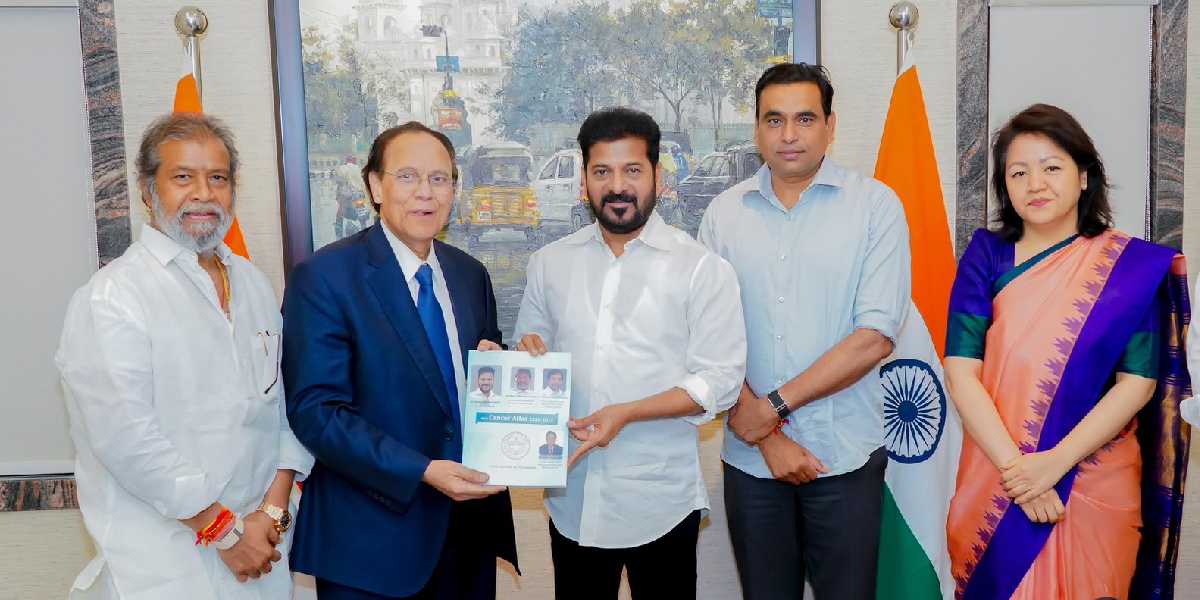
Oncologist and government adviser Dr Nori Dattatreyudu presented the Cancer Atlas to Chief Minister A Revanth Reddy.
The scheme covers four treatment modalities: surgical oncology, medical oncology (chemotherapy and targeted therapy), radiation oncology and stem cell transplantation. Families holding food security cards receive an annual limit of ₹10 lakh per family, covering 1,835 procedures, including 163 advanced treatments and follow-up packages.
The scheme operates across 81 cancer-treating hospitals: 54 government hospitals, accounting for 66.7 percent of the network, and 27 private hospitals.
Oncologist and government adviser Dr Nori Dattatreyudu presented the Cancer Atlas to Chief Minister A Revanth Reddy at his Jubilee Hills residence on 15 May.
Health Minister Damodar Rajanarsimha, MP Chamala Kiran Kumar Reddy, CMO Principal Secretary Srinivasa Raju and State Health Secretary Christina Z Chongthu attended.
The Chief Minister said the atlas would help identify cancer-prone regions and analyse the causes of the disease. “The Cancer Incidence and Prevalence Mapping across Telangana would be highly useful in identifying regions with a high prevalence of cancer and analysing the underlying causes behind the disease in the state,” he said.
Also Read: 10 deaths or 116? Why Telangana’s heatwave death count differs from NCRB data
Hyderabad district records the highest volume of treated cancer patients at 12,517, followed by Rangareddy (6,372) and Medchal (5,483). Mulugu records the lowest at 804, with Jogulamba at 1,073 and Komaram Bheem at 1,164.
The incidence rate—new cases per one lakh population per year—is 79 in Hanamkonda, the highest in the State. Hyderabad follows at 72. Karimnagar records 65, while Peddapalli and Rajanna record 63 each, and Jagtial 60.
Twenty-five of the 33 districts record incidence rates above 45 per lakh. Four fall below 40. Jogulamba records the lowest at 31, followed by Komaram Bheem and Adilabad, both at 35.
Statewide incidence rose to a peak of 66.29 per lakh in the financial year 2022-23. Prevalence that year reached 83.50 per lakh, the highest recorded during the study period.
The Chief Minister said the data could help establish special screening centres in high-incidence areas. He also announced specialised cancer hospitals in Hyderabad and in regions with high patient volumes. A Revanth Reddy directed officials to improve cancer treatment under the Aarogyasri scheme in corporate hospitals.
The 39-48 age group records the highest patient volume at 23,516. The above-62 group records 23,342. The 19-25 age group records the lowest at 2,283. Volume rises steadily from age 33.
In the 0-18 age group, blood cancers account for the highest patient volume. From 19 to 25, palliative care is the leading category, followed by blood cancers and breast cancer. From 26 onwards, breast cancer, cervical cancer and adjuvant therapies join palliative care and radical radiotherapy as the leading categories.
Women outnumber men in every adult age group from 33 onwards. The gap widens most in the 39-48 group, with 15,198 females against 8,318 males. In the 49-55 group, 12,522 females are recorded against 7,205 males. Among those above 62, females account for 13,038 patients against 10,304 males.
Also Read: From diabetes to aesthetics: How GLP-1 weight-loss drugs are entering dermatology clinics
Medical oncology accounts for 47.9 percent of all cases, covering 74,701 patients. Radiation oncology follows at 33 percent, covering 51,445 patients. Surgical oncology accounts for 18.9 percent, covering 29,482 patients. Stem cell and organ transplantation accounts for 0.2 percent, covering 289 patients.
Private hospitals manage 53.4 percent of all cancer cases treated under the scheme. Government hospitals manage 43.4 percent. Government hospitals conduct 100 percent of stem cell and organ transplantation procedures. A further 3,291 patients receive treatment at both government and private hospitals across different stages of care.
The scheme spent ₹89.03 crore on cancer treatment in the financial year 2020-21, covering 15,635 patients. By 2022-23, patient numbers peaked at 29,091 and expenditure reached ₹179.29 crore. In 2024-25, expenditure reached its highest point at ₹262.98 crore, covering 27,384 patients.
In surgical oncology, mastectomy records the highest number of claims (6,798) and the highest expenditure (₹18.26 crore). In medical oncology, palliative chemotherapy for unlisted regimens records the highest expenditure (₹69.14 crore) and the highest claim count (1,41,271 claims). In radiation oncology, intensity modulated radiotherapy records the highest expenditure (₹168.43 crore) across the study period.
MNJ Hospital in Hyderabad treated 34,256 patients during the study period, the highest among all facilities in the State. Basavatarakam Indo American Cancer Hospital treated 21,508 patients, while the Nizam’s Institute of Medical Sciences (NIMS) treated 8,641.
Hyderabad district houses 26 cancer-treating hospitals under the scheme: 14 government and 12 private. Rangareddy and Medchal have six each.
Yadadri has one hospital, which is private. Private non-medical colleges and large government institutions together account for nearly 90 percent of all cancer patients treated under the scheme.
The number of patients continuing treatment from previous financial years rose steadily during the study period. By 2024-25, 8,906 patients continued treatment from earlier years. New patient registrations peaked in 2022-23 at 23,094.
The Telangana Health Department is working to make cancer a notifiable disease. This would require healthcare providers to report all cases mandatorily. The move aims to build a more complete patient database to support monitoring, policy decisions and cancer control efforts.



