

Published Jul 01, 2026 | 7:00 AM ⚊ Updated Jul 01, 2026 | 7:00 AM

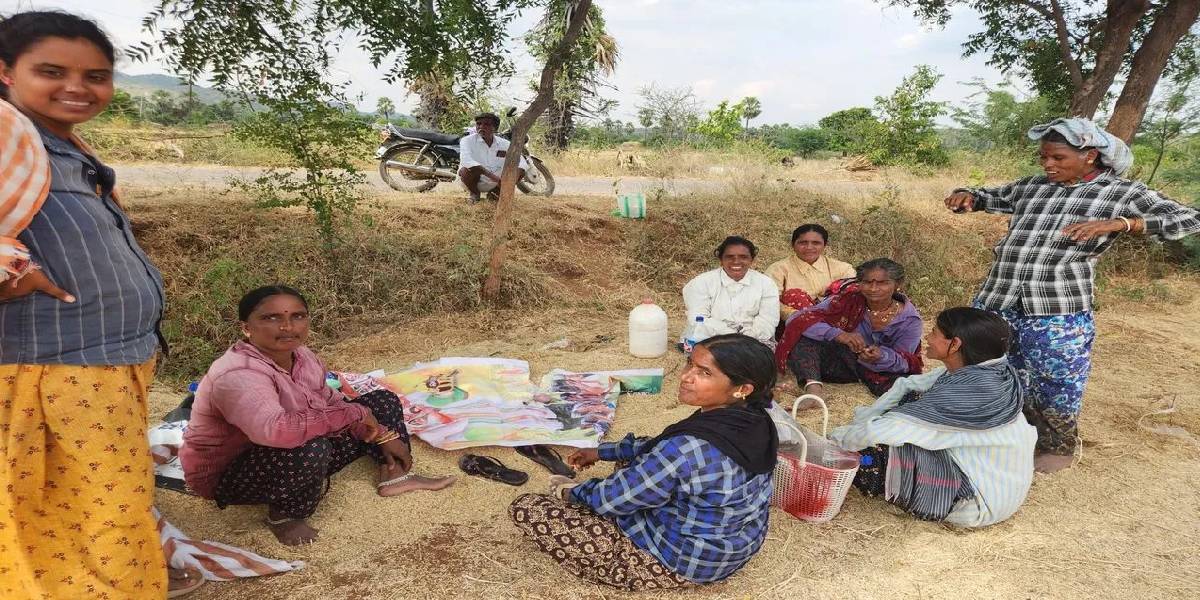
In urban Telangana, 24 percent of women have never attended school. In rural Telangana, that figure rises to 45.5 percent.

Synopsis: Nearly four in ten women in Telangana have never attended school, the highest proportion among all states and Union Territories in the National Family Health Survey-6. The gap is wider in rural Telangana, where 45.5 percent of women have never attended school, despite the state ranking among India’s best on indicators such as women’s paid work and financial inclusion.
Nearly four in ten women in Telangana have never attended school, the highest proportion among all states and Union Territories surveyed under the National Family Health Survey-6 (NFHS-6).
The figure has increased since the previous survey round, placing Telangana ahead of Bihar even as Bihar reduced its own figure and the national average fell.
The finding stands in sharp contrast to Telangana’s performance on several other women’s indicators in NFHS-6. The state ranks first in India for women receiving cash payment for work, at 53.2 percent, and fifth nationally for women operating their own bank or savings account, at 98.5 percent.
Yet when it comes to educational attainment, it records the highest proportion of women who have never attended school in the country.
This indicator covers females aged six years and above who have never attended school at any point in their lives. Because it includes older generations, it reflects decades of educational access rather than the current performance of schools alone.
Education directly influences other dimensions of women’s lives, including workforce participation, financial independence and access to healthcare.
Also Read: Centre softens hospital enforcement as study traces long battle over Clinical Establishments Act
According to NFHS-6, 39.8 percent of women in Telangana have never attended school, up from 39.1 percent in NFHS-5, a rise of 0.7 percentage points.
Over the same period, the national figure fell from 28.2 percent to 26.3 percent. Telangana now sits 13.5 percentage points above the national average.
Bihar reduced its figure from 38.9 percent to 35.9 percent, a fall of 3 percentage points. Telangana increased from 39.1 percent to 39.8 percent.
The two states have moved in opposite directions: Bihar has narrowed the gap with the national average while Telangana has widened it.
After Telangana and Bihar came Rajasthan (35.7 percent) and Jharkhand (32 percent), each with more than three in ten women having never attended school.
At the other end, Kerala reported the lowest proportion at 3.4 percent, followed by Lakshadweep (3.8 percent) and Mizoram (4.7 percent). The figure in Telangana is more than 11 times higher than Kerala’s.
The state-level figure becomes more pronounced when the data are broken down by place of residence.
In urban Telangana, 24 percent of women have never attended school. In rural Telangana, that figure rises to 45.5 percent. Nearly half of all women in rural Telangana have never attended school, indicating that educational deprivation remains concentrated outside urban centres.
The gap of more than 21 percentage points between urban and rural Telangana ranks among the widest reported by any major state. Bihar recorded a rural figure of 37.3 percent and an urban figure of 24.9 percent, both below Telangana’s corresponding figures.
Also Read: ISKCON claims soya beats eggs on protein. ICMR-NIN nutrition tables say otherwise
The divergence becomes clearer when Telangana is compared with Andhra Pradesh.
Andhra Pradesh also ranks among India’s leaders in women’s cash earnings, at 48 percent, and more than 92 percent of women there operate their own bank accounts.
Yet Andhra Pradesh reduced the proportion of women who have never attended school from 34.4 percent in NFHS-5 to 30.9 percent in NFHS-6, a fall of 3.5 percentage points. Telangana recorded an increase of 0.7 percentage points over the same period.
Both Telugu states perform strongly on economic indicators. On women’s educational attainment, they have moved in opposite directions.
Across India, the direction of travel on this indicator has been consistent. Karnataka’s figure fell by 4.8 percentage points to 22.2 percent. Gujarat fell from 27.1 percent to 23.7 percent, Punjab from 22.8 percent to 20.1 percent and Uttar Pradesh from 32.6 percent to 29.9 percent.
Even states that continue to report relatively high levels of educational deprivation showed progress. Bihar fell by 3 percentage points, Jharkhand by 3.5 percentage points and Rajasthan by 0.8 percentage points.
Only a handful of states moved in the opposite direction. Meghalaya recorded the steepest increase, rising 3.3 percentage points to 17.4 percent, followed by Arunachal Pradesh (up 2.6 percentage points), Sikkim (up 2.3 percentage points), Goa (up 1.8 percentage points) and Telangana (up 0.7 percentage points).
NFHS-6 places Telangana first in India for women receiving cash payment for work, at 53.2 percent. The contrast with educational attainment suggests that recent gains in women’s economic participation have not erased the legacy of educational deprivation.
Similarly, 98.5 percent of women in Telangana now operate a bank or savings account that they themselves use, among the highest proportions in India.
Yet nearly four in ten women have never attended school. Only 65.8 percent of women own and use a mobile phone themselves, indicating that digital inclusion has progressed more slowly than financial inclusion.
On household decision-making, Telangana performs above the national average but trails several states such as Kerala, Gujarat and Chhattisgarh, indicating that gains in employment and financial inclusion have not translated uniformly across all dimensions of women’s empowerment.



