

Published Aug 14, 2026 | 7:00 AM ⚊ Updated Aug 14, 2026 | 7:00 AM

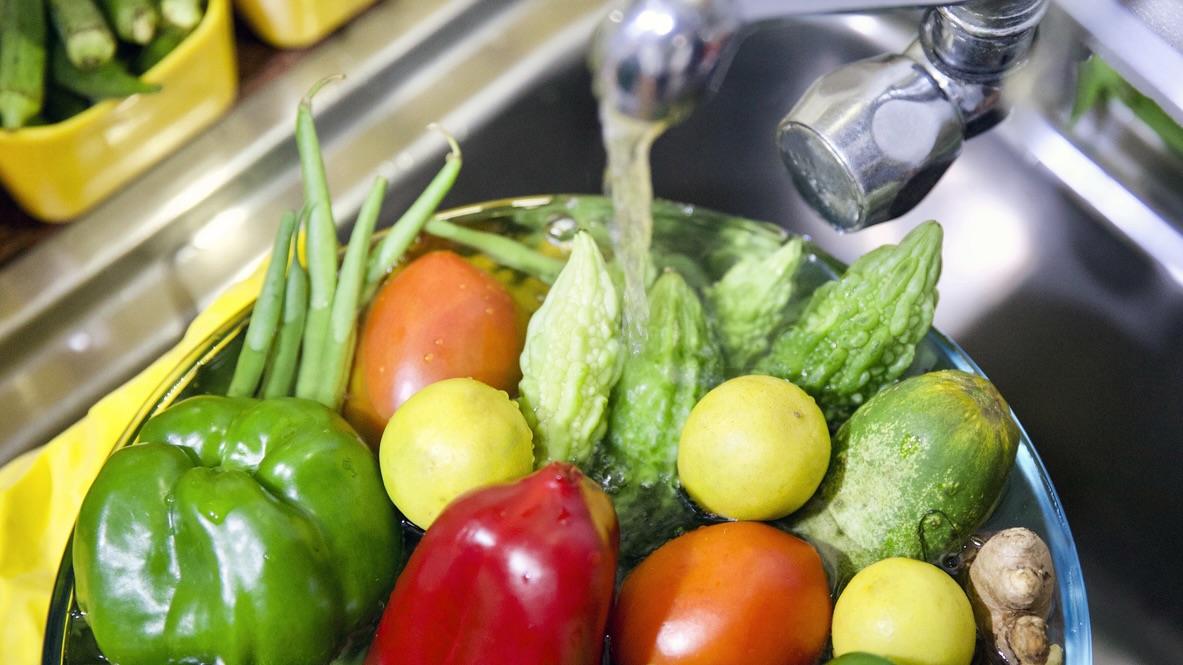
The state-wise data shows Telangana at the top in absolute numbers, with 486 samples above the MRL.

Synopsis: Telangana recorded the highest number of fruit and vegetable samples exceeding FSSAI pesticide residue limits in India, with 486 of 8,198 samples above permissible levels. Andhra Pradesh recorded 134 of 2,104 samples exceeding limits, giving it a higher proportion of 6.4 percent. The figures were tabled in Lok Sabha.
Telangana recorded the highest number of fruit and vegetable samples exceeding the pesticide residue limits prescribed by the Food Safety and Standards Authority of India (FSSAI) in the country, with 486 of 8,198 samples, or 5.9 percent, found above the permissible limit between 2023 and 2026. Karnataka ranked second with 334 of 9,176 samples, or 3.6 percent, according to data tabled in the Lok Sabha.
Maharashtra followed with 260 samples above the limit out of 5,295 tested, or 4.9 percent, while Gujarat recorded 170 of 6,035 samples above the limit, or 2.8 percent. Andhra Pradesh reported 134 such samples among 2,104 tested, giving it a higher proportion of 6.4 percent, while Haryana also recorded 6.4 percent, with 152 of 2,371 samples exceeding the limit.
Across the country, the Agriculture Ministry said 70,652 fruit and vegetable samples were collected and tested across 23 states and Union Territories during 2023 to 2026. Of these, 2,223 samples, or 3.1 percent, had pesticide residues above the Maximum Residue Limits (MRLs) fixed by FSSAI.
FSSAI does not prescribe a single MRL for all fruits and vegetables. The limit varies depending on the pesticide and the food commodity and is expressed in milligrams per kilogram (mg/kg).
For example, FSSAI’s prescribed MRL for 1-Naphthylacetic acid (NAA) is 0.05 mg/kg in grapes and mangoes, 0.1 mg/kg in tomatoes, 0.2 mg/kg in fresh chilli and 0.5 mg/kg in pineapple. For acetamiprid, the MRL is 0.2 mg/kg in okra, 0.3 mg/kg in tomatoes and 2 mg/kg in chilli. For 2,4-D, the limit is 2 mg/kg for berries and other small fruits, while it is 0.2 mg/kg for potatoes.
Also Read: Biryani, booze and the body: What South India’s favourite weekend feast does over time
The state-wise data shows Telangana at the top in absolute numbers, with 486 samples above the MRL. Karnataka followed with 334 and Maharashtra with 260. Gujarat recorded 170, Haryana 152 and Andhra Pradesh 134.
Other states reporting samples above the prescribed limits included Rajasthan (111), Himachal Pradesh (92), Kerala (82), Tamil Nadu (81), Madhya Pradesh (66), Uttar Pradesh (64), Jammu and Kashmir (58), Punjab (55), Uttarakhand (50), Delhi (19), West Bengal (5), Chandigarh (2), Assam (1) and Andaman and Nicobar Islands (1). Odisha, Jharkhand and Chhattisgarh reported no samples above the MRL in the data provided.
The figures also show why absolute numbers need to be read alongside the proportion of samples tested. Andhra Pradesh and Haryana recorded the highest proportion at 6.4 percent, followed by Telangana at 5.9 percent and Maharashtra at 4.9 percent. Karnataka stood at 3.6 percent, Rajasthan at 3.1 percent, Gujarat at 2.8 percent, while Kerala and Tamil Nadu recorded 2 percent and 2.2 percent, respectively.
Also Read: In five years, Tamil Nadu records highest food safety convictions; Telangana reports none
The five major southern states together recorded 1,117 samples above the MRL out of 27,209 tested, or about 4.1 percent.
Telangana accounted for 486 of these samples, Karnataka 334, Andhra Pradesh 134, Kerala 82 and Tamil Nadu 81. While Telangana had the highest absolute number in the South, Andhra Pradesh had the highest proportion of samples exceeding the MRL.
The figures were provided by Agriculture Minister Shivraj Singh Chouhan in response to a starred question in the Lok Sabha on the excessive and indiscriminate use of pesticides.
The Department of Agriculture and Farmers Welfare has been implementing the Monitoring of Pesticide Residues at National Level (MPRNL) project since 2005-06. The project covers vegetables, fruits, spices, cereals, pulses, herbs, tea, milk, eggs, meat, fish and water. Samples are collected from retail outlets, wholesale markets, cooperatives, APMC markets, farm gates and organic outlets and analysed by participating laboratories.
“The objective of the project is to assess the levels of pesticide residues in vegetables, fruits, spices, cereals, pulses, herbs, tea, milk, egg, meat, fish/marine and water etc.,” the statement laid by the minister said.
The Centre said the programme currently involves 40 participating laboratories. To establish traceability, laboratories record the location of sample collection.
“GPS coordinates of the sample collection point are recorded by the laboratories,” the statement said, adding that “in case of the farmgate samples, traceability of the growing area is established.”
Also Read: What is ICMR-NIN’s ‘dual-axis’ food classification, and what could it mean for India’s food labels?
The Agriculture Ministry said findings from the monitoring project are shared with state agriculture departments for farmer awareness and training on the safe and judicious use of pesticides.
“The reports generated under MPRNL project are shared with concerned State/UT Agricultural Departments for creating awareness and training programmes for the farmers about safe and judicious use of approved pesticides on the crop as per label claim recommended by the Registration Committee (RC),” the statement said.
The government conducts Farmer Field Schools, two-day training programmes, seed treatment campaigns and awareness programmes through 48 Central Integrated Pest Management Centres and related centres.
Between 2021-22 and 2025-26, the government conducted 1,353 Farmer Field School programmes benefiting 46,969 farmers, 680 two-day HRD programmes benefiting 37,664 farmers and 2,384 safe and judicious pesticide-use awareness campaigns benefiting 76,702 farmers.
The ministry has also launched the National Pest Surveillance System (NPSS), an artificial intelligence and machine learning-based platform that provides real-time pest identification, surveillance and expert advisories.
“The system promotes IPM by recommending bio-control agents and bio-pesticides as the preferred option,” the government said, adding that Registration Committee-approved pesticides are advised only when necessary and at recommended doses.
The government said continuation of the MPRNL project has been approved until 2028-29. Twenty-one states have also constituted committees to monitor pesticide residues and promote Good Agricultural Practices and Integrated Pest Management.
The FSSAI, meanwhile, prescribes MRLs for pesticide residues in food commodities based on dietary risk assessment. The government statement defines the MRL as the maximum level of pesticide residue legally tolerated in food when pesticides are applied correctly in accordance with Good Agricultural Practices.
Food containing pesticides above the quantities specified by FSSAI is considered unsafe under the Food Safety and Standards Act, 2006.



