

Published May 31, 2026 | 1:35 PM ⚊ Updated May 31, 2026 | 1:35 PM

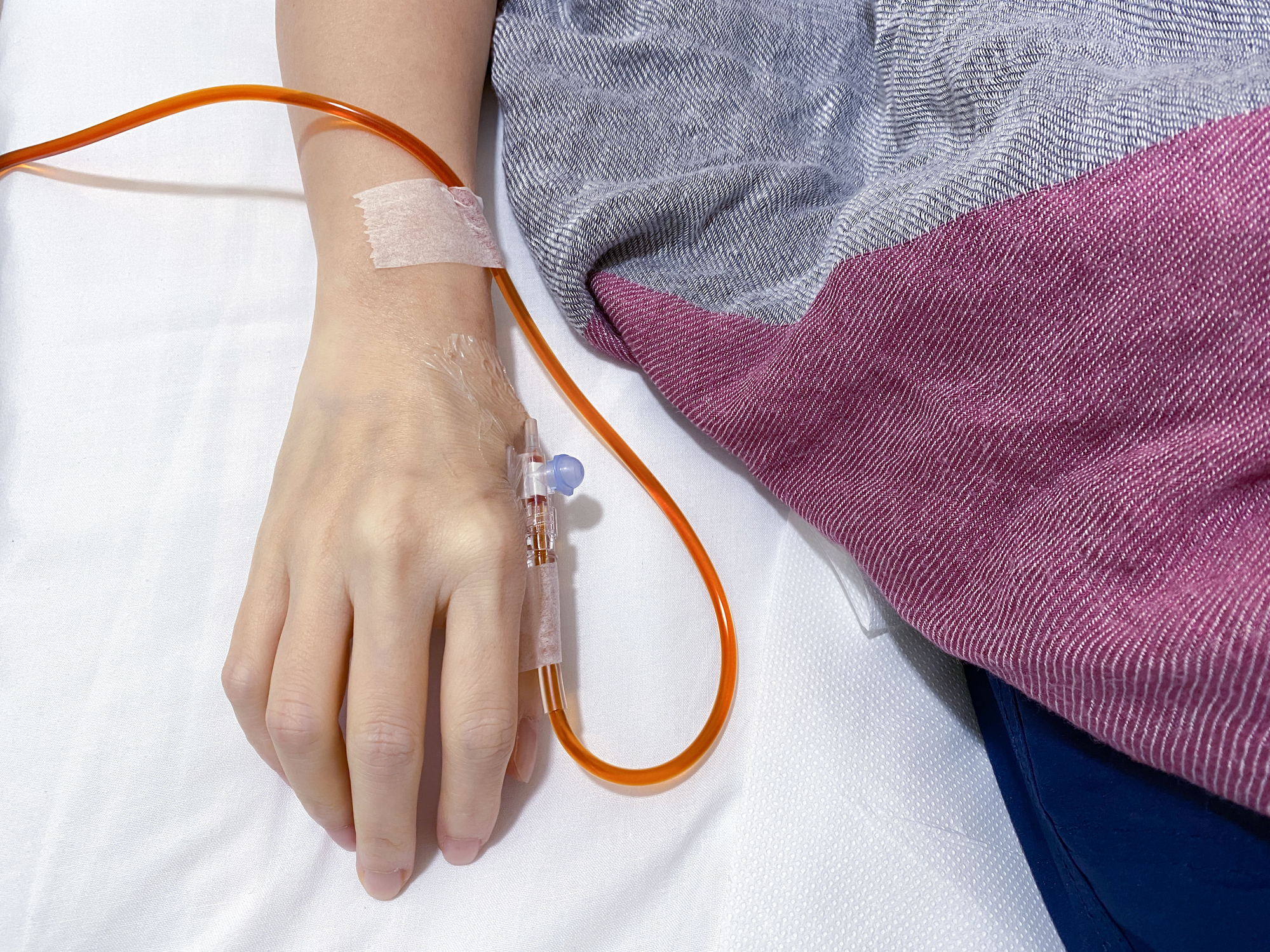
Anaemia can create serious complications. Representative image. (iStock)

Synopsis: NFHS-5 showed increased anaemia among children and persistently high levels among women despite Modi government’s ‘Anaemia Mukt Bharat’ program. Now, NFHS-6 factsheet has dropped all anaemia indicators, raising concerns that the government is avoiding scrutiny after disputing NFHS-5 findings and questioning the survey’s methodology.
In 2018, the Narendra Modi government launched Anaemia Mukt Bharat(Anaemia-Free India) with considerable fanfare.
Five years later, NFHS-5 delivered its verdict. Nearly 67 percent children under the age of five tested anaemic, up from 58.6 percent in NFHS-4. Among all women aged 15–49, the figure stood at 57 percent. Among pregnant women it was 52.2 percent. The data clearly revealed that the programme had not worked.
Instead of addressing the concern, the government seems to have adopted a “no data, no problem” approach. NFHS-6 factsheet, released on Friday, 29 May carries no data on anaemia. A factsheet revealed what changes have been made between the two surveys — 43 indicators dropped, 13 added. All seven anaemia indicators have been relegated to the “dropped” column.
According to sources cited at the time as reported by South First, the jump in child anaemia figures, from 59 percent to 67 percent, was precisely what the Union Health Ministry disputed. The method of using capillary blood samples, it argued, had inflated the numbers.
Prof KS James, director of the International Institute of Population Sciences, the nodal agency that conducts the NFHS, defended the findings. The ministry was not satisfied with that defence.
It is worth noting that the released data is only a factsheet, not the full published report.
In July 2023, as fieldwork for NFHS-6 was already underway, the ministry suspended Prof James on charges of recruitment irregularities. The timing was questionable and the charges were vague. Sources within IIPS told the media that the suspension was not the ministry’s first move. Before it acted, the ministry had reportedly asked Prof James to resign, specifically because he had refused to disavow the NFHS-5 data that had come as deep embarrassment to the government.
Prof James refused to resign. He was suspended instead. He resigned in August, citing personal reasons. In October, the government revoked his suspension on the same day it accepted his resignation. The charges that led to his suspension were never disclosed publicly. Nobody at IIPS, according to sources, knows to this day what the 11 complaints were that the ministry’s fact-finding committee found “prima facie credible”.
“This is a clear message being sent out by the government,” a faculty member told South First at that time. “Whoever will be appointed to this office will not be allowed to have any say on the NFHS-6 survey.”
Prof James is now Senior Visiting Scholar at Newcomb Institute, Tulane University. NFHS-6 was completed and released under new leadership.
The Indian Academic Freedom Network, in a letter defending Prof James, had warned that the suspension “placed India in the ranks of countries like China which do not allow independent surveys to raise questions on government narratives.” It had urged the government to remember that independent research and data gathering is crucial to good policy-making.
The factsheet records 101 indicators against NFHS-5’s 131. But the significance of those numbers only lands when you understand what the NFHS is.
Every five years, the NFHS functions as India’s most comprehensive measure of how people live, how children survive, and whether government programmes reach them. Policymakers use the data to ideate, researchers cite it.
UNICEF, UNFPA, and USAID have partnered with IIPS for decades because of its credibility and methodological rigour. When data disappears from this survey, it does not disappear from a table. It disappears from national accountability.
The prestigious medical journal The Lancet put the question starkly on its cover in April 2024: “Why is the Government so afraid of showing the real state of health? And more importantly, how does the Government intend to measure progress when there are no data?”
It had highlighted delayed census operations, the first decade in 150 years without a decennial census, withheld civil registration reports, and what it described as “serious setbacks in the collection and publication of health data in India”.
The anaemia deletion sits at the centre of all of this. The factsheet confirms that NFHS-6 retained indicators that track whether pregnant mothers consumed iron-folic acid supplements for 100 days and for 180 days. The programme inputs remain measurable. The health outcome does not.
This is the public health equivalent of counting how many prescriptions were written while refusing to check whether anyone recovered.
Anaemia in children impairs cognitive development, learning, and long-term productivity. Anaemia in pregnant women raises the risk of maternal mortality, premature birth, and low birth weight, perpetuating an intergenerational cycle.
“When we know that two-thirds of the women in the reproductive age group are anaemic, the government’s decision not to gather data on anaemia is going to reverse all the gains we made in reducing MMR, NMR, and IMR,” reacting The Lancet editorial, public health activist Akhila Vasan said.
Yet, NFHS-6 factsheet no longer reports anaemia prevalence.
In previous rounds, the survey tracked anaemia across multiple vulnerable populations, including children, pregnant women, adolescents and adults. These indicators provided one of the most comprehensive assessments of nutritional health available anywhere in the country.
The omission becomes even more notable because the survey continues to track interventions intended to address anaemia. It reports indicators related to iron-folic acid consumption during pregnancy, allowing policymakers to measure programme delivery.
What it no longer measures is whether those interventions translated into improved health outcomes.
For critics, that distinction is important. Measuring programme inputs while omitting programme outcomes makes it significantly harder to assess effectiveness. Without outcome data, determining whether policies are working becomes a far more complicated exercise.
Another significant omission concerns cancer screening. The previous survey introduced indicators measuring whether individuals had undergone screening for cervical cancer, breast cancer and oral cancer.
Those indicators represented an important shift in the evolution of the survey. They acknowledged that India was increasingly confronting a dual burden of disease, where infectious diseases coexist with a growing burden of non-communicable illnesses.
Cancer screening is central to prevention and early detection. Public health experts often emphasise that early diagnosis dramatically improves outcomes, particularly for cancers such as cervical cancer that can be detected and treated before becoming life-threatening.
The indicators introduced in NFHS-5 created a national baseline. They offered policymakers an opportunity to track whether investments in preventive healthcare were reaching the population.
With their removal from NFHS-6, that opportunity becomes more limited. Researchers can no longer compare screening coverage over time using the country’s most influential health survey.
The disappearance of HIV/AIDS awareness indicators may attract less public attention than anaemia or cancer, but researchers consider it equally important.
Public health responses to HIV have always relied on two pillars: treatment and awareness.
Knowledge about transmission, prevention and risk reduction remains central to controlling the spread of infection and reducing stigma. Previous surveys tracked comprehensive HIV knowledge among men and women and assessed awareness regarding preventive measures.
These indicators helped public health professionals understand whether awareness campaigns were reaching communities and whether knowledge gaps persisted among vulnerable populations.
Among the less discussed omissions are indicators relating to child mortality. Mortality statistics remain available through other data systems, but the NFHS data allowed researchers to examine mortality through the lens of inequality.
The survey could reveal whether children from poorer households faced different outcomes from those in wealthier households. It could show variations across regions, social groups and educational categories.
The list also omitted indicators extending beyond disease and healthcare.
Measures related to sanitation, clean cooking fuel, birth registration, death registration and literacy have also disappeared from the key indicators released.
Several family planning indicators have been removed, including measures relating to counselling and informed choice. Indicators tracking treatment practices for childhood illnesses are also absent.
The survey introduces new indicators focusing on ageing, financial inclusion, vaccination coverage and breastfeeding practices. It includes measures relating to bank account ownership, asset ownership among women, antenatal care utilisation and other emerging policy priorities.
A new indicator may provide fresh insight into one aspect of society. It cannot automatically compensate for the disappearance of indicators tracking entirely different health challenges.
The concern is whether critical indicators should disappear in the process.
Population & Household Profile (7)
Characteristics of Adults (2)
Marriage & Fertility (1)
Infant & Child Mortality (3)
Family Planning Methods (4)
Quality of Family Planning Services (2)
Maternal Care (1)
Delivery Care (1)
Child Vaccination (1)
Treatment of Childhood Diseases (3)
Adult Nutrition (2)
Anaemia (7)
Cancer Screening (4)
HIV/AIDS Knowledge (4)
Women’s Empowerment (1)
Population & Household Profile (5)
Family Planning (2)
Antenatal Care (1)
Child Vaccination (2)
Treatment of Childhood Diseases (1)
Child Feeding Practices (2)
(Edited by SF Desk)



