

Published May 20, 2026 | 7:00 AM ⚊ Updated May 20, 2026 | 7:00 AM

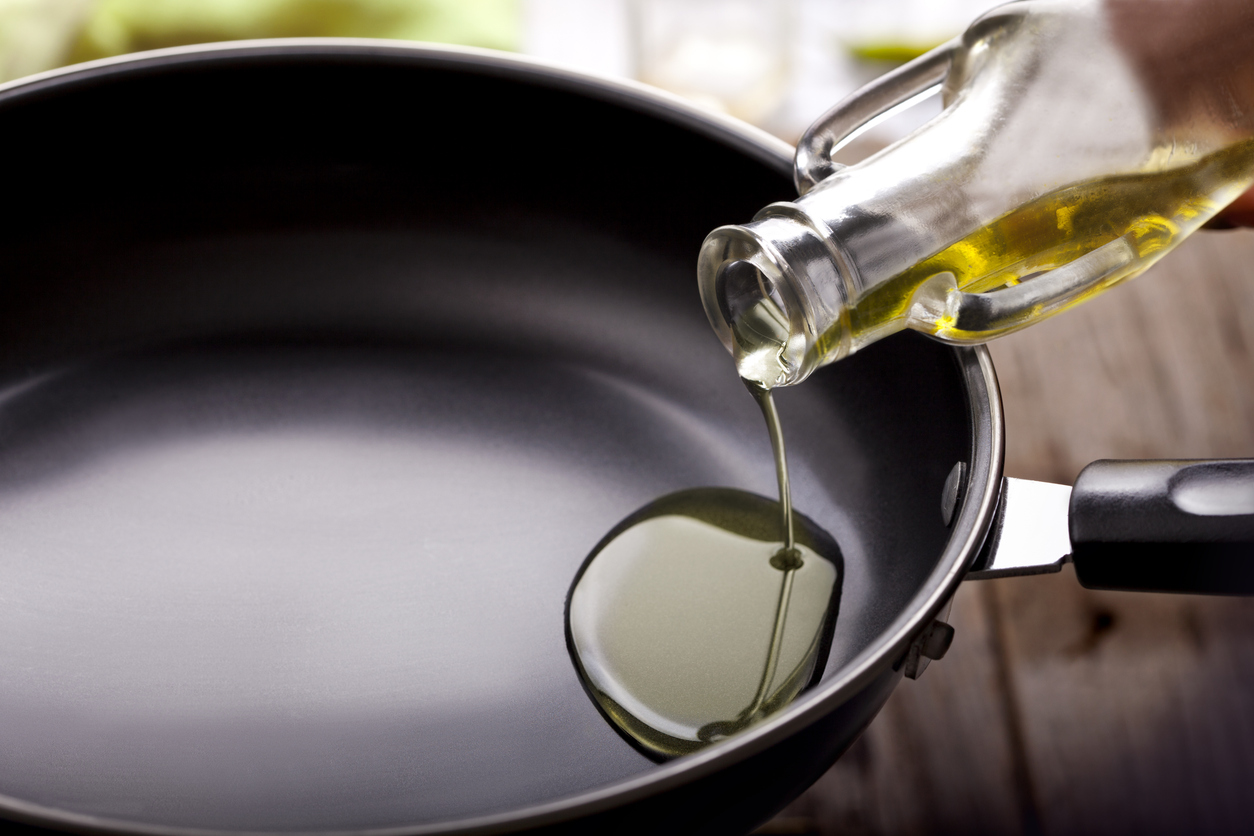
Cooking oil. (iStock)

Synopsis: Prime Minister Narendra Modi recently urged Indian citizens to reduce their consumption of cooking oil by 10 percent due to the ongoing West Asia crisis. However, the NSS data shows the average Indian household already spends a smaller share of its budget on cooking oil than at any point in the past 25 years. The 10 percent Modi seeks sits on top of a reduction that, measured by budget share, has already happened.
Prime Minister Narendra Modi, speaking at a BJP-organised public meeting in Hyderabad on 10 May, urged Indian citizens to reduce their consumption of cooking oil by 10 percent. The appeal came as part of a broader austerity call triggered by the US-Iran conflict, fears of a Strait of Hormuz blockade, and rising global energy prices.
“If every family slightly reduces its oil consumption, it can make a big difference,” Modi said. “Eating less oil is also a form of patriotism.”
The backdrop matters. India imports nearly 60 percent of its edible oil. The import bill crossed ₹1.6 trillion in the 2024-25 oil year. With global supply chains under stress and the rupee facing pressure, the government sees reduced domestic consumption as one lever it can pull.
Two government reports, the National Sample Survey Office’s Household Consumption Expenditure Survey 2023-24 and NITI Aayog’s 2024 report on edible oil self-sufficiency, together tell a more layered story.
Also Read: Modi’s austerity call — Proof of governance failure or prudent crisis management?
The NSS survey tracks what Indian families spend across more than 30 categories of consumption every month. On edible oil, the trend runs in one clear direction.
In rural India, edible oil consumed 4.44 percent of the average household’s total monthly expenditure in 2004-05. By 2023-24, that figure dropped to 2.77 percent. In urban India, the share fell from 3.29 percent to 1.82 percent over the same period.
That marks a decline of nearly 38 percent in the rural budget share and 45 percent in urban areas, across two decades, without any government appeal to cut consumption.
In absolute terms, the average rural Indian now spends ₹114.65 per month on edible oil. The average urban Indian spends ₹127.28.
The all-India average masks wide variation across states.
Gujarat stands as the country’s outlier. Rural households there spend ₹168.14 per month on edible oil, nearly 47 percent above the national rural average. That translates to 4.01 percent of their total household budget, the highest among major states.
Chhattisgarh rural households follow at 3.77 percent of total expenditure. Bihar urban households allocate 2.97 percent of their budget to cooking oil, the highest urban share among major states.
At the other end, Haryana records the lowest rural expenditure on edible oil, ₹60.78 per month, or 1.12 percent of total household spending. Kerala rural households allocate 1.79 percent and Tamil Nadu rural households 1.43 percent.
The data points to a pattern. States with lower overall consumption levels, such as Bihar, Chhattisgarh, and Uttar Pradesh, allocate a higher share of their budget to edible oil than wealthier states. A household in rural Chhattisgarh, with a monthly per capita expenditure of ₹2,927, stretches further for every litre than a household in rural Haryana, where the average sits at ₹5,449.
Across the five Southern states, edible oil spending runs below the national average as a share of total expenditure in both rural and urban areas.
Tamil Nadu records the lowest oil expenditure in the region, ₹84.07 per month in rural areas and ₹101.98 in urban areas. As a share of the total household budget, rural Tamil Nadu households allocate just 1.43 percent, well below the national rural average of 2.70 percent.
Kerala rural households spend ₹119.66 per month on edible oil but allocate just 1.79 percent of their total budget to it. In urban Kerala, that share drops further to 1.41 percent, one of the lowest urban figures among all major states. The state carries a high overall monthly per capita expenditure of ₹6,673 rurally and ₹7,834 in urban areas, which pushes edible oil’s proportional weight down.
Karnataka sits closer to the national average. Rural households there spend ₹113.42 per month on edible oil, representing 2.24 percent of total rural expenditure. Urban Karnataka households spend ₹121.77, or 1.49 percent of their total budget, still below the national urban average of 1.80 percent.
Telangana, the state where Modi delivered his Secunderabad address, records ₹127.60 rurally, above the national rural average in absolute terms but at 2.25 percent of total rural expenditure, below the national share. Urban Telangana households spend ₹119.44, or 1.31 percent of their budget.
If the NSS survey looks from the kitchen outward, the NITI Aayog’s 2024 report on edible oil self-sufficiency looks from the supply chain inward.
India’s per capita edible oil consumption rose from 3.2 kg per year in 1960-61 to 3.8 kg in 1980-81, then to 8.2 kg in 2000-01, and reached 19.7 kg by 2020-21. The report identifies three forces driving this climb simultaneously: population growth, rapid urbanisation, and rising per capita income.
More people, each consuming more oil per head, with incomes shifting diets toward processed and fried foods that carry higher oil content.
The urbanisation angle adds a specific dimension. The NITI Aayog report notes that rural households favour mustard oil, which accounts for roughly 45 percent of rural consumption. Urban households shift toward refined oils, sunflower and soybean, which collectively hold a 47 percent urban share. These refined oils represent India’s most import-dependent categories.
So urbanisation does not simply add consumers. It shifts them toward the oil types India relies most heavily on imports to supply.
India’s domestic production meets only 40–45 of its edible oil requirements. The NITI Aayog report puts the import volume at 16.5 million tonnes (MT) in 2022-23, up from 1.47 MT in 1986-87. The import dependency ratio stood at 57 percent in 2022-23.
Palm oil dominates these imports at 59 percent, sourced primarily from Indonesia at 62 percent and Malaysia at 32 percent. Soybean oil imports draw 75 percent from Argentina and 14 percent from Brazil. Sunflower oil arrives 85 percent from Ukraine, with Russia supplying eight percent.
The US-Iran conflict and Strait of Hormuz blockade fears that prompted Modi’s Hyderabad appeal sit directly across these supply routes. India’s edible oil import dependency runs through every active conflict zone simultaneously.
The NITI Aayog report projects domestic supply reaching 16 MT by 2030. Demand projections range from 29.8 MT under a static household approach to 45.5 MT under a scenario that factors in rising incomes and changing consumption behaviour. The gap between domestic production and national need widens regardless of what happens in Indian kitchens.
Also Read: PM Modi calls for austerity measures amid West Asia conflict
The NSS survey shows the budget share households dedicate to edible oil has fallen to its lowest point in 25 years. The NITI Aayog report shows import volumes reached their highest point in recorded history in 2022-23.
Both are simultaneously true because incomes rose and absolute consumption in volume terms climbed even as the proportional budget share shrank. Indian households spend less of their money on oil relative to everything else they buy, while India as a nation buys more oil from abroad than at any previous point.
Modi’s 10 percent reduction appeal targets volume consumption. The NSS data measures budget share. These track different things. A household can reduce its proportional spending on oil across two decades, as Indian households demonstrably have, while the country’s aggregate import bill continues to rise.
In February 2024, Modi told Parliament: “We call India a Krishi Pradhan Desh, but today we still import crores of rupees of edible oil. I have full confidence in the farmers of my country. We can achieve self-sufficiency in the next five years.”
The NITI Aayog report, published the same year, maps what that self-sufficiency requires, expanding oil palm cultivation across 2.43 million hectares of identified land, closing yield gaps that range from 12 percent in castor to 96 percent in sunflower, utilising rice fallow areas across 10 states, and modernising processing infrastructure currently running at 30 percent capacity utilisation.
These supply-side interventions, the report projects, could increase domestic edible oil production by an estimated 43.5 MT, enough to bridge the import gap under most demand scenarios.
The NSS data shows the average Indian household already spends a smaller share of its budget on cooking oil than at any point in the past 25 years. The 10 percent Modi seeks sits on top of a reduction that, measured by budget share, has already happened.
The structural challenge the NITI Aayog identifies runs deeper, in yields, in supply chain geography, in the concentration of import sources across conflict-prone regions, and in a demand trajectory shaped by population and income growth that no kitchen-level appeal fully addresses.
(Edited by Muhammed Fazil.)



