

Published May 31, 2026 | 7:00 AM ⚊ Updated May 31, 2026 | 7:00 AM

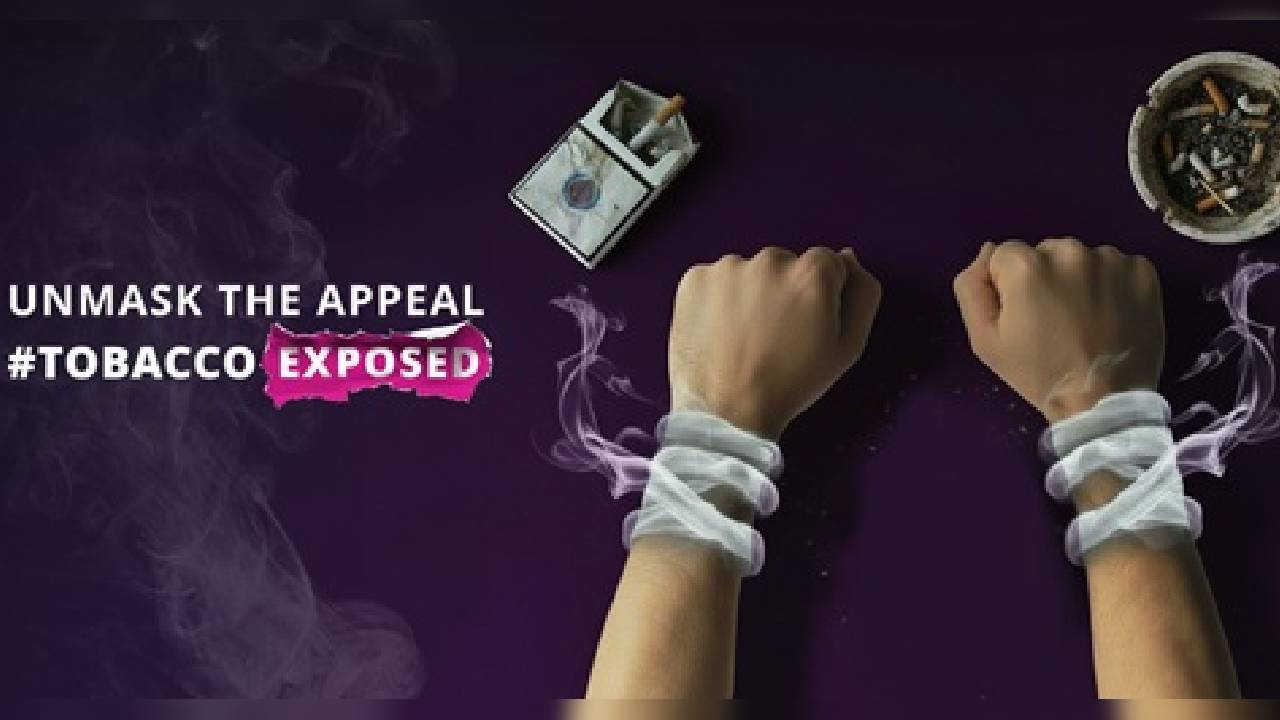
Every household where someone smokes distributes that risk to everyone who shares the space. (WHO)

Synopsis: Tobacco use among men has declined across southern India, according to NFHS-6, but sharp rural-urban disparities persist. While states such as Andhra Pradesh, Karnataka, Tamil Nadu and Telangana reported lower overall prevalence, rising cigarette consumption, especially in urban areas, raises concerns about future burdens of cancer, COPD and other tobacco-related diseases.
The use of tobacco among men in Andhra Pradesh, Telangana, Tamil Nadu and Karnataka is on the decline, the Sixth National Family Health Survey (NFHS-6) has revealed.
Tobacco use among men fell from 22.6% to 18.8% in Andhra Pradesh, while in Karnataka, it slid to 24.2% from 27.3%, compared to the previous survey period.
Tamil Nadu posted a decline to 17.7%, whereas Telangana, too, reflected a dip to 21.1% from the previous 22.3%.
The decline could be attributed to years of public health messaging, rising awareness and, in some states, stricter enforcement of tobacco-control regulations.
However, it is not the complete story.
Across every southern state, NFHS-6 recorded a persistent and significant gap between urban and rural tobacco use among men.
In Andhra Pradesh, 21.3% of rural men used tobacco, while its use was 13.7% in urban areas, a difference of 7.6 percentage points. In Karnataka, rural usage stood at 28.6% against urban’s 18.1%. Rural Telangana recorded 23.4% against urban’s 14.7%. In Tamil Nadu, it was 20% in rural areas, whereas urban areas showed a reduced usage at 15%.
The urban-rural divide matters for two reasons: Rural populations are large, and tobacco use concentrates in bidi, gutka, and smokeless tobacco, which cause diseases with less social visibility than cigarettes and reach healthcare systems much later.
Kerala recorded the narrowest urban-rural gap among southern states: 18.4% rural against 13.1% urban among men.
Also Read: Kerala tops major states in male hypertension
NFHS-6 recorded women’s tobacco use separately, and the southern picture depicted a different pattern.
In Andhra Pradesh, 3.8% of women used tobacco, almost unchanged from 3.9% in NFHS-5. In Telangana, the figure rose slightly from 5.6% to 5.9%. In Karnataka, women’s tobacco use fell from 8.6% to 6.4%. Tamil Nadu recorded 4.8%, a shade down from 4.9%.
Though fewer, these numbers carry a specific clinical relevance. Women who use tobacco in the South do so disproportionately in rural settings.
In Andhra Pradesh, 4.9% of rural women used tobacco compared to 1.4% of their urban counterparts. In Karnataka, the usage among 9.4% rural women reached out for tobacco, compared to urban at 2.3%. In Telangana, the 7.1% of rural women used tobacco, higher than their counterparts in cities, where 2.5% went for the agriculture product.
Rural women using tobacco have access to specialist medical care last. They carry the highest risk of late-stage diagnosis.
NFHS-6 measured whether people use tobacco. It did not measure what they used. The distinction is critical.
The Household Consumption Expenditure Survey 2023-24, analysed in an EAC-PM working paper released in February 2026, filled that gap.
Across southern states, the paper recorded a decade-long shift: bidi consumption falling, cigarette consumption rising, often in the same geographies across the same period.
In rural Karnataka, bidi consumption fell from 29.8% of households in 2011-12 to 19.7% in 2023-24. Over the same period, rural cigarette consumption more than tripled, from 4.8% to 15.3%.
Urban Karnataka showed a jump from 12.32% to 23.56%. Nearly one in four urban Karnataka households now light up cigarettes.
Telangana saw rural cigarette smoking climb from 11.3% to 23.2%. Urban Telangana moved from 14.52% to 25.16% — one in four urban households taking a puff.
In Tamil Nadu, rural cigarette usage more than doubled from 7.1% to 17.6%. Urban Tamil Nadu moved from 10.17% to 17.04%.
The working paper described what drove this pattern: “A clear shift in preference from relatively inferior product, bidi, to packaged, branded and relatively premium tobacco products like cigarettes.”
Rising incomes, expanding cities, and the perception that cigarettes carry a different social meaning from bidis combined to pull households up the tobacco ladder, without pulling them off tobacco.
Cigarettes now account for 47% of total urban tobacco expenditure nationally, the highest share of any product. The south, urbanising at pace, feeds directly into that figure.
Also Read: HR crisis dogs busy medical college in Kerala
Doctors treating tobacco-related disease in southern cities said the clinical picture already reflected the shift the surveys have been measuring.
“One of the most concerning trends today is the growing number of younger adults presenting with chronic cough, breathlessness, reduced lung function, worsening asthma, and early-stage Chronic Obstructive Pulmonary Disease,” said Dr A Jayachandra, Clinical Director and Head of Interventional Pulmonology at CARE Hospitals, Hyderabad.
“Many people believe tobacco-related lung damage develops only after decades of smoking, but the harmful effects begin much earlier. By the time symptoms become noticeable, significant and often irreversible lung damage may have already occurred,” he cautioned.
India has an estimated 55 million people living with chronic obstructive pulmonary disease (COPD). Smoking remains one of its leading causes.
Dr Jayachandra also flagged what the NFHS-6 data did not track: the entry of newer nicotine products into the same urban populations where cigarette use has been on an uptick.
“Products such as e-cigarettes, nicotine pouches, and flavoured vaping devices are often marketed as safer alternatives. In reality, nicotine addiction, airway inflammation, and long-term lung damage remain serious concerns. These products are specifically designed to attract and retain younger users,” he said.
Also Read: Southern states dominating C-section landscape
In surgical oncology wards, the tobacco story arrives later and at a higher cost.
“Many people still associate smoking only with lung cancer, but the reality is far more alarming,” said Dr Yugandar Reddy, Senior Consultant in Surgical Oncology at CARE Hospitals, Hyderabad.
“Cigarette smoke contains more than 7,000 chemicals, of which at least 69 are known carcinogens. Tobacco use connects directly to cancers of the mouth, throat, voice box, lungs, food pipe, stomach, liver, pancreas, colon, rectum, kidney, bladder, cervix, and certain blood cancers such as acute myeloid leukaemia,” he said.
Nearly one in three cancers in India is linked to tobacco use. Late diagnosis remains the central clinical challenge.
“We continue to see increasing numbers of oral, throat, and lung cancer cases, many of them in younger adults,” Dr Reddy said.
“One of the biggest challenges is delayed diagnosis, as patients often ignore warning signs such as persistent cough, blood in sputum, unexplained weight loss, non-healing mouth ulcers, voice changes, or difficulty swallowing. Early detection significantly improves treatment outcomes, while quitting tobacco at any age reduces cancer risk,” he said.
In Chennai, the shift toward urban cigarette use displays a specific pattern.
“We are observing a growing cancer burden in urban centres such as Chennai and Bengaluru,” Dr Shubhra Chauhan, Senior Consultant in Head and Neck Surgical Oncology at Gleneagles Hospital, Chennai, told South First.
“Better awareness and diagnostic facilities are helping us detect more cases, but environmental exposures and changing lifestyles are also likely playing a role.”
Dr Chauhan noted a shift in the patients’ age profile.
“One of the most noticeable changes is the increasing number of younger patients, particularly with oral and head and neck cancers. While the majority of cases still occur in the 50–65 age group, it is not uncommon today to see patients under 45,” the oncologist said.
Most cigarette-related cancers still arrive late.
“A substantial proportion of patients still present with Stage III or Stage IV disease. This remains particularly true for lung cancer, where symptoms frequently develop only after the disease has become locally advanced or metastatic,” Dr Chauhan said.
NFHS-6 recorded individual tobacco use, not the passive smokers.
The EAC-PM working paper estimated that second-hand tobacco smoke exposure imposed an economic burden of ₹56,700 crore in healthcare costs, 0.33% of India’s GDP and 8.1% of total healthcare expenditure.
Every household where someone smokes distributes that risk to everyone who shares the space.
Surgical oncology wards often receive passive smokers.
“We do encounter patients who have never actively smoked but have had prolonged exposure to second-hand smoke at home or in the workplace,” said Dr Chauhan.
“Such patients appear particularly among women whose spouses smoke, as well as among individuals who have lived for many years in environments with regular tobacco smoke exposure.”
Second-hand smoke carries an established risk for lung cancer, cardiovascular disease, and respiratory illness.
“From a public health perspective, the important message is that tobacco smoke affects not only the smoker but also family members and others who share the same environment,” Dr Chauhan said.
As urban cigarette use rises across southern cities, the population absorbing that risk expands beyond those who choose to smoke.
NFHS-6 noted one southern state moving differently from the rest.
In Kerala, men’s tobacco use fell from 16.9% to 15.9%. Women held at 2.2%. Rural men dropped from higher levels; urban men recorded 13.1%.
The HCES working paper added further details: Rural cigarette consumption in Kerala fell from 17.2% to 12.1%. In urban areas, it fell from 15.84% to 14.83%.
Decline in tobacco use in rural and urban Kerala showed a similar pattern. No other southern state replicated that pattern.
The survey data recorded that Kerala achieved something different. High literacy, functional public health infrastructure, and decades of sustained health communication have combined to produce a shift in what tobacco means socially, and the numbers register that shift without entirely accounting for it.
That unanswered question carries a direct relevance for the rest of the South.
It may also be noted that the urban-rural divide in Kerala is not as marked as in other states.
The HCES 2023-24 data captured the position of southern India between August 2022 and July 2023.
Given the latency between sustained smoking and the onset of tobacco-related diseases, the bodies of those who had started smoking a decade ago are carrying the ill effects. However, the effects have not taken them to hospitals.
India loses an estimated ₹1.7 trillion annually to healthcare expenditure and productivity losses from tobacco-related disease. The south, with cigarette consumption rising in its largest cities across an entire decade, contributes to that figure and will contribute more.
“The biggest misconception is that tobacco affects only smokers. In reality, it affects families, workplaces, healthcare systems, and the economy,” said Dr Jayachandra.
“The earlier a person quits, the greater the health benefits. Tobacco addiction is both a medical and behavioural condition, and with the right support, quitting is absolutely possible.”



