

Published Oct 19, 2026 | 7:00 AM ⚊ Updated Oct 19, 2026 | 7:00 AM

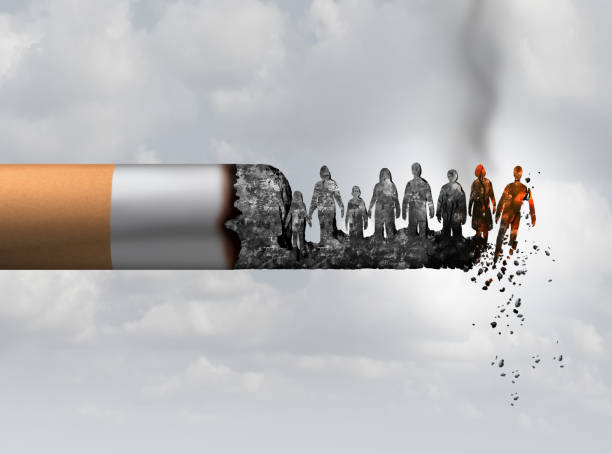
tobacco-related cancer risk varies across India due to regional differences in consumption patterns. (iStock)

Synopsis: India’s tobacco burden presents a complex picture: individual use has declined, but more households report purchasing tobacco, particularly gutkha. New research estimates substantial proportions of head and neck cancers could be prevented by eliminating tobacco exposure, with marked differences across states, sexes and products, highlighting the need for targeted tobacco control and cessation services.
Fewer Indians report using tobacco than five years ago, but more Indian households report buying it than a decade ago. And a new study pointed to smokeless tobacco accounting for more than half of mouth cancers among men in India.
The three findings offer different views of a public health problem that extends from household spending to cancer wards. The latest National Family Health Survey recorded a decline in individual tobacco use, a government working paper found a rise in household purchases, and new cancer estimates showed how the potential burden varies with the product used, the individual’s gender and region.
The cancer study, published in the Indian Journal of Medical Research, estimated that smokeless tobacco accounted for 57.3 percent of mouth cancers among men. Among women, tobacco in any form accounted for an estimated 73.4 percent of mouth cancers.
The authors described the research’s relevance: “Tobacco use is a modifiable risk factor for head and neck cancers, as its consumption can be prevented or eliminated. Therefore, understanding the extent to which tobacco habits contribute to these cancers is crucial for effective prevention strategies.”
The estimates did not identify individual cancers definitively caused by tobacco. They indicated the proportion of cases that could potentially be prevented if tobacco exposure were eliminated, assuming the associations are causal.
Also Read: Only Indian state where tobacco consumption has decreased
The study, titled Head and Neck Cancer Burden Attributable to Tobacco Use in India: National and Region-wise Estimates, relied on patient records from the Regional Cancer Centre in Thiruvananthapuram, Keralam.
Guruprasad Vinod and colleagues analysed 11,285 patients diagnosed with head and neck cancers and 7,154 people with non-cancerous conditions who visited the centre between 2019 and 2024. They used the data to estimate cancer risks associated with tobacco exposure and combined those estimates with state-level tobacco-use prevalence to calculate population attributable fractions (PAFs).
Among men, smokeless tobacco accounted for an estimated 61.8 percent of lip cancers, 30.7 percent of tongue cancers and 57.3 percent of mouth cancers. Smoking accounted for an estimated 40.2 percent of cancers involving the base of the tongue, tonsils and oropharynx, 45.7 percent of hypopharyngeal cancers and 38.4 percent of laryngeal cancers.
The patient records showed how tobacco-use patterns differed across cancer sites. Among men with mouth cancer, 55.3 percent used smokeless tobacco, compared with 17.5 percent of the comparison group. Among men with hypopharyngeal cancer, 85 percent smoked.
The authors pointed to the way smokeless tobacco comes into contact with oral tissues to explain its association with cancers of the mouth and tongue.
“This may be because smokeless tobacco directly contacts the oral cavity, causing prolonged exposure of the tongue to carcinogens, whereas smoking produces more diffuse and less concentrated exposure,” they write.
The distinction matters in India, where tobacco use includes cigarettes, bidis and several forms of smokeless tobacco. The cancer estimates suggested that a smoking-focused prevention strategy would miss a substantial part of the potential burden associated with smokeless products.
The researchers also compared their findings with estimates from other countries. “The present study found that population attributable fraction of mouth cancer due to smokeless tobacco was higher than reported in previous studies, reflecting the widespread use of smokeless tobacco,” they wrote.
Global estimates cited in the paper put tobacco’s share of oral cavity cancers at 34.4 percent among men and 22.8 percent among women. A European study reported a lower population attributable fraction of 21.6 percent for tobacco-related oral cancers.
The authors attributed the difference to “India’s higher use of smokeless tobacco, along with cultural practices, product availability, and dual-use patterns, leading to elevated population attributable fractions”.
Also Read: Tobacco increases sperm damage risk by four times
Among women, smokeless tobacco accounted for an estimated 68.8 percent of lip cancers and 68 percent of mouth cancers. Smoking accounted for 41 percent of oropharyngeal cancers and 34 percent of hypopharyngeal cancers. Tobacco in any form accounted for an estimated 73.4 percent of mouth cancers among women.
NFHS-6 reported tobacco use among 8.4 percent of women aged 15 and above, compared with 36.3 percent of men. The cancer study’s estimates described the proportion of a particular cancer type potentially attributable to exposure, not the prevalence of tobacco use or the total number of cancer cases in each sex.
The odds ratios indicated strong associations between smokeless tobacco and some cancers among women. The estimated odds of mouth cancer among women using smokeless tobacco were 17.6 times those among non-users. Among men, the corresponding odds ratio was 5.5.
The researchers cautioned about wide confidence intervals in some estimates for women. The odds ratio linking smoking to oropharyngeal cancer among women, for instance, has a confidence interval ranging from 3.2 to 406. The study included 2,576 women with cancer, compared with 8,709 men.
The wide interval signalled substantial uncertainty in the estimate. The findings indicated an association, but further investigation is needed to determine the precise magnitude.
The regional estimates for women were particularly high in some states. In Tripura, smokeless tobacco accounted for an estimated 90.4 percent of mouth cancers and 55.2 percent of tongue cancers among women.
Also Read: Will reducing tobacco consumption help India’s economy?
The national estimates concealed marked differences between states. Among men, the estimated proportion of mouth cancers attributable to smokeless tobacco reached 71 percent in Jharkhand and 70.3 percent in Odisha. Assam, Manipur and Arunachal Pradesh record estimates close to 70 percent.
Among women, the estimated share exceeded 80 percent in Chhattisgarh, Odisha and several Northeastern states.
Southern India presented a different pattern. Among men, the estimated proportion of mouth cancers attributable to smokeless tobacco was 50.2 percent in Karnataka, 35.1 percent in Tamil Nadu, 33.9 percent in Telangana, 25.6 percent in Andhra Pradesh and 25.1 percent in Keralam.
Among women, the estimates were 63.1 percent in Karnataka, 60.7 percent in Tamil Nadu, 59.9 percent in Telangana, 52.3 percent in Andhra Pradesh and 37.5 percent in Keralam.
Smoking-related estimates also varied. Among men, smoking accounted for an estimated 44 percent of laryngeal cancers in Andhra Pradesh and 33.4 percent in Telangana, compared with 38.4 percent nationally.
The authors noted that “tobacco-related cancer risk varies across India due to regional differences in consumption patterns”.
They described differences in the products used across regions. In Keralam, smokeless tobacco typically included betel leaf, areca nut, slaked lime and tobacco, while commercially prepared products such as gutkha and pan masala were uncommon. In Northern and Northeastern states, the authors noted, hand-rolled cigarettes, pipes and bamboo devices such as hookah were more commonly used.
These differences provided context for the state-level estimates. But the study had an important limitation: the researchers derived their cancer risk estimates from hospital-based data in Keralam and applied them across India because state-specific risk estimates were unavailable.
“In this study, due to limited State-specific data, cancer risk from tobacco exposures was assumed uniform nationwide,” the authors wrote.
The estimates, therefore, did not measure differences in cancer risk per tobacco user between states. The state-level PAFs reflect differences in tobacco-use prevalence, combined with risk estimates assumed to apply uniformly. The authors recommended further region-specific research to improve accuracy.
Also Read: What is ‘reverse smoking’, which doctors are warning about?
The latest National Family Health Survey added another dimension to the picture. NFHS-6, released in May 2026, recorded a decline in reported tobacco use compared with NFHS-5.
Among men aged 15 and above, prevalence fell from 38 percent to 36.3 percent. Among women, it fell from 8.9 per cent to 8.4 per cent.
The decline varied by state. Mizoram recorded the highest rates in the figures examined, with 73.6 percent of men and 61 percent of women reporting tobacco use.
In South India, the proportion of men reporting tobacco use fell in every state and Union Territory except Lakshadweep. Karnataka’s rate fell from 27.3 per cent to 24.2 percent, Andhra Pradesh’s from 22.6 percent to 18.8 percent, and Tamil Nadu’s from 20 percent to 17.7 percent. Telangana fell from 22.3 percent to 21.1 percent, Keralam from 16.9 percent to 15.9 percent, and Puducherry from 14.8 percent to 11.4 percent.
Among women, Karnataka’s rate fell from 8.6 percent to 6.4 percent, while Telangana’s increased from 5.6 percent to 5.9 percent and Puducherry’s from 2.6 percent to 4.1 percent.
The rural-urban gap remains substantial. Across India, 41.1 percent of rural men reported tobacco use, compared with 26.2 percent of urban men. Among women, the corresponding figures were 10 percent and 4.6 percent.
District-level data showed further variation within southern India. Among 132 southern districts, Kumuram Bheem Asifabad in Telangana recorded the highest reported prevalence among men, at 36.5 percent. Gadag followed at 35.9 per cent, followed by Koppal at 33.5 per cent and Kalaburagi at 33.1 per cent, all in Karnataka. Nine districts recorded prevalence of at least 30 percent, seven in Karnataka and two in Telangana.
Among women, Chikkaballapura in Karnataka recorded the highest rate, at 19.4 percent, followed by Adilabad in Telangana at 14.9 percent and Raichur in Karnataka at 14.4 percent. Adilabad’s rate rose by 3.9 percentage points from NFHS-5.
NFHS-6 did not separate smoked from smokeless tobacco in its figures, and it did not publish confidence intervals alongside these figures. Small changes between survey rounds, therefore, must be interpreted cautiously.
Also Read: Women, children suffer as anti-smoking law drives smokers indoors
While NFHS-6 recorded a decline in individual tobacco use, a February 2026 working paper from the Economic Advisory Council to the Prime Minister (EAC-PM) reported that more households were purchasing tobacco.
In Rise in Tobacco Consumption and Policy Implications, council member Shamika Ravi and Partha Protim Barman compared the National Sample Survey of 2011-12 with the Household Consumption Expenditure Survey of 2023-24.
The paper measured the share of households reporting tobacco purchases during a seven-day recall period. It calls this measure “incidence”, which in this context means the proportion of households reporting purchases, not new cases over time.
In rural India, the share of households reporting tobacco purchases increased from 59.3 percent in 2011-12 to 68.6 percent in 2023-24. In urban India, it rose from 34.9 percent to 45.6 percent.
Monthly per-capita spending on tobacco increased from ₹21 to ₹61 in rural areas and from ₹19 to ₹63 in urban areas. After adjusting for inflation, spending rose by 58 percent in rural India and 77 percent in urban India.
The authors described the findings as “a policy alarm bell”. They wrote that “the most consequential development is the dramatic expansion in the number of households reporting tobacco consumption”, adding that the spread was “not confined to any single geography or income group”.
The products purchased have also changed. The share of rural households reporting gutkha purchases rose from 5.3 percent to 30.4 percent. In urban areas, it increased from 3.1 percent to 16.8 percent. Gutkha accounted for 41 percent of rural household expenditure on tobacco.
Cigarette purchases have also increased. The share of urban households reporting them rose from 8.4 percent to 18.1 percent. By contrast, the share of rural households reporting bidi purchases fell from 26.9 percent to 23.2 percent; in urban areas, it declined from 10.9 percent to 10.2 percent.
The authors wrote that “traditional products such as bidi have shown stagnation or decline in incidence, while packaged and branded products, most notably gutkha and cigarettes, have experienced rapid growth”.
The state-level findings underlined the variation. In Karnataka, the share of rural households reporting tobacco purchases increased from 51.7 percent to 65.6 percent, while the urban share rose from 29 percent to 46.5 percent. Rural household purchases of gutkha rose from 1.1 percent to 25.5 percent.
In Telangana, rural household tobacco-purchase incidence rose from 41.9 percent to 52.7 percent. The share of rural households reporting cigarette purchases reached 23.2 percent. The comparison uses undivided Andhra Pradesh as the baseline for Telangana in 2011-12.
Keralam moved in the opposite direction: the share of rural households reporting tobacco purchases fell from 27.4 percent to 19 percent.
The household data did not establish that individual users have switched from bidis to cigarettes or gutkha. Nor did they show how many people in a household use the tobacco purchased.
The surveys also differed in methodology: the 2023-24 round visited households three times and used computer-assisted interviews, while the 2011-12 round relied on a single visit. The EAC-PM paper described this change but did not test its effect on the comparison.
Also Read: A shift beneath steady tobacco use in southern India
The EAC-PM paper called for stronger tobacco control through taxation and enforcement. It discussed the Central Excise (Amendment) Bill 2025, which proposed raising duty on chewing tobacco from 25 percent to 100 percent, gutkha from 25 percent to 40 percent, and cigarettes from 60 percent to 325 percent. It also noted that GST on bidi stood at 18 percent, compared with 40 percent on other tobacco products, and urged the government to revisit the difference.
The paper argued that tobacco spending places a disproportionate burden on poorer households. In rural India, 70.2 percent of households in the bottom 40 percent by monthly per-capita consumption expenditure reported tobacco purchases, compared with 63.4 percent among the richest 20 percent.
The authors expected higher prices to deter poorer households while richer households may continue buying tobacco. These were policy expectations, not demonstrated effects of the proposed changes.
The paper also asked the National Health Authority to explore a premium or other disincentive for tobacco users under Ayushman Bharat PM-JAY. Such a proposal raised questions about equity and access to healthcare and would require careful evaluation before implementation.
The cancer study emphasised prevention and cessation services. Its authors wrote: “The findings emphasise the need to strengthen tobacco cessation services, especially for high-risk men in regions with elevated population attributable fractions.”
“Healthcare providers should routinely screen for tobacco use and offer evidence-based cessation support as part of cancer prevention,” they added.
The researchers called for “strict implementation of the National Tobacco Control Programme and equitable access to cessation resources”. They also recommended further research to “explore factors driving regional variations and assess the impact of control measures on cancer incidence, supported by improved cancer registry data”.
The findings from the three sources put different aspects of tobacco use into focus: the proportion of individuals reporting use, the number of households purchasing tobacco and the estimated share of cancers potentially preventable by eliminating exposure. They did not establish a direct link between a rise in household purchases and the cancer estimates, but they identified areas where stronger evidence and targeted prevention were needed.
The cancer researchers argued that regional differences must inform prevention. The household data pointed to the growing reach of gutkha and cigarettes, while NFHS-6 recorded a modest decline in reported individual use.
Better state-specific risk estimates, improved cancer registration, stronger enforcement and accessible cessation services would help determine whether that decline translates into less exposure and fewer tobacco-related cancers.
(Edited by Majnu Babu).



