

Published Sep 19, 2026 | 7:00 AM ⚊ Updated Sep 19, 2026 | 9:32 AM

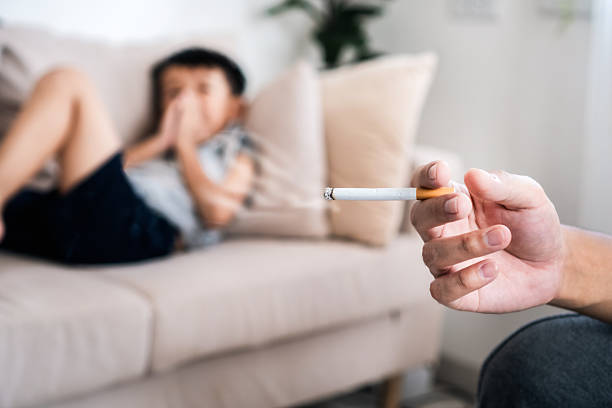
Exposure to second-hand smoke harms children more than adults. (Representational pic/iStock)

Synopsis: Nearly one in three Indians face second-hand smoke exposure, with 444 million people exposed in 2023, according to a study. Although prevalence has fallen since 1990, population growth has increased the absolute burden. The exposure can damage lungs, worsen respiratory disease, and raise cardiovascular risks, while women and children remain particularly vulnerable.
An estimated 444 million people in India inhaled second-hand smoke in 2023, placing the country behind only China, where 664 million people were exposed, according to a study. Indonesia ranked third, with 142 million people exposed to second-hand smoke.
The study, published in The Lancet Public Health, tracked exposure and its health consequences across 204 countries and territories between 1990 and 2023. It measured nine second-hand-smoke-linked health outcomes, including asthma, for the first time.
India’s numbers reflected a paradox. The age-standardised prevalence of second-hand smoke exposure dropped from 43.2% in 1990 to 30.6% in 2023, a fall of roughly 29%. Among women, prevalence fell from 49.2% to 30.3%. Among men, it dipped from 37.1% to 31%.
However, the number of people exposed increased over time. In 1990, India counted about 375 million exposed people, which rose 18.4% to 444 million by 2023.
Dr Sujith Varghese Abraham, a consultant pulmonologist at KIMSHEALTH, Thiruvananthapuram, explained the gap.
“The proportion of Indians exposed to second-hand smoke has fallen substantially in recent years, particularly over the last decade, due to increased awareness campaigns against tobacco smoking,” he told South First.
“While the proportion of the Indian population exposed has come down, the absolute number remains high because the overall population has grown considerably. A small percentage of a much larger population can still translate into hundreds of millions of people being exposed,” he stated.
Dr Abraham warned against considering the falling percentage as good news alone. “This falling prevalence does not necessarily mean a falling burden. Factors such as urban crowding, household exposure and continued tobacco use can continue to sustain a large absolute number of people exposed to second-hand smoke.”
The study’s authors described the same pattern globally. “Despite a 22.2% reduction in age-standardised prevalence since 1990, the absolute number of exposed individuals has remained stable owing to population growth,” they wrote, pointing to sub-Saharan Africa, where the exposed population doubled during the survey period.
Also Read: A shift beneath steady tobacco use in southern India
South Asia recorded 641 million exposed people in 2023, with prevalence standing at 33.6%. India alone accounted for roughly seven in 10 of the regional total.
India also outpaced the regional average in reducing prevalence. South Asia’s prevalence fell by about 24.1% since 1990, compared with a 29% dip in India. Population growth, though, cancelled much of that gain when counted in raw numbers.
The study defined second-hand smoke as exposure to smoke from combustible tobacco at home or work. It did not count exposure that occurs only in bars, restaurants, public transport or private vehicles.
Second-hand smoke did not spare people who never touched tobacco, the study revealed.
“Repeated exposure to second-hand smoke can lead to serious health issues, mainly caused by recurrent airway irritation, oxidative stress and inflammation,” Dr Abraham said. “It impairs the tiny cilia that normally clear mucus and pollutants, increases airway reactivity, and gradually affects lung function as well as the airway defence mechanisms.”
He described the impact of losing that defence. “When the airway defence mechanism is lost, it can lead to many infectious diseases, and because of this repeated airway irritation and injury, they are prone to chronic respiratory diseases and an increased risk of lung cancer.”
Even occasional exposure would leave a mark, he noted. “Occasional exposure can cause short-lived irritation and inflammation, which can largely recover, but these repeated occasional exposures, however, result similarly and also lead to persistent inflammation and cumulative lung damage.”
The study’s authors put the issue succinctly: “There is no safe level of second-hand smoke exposure.” Smoke carries toxic and carcinogenic compounds that raise the risk of cardiovascular and respiratory disease, they noted, and children would face particular risk because their airways and immune systems are still forming.
Also Read: How smoking harms fertility
The burden extended well beyond breathing problems.
Second-hand smoke contributed to 1.66 million deaths and 44.8 million Disability-Adjusted Life Years (DALYs) worldwide in 2023, the study claimed. Ischaemic heart disease topped the list of contributors to DALYs overall, while lower respiratory infections were high among children.
The authors traced the mechanism: “Through oxidative stress, endothelial dysfunction, and chronic inflammation, these exposures raise the risk of cardiovascular, respiratory, neoplastic, and metabolic disease.”
Dr Abraham pointed to a layering effect that plays out across Indian cities. “There is a cocktail of exposures common in our society, particularly among the urban population. It includes second-hand tobacco smoke, household air pollution, biomass fuel and occupational exposures,” he said.
“These exposures share a common pathway of respiratory damage, and these combined exposures can lead to a cumulative response that amplifies respiratory harm,” the pulmonologist further said. “The lung does not experience these exposures separately. It is exposed to all of them together, and this cumulative burden can lead to extensive lung damage.”
Also Read: How cooking smoke is silently damaging ageing minds
Across the world, women comprised more than half of those exposed to second-hand smoke. The study noted that women faced exposure even where female smoking was rare, largely because men smoke inside the household.
Children made up another group that bore a heavy share. They accounted for more than 12% of all DALYs linked to second-hand smoke globally in 2023, and the analysis counted 767 million children exposed worldwide.
Dr Abraham traced why children were more harmed than adults from the same exposure. “Children breathe more air in relation to their body size than adults, and repeated second-hand smoke exposure can lead to early airway inflammation, impairment in lung growth, frequent respiratory infections, wheezing and asthma exacerbations.”
The consequences did not end with childhood, he warned. “This persistent exposure may prevent children from reaching their potential lung function and may also lead to an early decline in lung function, leaving them with a lower respiratory reserve than a person should achieve.”
Dr Abraham explained why these two vulnerable groups were overlooked in India. He particularly flagged the anti-smoking law that forced smokers to smoke indoors.
“Smoking in public spaces is an offence and is prohibited under Section 4 of the COTPA 2003 Act. So, in such a scenario, smokers are forced to smoke inside their homes, and, relatively, these women and children are the victims of second-hand smoke,” he opined.
Also Read: How gendered division of labour hurts unborn babies
Many households held the belief that smoking near an open window, or stepping into another room, kept the family members safe. Dr Abraham rejected that belief.
“No,” he said. “Third-hand smoke is actually the residual tobacco left behind after a cigarette or other tobacco product has been extinguished. This nicotine and other chemicals can stick to clothes, hair, skin, furniture, carpets, curtains, walls and car interiors, and this residue can persist.”
He clearly mentioned those who would face the greatest risk from tobacco residue. “It can be inhaled, swallowed or absorbed through the skin, especially by infants and young children who frequently touch the contaminated surfaces and put their hands in their mouths. So, smoking in another room, or near a window, is not a solution to protect one’s family members.”
On where India should focus first—cutting down on smoking, protecting public spaces or tackling home exposure—Dr Abraham placed one above the rest.
“All three of these strategies are necessary, and out of these, the high-impact strategy would be reducing tobacco use itself,” he said. “The fewer the smokers, the fewer the sources of second-hand smoke, especially in homes, public places and workplaces.”
He emphasised where the effort should begin. “The strategy should begin at home. There should be proper tobacco awareness. The harmful effects of tobacco should be taught from childhood itself. And for a smoker, free and efficient tobacco cessation clinics should be available in all hospitals.”
The study’s authors reached a similar conclusion globally, linking India’s numbers to two other countries with a similar burden.
“China, India, and Indonesia, which together account for almost half of the global population exposed to second-hand smoking, have the highest smoking prevalence globally. Accelerating the decline in smoking would lower future exposure to second-hand smoking and its largely preventable burden,” the study noted.
They also pointed to a legal gap that left out homes. “Approximately 70% of the world’s population is not protected by comprehensive smoke-free laws, and domestic settings, where exposure tends to be most prolonged, remain largely unregulated.”
In India, falling prevalence marked real gains against a habit that once followed half the population. But 444 million people still breathe someone else’s smoke, most of them inside their own homes, and that number keeps climbing even as the percentage keeps falling.
(Edited by Majnu Babu).



