

Published May 20, 2026 | 2:44 PM ⚊ Updated May 20, 2026 | 2:44 PM

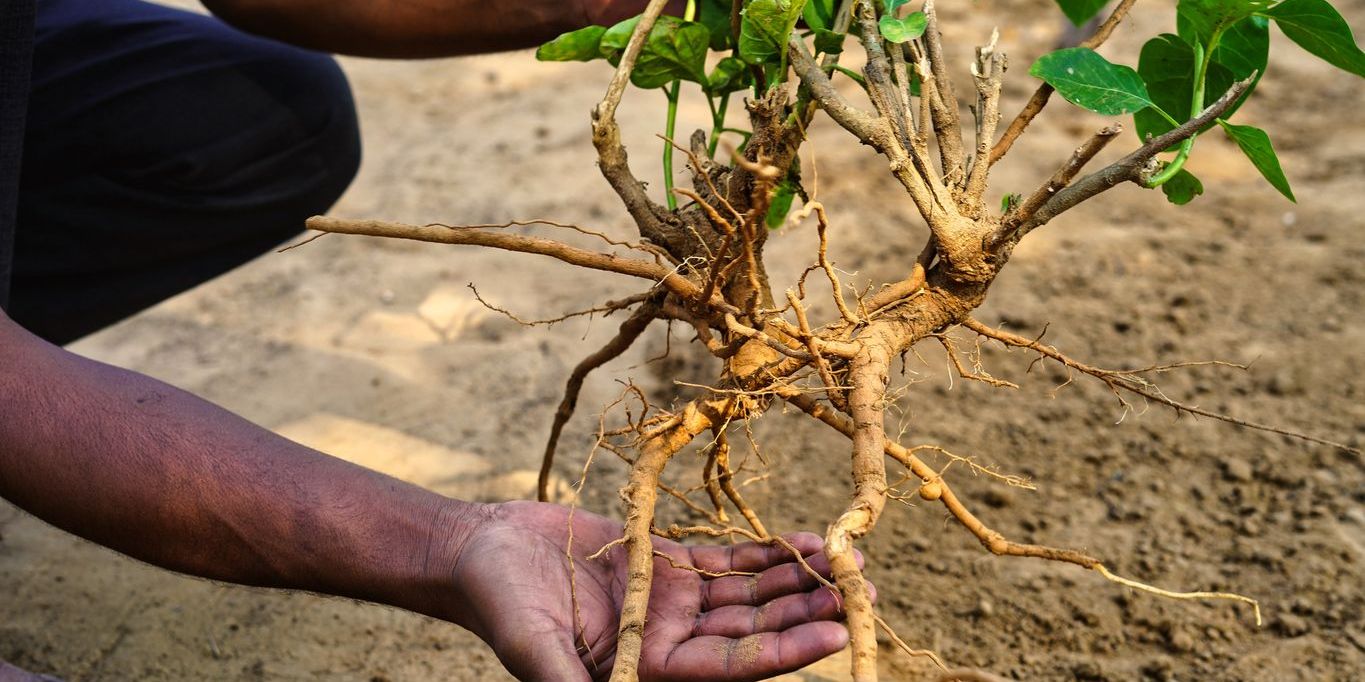
Representational image. Credit: iStock

Synopsis: India’s food regulator banned ashwagandha leaves from supplements in April 2026, citing safety concerns over a reactive compound called Withaferin-A. Eight manufacturers challenged the move in the Karnataka High Court, arguing the ban required a formal regulatory amendment, not a mere advisory. The court stayed the directives until June.
India’s food regulator FSSAI moved in April 2026 to ban ashwagandha leaves from supplements and health products. Eight companies challenged the move in court. The Karnataka High Court has since stayed both directives, pending a hearing in June.
On 15 April 2026, the Ministry of Ayush directed all manufacturers, exporters and sellers to stop using ashwagandha leaves immediately. The next day, the FSSAI reinforced that with its own advisory.
FSSAI left no room for interpretation. “The use of ashwagandha leaves in crude or extract or any other form is not permitted under the said regulations,” it said.
The regulator pointed squarely at science. Available studies, it noted, report “possible safety concerns for ashwagandha leaves due to higher concentrations of reactive withanolides, particularly Withaferin-A” — a compound that concentrates heavily in the leaves and raises toxicity questions at the doses found in leaf-based extracts.
FSSAI told all food business operators to “ensure strict compliance” and warned that “any deviation shall attract action under the Food Safety and Standards Act, 2006.”
Also Read: AYUSH ads get green light: Supreme Court lifts ban on pre-approval rule
The Ireland-based Kerry Group and its Bengaluru arm filed one petition before the Karnataka High Court. Six Indian manufacturers, led by Sami-Sabinsa Group, filed another.
Their argument went straight to process. The government, they contended, cannot ban an ingredient through a directive. It would need to formally amend the 2016 food safety regulations. A memo from the Ministry of Ayush carries no such legal weight.
The companies told the court they had manufactured products using ashwagandha leaves “for more than 30 years to the knowledge of the respondents, who did not raise any objections in this regard.”
They argued that the scientific studies cited in the directive “do not indicate much less establish that usage of Ashwagandha leaves results in possible safety concern.”
The advisory, they said, violated their constitutional right to carry on trade under Article 19(1)(g) and “fails to meet the proportionality test.” Stopping them from using ashwagandha leaves, they told the court, “would severely and substantially impact the business of the petitioner, who would be put to irreparable injury and hardship.”
Counsel for the petitioners walked Justice SR Krishna Kumar through the material on record. They pointed to Schedule IV of the 2016 regulations, which lists Withania somnifera at serial number 432 as a permitted plant ingredient, and argued that the government “wrongly state and assume that in Schedule IV of the 2016 Regulations only the roots and extracts of Ashwagandha and not the leaves are permitted.”
They told the court that “prohibition of usage of certain parts of a food supplement cannot be issued through a mere advisory simpliciter without amending the 2016 Regulations, which was sufficient to vitiate the impugned advisory.”
The government’s advocate sought time to file objections. The court listed the matter for 8 June.
Also Read: Urban India drives AYUSH use, as 7 in 10 believe it works, and 6 in 10 follow it on faith
On 12 May, Justice Krishna Kumar stayed both the FSSAI advisory and the Ministry directive for the eight petitioner companies.
“The impugned Advisory dated 16.04.2026 and the impugned Directive dated 15.04.2026 issued by respondent Nos. 1 and 2 respectively, are hereby stayed only insofar as it relates to the petitioners in W.P. No. 14990/2026 and W.P. No. 15010/2026 are concerned, till the next date of hearing,” the court said.
The court reserved the right for the government to return before 8 June if it sought to modify or vacate the order. “Liberty is reserved in favour of respondents to seek vacation or modification of this order,” it said.
The stay applies only to the eight petitioner companies. Other food businesses that use ashwagandha leaves in their products do not receive the same protection and remain bound by the FSSAI advisory.
At the June hearing, the government will need to decide whether to defend the advisory as it stands, apply to vacate the stay, or begin the longer process of formally amending the 2016 regulations which will formally decide if India’s food regulator can restrict a permitted ingredient through an advisory alone, or whether every such move requires a formal amendment to the underlying law.
(Edited by Amit Vasudev)



