

Published Nov 24, 2026 | 7:00 AM ⚊ Updated Nov 24, 2026 | 7:00 AM

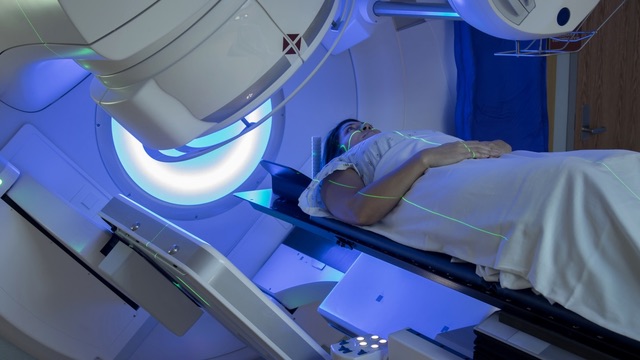
Lung cancer remained the leading individual cancer.

Synopsis: An analysis of India’s cancer mortality data from 2015 to 2024 reveals changing cancer patterns across South India. Lung cancer among women and non-smokers, rising breast cancer deaths in Tamil Nadu, and Karnataka’s oral and oesophageal cancer burden highlight growing challenges, while late diagnosis, treatment costs and gaps in death certification persist.
Cancer is no longer following the patterns doctors have traditionally associated with the disease. More women and non-smokers are presenting with lung cancer, breast cancer deaths recorded in Tamil Nadu have nearly tripled in five years, and Karnataka continues to report a substantial burden of oral and oesophageal cancers.
Even as cancer treatment advances with robotic surgery, targeted therapies and immunotherapy, doctors say patients continue to reach hospitals after the disease has progressed, when treatment becomes more complicated and the chances of a cure may diminish.
An analysis of the Medical Certification of Cause of Death (MCCD) reports from 2015 to 2024 shows that medically certified neoplasm deaths in India increased from 62,876 in 2015 to 1,02,520 in 2024, a rise of approximately 63 percent.
These figures represent deaths for which medical cause-of-death certificates were issued, not the total number of cancer deaths in India.
In 2024, Karnataka recorded 12,207 medically certified neoplasm deaths, followed by Tamil Nadu with 10,861, Kerala with 5,339, Telangana with 1,759 and Andhra Pradesh with 1,263. Together with Puducherry, the six southern states and Union Territory accounted for approximately 31 percent of India’s medically certified cancer deaths.
Also Read: Bisleri says its water is safe, questions Food Safety and Standards Authority of India’s findings
Lung cancer remained the leading individual cancer site nationally in nine of the ten years analysed. In 2024, it accounted for 10,036 medically certified deaths, or 9.8 percent of all certified neoplasm deaths.
Kerala recorded 833 lung cancer deaths in 2024, accounting for approximately 15.6 percent of its certified cancer deaths. Karnataka recorded 1,348 deaths, making lung cancer the state’s leading cancer site.
But doctors say the profile of patients presenting with lung cancer is also changing.
Dr Khadse Hussain, Senior Consultant, Surgical Oncology (Thoracic and Oesophageal Surgery), Apollo Proton Cancer Centre, Chennai, told South First that he is seeing more women with lung cancer, particularly in the 40-55 age group, including those who have never smoked.
“Females are getting more now, more in the 40 to 55 years’ group, non-smokers, adenocarcinoma is the commonest type (previously squamous cell carcinoma),” he said.
Dr Niti Raizada, Principal Director, Medical Oncology and Hemato-Oncology, Fortis Hospitals, Bengaluru, said smoking remains strongly associated with lung cancer, while environmental and occupational exposures may also contribute.
“Environmental and occupational exposures, including air pollution and certain workplace chemicals, may also contribute to cancer development,” she said to South First.
Another concern is the stage at which patients reach cancer centres.
Dr Hussain said approximately three-fourths of the lung cancer patients he encounters present with advanced disease. Among patients undergoing surgery at his centre, he estimates that around 20 percent are detected at an early stage, while 80 percent have locally advanced disease.
He said surgery is now possible in many locally advanced cases following chemotherapy and immunotherapy. Selected patients with metastatic disease may also undergo surgery.
Also Read: Cosmetics from Pakistan, vloggers and ailing kidneys in Keralam
While lung cancer dominates the mortality figures in Kerala and Karnataka, Tamil Nadu presents another important trend: the sharp increase in recorded breast cancer deaths.
The MCCD data shows that medically certified breast cancer deaths in Tamil Nadu increased from 284 in 2019 to 822 in 2024, nearly three times the earlier figure.
Dr Manjula Rao, Consultant, Breast Oncoplastic Surgery, Apollo Proton Cancer Centre, Chennai, cited Tamil Nadu Cancer Registry Programme figures showing that the crude incidence rate of breast cancer increased from 24.7 per 100,000 women in 2016 to 28.7 per 100,000 in 2021, an increase of approximately 16.2 percent.
“Breast cancer is now the most common cancer among women in the country,” Dr Rao said to South First.
However, she cautioned against interpreting the increase in medically certified deaths as an equivalent rise in cancer incidence.
“An increase in recorded deaths does not necessarily represent an equivalent increase in disease incidence. Improved cancer registration, reporting and recognition of the disease burden may also contribute to changes in recorded numbers,” she said.
Late diagnosis remains a major challenge. Citing an Indian breast cancer data review, Dr Rao said approximately 57 percent of patients are diagnosed at a late stage. She also referred to a National Cancer Registry Programme hospital-based analysis in which approximately 13 percent of patients had distant metastases at initial presentation.
The consequences extend beyond survival. When breast cancer is detected early, women may be eligible for breast-conserving surgery. But when the disease progresses and involves the skin, chest wall or extensive lymph nodes, surgery becomes more complicated.
“Early diagnosis is not merely about detecting cancer sooner; it can fundamentally change the extent of treatment required, the possibility of breast preservation and, most importantly, the chances of long-term survival,” Dr Rao said.
She also highlighted improvements in breast cancer surgery, particularly the growing use of breast-conserving and oncoplastic procedures.
“The main shift over the last many decades in breast cancer surgery has been from removing more to removing only what is needed, without compromising cure,” she said.
Oncoplastic surgery combines tumour removal with breast reshaping, allowing surgeons to remove larger tumours while preserving the breast in suitable patients.
Dr Rao also pointed to Tamil Nadu’s community-based screening initiatives as an important step towards earlier detection. She urged women not to ignore breast changes, including lumps, nipple discharge, nipple retraction and alterations in breast appearance.
Also Read: 800 gloves for one patient, Rs 66 lakh in post-discharge bills: ACB flags irregularities at NIMS
The MCCD data also reveals differences in cancer mortality patterns between neighbouring southern states.
In 2024, Karnataka recorded 933 deaths from cancers of the lip, oral cavity and pharynx, accounting for approximately 9.5 percent of India’s certified deaths in this category. The state also recorded 619 oesophageal cancer deaths, representing approximately 16.8 percent of the national total.
Tobacco use, particularly smokeless tobacco, areca nut and betel quid consumption, are established risk factors for oral cancers. Tobacco and alcohol consumption are also associated with oesophageal cancer.
Dr Sandip Duarah, Senior Consultant, Surgical Oncology (Head and Neck), Apollo Proton Cancer Centre, Chennai, said the changing cancer burden needs to be understood through several factors, including population growth, increased life expectancy, lifestyle changes and improvements in diagnostic screening and reporting.
He also pointed to Karnataka’s areca nut cultivation and consumption patterns.
“Karnataka has one of the highest cultivation areas dedicated to areca nut,” he said to South First, referring to studies from the Malnad region that have examined environmental factors, including pesticide exposure, in relation to cancer patterns.
Dr Dharma Kumar KG, Surgical Oncologist at Gleneagles BGS Hospitals, Bengaluru, also identified tobacco and areca nut as important risk factors.
“Tobacco use, including smoking and smokeless tobacco, is a major risk factor for lung and oral cancers. Areca nut and betel quid consumption are also strongly linked to oral cancer,” he said.
He added that alcohol consumption can further increase cancer risk, particularly when combined with tobacco use.
However, the MCCD data cannot establish the precise contribution of individual risk factors to Karnataka’s cancer mortality.
Also Read: Karnataka could see 9.41 lakh dementia cases by 2036; experts stress need for early diagnosis
Beyond individual cancer sites, digestive organ cancers form the largest group of medically certified neoplasm deaths in India.
In 2024, they accounted for 26,014 deaths, or 25.4 percent of all certified neoplasm deaths. The category includes cancers of the oesophagus, stomach, liver, pancreas, colon and other digestive organs.
Among individual sites, liver and bile duct cancers accounted for 5,191 deaths, stomach cancer for 4,626, oesophageal cancer for 3,693 and colon cancer for 2,848.
Dr Raizada said several factors contribute to digestive cancers, including tobacco, alcohol, dietary habits, obesity, physical inactivity and infections.
“H. pylori infection is associated with stomach cancer, while hepatitis B and C infections can increase the risk of liver cancer,” she said.
She added that the contribution of each risk factor varies according to the type of cancer and an individual’s exposure history.
Across the interviews, one concern repeatedly emerged: patients often reach specialised cancer centres only after symptoms have progressed.
Dr Dharma Kumar said the stage at diagnosis plays a major role in determining whether surgery is possible.
“Patients diagnosed at an early stage often have a better chance of undergoing surgery with the aim of removing the cancer completely,” he said.
He identified lack of awareness, fear of a cancer diagnosis, delayed medical consultation and inadequate referral systems as factors contributing to treatment delays.
“Delays in referral to a cancer specialist can further affect the treatment timeline,” he said.
Geographical access is another challenge. Patients from smaller towns and rural areas may have to travel long distances to reach specialised cancer centres, adding to accommodation, transport and treatment expenses.
Dr Raizada also highlighted financial constraints as a factor that can interrupt cancer treatment.
“Some patients may delay investigations, miss appointments or discontinue treatment because of the cost of medicines, hospital visits and supportive care,” she said.
Also Read: Doctors link Instagram-promoted fairness cream to serious kidney disorder in Keralam teenager
Cancer treatment has changed considerably over the past decade, with improvements in surgical techniques, molecular diagnostics, targeted therapies and immunotherapy. However, these treatments require appropriate testing and are not suitable for every patient.
“Their cost can also be a major concern, particularly for patients without adequate health insurance or financial support,” Dr Raizada said.
She cautioned against assuming that newer or more expensive therapies are necessarily the best option for every patient.
“It is important to select treatment based on scientific evidence, the patient’s medical condition and affordability,” she said.
In 2024, Andhra Pradesh recorded 1,263 medically certified neoplasm deaths, while Telangana recorded 1,759. These figures are substantially lower than those of Karnataka, Tamil Nadu and Kerala. However, they should not be interpreted as evidence that the two states have a lower cancer burden.
The MCCD analysis indicates that Andhra Pradesh and Telangana appear to medically certify a much smaller share of their deaths than states such as Kerala.
Some individual cancer figures are also unusually low. Andhra Pradesh recorded only 14 lung cancer deaths and 15 breast cancer deaths in 2024.
Karnataka also recorded a sharp decline in total certified neoplasm deaths in 2021, falling from 12,230 in 2020 to 6,340 in 2021, a reduction of approximately 48 percent.
Such fluctuations raise questions about the completeness and consistency of death certification.
The MCCD figures must also be distinguished from population-based cancer registry estimates. While the former record medically certified causes of death, cancer registries provide information on incidence and, depending on the registry, mortality and survival.
(Edited by Dese Gowda)



