

Published Aug 13, 2026 | 11:00 AM ⚊ Updated Aug 13, 2026 | 11:00 AM

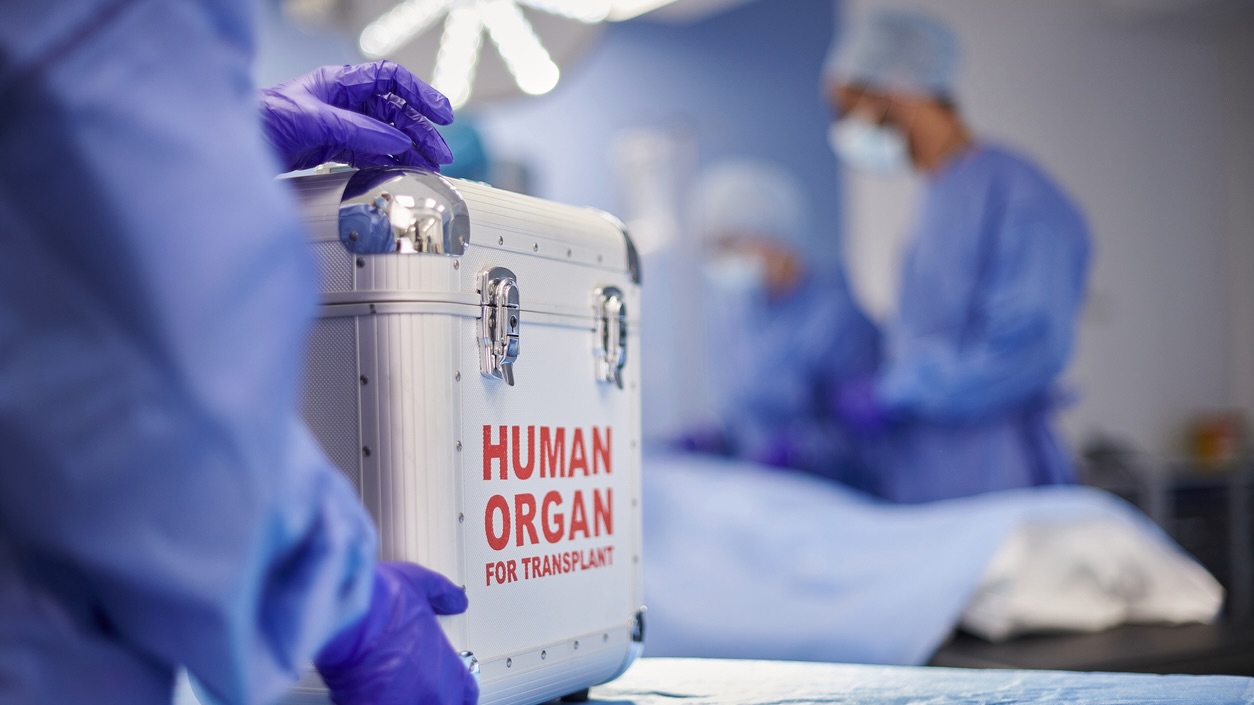
The numbers are alarming, a jump from 4,990 organ transplants in 2013 to 20,138 in 2025.

Synopsis: As the world celebrates Organ Donation Day on 13 August, India’s organ transplant numbers are rising, but demand continues to outpace supply. The crisis begins much earlier, with chronic diseases pushing millions towards organ failure. Drawing on a Parliamentary Committee report, NOTTO data and a Lancet study, this story examines why prevention, early detection, deceased donation and equitable transplant infrastructure must work together.
India is performing more organ transplants than ever before. Yet the country continues to meet only a fraction of the need for organs, while the number of people progressing towards organ failure keeps growing.
That makes India’s organ donation problem bigger than a shortage of donors.
It starts much earlier, with diseases that damage organs over the years, patients who are diagnosed late and limited access to specialist care. By the time a person suffering from organ failure enters a transplant waiting list, much of the opportunity to prevent that demand has already passed.
The connection emerges from three recent reports: the National Organ and Tissue Transplant Organisation’s 2025-26 report, the Rajya Sabha Department-related Parliamentary Standing Committee on Health and Family Welfare’s report on chronic kidney disease, and a study published in The Lancet Regional Health – Southeast Asia examining India’s transplant needs up to 2040.
India has an estimated 138 million people living with chronic kidney disease, according to the Parliamentary Committee. Around 2.2 lakh people progress to end-stage kidney disease every year, creating an additional requirement of about 3.4 crore dialysis sessions annually.
The Committee’s warning goes beyond dialysis capacity. A country with this burden, it said, “cannot afford to rely predominantly on a treatment-oriented strategy centred on dialysis and transplantation.” It called for an “urgent need to reorient national priorities” towards prevention, early detection and slowing disease progression.
That argument connects directly with the country’s transplant numbers.
Also Read: Why does Parliament want Indians to start kidney tests at 20, and repeat them every six months?
India recorded 20,138 organ transplants in 2025, according to NOTTO. That included 16,612 transplants involving living donors and 3,526 involving deceased donors. Kidney transplantation accounted for 14,477 procedures, of which 12,491 involved living donors and 1,986 deceased donors.
The numbers are alarming, a jump from 4,990 organ transplants in 2013 to 20,138 in 2025. But the numbers alone does not show the full scale of the unmet need.
The Lancet study estimates that India needed 125,894 kidney, 184,542 liver, 83,841 heart and 11,253 lung transplants in 2021. Actual transplant supply met only 7.2 per cent of kidney, 1.5 per cent of liver, 0.2 per cent of heart and 1.2 per cent of lung need.
The researchers project that annual need will rise to 143,722 kidney, 210,649 liver, 95,711 heart and 12,846 lung transplants by 2040. Even under a moderate reform scenario, kidney transplant coverage would reach only 32.6 per cent of projected need by 2040, while liver, heart and lung coverage would remain below 7 per cent.
The researchers describe this as a “large and persistent gap between transplant need and supply in India.”
And they make a point that brings the story back to prevention. “Health policies for disease prevention remain a key driver of future demand,” the study says, alongside the need to expand transplant infrastructure.
In effect, India has to work on both ends of the transplant pipeline. It has to reduce the number of people progressing to organ failure and increase the number of organs available to those who still need transplantation.
Kidney disease offers the clearest example because it sits at the intersection of chronic disease, dialysis, living donation and deceased donation.
The Parliamentary Committee records a national kidney transplant waiting list of 61,668 patients as of 9 February 2026.
In 2024, India performed 11,558 living-donor and 1,918 deceased-donor kidney transplants. The Committee notes that the waiting list was nearly five times the number of kidney transplants performed in 2024.
It also says the demand-supply mismatch requires a “two-pronged strategy”: increasing deceased organ donation while expanding transplant infrastructure and specialist capacity in states that lack it.
In 2025, living donors accounted for nearly four out of every five organ transplants recorded by NOTTO. For kidney transplantation, the gap is even more visible: 12,491 living-donor procedures compared with 1,986 deceased-donor procedures.
The Parliamentary Committee was told by experts that the availability of living donors is becoming constrained because of smaller family sizes and the prevalence of diabetes and hypertension among potential donors. The Committee also recorded that deceased-donor programmes remain uneven across India.
That makes deceased donation more important, but it requires more than public pledges.
The Lancet researchers point to the infrastructure required to identify potential donors.
Their analysis identifies the need to strengthen deceased donation through identification of potential donors in intensive care units, organ retrieval, transport, transplant coordinators and transplant capacity.
The Parliamentary Committee has also recommended expanding organ retrieval centres and kidney transplant facilities. It has proposed at least three government medical colleges with such facilities in every large state and one in every small state or Union Territory.
The Committee has also highlighted the financial constraints faced by underprivileged patients. It pointed out that even when a suitable donor is available, such patients can struggle to undergo transplantation or maintain post-transplant care.
The challenges doesnt end there. Transplanation requires every link in the chain to work as intended.
In case of a deceased donor, after the identification, his or her family has to consent for the procedure and brain-stem death needs to be certified. Organs need to be retrieved and transported. A compatible recipient needs to be identified. A transplant centre needs to be available. The recipient then needs medicines and follow-up care.
If any part of that chain fails, the donation may not end up in a transplant.
Also Read: Three-star cap on room rent: Parliament panel moots private healthcare price controls
The Lancet study also found that the transplant infrastructure is concentrated in a small number of states.
In 2024, five states accounted for 80-96 per cent of solid-organ transplantation while representing 29 per cent of India’s population. The researchers caution that these figures refer to the location of transplant centres, not necessarily the residence of recipients. Patients travel between states to access transplantation.
That distinction still exposes an infrastructure problem.
The researchers point to Tamil Nadu’s deceased-donor network and Telangana’s Jeevandan programme as examples of what states can achieve when political commitment, infrastructure and public engagement come together. They argue that these models should be replicated while investment is directed towards regions where transplant activity remains low.
NOTTO lists Jeevandan Telangana at NIMS, Hyderabad, among the State Organ and Tissue Transplant Organisations supported under the national network.
The Parliamentary Committee’s report repeatedly brings the focus back to prevention. It says early identification of people at risk through screening for diabetes, hypertension, albuminuria and reduced kidney function can delay CKD progression. It also says strengthening secondary prevention can reduce progression to end-stage kidney disease and lower future demand for dialysis and transplantation.
The Committee has recommended integrating serum creatinine testing with automatic eGFR reporting into routine screening for high-risk people at primary healthcare facilities. It says relying on referrals to higher facilities can result in patients being lost to follow-up and diagnosed only after kidney damage has progressed.
The question cannot only be how many Indians are willing to donate their organs after death. It also has to be how many people can be kept from reaching organ failure in the first place. The Lancet researchers make that connection directly by placing disease prevention alongside transplant infrastructure as determinants of future demand.
The Parliamentary Committee, meanwhile, calls for a healthcare approach that runs from prevention and screening to transplantation and deceased donation. It says the rising CKD burden requires stronger primary healthcare, systematic screening, specialist capacity, deceased donation and financial protection.
(Edited by Fayisa CA)



