

Published May 26, 2026 | 7:00 AM ⚊ Updated May 26, 2026 | 7:00 AM

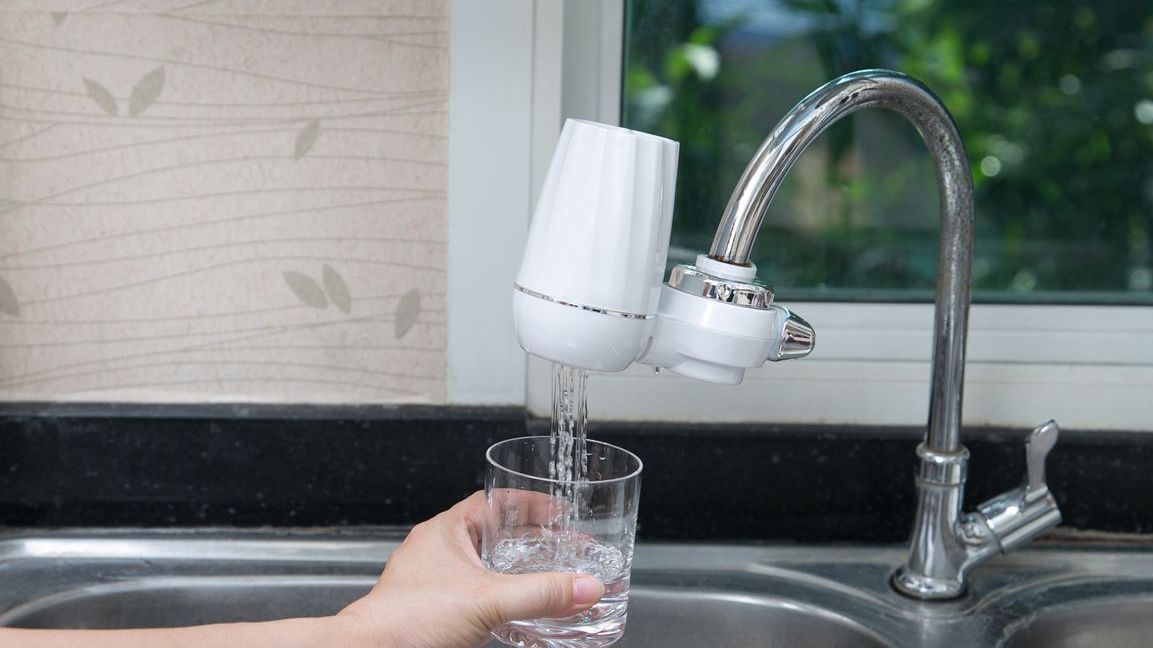
RO water. Representative image. (iStock)

Synopsis: Chennai households rated their RO-purified water as safe based on clarity, taste and smell. A study testing 262 samples across 216 homes found E. coli in 31 percent of post-purification samples. Poor maintenance, ageing filters and unsafe storage drove contamination. Education levels strongly predicted which households faced the highest risk.
Chennai families trusted their water purifiers. They looked at the water. It ran clear. They smelled it. Nothing. They tasted it. Clean, sometimes faintly sweet.
The bacteria, however, had not read the manual.
A new study published in the Journal of Exposure Science & Environmental Epidemiology tested 262 water samples from 216 low- and middle-income households across Chennai. Researchers collected samples before and after reverse osmosis treatment. What they found dismantled a widely held belief about home water purification.
Thirty-one percent of post-RO water samples still tested positive for E. coli.
Before purification, 71 percent of source water samples carried the bacteria. RO systems brought that number down. But down is not the same as safe.
“While RO systems reduced contamination, 31 percent of post-RO samples still contained E. coli compared to 71 percent in non-treated water,” the authors wrote. “RO systems improve physical and chemical water parameters but are insufficient in fully eliminating biological contaminants.”
Also Read: Can green roofs cool Chennai without worsening water stress?
Reverse osmosis systems have become a fixture in urban Indian homes. They strip out dissolved solids, reduce turbidity, cut hardness and alkalinity. The water they produce looks and tastes different from tap water. Better, most people say.
That visible improvement built confidence. Too much of it.
The study found that most respondents rated their drinking water as “good” or “very good.” They based this on colour, taste and odour. Sensory cues that E. coli does not trigger. The bacteria are colourless, odourless and tasteless.
Researchers described this as a critical gap. Public perception of water safety did not match the microbiological reality in a significant number of households.
“Instances of unsafe water due to E. coli contamination were not reflected in respondents’ perceptions,” the authors noted. “This highlights the critical need for regular water testing.”
People were not being careless. They were using the only tools available to them without a laboratory. Their eyes, nose and tongue. Those tools simply cannot detect E. coli.
The RO technology itself is not the problem. Under controlled conditions, well-maintained RO systems remove biological contaminants effectively. The problem lives outside the machine.
Researchers identified several failure points. Ageing filters that no longer perform at rated capacity. Biofilm, a layer of microorganisms that builds up inside purification systems over time. Unsafe handling of purified water after it leaves the tap. Improper storage in uncovered or contaminated containers.
“RO system effectiveness depends heavily on regular maintenance and proper water handling practices,” the authors wrote.
The study’s second phase, conducted with a separate group of households between August and October 2024, added granular detail to these findings. It tracked contamination levels against maintenance history.
Systems serviced within the previous three months showed the lowest E. coli positivity. Systems older than five years, or those never maintained, showed the highest contamination rates.
The machine does not degrade in isolation. It degrades because no one services it.
The study tracked contamination rates against the education levels of the household member responsible for water management. The gap it revealed was stark.
Among households where the respondent held a postgraduate degree, 36 percent of the drinking water samples contained E. coli. Among households with lower education levels, that figure climbed to 83 percent.
Researchers attributed this to awareness. Higher education correlates with better knowledge of hygiene practices, maintenance schedules and safe water handling. People who knew more, contaminated their water less.
“Education can significantly influence behavioural practices related to water use and sanitation,” the authors wrote. “People with higher education levels may be more informed about the importance of safe water handling, potential sources of water contamination, and ways to purify water.”
The finding carries a harder implication. The households most vulnerable to contamination are also the least equipped, by access to information, to protect themselves.
Thirty-one percent of surveyed households reported children under the age of five. That number sits uncomfortably alongside the contamination data.
Young children face the greatest health risk from E. coli in drinking water. Diarrhoeal disease linked to contaminated water kills hundreds of thousands of children globally each year.
In Chennai’s low- and middle-income households, the combination of high contamination rates, low awareness and vulnerable occupants creates a compounding risk.
The study does not report illness outcomes directly. But it flags the overlap.
Also Read: How Chennai is racing to build heatstroke wards as temperature soars
The research team surveyed 23 locations across Chennai. They mapped contamination patterns spatially, and the city did not distribute its risk evenly.
Some areas showed high contamination in both source water and post-RO samples, pointing to systemic failures in water quality management. Others showed contamination appearing only after treatment, suggesting recontamination during storage or dispensing.
Regional disparities in infrastructure quality, pipe conditions and water source integrity shaped outcomes as much as household behaviour did.
“External factors such as environmental conditions and infrastructure maintenance also play a critical role in ensuring water safety,” the authors noted.
Researchers stopped short of calling RO systems a failed technology. They called them an incomplete solution.
“For household water treatment systems such as RO to achieve their full potential in safeguarding public health, a multi-faceted approach combining technical solutions with behavioural interventions is essential,” the authors wrote.
Their recommendations reach beyond individual households. They call for structured maintenance guidance. Technician training and certification. Standardised servicing intervals. Community-level awareness programmes. Public health communication on safe water handling.
They also pointed to something simpler. Timely filter replacement. Keeping storage containers covered. Not dipping hands or utensils into purified water.
“These findings underscore the urgent need for education, public awareness campaigns, the development of basic maintenance and servicing standards, and proper maintenance protocols to enhance the performance of RO systems,” the researchers concluded.
The study was conducted by researchers from Tel Aviv University, IIT Madras and partner institutions, including Stella Maris College, Madras Christian College and Engineering Without Borders in Chennai. More than 60 students from four institutions participated as field surveyors.
(Edited by Muhammed Fazil.)



