

Published May 20, 2026 | 10:49 AM ⚊ Updated May 20, 2026 | 10:49 AM

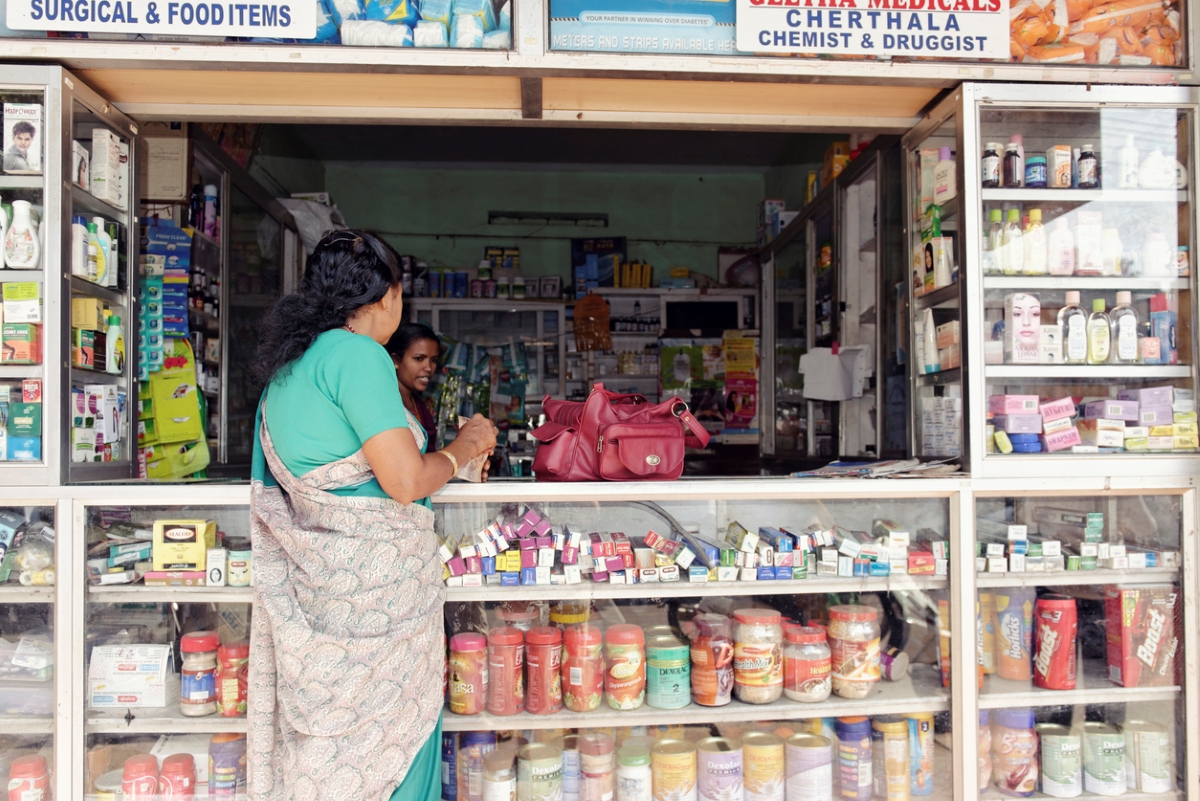
Pharmacy store in India (Representational image/ iStock)

Synopsis: A customer uploads a prescription on a medicine delivery app late at night. Within minutes, antibiotics and blood pressure tablets arrive at the door at nearly 30 percent discount. A few kilometres away, a chemist in Kondapur Hyderabad who has run his pharmacy for over three decades cannot afford to offer even a fraction of that discount. That gap sits at the heart of why the shutters will come down on Wednesday.
“This is a battle for survival,” says A. Sridhar Gupta, president of the Hyderabad Chemist and Druggist Association. “Unfair deep discounting by big corporate players is wiping out small, accessible medicine counters that families have relied on for generations, especially in semi-urban and rural pockets.”
Those words come a day before thousands of chemists and druggists across Hyderabad and the country are set to pull down their shutters in a coordinated strike to paralyse retail pharmacies on Wednesday, 20 May.
A customer uploads a prescription for a medicine delivery app late at night. Within minutes, antibiotics and blood pressure tablets arrive at the door at nearly 30 percent discount. A few kilometres away, a chemist in Kondapur, Hyderabad, who has run his pharmacy for over three decades, cannot afford to offer even a fraction of that discount. That gap sits at the heart of why the shutters will come down on Wednesday.
Also Read: 10 deaths or 116? Why Telangana’s heatwave death count differs from NCRB data
Corporate pharmacy chains and digital platforms have built their discount model on private-label medicines manufactured through third-party arrangements and sold under their own brands. The mechanics, according to chemists, are deliberate and structured to squeeze out independent traders.
Mohammed Khaja Najeebuddin, treasurer of the Hyderabad District Chemists and Druggists Association, broke it down plainly. “They create their own brands through third-party manufacturing and convince consumers that the medicines are the same but cheaper. Since their manufacturing margins are higher, they can offer discounts ranging from 40 percent to even 80 percent,” he said to South First.
For a neighbourhood chemist operating under the Drug Price Control Order, those numbers represent an impossible benchmark. The Drug Price Control Order (DPCO) fixes retailer margins at around 16 percent and wholesaler margins at around eight percent, covering roughly 600 medicines. There is no structural room to compete with a platform offering 80 percent off.
“Under the DPCO system, retailers get around 16 percent margin while wholesalers get around eight percent. Nearly 600 medicines fall under DPCO pricing,” Najeebuddin reiterated. “We are asking the government either to remove DPCO restrictions or create a level playing field so customers can benefit and pharmacies can survive.”
The associations have also raised objections to what they describe as the misuse of the Named Patient Program (NPP) and DPCO regulations by large corporate chains to push their own brands. They allege that when the same medicine sells under different labels at different prices, consumers face financial exploitation without always realising it.
The associations trace a significant part of the problem to a single government notification issued in March 2020.
“When the COVID-19 pandemic locked down the country and patients could not step out to collect medicines, the government issued G.S.R. 220(E) to permit online medicine supply as an emergency measure. At that time, we raised no objection because the public needed access to medicines and digital delivery filled a genuine gap,” said Najeebuddin.
What followed, they argue, was a permanent capture of a temporary relaxation. The emergency rule stayed on the books. Digital platforms scaled aggressively. Corporate chains expanded. The neighbourhood pharmacy, unable to match the discounts or the convenience, began bleeding customers.
“The temporary relaxations introduced during the health emergency are now being misused permanently by digital platforms and large corporations,” the associations said in their statement ahead of Wednesday’s strike.
The TTCDA and HCDA demand the immediate withdrawal of G.S.R. 220(E), along with G.S.R. 817(E), a more recent notification that chemists allege permits the sale of medicines without prescriptions, a move they describe as a direct threat to public health.
“We are not opposing healthcare services. However, we strongly object to policies that harm public health. As part of the protest on 20 May, all medical shops in Hyderabad district will remain closed from 12.40 pm onwards,” said Gupta.
Also Read: From diabetes to aesthetics: How GLP-1 weight-loss drugs are entering dermatology clinics
Beyond the business argument, the associations have raised concerns that reach well past trade disputes and into territory that health regulators may find harder to dismiss.
Najeebuddin pointed to the ease with which a single prescription, once uploaded to an online platform, continues to generate repeated medicine supplies long after the original consultation. He argued this practice directly fuels irrational antibiotic use and accelerates antimicrobial resistance across the population.
The associations submitted a memorandum to Prime Minister Narendra Modi, alleging that e-pharmacies exploit regulatory loopholes by dispensing critical medicines without physical prescription verification. The memorandum warned that unrestricted availability of medicines, particularly antibiotics, could produce a serious public health crisis that governments would struggle to contain.
Najeebuddin also flagged the online availability of abortion kits and habit-forming drugs, citing what he described as minimal resistance from digital platforms at the point of sale.
“Earlier, such medicines would not be given without prescriptions from pharmacy counters. Now abortion kits are easily available online,” he said.
He named specific medicines while speaking about the risk to young people. “College students are getting access to drugs like Alprazolam, Zolpidem, Nitrazepam and Diazepam online very easily. We do not provide such medicines without prescriptions at our counters,” he said.
The associations also referred to a recent controversy in Telangana, alleging that investigations into certain cases revealed online procurement links. “Two months ago, there was also an issue in Telangana, and enquiries showed that many products involved had been purchased online,” Najeebuddin said.
Najeebuddin argued that the loss of neighbourhood pharmacies carries a cost that discount percentages do not capture. A trained pharmacist at a physical counter provides something that digital platforms structurally cannot replicate.
“As pharmacists, we explain to patients whether a medicine should be taken before food or after food, how many days it should be taken and when they should return for review. Online platforms do not provide this counselling,” he said.
That counselling, he argued, is not a courtesy. It prevents dosage errors, reduces drug interactions, and keeps patients on the right treatment track. When the neighbourhood pharmacy disappears, that layer of care disappears with it.
He also raised concerns about storage and transportation conditions within online medicine delivery systems, alleging that several operators in Telangana run with inadequate infrastructure.
“Many online operators do not have proper facilities in Telangana. Some simply operate from small rooms in cities like Delhi or Mumbai with computers. Medicines are transported long distances without proper storage conditions,” he alleged.
The implications, he said, are direct. “If medicines are not stored properly, their potency reduces. They are transported through lorries and other modes before reaching customers,” he said.
Najeebuddin also alleged that fake prescriptions move through online platforms with minimal friction. “Customers often do not have enough awareness. We believe we are working for public health awareness and rational medicine use,” he said.
In Telangana alone, around 45,000 pharmacies plan to participate in the strike, with nearly 20,000 of them concentrated in Hyderabad, according to T. Krishna Kumar, treasurer of the Telangana Chemists and Druggists Association. The shutdown will run from 12:40 pm onwards under a nationwide bandh called by the All India Organisation of Chemists and Druggists.
The strike brings together the TTCDA, HCDA and the AIOCD, presenting what the associations describe as a unified national movement rather than a localised protest.
“This is an All India strike and a 24-hour national protest. If the government does not solve our issues, we will intensify the agitation further,” said Najeebuddin.
TTCDA president K. Srinivas and general secretary T. Raju warned that if the Centre does not act before or after Wednesday, chemists across Hyderabad will join an indefinite nationwide agitation.
The Drugs Control Administration of Telangana issued a public advisory ahead of the bandh, directing hospital-attached pharmacies to remain open and instructing corporate chains, including Apollo and MedPlus, to keep their stores open throughout the day.
District chapters of the AIOCD were asked to stay in contact with Drug Inspectors to ensure emergency medicine supply does not break down. All field officers have been placed on alert across the state.
The DCA said it will monitor the availability of essential and life-saving medicines through Wednesday and urged citizens facing difficulty to contact their local Drug Inspector or the Assistant Director of the Drugs Control Administration for immediate assistance.
For now, the neighbourhood chemist who has served the same families for decades prepares to lock his counter on Wednesday morning, hoping that one day of silence will say what years of representations to the government have not.
(Edited by Sumavarsha)



