

Published Jun 15, 2026 | 7:01 AM ⚊ Updated Jun 15, 2026 | 7:01 AM

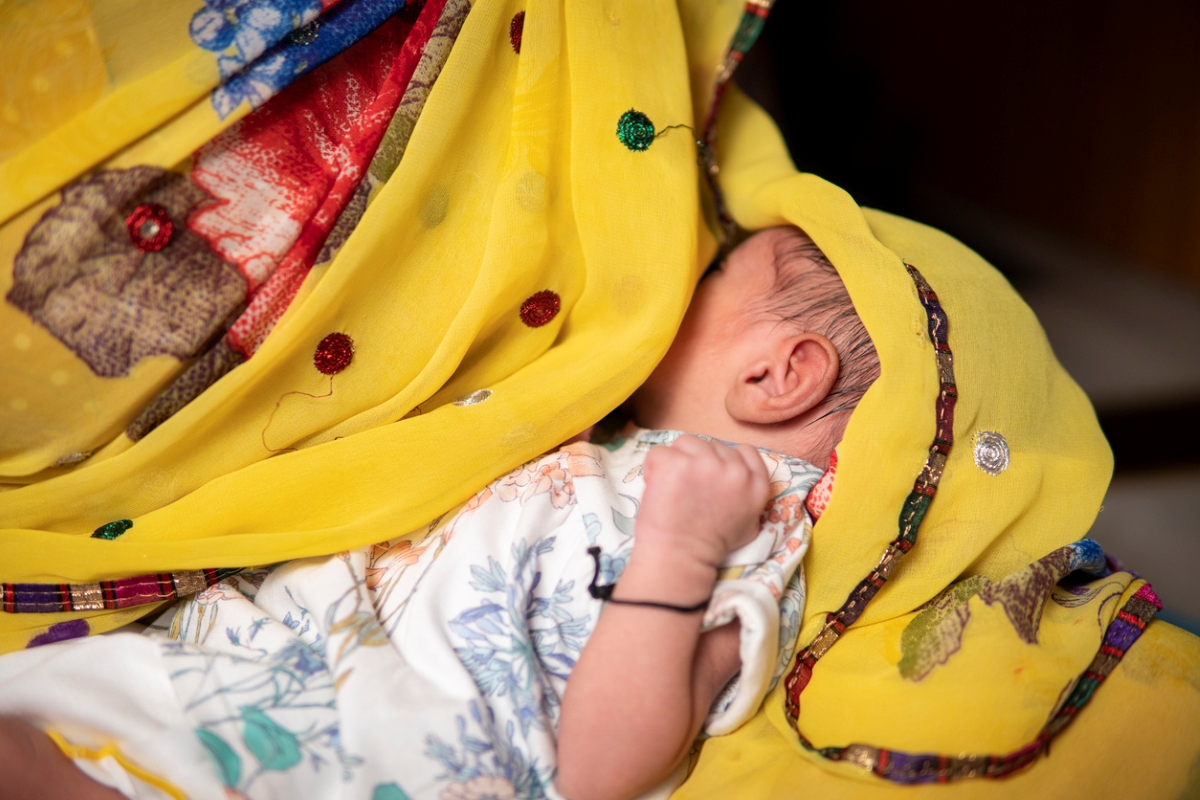
Breastfeeding. (Representational/ iStock)

Synopsis: South India has achieved high breastfeeding rates, with over 90 percent of infants under six months currently breastfed. Yet NFHS-6 data shows only 13-21 percent of children aged 6-23 months receive an adequate diet. The story explores this nutrition gap, examining why gains in breastfeeding are not translating into better feeding practices later.
Across Kerala, Andhra Pradesh, Telangana, Tamil Nadu and Karnataka, more than 90 percent of infants under six months are currently breastfeeding, according to the latest National Family Health Survey (NFHS-6, 2023-24). Most states show gains over the previous round, NFHS-5 (2019-21).
Follow the same children six months further, and the picture changes. Across these five states, only 13 percent to 21 percent of children aged 6-23 months receive what the survey calls an “adequate diet.” Karnataka records 13.3 percent . Telangana records 15.3 percent. Tamil Nadu reaches 20.6 percent. Kerala, despite topping the breastfeeding charts at 91.1 percent, manages only 19.8 percent.
South India has largely solved the breastfeeding problem. What happens after remains unresolved.
NFHS-6 measures adequate diet using two conditions: minimum meal frequency (eating often enough for the child’s age) and minimum dietary diversity (food from a sufficient range of groups, including pulses, dairy, eggs, fish, meat, fruits and vegetables).
A child can be fed regularly and still fail this test. Consider a toddler who eats three times a day but receives only rice and milk at each meal. The frequency requirement is met. The diversity requirement is not fulfilled, since pulses, vegetables, fruits, eggs, fish and meat are all absent. By NFHS-6’s definition, this child does not receive an adequate diet, even though the household may consider the child well fed.
This gap between “fed” and “adequately fed” sits at the centre of what the data shows for south India.
The first hours after birth set the pattern for what follows, says Dr Sivaranjani Santosh, a paediatrician and public health activist. “The first days after birth are crucial for establishing breastfeeding,” she says to South First. “If mothers receive proper guidance, skin-to-skin contact, help with latching, and encouragement during this period, breastfeeding often becomes much easier later on. But if support is missing at that stage, breastfeeding may fail before it is even properly established.”
South India’s numbers reflect both possibilities. Telangana shows the sharpest rise nationally in early initiation of breastfeeding (within one hour of birth), climbing 20 percentage points, from 37.1 percent to 57.1 percent. Andhra Pradesh rose 15.2 points to 67.2 percent. Kerala rose 14.4 points to 68.6 percent. Exclusive breastfeeding for the first six months also holds up across most of the region, with Andhra Pradesh at 69.5 percent and Kerala at 70.2 percent, both above the national figure of 61.9 percent.
But Dr Sivaranjani points to a structural weakness behind these averages: what happens inside hospitals in the first few days. “Practices such as immediate skin-to-skin contact, keeping the baby with the mother, and rooming-in are extremely important,” she says. “However, what often happens is that the baby is placed in a separate crib or nursery while the mother is kept elsewhere. The opportunities for skin-to-skin contact become limited. The baby is not feeding on demand.”
Also Read: NFHS-6 factsheet drops anaemia, cancer, HIV indicators
She also flags a more recent pressure on breastfeeding: formula introduced early in hospital, sometimes on the first day. “Once that happens, the breastfeeding cycle can get disrupted,” she says. “The baby starts receiving formula, the mother’s milk production may not establish optimally, and gradually formula becomes a regular part of feeding.” She points to surrogate marketing by formula companies, including paediatricians featured on manufacturers’ social media pages, as part of this pressure, despite restrictions under the Infant Milk Substitutes (IMS) Act.
For families with fewer resources, the stakes of this shift are higher. “Formula may be diluted to make it last longer,” she says. “Bottles may not be sterilised properly. Water quality may not always be safe. Under such circumstances, babies become vulnerable to malnutrition, diarrhoeal diseases, and infections.”
On balance, south India’s breastfeeding numbers are strong. But Dr Sivaranjani’s account suggests the margins, hospital practice, formula marketing, water quality, are where future gains or losses will come from. The bigger gap, however, lies further down the timeline.
At six months, breast milk stops being sufficient on its own. Children need solid food, introduced gradually and built up in variety and frequency as they grow. NFHS-6’s adequate diet figures suggest this transition is where south India’s nutrition systems lose their footing.
The numbers are stark. Karnataka’s breastfeeding rate sits at 91.6 percent; its adequate diet rate sits at 13.3 percent. Andhra Pradesh moves from 96.5 percent to 19.2 percent. Telangana from 94.6 percent to 15.3 percent. In each case, the drop is roughly 75 to 80 percentage points.
In practical terms, this means a household that has, for six months, been doing the right thing, breastfeeding on demand, often with hospital and community support, now needs to introduce mashed dal, vegetables, egg, curd, fruit and small amounts of fish or meat, multiple times a day, in quantities suited to a small child. For many families, this shift doesn’t happen smoothly, or doesn’t happen at all in the combinations the survey looks for.
Also Read: Reported spousal violence declines across India, but rises sharply in Kerala: NFHS-6
Telangana’s numbers stand out for a specific reason. It posted the country’s largest gain in early initiation of breastfeeding, yet its exclusive breastfeeding rate fell, and its adequate diet figure for 6-23 months, at 15.3 percent, trails Tamil Nadu, Andhra Pradesh and Kerala.
Several explanations could account for this combination, though NFHS-6 doesn’t test them directly. Rapid urbanisation around Hyderabad may have widened access to formula and packaged foods, which can substitute for both breast milk and home-cooked complementary food. Higher rates of maternal employment in urban Telangana could shorten the window for establishing breastfeeding routines after birth. Or counselling on complementary feeding may not be reaching families with the same consistency as messaging on breastfeeding initiation, which tends to happen at the point of delivery and is easier to standardise across hospitals.
Whatever the cause, Telangana illustrates a state that gets the loudest, most visible part of infant nutrition right, and the quieter, longer part wrong.
Dr Sivaranjani’s account of what effective support actually requires offers a useful lens for the complementary feeding gap, even though her example was about breastfeeding. She describes a mother whose milk supply had dropped to around 30 ml by the time the baby was nearly three weeks old. “During the first consultation, I spent nearly an hour with her trying to understand what was happening,” she says. They have stayed in touch since, with follow-up reviews tracking the baby’s progress. “This kind of support cannot be rushed.”
She is also clear that simply assigning a role, a lactation consultant, an Anganwadi worker, a counsellor, does not guarantee this kind of support. “Lactation consultants are certainly important, but simply having someone designated as a lactation specialist is not enough,” she says. “The quality of support matters.”
Complementary feeding arguably demands more of this than breastfeeding does. It is not a single skill, like latching, that can be corrected in a session. It requires a family to change what they cook, how often, and in what combination, over many months, often on a tight budget and with limited time.
A one-time instruction at a health centre, eat more vegetables, add an egg, is unlikely to translate into a changed plate at home without repeated, practical follow-up: what to cook with what’s available, how to prepare it for a child who can’t yet chew much, how to fit an extra meal into the day.
Dr Sivaranjani’s broader point, made about breastfeeding but equally true here, is that partial measures don’t add up to adequate ones. “Sometimes people assume that if a baby receives two or three breastfeeds a day, they have already obtained all the benefits and the remaining feeds can be formula,” she says. “That is not how it works. The amount of breast milk a child receives matters.” A toddler who eats once a day, or eats only what’s quick and familiar, is in a similar position: technically fed, but short of what the data defines as adequate.
Across much of south India, more than nine in ten infants are breastfed. Yet four out of five children between six months and two years of age still do not receive an adequate diet. The region has succeeded in getting nutrition started. Ensuring it continuing remains the bigger challenge.
(Edited by Sumavarsha)



