

Published Jun 04, 2026 | 7:02 AM ⚊ Updated Jun 04, 2026 | 7:02 AM

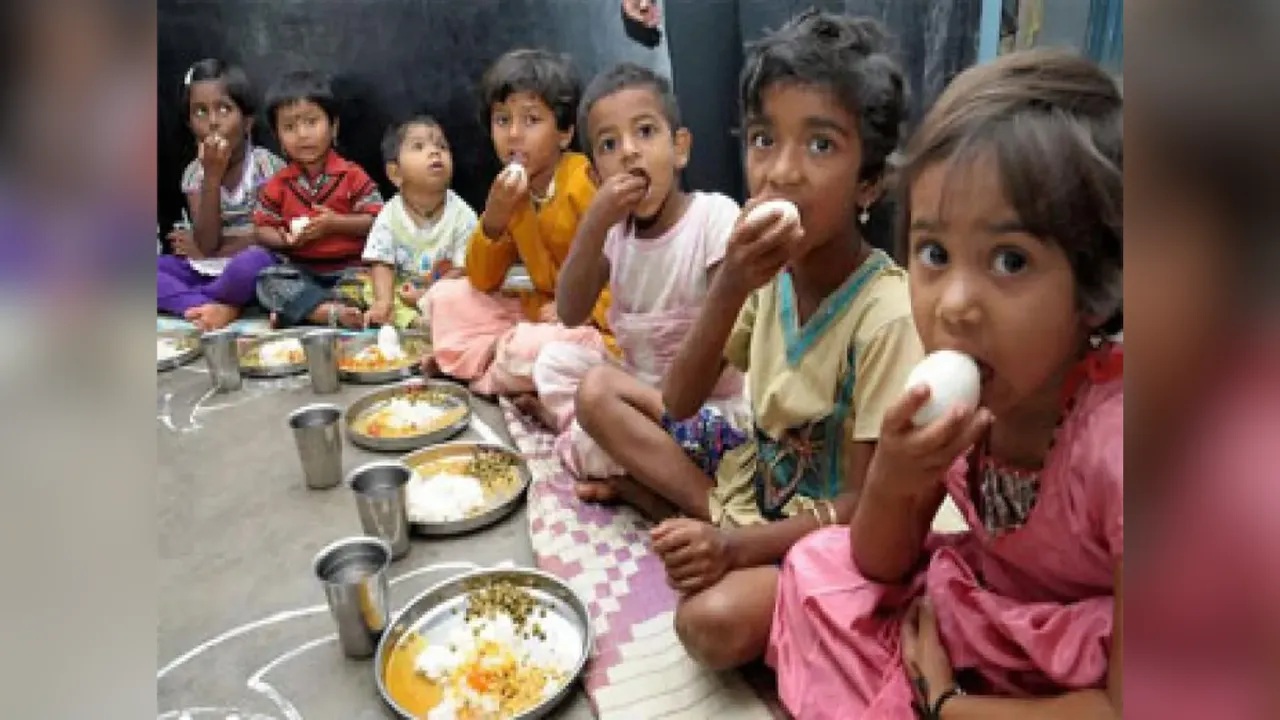
Children having food at school. Representative image.

Synopsis: Kerala recorded the lowest child stunting prevalence among India’s major states at 20.1 percent, according to NFHS-6, but malnutrition remains a significant challenge across South India. Despite improvements in stunting, wasting and severe wasting, millions of children in Telangana, Karnataka, Andhra Pradesh and Tamil Nadu continue to face nutritional deficits.
Kerala has emerged as India’s best-performing major state in terms of controlling child stunting, according to the National Family Health Survey-6 (NFHS-6). However, the latest data also reveal a sobering reality: Despite significant improvements to the health sector across southern India, child malnutrition remains a persistent challenge.
The survey found that 20.1 percent of children under five years of age in Kerala are stunted, the lowest prevalence among India’s larger states. Tamil Nadu followed closely at 20.7 percent, while Andhra Pradesh reported 24.6 percent, Karnataka 26.5 percent, and Telangana 27 percent.
All five southern states performed better than the national average of 29.3 percent, which itself represents a substantial improvement from 35.5 percent recorded in NFHS-5.
Yet, the numbers suggest that progress should not be mistaken for victory. Even in Kerala, one in every five children remains stunted, a condition that reflects chronic undernutrition and repeated infections during the most critical years of growth and development.
Across South India, millions of children continue to face nutritional deficits despite economic growth, expanding healthcare systems and improvements in maternal and child health indicators.
Also Read: NFHS-6 factsheet drops anaemia, cancer, HIV indicators
Stunting is widely regarded as one of the most important indicators of long-term child nutrition because it reflects cumulative nutritional deprivation. The latest NFHS data show encouraging progress across all southern states.
Telangana recorded a decline in stunting from 33.1 percent in NFHS-5 to 27.0 percent in NFHS-6, a reduction of 6.1 percentage points.
Andhra Pradesh improved from 31.2 percent to 24.6 percent, while Karnataka saw one of the sharpest reductions among major states, falling from 35.4 percent to 26.5 percent.
Tamil Nadu reduced stunting from 25.0 percent to 20.7 percent, while Kerala improved from 23.4 percent to 20.1 percent.
The findings mirror the broader national trend. Across India, stunting fell by 6.2 percentage points between the two survey rounds.
Some states recorded even steeper improvements. West Bengal posted the largest decline, from 33.8 percent to 22.4 percent, followed by Tripura and Himachal Pradesh.
However, despite these gains, the prevalence remains unacceptably high in many parts of the country. Meghalaya continues to report the highest stunting burden at 36.8 percent, followed by Bihar at 35.6 percent, Gujarat at 35.3 percent, and Jharkhand at 35 percent.
While stunting showed notable improvement, wasting remains a major concern. Wasting reflects acute malnutrition and is often associated with recent illness, food insecurity or inadequate dietary intake. It is also one of the strongest predictors of child mortality.
Nationally, wasting declined only marginally from 19.3 percent to 19 percent, indicating little progress over the last five years.
Southern states performed better than the national average, but the burden remains substantial.
Kerala reported the lowest wasting prevalence among southern states at 10.9 percent, followed by Andhra Pradesh at 12.3 percent.
However, Telangana reported 16.9 percent, Tamil Nadu 17.4 percent, and Karnataka 18.7 percent.
These figures mean that roughly one in six children in Telangana and one in five children in Karnataka continue to experience acute malnutrition despite broader improvements in child health.
The contrast between stunting and wasting suggests that while long-term nutritional outcomes are improving, short-term nutritional vulnerabilities remain.
One of the most encouraging findings in the survey relates to severe wasting, the most dangerous form of acute malnutrition.
Nationally, severe wasting declined from 7.7 percent to 5.2 percent. Southern states recorded particularly significant improvements.
Telangana nearly halved its prevalence, dropping from 8.5 percent to 3.9 percent. Andhra Pradesh improved from 6 percent to 2.7 percent.
Kerala reduced severe wasting from 5.8 percent to 2.6 percent, while Karnataka declined from 8.4 percent to 4.6 percent.
Tamil Nadu also improved, reducing prevalence from 5.5 percent to 4.9 percent. The reductions are significant because severe wasting is closely linked to a higher risk of death among young children.
Public health experts often view declines in severe wasting as evidence of improvements in child feeding practices, maternal health and healthcare access.
Also Read: Reported spousal violence declines across India, but rises sharply in Kerala: NFHS-6
Another indicator that highlights the continuing challenge is underweight prevalence.
Nationally, underweight prevalence remained largely unchanged, declining only marginally from 32.1 percent to 31.8 percent.
Southern states performed better than the national average but still reported considerable burdens.
Kerala recorded the lowest prevalence among the larger southern states at 17.8 percent. Andhra Pradesh and Tamil Nadu each reported 23.2 percent. Telangana and Karnataka both stood at 27.8 percent.
This means more than one in four children in Telangana and Karnataka are still underweight for their age.
The persistence of underweight prevalence despite improvements in stunting suggests that gains in child nutrition remain uneven.
Several states outside the South actually witnessed worsening outcomes. Haryana’s underweight prevalence rose from 21.5 percent to 28.9 percent, while Punjab increased from 16.9 percent to 23.7 percent.
The survey also tracked overweight prevalence among children under five. Nationally, childhood overweight prevalence declined from 3.4 percent to 1.3 percent. Southern states recorded similar reductions. Telangana’s prevalence fell from 3.4 percent to 1.2 percent. Andhra Pradesh improved from 2.7 percent to 1.5 percent.
Tamil Nadu reduced prevalence from 4.3 percent to 2.2 percent, while Kerala declined from 4 percent to 2.1 percent.
The findings suggest that concerns about childhood obesity, while important, remain secondary to the larger challenge of undernutrition in most parts of India.
The NFHS-6 findings paint a complex picture of child nutrition in southern India.
On the one hand, the region continues to outperform much of the country. Every major southern state reports lower stunting rates than the national average. Severe wasting has declined significantly, and childhood overweight prevalence remains relatively low.
On the other hand, the scale of the remaining burden is difficult to ignore.
One in five children in Kerala and Tamil Nadu remains stunted. More than one in four children in Telangana and Karnataka are underweight. Acute malnutrition continues to affect large numbers of children despite improvements in healthcare infrastructure and economic indicators.
The data suggest that while southern states have made measurable progress, child nutrition remains one of the region’s most persistent public health challenges.
The findings also challenge the assumption that economic development alone can eliminate child malnutrition.
Several relatively prosperous states continue to report substantial nutritional deficits. Kerala’s strong performance demonstrates what is possible through sustained investments in maternal health, education and primary healthcare. Yet even Kerala has not eliminated stunting.
(Edited by Muhammed Fazil.)



