

Published Sep 11, 2026 | 7:00 AM ⚊ Updated Sep 11, 2026 | 7:00 AM

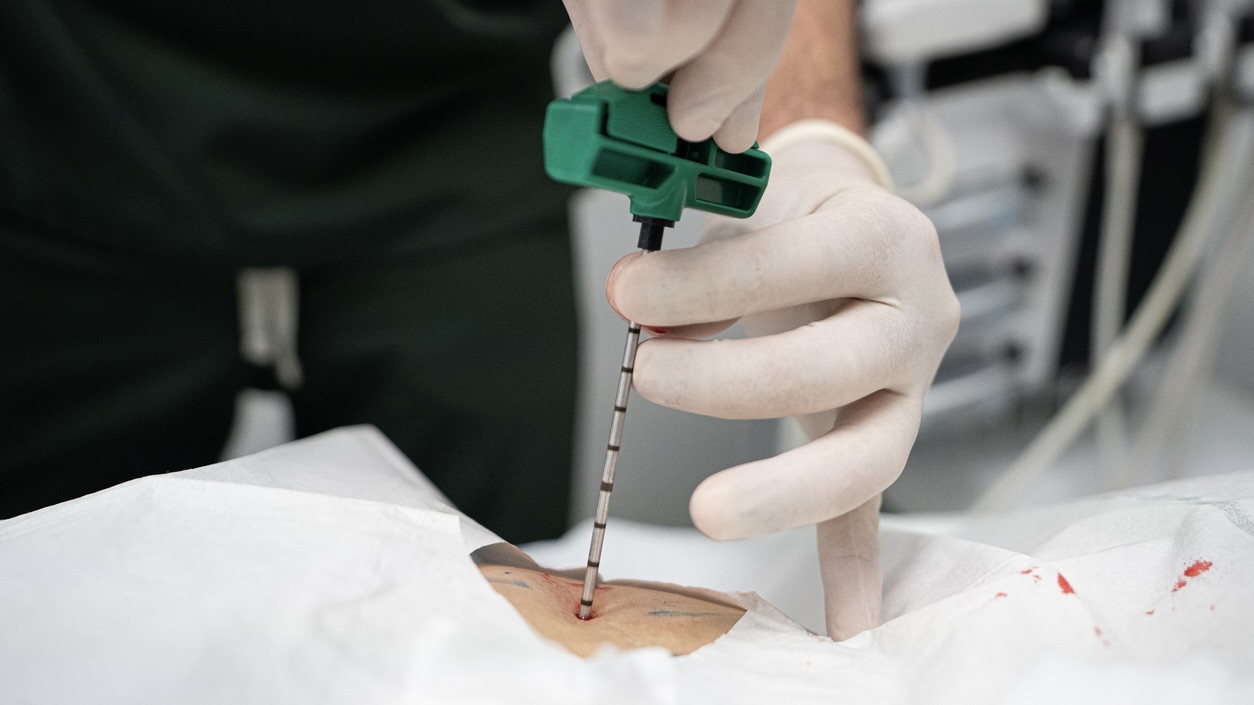
A doctor harvests bone marrow from a patient.

Synopsis: India faces a large gap between the number of patients who need bone marrow transplants and the number of procedures performed. With only a minority finding fully matched sibling donors, advances in haploidentical, or half-match, transplantation are expanding options for children with blood cancers and serious blood disorders.
For a child with leukaemia, thalassemia or bone marrow failure, a transplant can offer a chance of cure. But before doctors can begin, they often face a fundamental question: where will the stem cells come from?
A fully matched sibling donor is available for only around 25 to 30 percent of patients who need a bone marrow transplant, according to transplant material. This leaves many patients dependent on matched unrelated donors, cord blood or partially matched family members.
The emergence of haploidentical transplantation, commonly called a half-match transplant, has changed that equation. A biological parent is generally a half match for their child, meaning that children without a fully matched sibling may still have a potential donor within their own family.
“A parent is always a half match for their child, and siblings can also provide a half-matched donor option,” said Dr Sunil Bhat, director and clinical lead, Paediatric Haematology, Oncology and Bone Marrow Transplantation.
For patients who once had no compatible donor, that development can turn a transplant from an unavailable option into a possibility.
Bone marrow is a soft, spongy tissue inside bones. It produces blood-forming stem cells, which eventually develop into red blood cells, white blood cells and platelets. When the marrow is damaged or diseased, the body can struggle to produce healthy blood cells.
A bone marrow transplant, more broadly referred to as a haematopoietic stem cell transplant, replaces damaged or diseased blood-forming cells with healthy stem cells.
It may be required for conditions such as leukaemia and lymphoma, but transplantation is also used for several non-cancerous disorders, including thalassemia, sickle cell disease, aplastic anaemia, immunodeficiencies and some inherited metabolic disorders.
And despite the name, the stem cells do not necessarily have to be collected directly from bone marrow.
“There are three types of blood stem cell sources for transplants,” the transplant material explains: bone marrow, umbilical cord blood and peripheral blood stem cells.
Peripheral blood stem cells are increasingly used for collection. The donor is given growth-factor medicines for several days to move stem cells from the bone marrow into the bloodstream. The cells are then collected using an apheresis machine, without surgery. Bone marrow itself can be collected from the pelvic bone under general anaesthesia.
For an allogeneic transplant, the stem cells come from another person. Doctors therefore need to determine how compatible the donor and recipient are.
This is done through HLA testing, which examines human leukocyte antigens, markers found on cells and tissues. The patient’s and donor’s HLA profiles are compared to assess compatibility.
Traditionally, a matched sibling has been the preferred donor. But because only around one-quarter to one-third of patients are likely to have a fully matched sibling, many families face a search beyond the immediate family.
Matched unrelated donor registries can provide another option. Umbilical cord blood is another source, while haploidentical transplantation has opened up the possibility of using a biological parent, sibling or other relative who is only partially matched.
“The absence of a full match does not automatically become the absence of hope for a child,” Bhat said.
Haploidentical transplantation has developed rapidly over the past decade. Earlier, using a partially matched donor presented major challenges because of the risk of the donor’s immune cells attacking the patient’s tissues.
Newer approaches have made it possible to manage this risk more effectively. Haploidentical transplantation can be performed using techniques involving T-cell depletion or approaches without T-cell depletion.
Bhat said the first half-match paediatric transplant performed by his team in India was on a child with leukaemia who had no other transplant option.
“It was actually a landmark first for India which was a half-match transplant that has paved the way for this half-match transplants since then,” he said.
Since then, the technique has moved from being an option for exceptional cases to an established pathway in transplant medicine.
The experience of high-volume paediatric transplant programmes illustrates that change. One Bengaluru centre, for instance, recently reported crossing 1,000 paediatric haploidentical transplants.
But the significance lies less in the number itself than in what it represents: more children can potentially receive a transplant even when a fully matched sibling is unavailable.
Finding a donor is only the first step. Before transplantation, patients undergo detailed assessments and then receive a conditioning regimen, usually involving chemotherapy and sometimes radiation. The treatment prepares the body for the incoming stem cells and, in cancer patients, aims to eliminate as many cancer cells as possible.
The stem cells are then infused into the patient’s bloodstream, much like a blood transfusion.
Once inside the body, the cells travel to the bone marrow and begin producing new blood cells. This is known as engraftment.
The transplanted cells generally begin grafting into the marrow within two to four weeks, after which they start producing white blood cells, platelets and red blood cells.
Those weeks can be particularly difficult for patients because their immune systems are severely weakened.
Bhat described transplantation as a treatment that requires an entire healthcare ecosystem rather than a single procedure.
“It takes a village, it takes a lot of effort, a lot of infrastructure, a lot of teamwork, multiple departments involved to run a very successful bone marrow transplant unit,” he said.
Patients may require blood and platelet transfusions, antibiotics, nutritional support and close monitoring. Specialised transplant units may also use HEPA-filtered rooms to reduce infection exposure in severely immunocompromised patients.
Bone marrow transplantation can be life-saving, but it carries significant risks.
One of the most important complications following an allogeneic transplant is graft-versus-host disease (GVHD). This occurs when immune cells from the donor recognise the patient’s tissues as foreign and attack them.
Other complications can include infections, graft failure, anaemia, bleeding and damage to organs including the kidneys, lungs and heart.
The severity of these complications depends on factors such as the patient’s age, underlying disease and overall health.
Patients therefore remain under close medical observation after transplantation, with doctors monitoring blood counts, vital signs and signs of infection or other complications.
The public perception of bone marrow transplantation is often linked to leukaemia and other cancers. But a significant part of paediatric transplantation involves non-malignant diseases.
Thalassemia, sickle cell disease, aplastic anaemia and immunodeficiency disorders are among the conditions that may require transplantation.
For some children with severe aplastic anaemia, the disease can cause the bone marrow to stop producing sufficient blood cells. They may consequently become dependent on repeated blood and platelet transfusions and face a high risk of serious infections.
Bhat described a 15-year-old boy from Chhattisgarh who had severe aplastic anaemia and had become dependent on regular transfusions.
With no fully matched donor available, his father became his donor for a haploidentical transplant. The child subsequently achieved engraftment and was doing well under follow-up.
Another child, an 11-year-old with B-cell acute lymphoblastic leukaemia, underwent a haploidentical transplant after relapsing in both the bone marrow and testes. His father served as the donor. Despite infections and skin graft-versus-host disease during recovery, he achieved successful engraftment and continued to recover more than a year later.
These cases highlight why expanding the donor pool matters. A family may not have a perfect genetic match, but that does not necessarily mean there is no potential donor.
Also Read: Oxygen bars promise clean air and wellness, but doctors say there is little evidence of benefit
Even as transplantation becomes technically more accessible, India faces a much larger capacity problem.
Dr Devi Shetty, founder and chairman of Narayana Health, said India needs more than 40,000 bone marrow transplants each year, while hospitals collectively may currently be performing only around 3,000.
“India requires over 40,000 bone marrow transplants a year and currently I think all the hospitals in the country put together may not be doing more than 3,000 bone marrow transplant a year,” Shetty said.
That gap extends beyond the number of transplant beds. BMT requires specialised doctors, trained nurses, laboratories, blood-bank support, infection-control systems and intensive-care facilities.
The additional material describes paediatric transplant care as a multidisciplinary service, supported by intensive care, specialised laboratories, blood products, imaging and trained teams.
Doctors say India has also developed considerable expertise in transplantation.
“The outcomes have improved. The outcomes are at par with the western world at a significantly lower cost than the western world,” Bhat said.
But access to expertise only helps if patients reach transplant centres at the right time.
Bhat said children with serious blood disorders should be referred early, particularly those with leukaemia, thalassemia, aplastic anaemia and sickle cell disease.
“There are thousands of these children and patients in India who require this treatment,” he said, urging primary physicians to identify and refer patients who may benefit from transplantation.
Delayed diagnosis and delayed referral remain important hurdles in paediatric blood disorders. The paediatric haematology material also identifies wrong or delayed diagnosis, late referral to specialists and lack of awareness that many of these diseases are treatable as major challenges to improving cure rates.
Also Read: H1N1 surge raises another concern: Are patients reaching for antibiotics on their own?
Bone marrow transplantation has therefore moved beyond the traditional model of waiting for a perfectly matched sibling.
Patients can now be assessed for matched unrelated donors, cord blood and haploidentical family donors. For children, the availability of a half-matched parent can be particularly important.
That does not make transplantation easy or risk-free. It remains one of the most intensive treatments in modern medicine, requiring specialised teams and prolonged monitoring.
But the expansion of donor options has changed the question for many families.
Instead of asking whether a perfect donor exists, doctors can increasingly ask which suitable donor option is available and which transplant approach is safest for that child.
For India, however, the next challenge is much larger: increasing the number of patients who can actually access these treatments.
“Our desire now is to expand our services and let us see how we can take the bone marrow transplant from 3,000 bone marrow transplant per year to 30,000,” Shetty said.
The science has widened the donor pool. The challenge now is to make sure that children who need a transplant are diagnosed early, referred in time and able to access the specialised care that can carry them through it.



