

Published Aug 28, 2026 | 7:00 AM ⚊ Updated Aug 28, 2026 | 1:52 PM

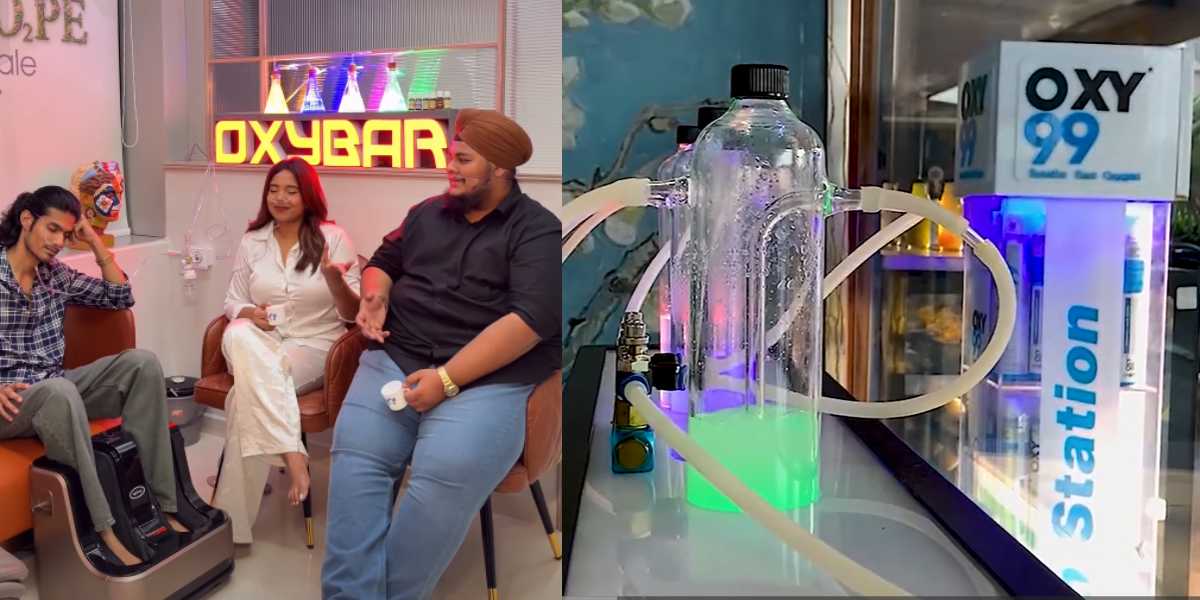
Screenshot from the videos

Synopsis: Two promotional videos from Nagpur and Delhi market flavoured oxygen sessions as a way to detox from pollution, improve energy, reduce stress and promote wellness. Pulmonologists, however, say healthy people with normal oxygen levels have no established benefit from concentrated oxygen, while warning against unproven therapeutic claims and potential risks from inhaled fragrances.
From flavoured oxygen in Nagpur to an oxygen bar marketed as a way to escape Delhi’s polluted air, wellness businesses are increasingly selling short sessions of concentrated oxygen as a way to feel refreshed, energised and rejuvenated, and being promoted on social media platforms at large.
But pulmonologists say healthy people with normal oxygen saturation have no established medical need for such sessions, while warning that the “detox” and therapeutic claims being made by some oxygen bars are not supported by evidence.
A promotional video from Anant Super Specialty Hospital in Nagpur advertises an “OxyBar” offering flavoured oxygen in four flavours. The video says the sessions combine deep breathing and aromatherapy and can help people feel calm and refreshed.
It also claims that the experience can provide a coffee-like boost for people who feel tired or low, improving alertness and mood. The promotion ends with a more direct claim: viewers are told to try the OxyBar to “detox” in a “toxic world”.
In Delhi, a video for Oxypure at Select Citywalk, Saket, makes pollution the central selling point. The facility is described as a place where people can breathe “non-polluted air”, with the video claiming that customers can inhale almost 85 percent pure oxygen during a 15-minute aromatherapy session.
The video shows a presenter choosing lavender and says the flavour can help with depression, hair and skin health and muscular pain. It says the oxygen is delivered through a nasal cannula connected to a concentrator, with sessions starting at ₹299. The facility is also shown offering seven flavours, including lemongrass, orange, lavender and peppermint.
But according to pulmonologists, more oxygen does not automatically mean better health.
Also Read: H1N1 surge raises another concern: Are patients reaching for antibiotics on their own?
Dr Mohana Krishnan, Senior Consultant, Pulmonology and Sleep Medicine, Apollo Speciality Hospitals, Chennai, said a healthy person breathing normal air is already carrying almost all the oxygen their blood can carry.
“None at all. When you breathe normal room air, which has about 21 percent oxygen, your blood is already carrying nearly all the oxygen it can, typically 95 percent to 99 percent saturation,” he said to South First when asked whether there is a proven benefit from inhaling 80-85 percent oxygen for 15 minutes.
“Taking in 80 percent to 85 percent oxygen for 15 minutes doesn’t give your body an extra boost, because your red blood cells simply don’t have empty seats left to carry it,” he said.
Dr Mohana explained that the additional oxygen can dissolve into the plasma, but the amount is too small to meaningfully change energy or metabolism in a healthy person.
“You end up just breathing most of that extra oxygen right back out,” he said. He also noted that suddenly breathing very high concentrations of oxygen can cause small blood vessels in the brain or heart to narrow slightly rather than open up.
Dr Vivek Anand Padegal, Director, Pulmonology, Fortis Hospital, Bannerghatta Road, Bengaluru, similarly said there is no scientifically proven health benefit from a 15-minute session of 80-85 percent oxygen in a healthy person.
“The air we normally breathe contains around 21 percent oxygen, which is sufficient for healthy individuals. More oxygen does not automatically mean more energy or better health,” he said to South First.
The pollution angle is particularly prominent in the Delhi promotion. But Dr Mohana said the idea that concentrated oxygen can clean pollution from the lungs is a dangerous misconception.
“Pollution damages our airways because toxic particles like PM2.5 and harmful gases trigger inflammation and irritate the lung lining. Oxygen cannot wash or scrub those particles out of your lungs. It doesn’t detoxify tissue,” he said.
He added that unregulated high oxygen levels could themselves contribute to oxidative stress.
Dr Sagar C, Consultant, Pulmonology, Narayana Health, Bengaluru, also rejected the “detox” claim.
“Supplemental oxygen should not be described as a ‘detox’ treatment for air pollution exposure,” he said to South First. “Air pollution can cause oxidative stress, airway inflammation and cardiovascular and respiratory effects. Breathing concentrated oxygen afterwards does not remove particulate matter or pollutants from the body, nor does it reverse the biological effects that have already occurred.”
Dr Padegal said there is similarly no scientific evidence that concentrated oxygen can reverse the effects of pollution.
“Breathing more oxygen does not remove these particles from the lungs or reverse the biological effects of pollution exposure,” he said.
Dr Mohana said the key issue is that oxygen is being marketed as though the body can simply use more of it once it is supplied.
“Because your haemoglobin is already full, the extra oxygen just dissolves into the liquid part of your blood, the plasma. But that amount is so tiny that it has no real impact on your body’s energy or metabolism,” he said.
He added that high concentrations can increase oxidative stress and potentially cause blood vessels to narrow.
Dr Padegal described this state as hyperoxia, where excessive oxygen exposure can increase the production of reactive oxygen species.
“Excess oxygen can increase the production of reactive oxygen species, which can cause oxidative stress and cellular damage,” he said, adding that significant or prolonged exposure can affect the lungs and other organs.
Dr Sagar, however, cautioned against treating a brief 15-minute wellness session as equivalent to prolonged high-concentration oxygen exposure in a hospital.
“The risk depends on the concentration, duration of exposure, the individual’s underlying health and the way oxygen is delivered,” he said. “A 15-minute session in a healthy person is not equivalent to prolonged high-concentration oxygen exposure in an intensive-care setting.”
The distinction is important, he said, because the absence of an obvious short-term risk does not establish that an intervention provides a medical benefit.
The Delhi presenter says he felt “energized” and “fresh” after the session and that her stress had disappeared.
Dr Mohana said such a feeling can be genuine, but the explanation may have little to do with the oxygen itself.
He identified three possible factors: the placebo effect, deep and relaxed breathing, and aromatherapy.
“Sitting in a chair for 15 minutes away from screens, taking slow, deep breaths, naturally calms your nervous system and drops your heart rate,” he said.
He also said scents such as citrus or peppermint may be associated with alertness, while lavender may promote relaxation.
“The pleasant feeling comes from your nose smelling the scent, not your lungs absorbing the gas,” he said.
Dr Sagar similarly said the relaxing environment, controlled breathing, aromatherapy and expectation of benefit can influence how a person feels.
“We should distinguish between a subjective feeling of wellness and a clinically demonstrated health benefit,” he said.
Also Read: How fake doctors ran Hyderabad clinics for years, some for 26, treating up to 100 patients a day
The Nagpur and Delhi promotions do not simply sell oxygen. They sell flavoured oxygen, with options including lavender, peppermint, lemongrass and orange.
This introduces a separate respiratory question: what exactly is being inhaled along with the oxygen?
Dr Mohana said the scented component deserves particular attention.
“Breathing in vaporised oils, perfumes, and non-sterile moisture can irritate delicate airway linings, set off coughing fits, and cause sudden bronchial spasms,” he said.
He particularly cautioned people with asthma and allergies.
“Scented essential oils and synthetic fragrances are notorious triggers for severe asthma attacks,” he said.
Dr Padegal also said people with sensitive airways may be sensitive to fragrances or aromatherapy used during such sessions.
This is significant because the Delhi video makes specific health claims for lavender, including that it can help with depression, muscular pain, hair and skin health.
The experts’ responses do not establish evidence for those claims.
The pulmonologists also stressed that an oxygen bar should not be confused with medical oxygen therapy.
“Medical oxygen is a treatment prescribed for a defined clinical indication,” Dr Sagar said. Such therapy is guided by the patient’s oxygen saturation, clinical condition and, where appropriate, blood-gas measurements.
Dr Padegal said the concentration, flow and duration of medical oxygen are determined according to a patient’s medical condition. Oxygen-bar sessions, on the other hand, are marketed as wellness or recreational experiences.
Dr Mohana put it more directly: “In medicine, oxygen is a drug, and like any drug, too much when you don’t need it can be counterproductive.”
Dr Sagar said the same principle applies to healthy people with normal oxygen saturation.
“Someone with normal oxygen saturation does not routinely need supplemental oxygen simply as a health or energy booster,” he said.
Also Read: Tamil Nadu extends third-child maternity leave to a year, expert calls for wider care policy
Dr Mohana said several groups should stay away from oxygen bars or seek medical advice before using supplemental oxygen.
These include people with asthma and allergies, those with COPD or chronic lung disease, and heart patients. He said scented oils and synthetic fragrances can trigger asthma attacks, while uncontrolled oxygen can cause problems in some people with COPD or other conditions associated with carbon dioxide retention.
Dr Sagar similarly advised people with significant respiratory or cardiac conditions not to self-prescribe supplemental oxygen. He said people with unexplained breathlessness, chest pain, dizziness or low oxygen saturation should seek medical evaluation rather than using an oxygen bar.
For consumers considering an oxygen-bar session, Dr Sagar recommends asking what specific health benefit is being claimed and whether clinical studies demonstrate that benefit in healthy people.
Consumers should also ask about the oxygen concentration, duration, equipment, monitoring, supervision, contraindications and potential adverse effects.
Dr Mohana suggests asking whether the scented oils being vaporised have been tested and proven safe for direct, deep-lung inhalation, and whether the equipment and water bubblers are sterile and single-use.



