

Published May 23, 2026 | 10:30 AM ⚊ Updated May 23, 2026 | 10:30 AM

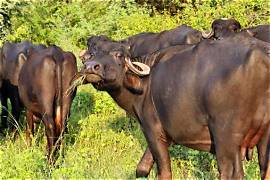
Animals injected repeatedly with oxytocin stop releasing milk through their own. (iStock)

Synopsis: A Hyderabad police and Drug Control Administration(DCA) crackdown on illegal oxytocin injections in dairy farms has exposed a wider network supplying the banned hormone to artificially boost milk production in buffaloes. Experts warn that the misuse can severely harm animals and may pose health risks to consumers. Authorities have now expanded inspections across Telangana.
Farm owner Attheni Krishna was running a legal cattle feed shop for years until he met Khaled Ali, alias Chatru Singh, some five or six years ago.
Ali made an offer, which Krishna couldn’t resist. The profit was huge, though the business was illegal.
He sourced the restricted oxytocin injections from Gujarat through Ali for ₹50 a bottle and sold them to local dairy farmers at an inflated price of ₹250 to ₹300 per bottle.
Krishna’s dream run ended by the beginning of May when he descended on his shop, Sri Krishna Cattle Feed, in Tukkuguda. The 45-year-old man was subsequently arrested.
According to the police, one of his regular customers, Suresh from Tukkuguda, “routinely purchased these illegal injections to administer them to his dairy buffaloes.”
When the Shamshabad Zone Task Force raided and arrested Krishna, officers seized 173 oxytocin injections valued at ₹50,000. A search is on for Khaled Ali and Suresh.
The Hyderabad Police Seized 173 Restricted #Oxytocin Injections, worth ₹50,000. The injections are procured from #Gujarat and illicitly used to force #Buffaloes to yield more #Milk 🚨
🔻Possible Harmful Effects on Animals
Frequent or unnecessary Oxytocin… pic.twitter.com/KU9n1IG6uk— Surya Reddy (@jsuryareddy) May 18, 2026
Oxytocin occurs naturally in cattle. The body releases it during calving to trigger uterine contractions and signal the muscles around the milk glands to let milk flow when a calf feeds.
Veterinary doctors prescribe it legitimately in narrow circumstances: hormonal deficiency, difficulty releasing milk, or complications during delivery.
But the misuse runs on simpler logic. The police described how Krishna recognised “a high-profit margin” the moment Ali approached him, and began procuring the injections to sell illegally to farmers who used them to “force buffaloes to yield more milk.”
M Chandrasekhar, Drug Inspector at Patancheru, told South First that farmers justified the use of the restricted drug when questioned.
“Common reasons said by cattle owners are that when a calf passes away after birth, the hormone is administered to its mother. It is also used to stimulate excess milk production,” the official said.
Also Read: Who is the most valuable between humans and cattle?
Krishna’s arrest was not the only one. On 7 May 2026, officials from the Drugs Control Administration (DCA) raided two fodder shops in Patancheru, Sangareddy district.
The DCA stated that “the said fodder shops were found to have illegally stocked injections purported to contain oxytocin for sale, intended for misuse in cattle.”
Officers seized 40 unlabelled transparent bottles of 200ml each from Sri Renuka Cattle Feed, owned by R Saikrishna Gouda. Inspection at Laxmi Krishna Cattle Feed, owned by Mylaram Sai Ram, yielded 120 unlabelled transparent bottles of 250ml each.
Neither shop held a licence to stock or distribute the injections.
Chandrasekhar said that the scale of an operation does not determine whether enforcement follows.
“It doesn’t matter whether it is a small dairy farm or a commercial one. If we receive information, we conduct the raid,” he added.
The DCA confirmed that investigators believe the misuse carries a specific commercial purpose: the injections work by “artificially increasing milk production in dairy animals.”
Also Read: Karnataka cracks down on cattle grazing in forests
Dr K Vijaya Kumar Reddy, retired Assistant Director of Animal Husbandry in Ranga Reddy district, told South First that animals injected repeatedly stop releasing milk through their own. Their bodies grow dependent on the synthetic hormone to function.
“Frequent or unnecessary oxytocin injections can severely affect animal health. Repeated usage may lead to reproductive complications, reduced natural fertility and uterine stress,” Dr Reddy said.
The damage extends to calving. “The injected drug will eventually dissolve from the cow’s body, but it will make its calving process difficult, leading to rupture of uterine layers,” he added.
The police listed the documented animal health consequences as reproductive problems, reduced natural fertility, uterine stress, mastitis and dependence on injections for milk release.
Whether oxytocin residues pass from the animal to milk, and what those residues do inside the human body, remains a subject of active scientific debate without a settled consensus.
Dr Reddy said regular consumption of milk from synthetically administered cattle may push children, particularly young girls, toward early puberty. He also cited mood fluctuations, stomach cramps and cardiovascular strain among the concerns raised.
The police flagged pregnant women as carrying particular risk, stating that those who drink this milk “face a higher risk of premature labour pains or miscarriages.”
No regulatory authority has issued a definitive finding on the human health threshold. The science continues to move.
“The abuse of oxytocin in livestock, particularly its illegal administration to artificially induce milk let-down and increase milk production in dairy animals, constitutes an offence,” the DCA said.
Under the Drugs and Cosmetics Act, unauthorised stocking and sale of oxytocin injections invite imprisonment of up to five years.
The DCA collected samples from the Patancheru inspections for laboratory analysis. Further investigation would follow, and action would be initiated against the offenders.
(Edited by Majnu Babu).



