

Published May 12, 2026 | 8:05 AM ⚊ Updated May 12, 2026 | 8:05 AM

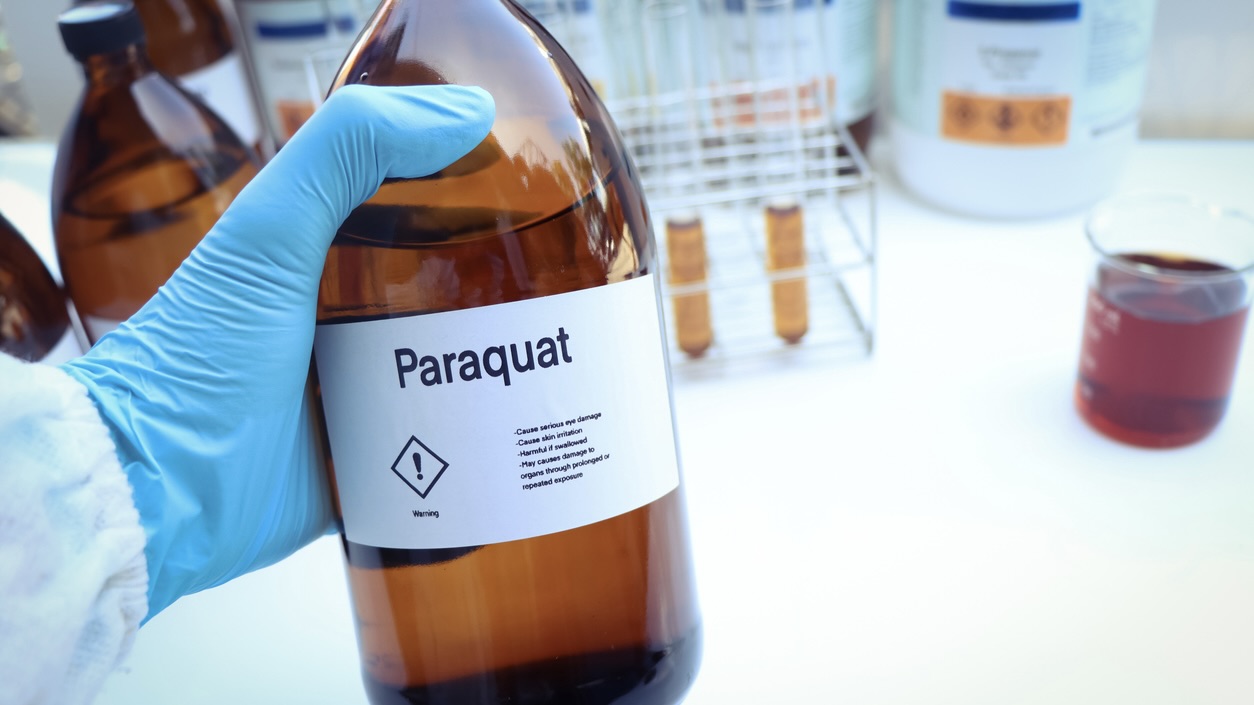
Paraquat accumulates in the lungs, triggers irreversible fibrosis, and causes acute respiratory failure, kidney failure, and liver injury.

Synopsis: More than a quarter of India’s pesticide suicide deaths in 2024 came from Telangana and Andhra Pradesh, according to NCRB data. Medical studies from hospitals found that most patients who consumed the herbicide paraquat—easily available in rural areas—did not survive, as the chemical causes rapid organ failure and has no antidote. Although Telangana and Odisha temporarily banned the chemical, doctors and public health experts say only a nationwide ban can prevent further deaths.
In 2024, 26,921 people in India died after consuming pesticides. One in four of those deaths—7,123—came from two states: Telangana and Andhra Pradesh. The figures appear in the National Crime Records Bureau (NCRB) Accidental Deaths and Suicides in India report, released this month.
Telangana recorded 4,252 such deaths, the highest in the country. Maharashtra came second with 3,748 deaths, while Tamil Nadu came third with 3,364. Andhra Pradesh followed with 2,871.
Pesticide consumption accounted for 15.8 percent of all suicide deaths in India in 2024, the second most common method after hanging, which accounted for 62.3 percent of the 1,70,746 total deaths.
In hospital wards across Telangana and Andhra Pradesh, one name appears in case files more than any other: paraquat. A non-selective herbicide approved in India under the Insecticides Act, 1968, paraquat is sold cheaply and without restriction in rural agricultural supply shops.
Once ingested, it accumulates in the lungs, triggers irreversible fibrosis, and causes acute respiratory failure, kidney failure, and liver injury in rapid succession. There is no antidote.
The kidneys excrete 80 percent to 90 percent of the poison within six hours of ingestion, the only window in which treatment carries a meaningful chance of survival. Yet only 12.6 percent of patients in a decade-long study at a quaternary care centre in south India reached hospital within that window. Nearly half arrived after 24 hours, by which point organ damage was largely irreversible.
The study, published in the Indian Journal of Critical Care Medicine in February 2026, analysed 166 paraquat poisoning cases between 2015 and 2024. Nearly 80 percent of patients did not survive. The median survival time was five days. Cases rose from a single admission in 2015 to 53 in 2024. Of all patients, 65.7 percent came from Andhra Pradesh. Kadapa and Chittoor districts alone accounted for three-quarters of those cases.
A parallel study at Gandhi Hospital in Hyderabad tracked 400 patients referred for paraquat-related acute kidney injury over 10 years and found a mortality rate of 75 percent. Of the 1,342 paraquat admissions during the period, around 30 percent developed acute kidney injury.
A meta-analysis of 15 Indian case series found a pooled mortality rate of 79 percent.
“High morbidity and mortality associated with paraquat poisoning in India have been highlighted in our study,” the CMC authors wrote. “This calls for immediate national policy interventions to limit or prohibit its use.”
Also Read: 50 years after India’s blindness mission, Telangana data tells who free surgery fails
The profile of victims remains consistent across both studies. Most are young men in their twenties and thirties – farmers and workers who reach for the nearest available means in a moment of crisis.
In the CMC study, 97.6 percent of cases involved deliberate self-poisoning. Family conflict was the most common trigger, cited in 54.2 percent of cases, followed by financial stress. At Gandhi Hospital, suicidal intent accounted for 90 percent of admissions.
Paraquat’s accessibility is central to why it keeps appearing in poisoning cases. “PQ is a readily available and unrestricted weedicide,” the Gandhi Hospital authors wrote.
On 26 March, actor Rahul Ramakrishna, known for his roles in Arjun Reddy, Ala Vaikunthapurramuloo, and RRR, posted on X: “Lost my brother today to paraquat poisoning. It’s terrifyingly lethal and widely misused for self-destruction. Shocked by how easily it is available everywhere. Doctors are overwhelmed by the amount of cases. Please ban it ASAP – save lives.”
Honourable Sirs @TelanganaCMO @PMOIndia,
Lost my brother today to Paraquat poisoning. It’s terrifyingly lethal and widely misused for self-destruction. Shocked by how easily it is available everywhere. Doctors are overwhelmed by the amount of cases.Please ban it ASAP-save lives🙏🏽— Rahul Ramakrishna (@eyrahul) March 26, 2026
The post tagged both the Telangana Chief Minister’s Office and the Prime Minister’s Office. It reached millions of people who had never heard of paraquat.
The next day, Kadiyam Kavya raised the issue in Parliament. “Paraquat dichloride is an internationally recognised, acutely toxic herbicide. Even minimal exposure can cause severe harm to the human body, including lung, kidney and liver failure, and finally death. The sad thing is there is no antidote for this dangerous poison, which is frequently used by poor farmers,” she said, urging the central government to act.
Also Read: Telangana’s tenant farmers and society’s duty!
On 31 March 2026, Telangana’s Agriculture and Cooperation Department issued a notification banning paraquat under Section 27 of the Insecticides Act, 1968. “The sale/stock/distribution/manufacturing/use of Paraquat and its derivatives/formulations is hereby banned in the State of Telangana for a period of 60 days with immediate effect,” the notification said.
But Section 27 gives states limited powers. The Act allows an emergency notification banning a pesticide for up to 60 days, extendable by another 30. After that 90-day limit, the state’s powers end. Any permanent prohibition must come from the central government.
Yet paraquat remains available online. At the time of publication, it could still be bought through platforms including Amazon India and Flipkart, despite the state ban.
Section 27 of the Insecticides Act, 1968 states: “…prohibit the sale, distribution or use of the insecticide or batch, in such area, to such extent and for such period (not exceeding sixty days) as may be specified in the notification pending investigation into the matter.”
The provision allows immediate action, not permanent prohibition. A 30-day extension brings the limit to 90 days. Beyond that, only the central government can act.
More than 70 countries, including the United Kingdom, China, and member states of the European Union, have already banned paraquat. Odisha introduced a state-level prohibition in October 2024. Telangana followed in March 2026. Both bans carry the same legal limit.
“When a substance carries such an extraordinarily high fatality rate with no effective treatment, prevention becomes the only reliable lifesaving strategy,” said Dr Karthik Nagula, President of the Healthcare Reforms Doctors Association, Telangana.
Dr Bandari Rajkumar, a critical care specialist, called it “a national health and social emergency affecting farmers, rural families, and young individuals”.
The NCRB data released this month puts numbers to what doctors in Telangana and Andhra Pradesh have documented for years. Paraquat remains legally approved in India. It remains cheap. It remains on the shelf.
The CMC study states plainly: “The findings underscore the urgent need for early recognition, timely referral, and standardised treatment protocols.” But the authors also note the limits of clinical intervention when patients arrive days after ingestion and the poison has no antidote.



