

Published May 09, 2026 | 7:00 AM ⚊ Updated May 09, 2026 | 7:00 AM

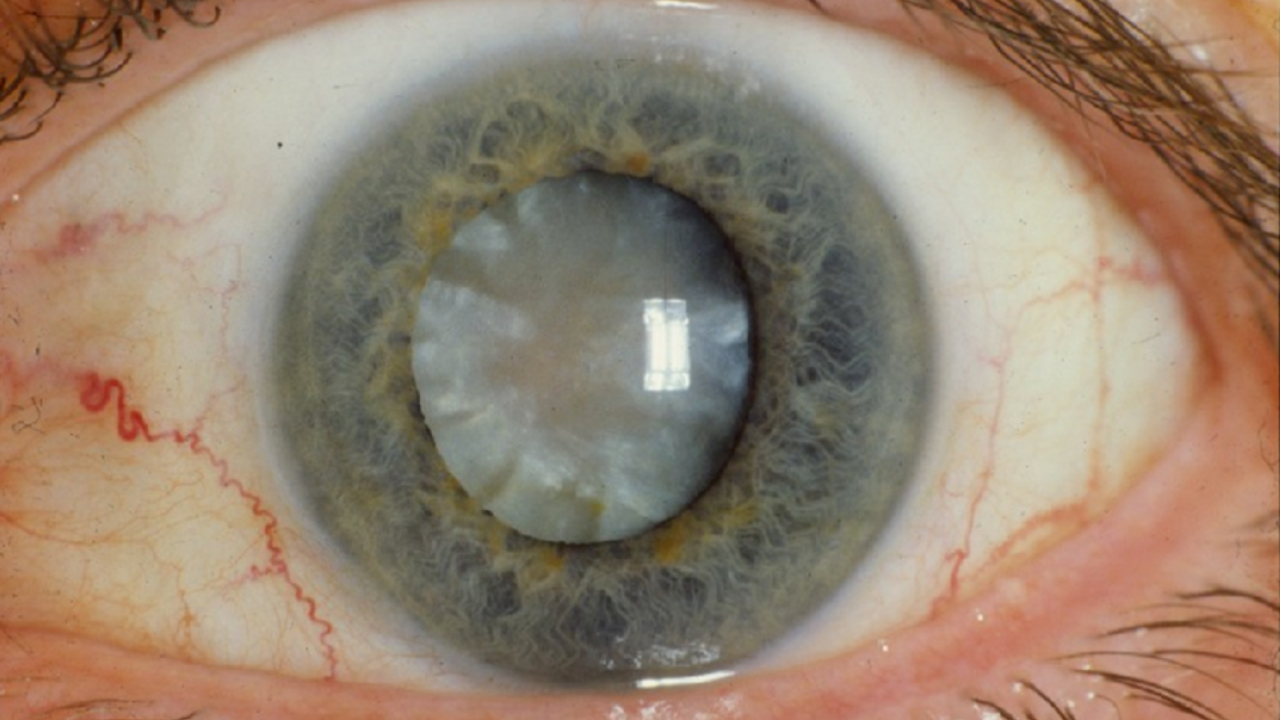
Representational image. Credit: Wikimedia Commons

Synopsis: A new population study from Telangana reveals troubling gaps in India’s blindness elimination programme. While cataract surgery rates soared over decades, only 72% of operated eyes achieved good vision—below WHO’s 80% benchmark. Poor outcomes were twice the acceptable limit, especially among free-surgery and uneducated patients. The findings highlight failures in follow-up care despite historic progress.
In 1976, India made history. It became the first country in the world to launch a national programme to eliminate preventable blindness. Cataract surgery sat at the heart of that mission.
The procedure takes 20 minutes. A surgeon removes a clouded lens and replaces it with an artificial one. It works. It restores sight. And for five decades, India scaled it with extraordinary ambition, pushing surgical rates up, watching blindness prevalence fall to 0.36 percent by 2019.
Governments celebrated. The numbers justified it.
But a new population study from Telangana measures something the surgical rate never did: how well patients actually see after the operation. What it finds unsettles the celebration.
Researchers at L V Prasad Eye Institute deployed the Rapid Assessment of Visual Impairment methodology across four districts in Telangana: Adilabad, Mahbubnagar, Khammam and Warangal. Together, these districts cover approximately one-third of the state’s population.
The study, published in Ophthalmic Epidemiology and authored by Srinivas Marmamula, Vinitha Mingi and colleagues, examined 11,238 individuals aged 40 and above. Of these, 1,332 participants accounting for 1,850 eyes had undergone cataract surgery.
The World Health Organisation(WHO) sets a clear benchmark for acceptable outcomes. At least 80 percent of operated eyes should achieve good visual outcomes, defined as vision of 6/18 or better. Only 72 percent of operated eyes achieved good vision, eight percentage points below the WHO target.
Other targets by WHO suggest that no more than 5 percent should record poor outcomes, defined as vision worse than 6/60. The state recorded 11.2 percent poor outcomes, more than double what the global health body considers acceptable. One in every nine operated eyes still sees poorly after surgery.
Telangana fell short on both counts.
Also Read: Telangana: Fake ‘critical care specialist’ found treating patients at Siddipet hospital; arrested
Here is where the data moves from disappointing to damning.
Patients who received free surgery carried 80 percent higher odds of poor outcomes compared to those who paid for their procedure.
This is not a marginal finding. It sits inside a programme designed specifically to serve those who cannot afford care. The government built the infrastructure, subsidised the surgery, sent teams into communities and waived the cost entirely for millions of patients.
Those patients accessed the programme. They underwent surgery. They recorded the worst outcomes.
The study also found that individuals with no formal education faced 83 percent higher odds of poor outcomes compared to educated patients. In the study sample, 72.5 percent of participants had no education. The programme’s intended beneficiaries, the poor and the uneducated, carried the heaviest burden of surgical failure.
“Individuals with higher levels of education and higher socioeconomic status had better outcomes,” the authors note. “Literate participants are also likely to receive early treatment, better follow-up and postoperative care, and appropriate correction of residual refractive error, leading to better outcomes.”
The inverse also holds. Those without education, without economic power, without the confidence to return and demand better care, see the worst.
To understand why free surgery produces poorer outcomes, the study points to what happens after the patient leaves the operating theatre.
The two leading causes of poor vision after cataract surgery in Telangana were posterior segment disease, conditions affecting the back of the eye, responsible for 37 percent of cases, and uncorrected refractive error, responsible for 36 percent of cases.
Uncorrected refractive error means the patient needs spectacles after surgery. Without a follow-up visit, without a prescription, without affordable glasses, the surgery sits incomplete. The clouded lens is gone. The vision remains poor.
Both conditions require patients to return. Most do not.
Dr Srinivas Marmamula, Network Associate Director of Public Health Research at L V Prasad Eye Institute and the corresponding author of the study, identifies this as the central failure of the current system.
“Cataract surgery is not a one-time intervention. Regular follow up is required for correction of residual refraction errors and management of other eye conditions that are often age-related. Only then the benefits of cataract surgery are sustained on a long run,” he said.
Paid surgery happens inside private hospitals with invested surgeons, follow-up systems and accountability structures. When patients pay, they return. When surgery is free, the transaction ends at the theatre door.
The programme declares success when the surgery happens. The patient lives with what comes after.
Also Read: One region, many risks: How South India’s cities are diverging in diabetes and heart disease
The failure does not distribute evenly across Telangana.
Adilabad recorded the strongest outcomes. Warangal recorded the worst, with only 48.9 percent of operated eyes achieving very good vision compared to 68.5 percent in Adilabad. The odds of poor outcomes ran significantly higher in Mahbubnagar, Khammam and Warangal compared to Adilabad.
Same state. Same national programme. Vastly different results.
The authors attribute regional variation to differences in service quality across districts but acknowledge that further investigation is needed to identify root causes. What the data confirms is that geography shapes what surgery delivers. A patient in Warangal and a patient in Adilabad enter the same national programme and leave with measurably different sight.
Progress is real. The gap remains wide.
The study authors do not dismiss five decades of work. They place the findings in context and the context matters.
20 years ago, poor outcomes after cataract surgery in this region ranged from 20 percent to 50 percent. The Andhra Pradesh Eye Disease Study, conducted in 1999 and 2003, recorded poor outcomes of 20.4 percent in urban areas and 31.5 percent in rural areas. The current figure of 11.2 percent marks a genuine improvement.
Surgical techniques advanced. Intraocular lenses replaced older aphakic corrections. Surgeries now happen on less advanced cataracts. The programme learns and improves.
Aphakic eyes, those without an artificial lens replacement, carried dramatically higher odds of poor outcomes, with an odds ratio of 5.52. These cases largely represent older surgeries performed before intraocular lenses became standard practice in India. As this population ages out, outcomes should improve further.
“There is a general trend of improvement in visual outcomes after cataract surgery in the state and the rest of India,” the authors write. “This improvement in outcomes could be due to improvements in surgical techniques, the introduction of intraocular lenses and surgeries in eyes with less severe cataracts.”
But the WHO threshold sits at 5 percent. Telangana sits at 11.2 percent. Progress and failure coexist in the same data.
Not everything disappoints.
More women underwent cataract surgery than men in this study, with women accounting for 54.6 percent of surgical patients. For decades, women in India accessed eye care at lower rates than men. Community-based outreach and free surgery shifted that pattern.
The programme reached women. That represents real progress in a country where gender historically determined access to healthcare.
But access without follow-up delivers a procedure, not restored sight.
The authors conclude: “Monitoring and reporting outcomes at regular intervals, along with improving follow-up care and appropriate refractive correction, will ensure the realisation of the benefits of cataract surgery and enable progress towards achieving universal eye health coverage in India.”
50 years after India launched its blindness mission, the surgery reaches the poor. The sight does not.



