

Published Sep 13, 2026 | 8:05 AM ⚊ Updated Sep 13, 2026 | 9:04 AM

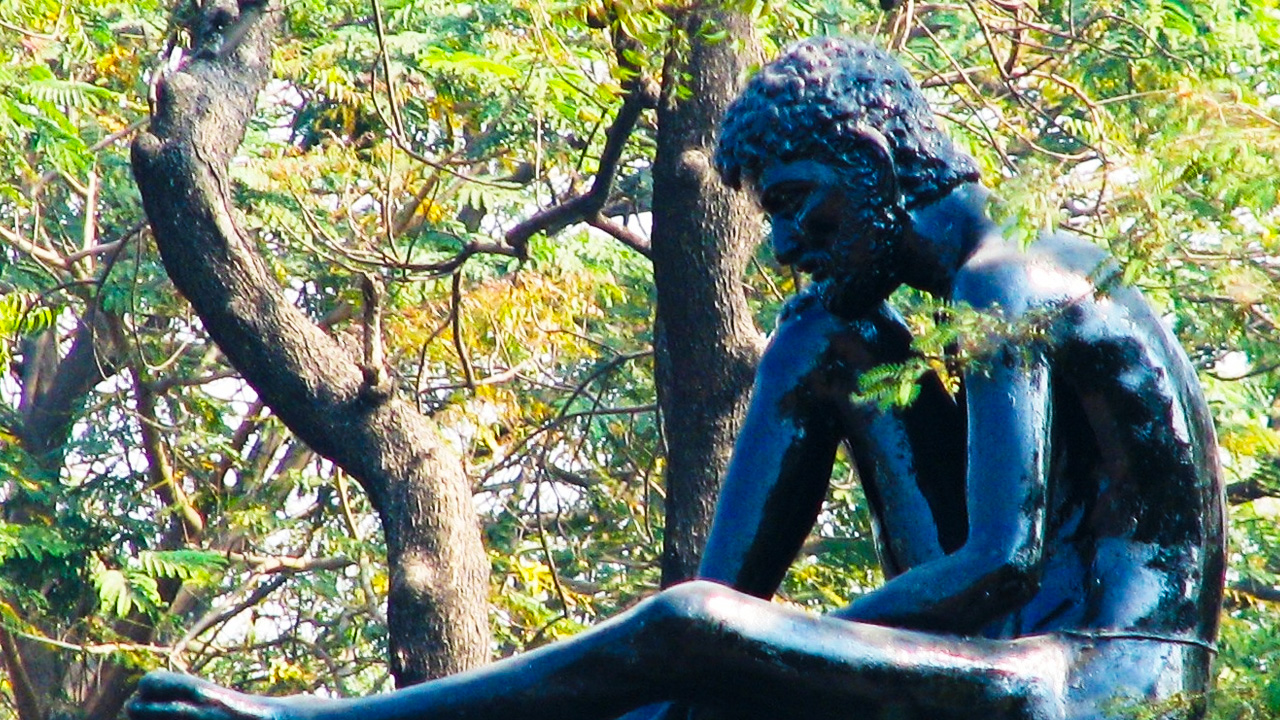
Statue of Yogi Vemana. (Photo | Special Arrangement)

Synopsis: Yogi Vemana remains one of the greatest voices in Telugu literature—a saint, a philosopher, a reformer, and a poet of the people. His message transcends religion and caste, urging humanity toward moral integrity, self-knowledge, and universal compassion. Centuries may pass, but Vemana’s wisdom will continue to illuminate hearts, guiding generations toward truth.
Yogi Vemana is a celebrated 17th-century Telugu philosopher-poet and social reformer famous for using simple, everyday language to teach morality, equality and spiritual wisdom. He was a people’s poet and had a distinct style. He wrote his verses in the ataveladi metre.
Through his poems, which had a four-line structure, he imparted wisdom conveyed eloquently through simple daily observations with an underlying moral message and lesson. His famous tagline or signature line is popular in every Telugu household and has become near-universal.
Almost all of his poems end with the famous refrain “Vishwadhabhirama Vinura Vema” (Listen, O Vema, beloved of the universe). The tune is catchy, rhythmic and ordinary folks have committed it to memory, sharing his verses with their timeless wisdom and passing on the legacy through the oral tradition.
He is remembered for his pioneering work and pronouncements on social reform and equality. He strongly opposed the caste system, and his contention was that a person’s worth comes from good and noble actions and not from birth. He believed that washing the body has no purpose or value if the mind stays impure.
He called out greed among the wealthy and also the religious leaders. He insisted that mere rituals were empty if they did not serve a larger purpose. Hypocrisy, duplicity and double standards, he viewed with disdain.
As a Yogi, he focused on and preached meditation, sense control, restraining the senses and freeing oneself from endless desires. He taught that the entire universe is reflected in the human mind and true peace comes from an honest and clean heart and not a restless one.
He has left a lasting legacy, and his poems have had a pronounced cultural impact. His poems have survived the ravages of time. Thanks to the efforts of a dedicated few, his poems have been bequeathed to posterity through palm leaves and the oral tradition.
Yogi Vemana was born into a rich Reddy farming family around 1652 in the Gandikota region, Kadapa district of the erstwhile Andhra Pradesh. His early life was not remarkable by any means. He lived a life of indulgence. He frittered away time and money on worldly pleasures and kept bad company. There is a saying that every sinner has a future and every saint a past. This rings true in Vemana’s case!
In everybody’s life, there is a moment of reckoning and a turning point. A deep personal betrayal, the realisation of the hollowness of material lust and societal hypocrisy transformed him. He turned a new leaf.
He abandoned his wealth and became a wandering yogi. He learned Achala Yoga from his master, Lambika Shiva Yogi, in Kondaveedu. He earned the sobriquet Praja Kavi, or People’s Poet, through his works. He did not write in high-falutin language. He used everyday Telugu to convey his ideas so that the common man could understand him.
He lambasted caste discrimination, frowned on the pernicious practice of untouchability, condemned hypocrisy and urged people to eschew blind religious rituals. He preached that God resides within a person and we can access him through this inward seeking rather than in any external worship. He spent his last days in Katarlapalli near Kadiri in Anantapur district before he breathed his last.
His four-line satakas have been immortalised and have stood the test of time. His practical homilies are recited even to this day by scholars and laymen alike.
Vemana wrote in the ataveladi metre. If parallels can be drawn, the ataveladi is a light, dancing metre which can be expressed, in the parlance of a poet, as the easy gait of a walking young woman.
The first three lines do the heavy lifting. Typically, an image or observation from everyday occurrence or daily life, an amplification of the point and a dose of eternal wisdom. The fourth line is invariably the crowning glory.
The signature stamp of Vemana is where he beseeches himself (the beloved of the world) to listen. It is a stroke of genius by any measure and has helped immortalise the poems with easy memorability and pithy declarations.
One critique argues that the line stamps authorship, in the manner of Vachana poets who used an Ankita. It is a device which Hindi poet Kabir also used.
Vachana poets (Sharanas) were 12th-century radical saint-poets from Karnataka, India, who wrote short, free-verse devotional poems in everyday Kannada called vachanas to champion social equality and reject caste, ritualism, and patriarchy. An ankita is the formal signature or pen name of the poet’s chosen form of the god Shiva, placed at the very end of every vachana to act as both an authorial seal and a direct address to the divine.
Vemana’s deeper poems reveal his mastery of yogic symbolism. He often refers to: Kundalini, breath regulation (prāṇāyāma), meditation (dhyāna), non-attachment (vairāgya), self-inquiry (ātma-vicāra) and the realisation of the brahman.
He emphasises that enlightenment requires inner purity, not outer rituals: “Manasey manushulaku maargamulu.” The mind is the true path for all beings. Many verses advise controlling the senses, practising compassion, avoiding selfishness, and seeking the divine within oneself.
Many poems target social evils that persist today. His fearless criticism of caste arrogance stands out: “Miriyamu enthadaina meedanalla ga nunnu…” Just as pepper feels hot no matter its colour, character—not birth—defines a true human.
He attacked caste hierarchy, fake gurus, fraudulent ascetics, corrupt priests, greed and material obsession, hypocrisy in religious practices, dowry and exploitation, social injustice and gender discrimination. His poetry mirrored society’s weaknesses and its soft underbelly.
He is a Yogi, in every sense of the term, as his verses reflect not only social awareness but also deep spiritual realisation.
They are suffused with yogic insights:
Some verses even contain coded yogic symbols, hinting at his practice of Hatha Yoga and Raja Yoga. It is said that he lived as a renunciate in forests, meditating and guiding seekers, embodying the very truths he preached. He walked the talk!
As already mentioned, in the 19th century, CP Brown, a British civil servant and linguist recognising the literary and cultural importance of Vemana’s poetry, collected hundreds of these poems from manuscripts and other oral sources. He edited, transliterated, and translated them into English, providing valuable commentary.
His work helped standardise and preserve Vemana’s poetry in written form. This led to the first printed edition of Vemana’s poems in the mid-19th century, published in both Telugu and English. Subsequently, Telugu scholars and publishers have released several improved editions with corrected texts, explanations, and contextual meanings.
Some of his most popular verses are reproduced below with their meanings.
Verse 1
ఉప్పు కప్పురంబు నొక్క పోలిక నుండు
చూడ చూడ రుచులు జాడ వేరు
పురుషులందు పుణ్య పురుషులు వేరయా
విశ్వదాభిరామ, వినుర వేమా
తాత్పర్యం: ఉప్పు కర్పూరం చూడటానికి ఒకేలా కనిపిస్తాయి, కాని వాటి రుచులు వేరు, అలాగే మనుషులంతా ఒకే విధంగా కనిపించిన అందులో మంచి వారు వేరు.
Uppu Kappurambu nokka polika nundu
Chooda chooda ruchulu jaada veru
Purushulandu Punya purushulu veraya
Viswadhaabhiraama, Vinura Vema
Translation
Salt and camphor look alike. On consumption, they taste different. So also, among men, virtuous people stand apart. Beloved of the Bounteous, Vema, listen!
Verse 2
ఆత్మశుద్ధి లేని యాచారమదియేల?
భాండశుద్ధి లేని పాకమేల?
చిత్త శుద్ధి లేని శివపూజలేలరా?
విశ్వదాభిరామ వినురవేమ.
అర్థము:
ఆత్మ, మనసు మంచి ఆలోచనలతో లేకుండా ఆచారాలు పాటించడం ఎందుకు?
వంట చేసేటపుడు పాత్ర శుభ్రంగా లేకపోతే వంట చేయడమెందుకు?
చిత్తం అనగా మనసు లోని ఆలోచనలు, బుద్ధి నిర్మలంగా లేకపోతే శివ పూజ చేయడం ఎందుకు?
చక్కగా, నిజాయితీగా చేయని ఏ పని వల్ల కూడా సత్ఫలితం పొందలేము.
అని వేమన భావం.
Aathma sudhi leni yacharamadiyela
bhanda sudhi leni paakamela
chittha sidhi leni siva poojalelaraa
viswadabhi raama vinura vema
Translation
There is no reason to follow all rituals when your heart and soul are not good.
There is no reason to cook when the utensil is not cleaned.
Without a good heart and good thoughts, there is no use in making prayers to God.
Be honest and humble all the time.
Verse 3
అల్పు డెపుడు పల్కు ఆడంబరముగాను
సజ్జనుండు పల్కు చల్లగాను
కంచు మ్రోగునట్లు కనకంబు మ్రోగునా
విశ్వదాభిరామ, వినురవేమ!
Alpudepudu palkun adambaramu ganu
Sajjanundu palku callaganu
Kancu mroginatlu kanakambu mroguna
Visvadabhirama, Vinura Vema!
ఈ పద్యం ప్రసిద్ధ వేమన శతకానికి చెందినది. దీని అర్థం ఏమిటంటే, జ్ఞానం లేని అల్పులు ఎక్కువగా గొప్పలు చెప్పుకుంటూ అరుస్తారు, కానీ గొప్పవారు శాంతంగా, నిరాడంబరంగా మాట్లాడుతారు.
Translation
A mean person brags. A good man speaks with composure. Does gold sound the way bronze sounds?
Here the sound made by gold is equivalent to the words of a good man, and the ringing of bronze is equivalent to the talk of a mean, arrogant person. Mere sound does not make one’s speech noble or acceptable.
Verse 4
మేడి పండు చూడ మేలిమై యుండు
పొట్ట విప్పి చూడ పురుగులుండు
పిఱికివాని మదిని బింకమీలాగురా
విశ్వదాభిరామ వినురవేమ.
అర్థము:
మేడి పండు పైకి చక్కగా కనిపించినప్పటికీ దానిలో పురుగులుండే అవకాశం ఉంది.
అలాగే పిఱికి వాడు పైకి బింకం ప్రదర్శించినప్పటికీ అతని మనసులో భయం ఉంటుంది.
అని వేమన భావం.
Medi pandu chooda melimai yundu
potta vippi chooda purugulundu
piriki vaani madini binkameelaaguraa
viswadabhiraama vinura vema
Translation
If you think of a fruit which you could see very nice and neat from the outside, but it may have bugs inside. A cowardly person may look still, but he may have fear in his heart.
His vision resonates with the bhakti saints across India—Kabir in the North, Basavanna in Karnataka, and Tukaram in Maharashtra—who all used the common tongue or the lingua franca to pierce through and demolish social falsehoods.
Tradition says that Vemana attained siddhi (final liberation) at Kattarupalli near Kadapa, where his samadhi (tomb) is still revered.
Pilgrims visit the site, offering prayers to the saint whose poems still guide their lives.
Over time, he has come to be remembered not just as a poet but as a prophet-like figure, a conscience of society whose simple truths resonate across ages.
Also Read:
Bonalu: Where Telangana comes alive for the mother goddess
Warangal: Centre of dissent and citadel of defiance



