
Published Oct 02, 2026 | 12:28 PM ⚊ Updated Oct 02, 2026 | 12:30 PM

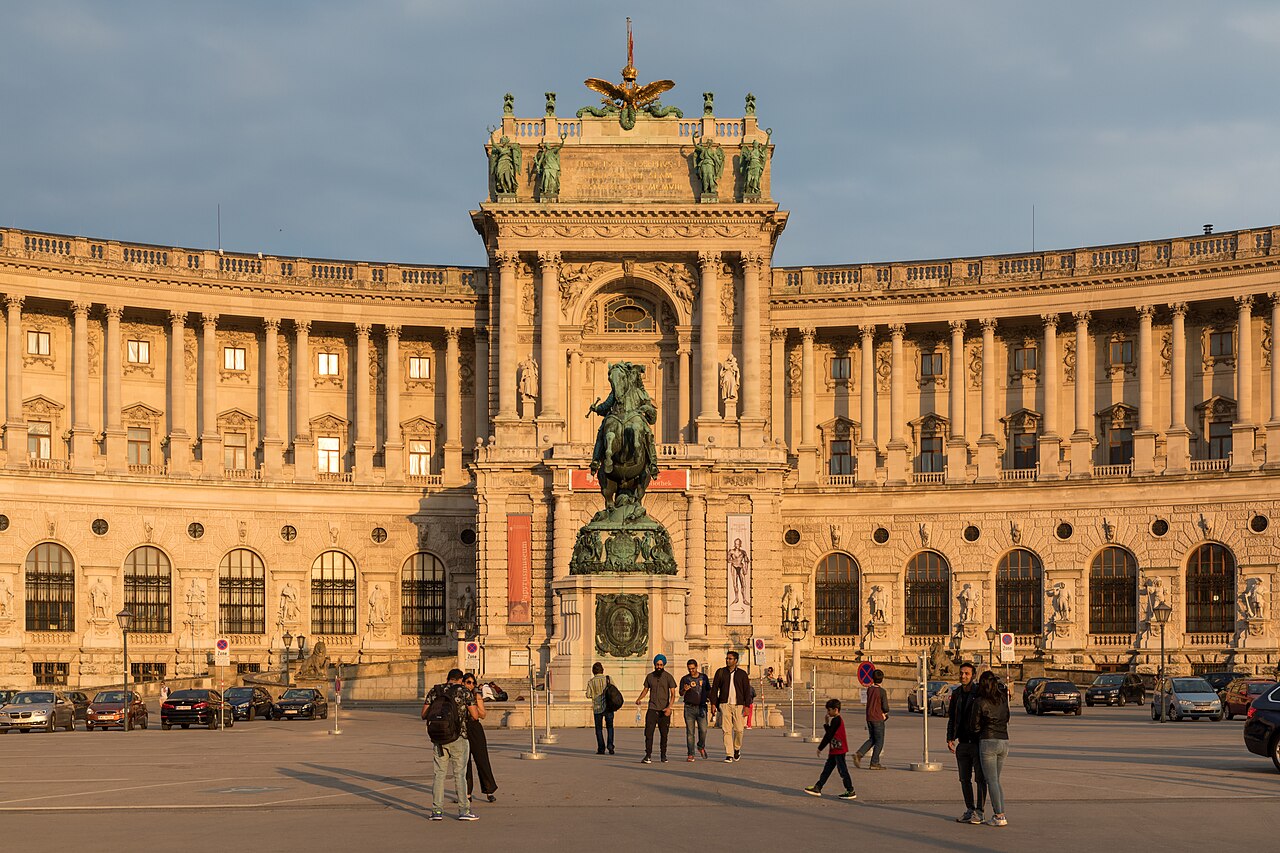
The Hofburg, the former principal imperial palace of the Habsburg dynasty, in Vienna. (Dietmar Rabich/Creative Commons).

“Vienna is certainly the grandest city I have ever seen. All along the Ringstrasse, colossal buildings proclaim an imperial past – the parliament, the Palace of Justice, the Natural History Museum, the Kunsthistorisches Museum, the opera house, the Burgtheater and above all the Hofburg, with its 2,600 rooms… A Martian coming to Earth would unhesitatingly land at Vienna, thinking it the capital of the planet.”
— Bill Bryson, Neither Here nor There: Travels in Europe
“I really like the city of Vienna. I like its art, its music and its architecture. In short, I like the culture that Vienna represents.”
— Eric Kandel, Nobel Laureate
In a BBC programme on Vienna titled Vienna – City of Dreams, presenter Joseph Leo Koerner notes that historically, “Architecture is a matter of life and death in Vienna.”
Legend has it that the architect of the Vienna Opera (Wiener Staatsoper), Eduard van der Nüll, committed suicide after being deeply hurt by the ridicule and trenchant criticism of the wider populace and the Emperor regarding his style and architectural design. Facts, however, don’t support the story.
Adolf Loos, one of the city’s prominent architects, described Vienna in contemptible terms as a “Potemkin City”—referring to the Potemkin villages constructed in Russia with deceptive, glamorous fronts to hide poverty when Empress Catherine the Great passed through the provinces. Loos felt this way because he believed anyone coming to Vienna would be persuaded to believe “he had been transported into a city of nothing but aristocrats.”
Wiener Staatsoper.
Unlike most global imperial cities, the essence of Vienna’s architectural legacy is not confined solely to royal palaces or grand mansions, but is found in the initiatives pursued by eminent architects in the town-planning process.
This included the ‘Ringstrasse’, which is integral to understanding the architectural legacy of Vienna, and which was, in effect, the expansion of the Old Town (Innere Stadt) of the city by an Imperial decree by Emperor Franz Joseph.
The construction of the ‘Ringstrasse’ involved tearing down the medieval European old city or town walls to integrate the Old Town with royal palaces and the emerging suburbs. Ringstrasse represented the symbolic assertion of the rising new bourgeoisie of Austria in opposition to the old feudal order.
In many ways, the new buildings that rose around the area of Ringstrasse were meant to carve the identity of the emerging bourgeoisie and serve as an antidote to the absolutist Habsburg Monarchy. The architectural transformation that followed the Ringstrasse would later bear the imprint of architects like Otto Wagner and Adolf Loos.
In my quest to make sense of and interpret the ‘Ringstrasse’ phenomenon, I stumbled upon an article in the Daily Art Magazine by Nicole Ganbold. She writes of how the edifices surrounding the boulevard were inspired by the philosophy of Gesamtkunstwerk (Total Work of Art), blending classical historicism with a unified modern vision.
Kunsthistorisches Museum.
The bourgeoisie constructed cultural institutions like the Court Theatre (Burgtheater), Art Museum (Kunsthistorisches Museum), Museum for Natural History (Wiener Naturhistorisches Museum), and the Vienna Opera (Wiener Staatsoper) to assert their identity as a new power elite in society.
When it came to politics, the new buildings constructed on the Ringstrasse reflected constitutional rule and bourgeois democracy, represented by the City Hall (Wiener Rathaus) and the Parliament (Österreichisches Parlament).
The dominant architectural styles around the Ringstrasse were Greco-Roman, Gothic, and Renaissance, blended with modernism. Construction affirmed allegiance to the Empire by paying respect to traditional styles while integrating them into the architectural framework. The Ringstrasse is unique for successfully carving out a traditional ambience without its own distinct tradition, seamlessly blending modernism with aristocratic classicism.
Distinct classical elements included magnificent entrance halls, stucco ceilings, and marble winding staircases displaying prestige and craftsmanship. The most striking features were the Baroque sculpted statues supporting balconies with ornamental balustrades and wrought-iron railings. The pompous, ornate design of the facades with intricate stucco decoration created the feel and aura of a regal palatial structure, prompting many to term them “Rent Palaces.”
Otto Wagner deserves much of the credit for transforming Vienna’s architectural language.
Born in 1841 into a family of wealthy bourgeois bureaucrats, Otto Wagner’s father, Rudolf Simoen Wagner, was a notary to the Royal Hungarian Court, and his mother’s father was an archivist to the Imperial Court and Army.
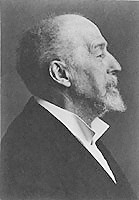
Otto Koloman Wagner
Wagner was educated by private tutors and French governesses until the age of nine, attended the Akademisches Gymnasium in Vienna for two years, and then joined the Benedictine boarding school at Kremsmünster. He received his early architectural training at the Vienna Technical University and the Royal Building Academy in Berlin, ultimately completing his formal training at the Academy of Fine Arts in Vienna in October 1863.
At the Academy of Fine Arts, his understanding of architecture was inspired by encounters with leading figures August Sicardsburg and Eduard van der Nüll, designers of the Vienna Opera House. Wagner notably acknowledged his refined facility for drawing to the mentoring of van der Nüll.
Wagner was a brilliant pioneering engineer and designer who introduced rationality, efficiency, and beauty into his architectural designs. Alongside numerous residences and historical buildings, he designed the Jugendstiltheater and the Austrian Postal Savings Bank (Postsparkasse). He also designed the Vienna Light Railway system, intentionally displaying open steel structures to pioneer modernism.
His architectural marvels include the prominent religious building Kirche am Steinhof (designed around 1914), featuring an imposing gold-plated dome offering striking views across the city. Wagner was also a key founder of the Viennese arts and aesthetics movement, the Secession movement, alongside painter Gustav Klimt, bringing a radical new understanding of art and architecture away from traditional styles.
Among his engineering innovations are Wagner stairways, featuring curved steps and a gentle, effortless ascent designed so one could float down rather than walk. Other architectural innovations included covering exterior facades with weather-resistant ceramic cladding, classical brick construction, and reinforced concrete construction.
Notably, Otto Wagner inscribed his Vienna villas with the Latin motto: Sine arte sine amore non est vita (There is no life without love or art).
Viennese historical folklore suggests that Wagner, as a wealthy, upper-middle-class architect independent of client commissions, was less focused on the quality of life for the masses and rising proletariat, a role championed instead by architect Adolf Loos.
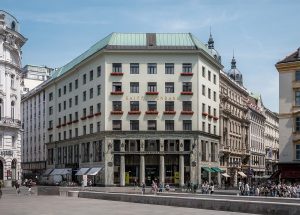
Looshaus
Loos’s legacy is embodied by the Looshaus on the historic Michaelerplatz. The building’s lack of ornamentation was considered so shocking by Emperor Franz Joseph that he reportedly ordered Hofburg staterooms facing Michaelerplatz to remain permanently drawn.
Adolf Loos, a radical, defiant architect who despised ornamentation, can be termed one of the founding fathers of Modernism.
He wrote a provocative, critical essay titled Ornament and Crime, in which he declared that “Ornament does not heighten my joy in life or the joy in life of any cultivated person,” and maintained that “Freedom from ornament is a sign of spiritual strength.”
Loos was born in 1870 in Brno (in present-day Czech Republic, then part of the Austro-Hungarian Empire) to a sculptor and stonemason father. He studied at the Royal and Imperial State Technical College in Reichenberg (Bohemia), the College of Technology in Dresden, and the Academy of Fine Arts in Vienna, though he never completed a formal degree.
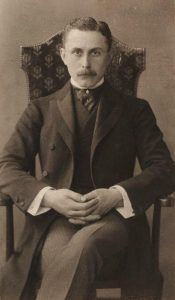
Adolf Franz Karl Viktor Maria Loos.
Later, he travelled to the United States, working odd jobs as a mason and dishwasher, during which time he came under the spell of American architect Louis Sullivan.
This American influence explains his deep apathy toward architectural ornamentation; Sullivan wrote in his essay Ornament in Architecture that “I take it as self-evident that a building, quite devoid of ornament, may convey a noble and dignified sentiment by virtue of mass and proportion.”
Upon returning to Vienna in 1896, Loos worked alongside Austrian architect Karl Mayreder before opening his own practice in 1898. Loos later established his own school, which produced prominent architects such as Richard Neutra and RM Schindler.
He left behind an indelible legacy as a pioneer of modernist architecture, with the Looshaus at Michaelerplatz standing as an enduring symbol of the birth of architectural Modernism in Vienna.
Also Read:
Pyotr Ilyich Tchaikovsky: The Glass Child turned genius who transformed classical music
150 years of performance: Swan Lake, the triumph of a classical ballet and its composer
Mozart at 270: Celebrating the myth and music of a wizard
(Views are personal. Edited by R Rajesh Kumar.)



